

FUKASAWA Takeshi, Assistant Professor
I have primarily conducted empirical economic research, focusing on energy efficiency, product durability, competition policy, and the design of Japan’s hometown tax donation system. In addition, I conduct methodological research aimed at reducing computational burden, particularly in settings where empirical analysis requires substantial computing time. My initial motivation for methodological work arose from concerns about the energy intensity of large-scale computation. While advancing research related to environmental problems, including energy conservation, I became concerned that my own computationally intensive research consumed a non-negligible amount of electricity, and might itself be energy inefficient. Below, I briefly introduce three research topics I am currently investigating: electricity markets, product durability, and optimization. The first two represent empirical economic research, while optimization constitutes methodological work. I conclude by outlining future research directions.
Electricity: Inefficient Operations of Thermal Generation Units?
Mitigating global warming requires improving the operational efficiency of existing thermal power plants. Current electricity markets are fundamentally designed to prioritize generation from “efficient power plants with low generation costs.” However, my research indicates that the “inter-firm differences in fuel prices,” which are largely overlooked until now, can lead to inefficient power plant operations and excessive fuel consumption.
For example, consider two firms A and B, each own LNG gas-fired power plants with thermal efficiencies of 50% and 60% respectively, as shown in Figure 1. In this case, it would appear appropriate to prioritize generation from firm B’s more efficient plant. However, if firm B’s assumed LNG fuel price is significantly higher than firm A’s, under the current market design, the costs associated with using firm B’s plant are deemed too high. Consequently, the less efficient plant owned by firm A is prioritized. Situations in which “fuel prices” differ across firms are plausible due to factors such as fuel purchase contracts, and tend to become particularly pronounced during periods of sharp fuel price volatility. According to my ongoing empirical research, although the results are still preliminary, the “inter-firm difference in fuel prices” may have increased Japan’s LNG consumption by approximately 5-10% and raised CO2 emissions by about 1% during the fall of 2021, when LNG gas prices surged.
Policy discussions on desirable market system designs that explicitly account for inter-firm differences in fuel prices remain limited, highlighting the need for further examination.
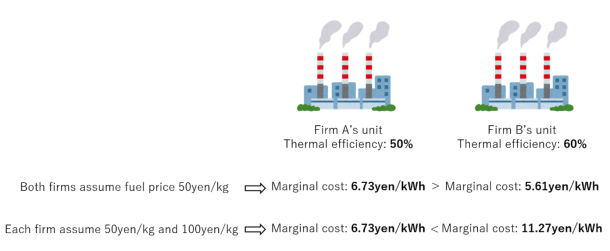
Figure 1: Fuel prices and thermal generation units’ generation costs (Marginal Costs)
Note: Assume a constant marginal cost, an on-site rate of 2.3%, and a fuel calorific value of 54.7 MJ/kg.
Durability: What is socially desirable durability?
While longer product lifespans appear beneficial to consumers, for firms, high durability may reduce future replacement demand and potentially depress long-run profits, creating potential incentives for firms to intentionally reduce durability (planned obsolescence). Higher product durability also tends to reduce waste generation and natural resource consumption. Recent environmental policies increasingly emphasize higher durability from a circular economy perspective.
My research examines the socially desirable level of product durability by explicitly modelling these trade-offs. Using light bulbs as a case study, I conduct an empirical analysis from an economics perspective (specifically industrial organization). To my knowledge, no prior empirical economic research has directly addressed this question, and my study proposes an empirical framework.
Optimization: How to efficiently estimate parameters?
Constrained (continuous) optimization problems, represented by equations such as the one below, arise in many fields.

In this problem, we seek parameters θ that minimize the function Q(θ) within the range satisfying the condition G(θ)=0. Generally, solving the problem by hand is difficult. Instead, based on information such as the function’s derivative, we iteratively update the values until we determine they are sufficiently close to the solution.
Structural estimation methods in economics, including those used in my durability analysis, often require solving cumbersome constrained optimization problems. Such computations using computers sometimes require several days of processing time. The need to reduce the computational time initially motivated my interest in this area. Note that similar problems arise in various fields, including natural sciences (e.g., weather forecasting).
Regarding constrained optimization problems, while general-purpose algorithms have been developed in the field of numerical optimization, economic studies have developed methods tailored to specific economic models, leveraging statistical insights. My research investigates more general-purpose algorithms by extending economic and statistical insights beyond model-specific settings.
The Lagrange multiplier plays a central role in constrained optimization. In general, the specific value cannot be determined without solving the problem. However, in statistical problem settings (such as maximum likelihood estimation or least squares methods where the error term follows a normal distribution), it can be shown that the Lagrange multiplier approaches zero as the sample size increases under some conditions. Although this property itself is well-utilized in statistical testing, it has not been sufficiently exploited in numerical optimization. In my research, I first demonstrate that high-performance methods previously proposed in economics implicitly leveraged this property. Building upon this insight, I propose an algorithm that is more general-purpose than existing methods in economics. I show that this approach achieves multiple-fold reductions in computational time across several economic applications.
Constrained optimization has also become increasingly incorporated into deep learning, which forms the foundation of AI. For instance, the Physics-informed Neural Networks (PINNs) method, which incorporates equations representing physical laws as constraints, has been applied in numerous recent studies. The aforementioned statistical analysis also offers insights relevant to such methods, and I explore this direction.
Future Outlook
In recent years, electricity demand has been increasing with the spread of AI and other technologies. Consequently, there is a growing need for further efficiency improvements and energy savings in computationally intensive methods and algorithms. Although computational costs in economic research have not yet reached a scale that constitutes a major societal concern, analyses requiring extensive computational resources and access to high-performance computing are undesirable from a reproducibility perspective. A core objective of economics is the efficient allocation of scarce resources (including electricity and computational resources). I therefore aim to contribute not only through economic analysis of desirable policies but also through technical aspects.
Although I have specialized in economics since graduate school, my undergraduate major was mathematics, where I attended a mathematical statistics seminar. My research has been consistently motivated by an interest in analyzing social problems using mathematical tools. Currently, I focus on optimization—a field at the intersection statistics, numerical computation, and machine learning. This area is increasingly important for computational efficiency and reducing energy consumption, and I believe it also offers valuable insights for economic analysis. Going forward, I aim to advance my research in economics by integrating interdisciplinary knowledge and maintaining a broad perspective.
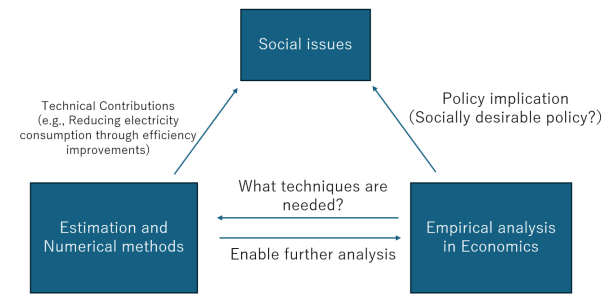
Figure 2. Relationship between empirical and methodological research