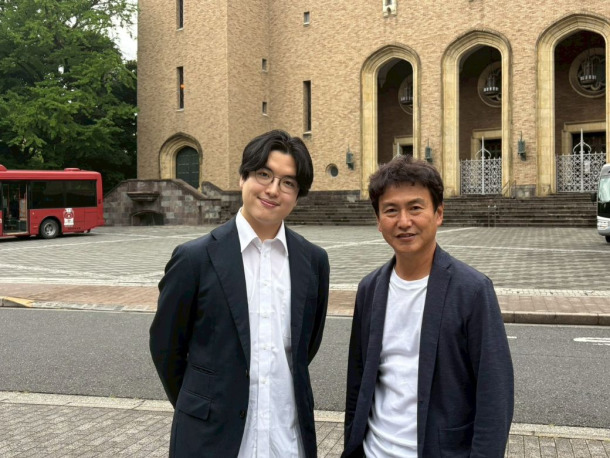
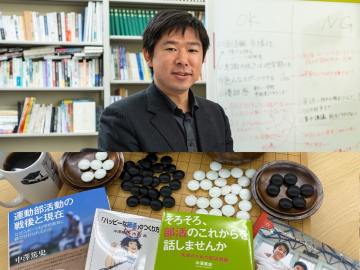
In front of the Okuma Auditorium. From left: Suzuki, Professor Inoue.
Waseda University has 13 faculties and educates students in a wide range of academic fields. In "Interesting Lectures and Seminars", students who have taken such classes will introduce what classes and seminars are available and what you can learn from them.
Business Idea Design (BID) [Subject offered by the School of Commerce]
Kota Suzuki, 3rd year student, School of Commerce
Does a good idea instantly become a business the moment you come up with it? Professor Tatsuhiko Inoue (Faculty of Commerce) and the representative of Business Bank Group, Takanori Hamaguchi, devised the Business Idea Design (BID). This program is a practical class where students not only learn how to generate business ideas, but also work as a team to refine the ideas they have created into business plans and evaluate each other through pitches (*1).
*1 Short presentations in a business setting
The goal of the course was to gain an understanding of business models and to be able to actually use idea generation techniques. Undergraduate students from various fields, as well as master's and doctoral students, formed groups to create virtual "companies," bringing together different expertise and experiences. As a result, I encountered many perspectives that I wouldn't have come up with on my own.
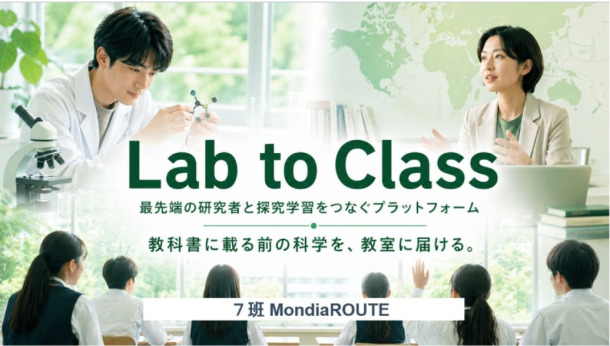
These are slides from the business plan created by the author's team. We devised a platform to connect middle and high school students' inquiry-based learning with graduate students (researchers). The team consisted of 6 members, and the name of the team, Mondia ROUTE, comes from the phrase "a road leading to the world."
Classes are held consecutively on Fridays during the 4th and 5th periods. In the 4th period, each group pitches their business plan using the idea generation techniques learned the previous week, and the audience, acting as investors, discusses how much of the in-class currency they should bid on each plan in the Business Improvement District (BID). In the 5th period, students receive lectures from Norihide Kuroda, a director of Business Bank Group, and Professor Inoue on idea generation techniques such as "Wouldn't it be nice to have this?" which starts from desires, and "analogy," which applies mechanisms from other fields. From there, students spend a week refining their next plan and then pitch and bid again.
I focused on idea generation and pitching within the "company." In one week, a team member pointed out that the "monetization (*2)" of my proposal was weak, so I had to revise the business plan from scratch, and the structure changed right before the pitch. The process of generating ideas, translating them into a business plan, and creating a pitch that would move the audience was by no means easy. However, the rewards of receiving evaluation at BID were overwhelming.
*2 Monetizing services that were previously unprofitable.
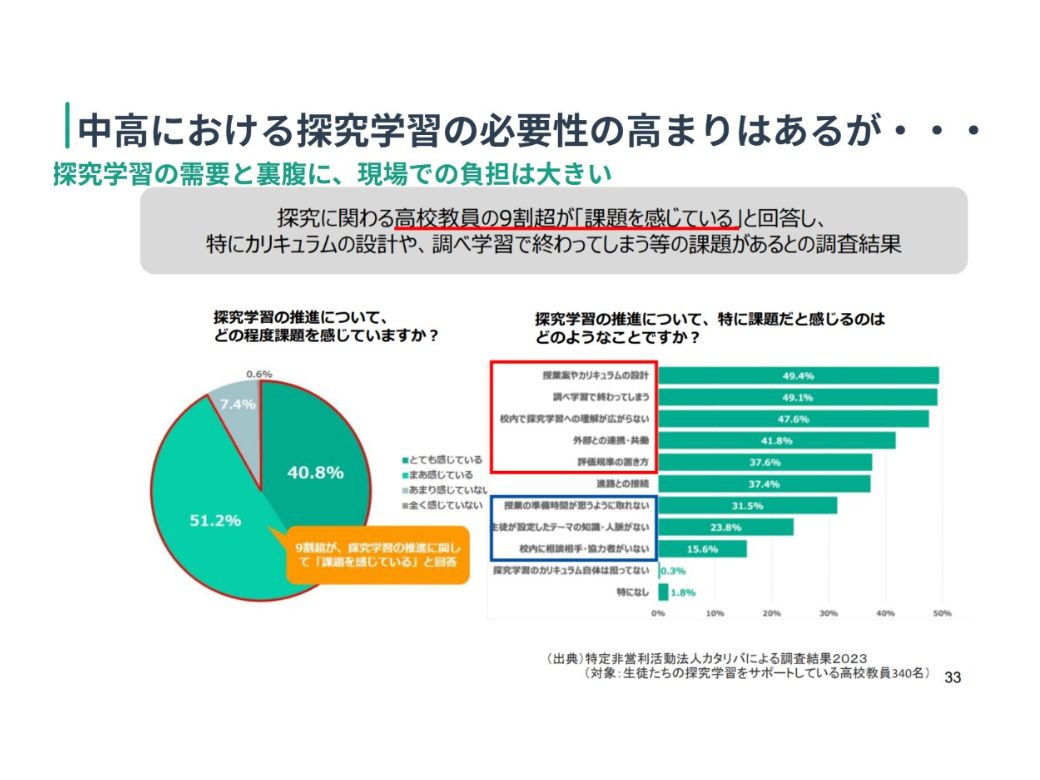
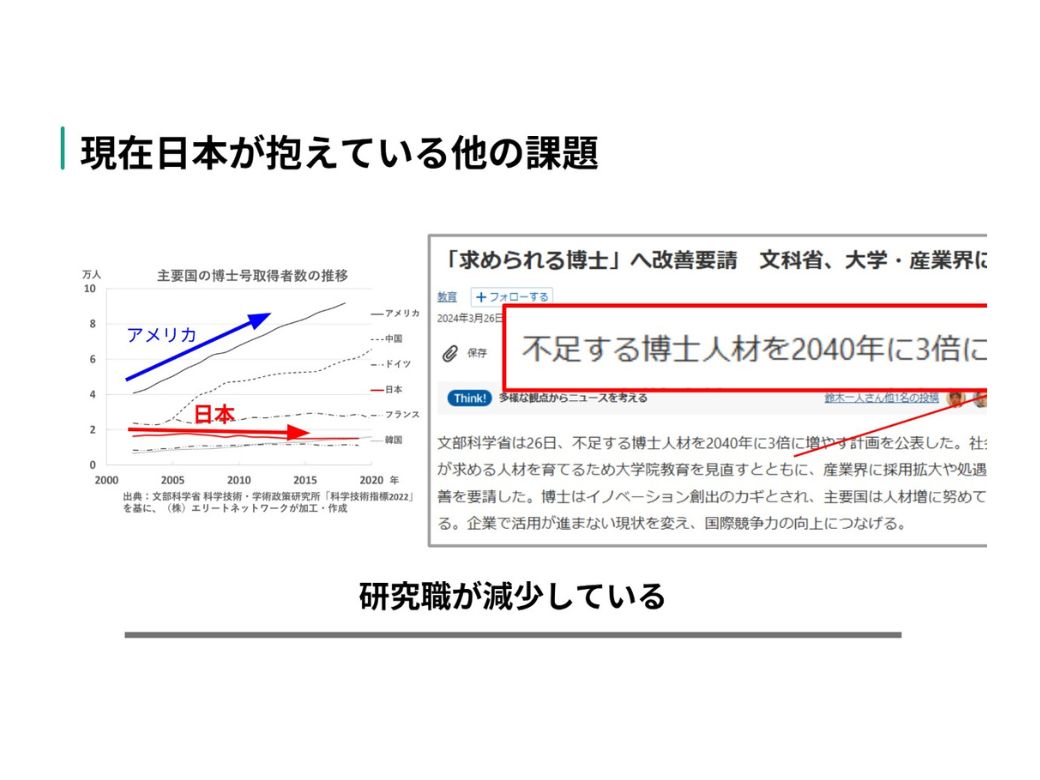
We considered how to solve problems by matching the difficulties in inquiry-based learning from the perspective of junior and senior high schools (left) with the challenges faced by those in research careers (right). (Click to enlarge)
The most memorable part was the final round. Our team, which came in second in cumulative bid amount, was given the opportunity to pitch to investors, including Tadashi Takiguchi, CEO of Well Investment, as one of the top teams. The feedback wasn't just about the content of our business plan, but also whether the customer problems we identified were even valid! In the end, we received bids from investors, but it was also a painful experience that made us realize that simply preparing a presentation isn't enough to influence investors' decisions.
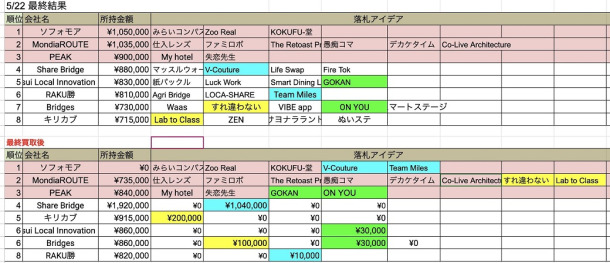
The final BID results. The top row shows the rankings determined by the amount of money each team possesses. The right side shows the ideas that each team had acquired. The bottom row shows the results after the final buyouts. Only the top 3 teams can buy ideas acquired by other teams with their remaining funds, and teams ranked 4th and below will see their rankings change based on the income they receive when their own ideas are bought back.
What I learned in this class is that novelty alone is not enough to make a business. You have to confirm the problems by talking directly to customers, revise your hypotheses, and communicate the value. For me, who aspires to start my own business in the future, the biggest lesson I learned was experiencing firsthand how difficult it is to transform a spur-of-the-moment idea into a "business plan that people will choose."


![[Save version] Map of the four main campuses](https://www.waseda.jp/inst/weekly/assets/uploads/2026/06/110d605cfac40346aad1d2df464a6586-940x705-1-1-610x457.jpg)