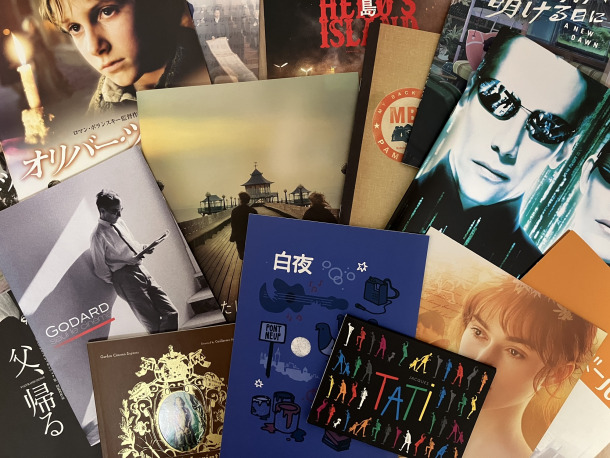
Reading the movie pamphlet is also a pleasure after watching the film.
Waseda University has many professors with a wide range of hobbies and special skills. In "Professor's Time Off," we introduce the unexpected side of our professors that you don't see during class.
Ayuko Matsuyama, Associate Professor, Faculty of Education and Integrated Arts and Sciences
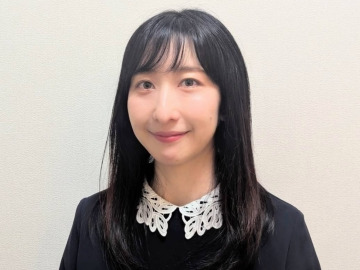
Ayuko Matsuyama is an Associate Professor. She graduated from School of Education at Waseda University and also from the Graduate School of Education. She holds a PhD in Education. She has been in her current position since 2024. Her specialties are social education and lifelong learning.
"Today, I'll make it a day to do nothing." On days like that, the first thing that comes to mind is watching a movie. If I have the energy, I'll choose a film based on my mood and head to the cinema. Otherwise, I'll make a quick trip to the nearby cake shop, brew some coffee at home, and choose a movie to watch from a subscription service. In the past, I would have picked out two or three interesting films from a rental shop, but now I don't even bother with that anymore.
Looking back on the films I have watched, my family had a huge influence at first. Both my parents loved movies, and at home we had a collection of hundreds of VHS tapes, diligently recorded from NHK's "Satellite Movie Theater." Weekends spent with my working parents were almost entirely dedicated to watching movies from that collection. Moreover, my mother liked foreign films such as Nouvelle Vague works, and my father liked Japanese films, especially yakuza films, so I encountered many great actors from both East and West, from French actor Jean-Paul Belmondo to Shintaro Katsu. Perhaps because of that, even now I enjoy watching films in a way that traces the history of cinema, regardless of genre or country.
* This refers to an innovative film movement that emerged in France from the late 1950s to the 1960s, meaning "new wave." It rejected traditional epic filmmaking and was a movement in which young directors pursued realistic and free expression through location shooting and improvisational direction.
My favorites are the films from the 1950s, the golden age of Japanese cinema. Back then, films were produced under a single director, with a fixed cast and crew, such as Yasujiro Ozu's Ozu Group or Akira Kurosawa's Kurosawa Group. I'm drawn to these communities of filmmakers, and I enjoy not only watching the films themselves, but also imagining what daily life at the studio was like, as conveyed through books like "Matsuo Shokudo in front of Shochiku Ofuna Studio" by Wakana Yamamoto (Chuko Bunko).
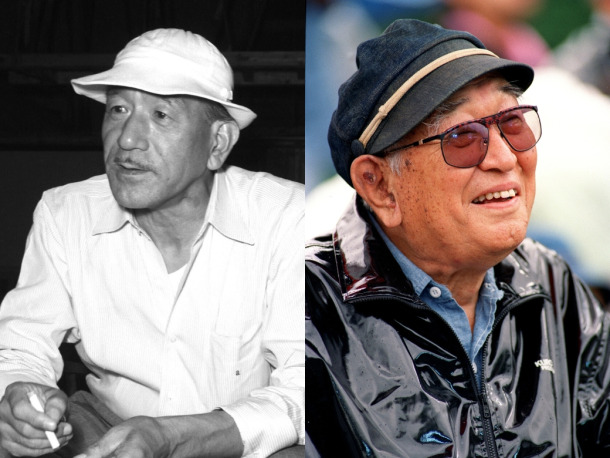
Yasujiro Ozu (left, 1903–1963) and Akira Kurosawa (right, 1910–1998). Both are leading Japanese film directors. (Photo courtesy of Kyodo News)
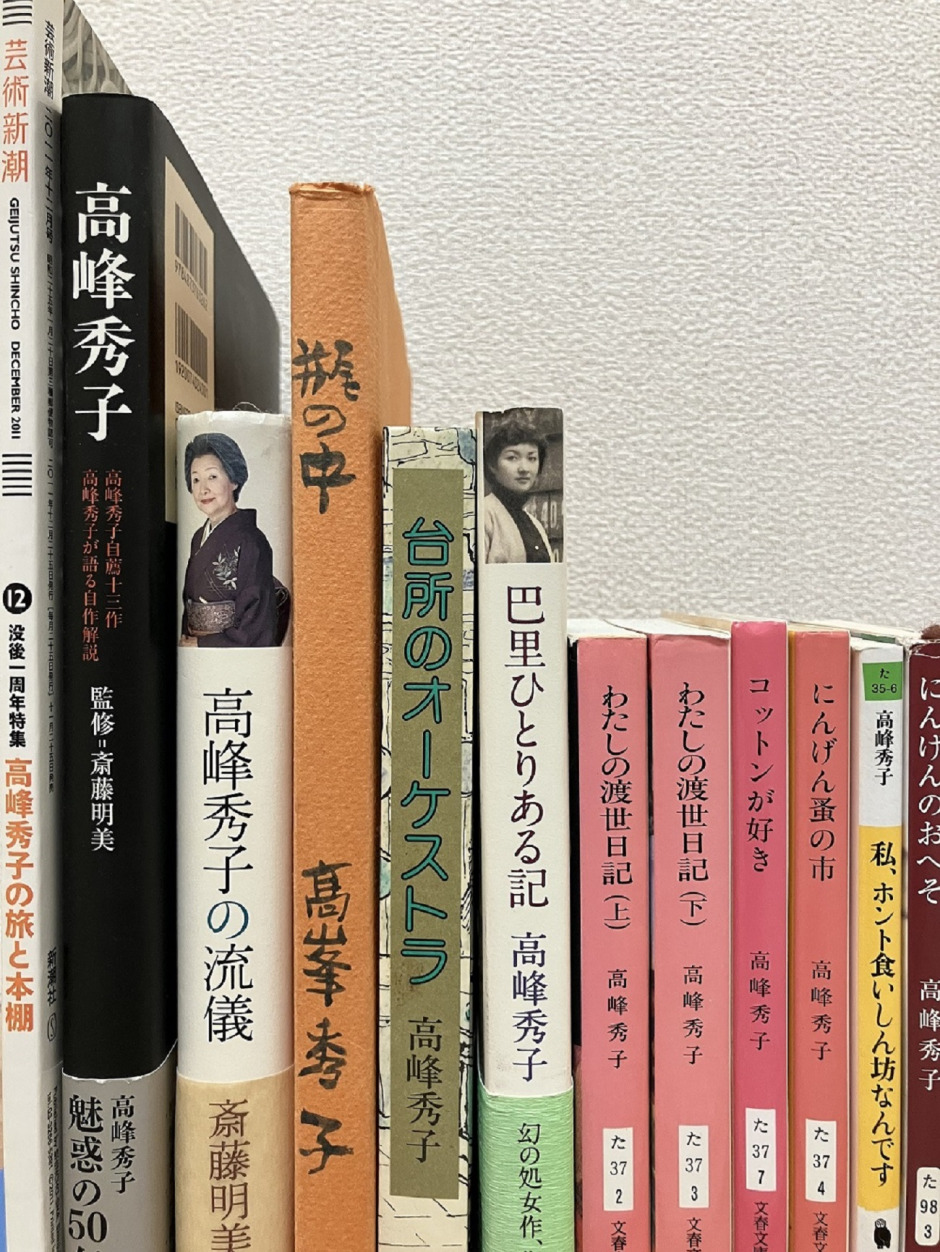
Of all the movie stars of that era, the one whose films I've seen the most is actress Hideko Takamine. I've been a fan for 20 years, and I've visited the filming locations of her movies, the Azabu Nagasaka-cho where she lived, and the Yurakucho Shin Kokusai Building where she ran an antique shop. Despite not being able to attend elementary school properly since her debut at the age of five, Takamine was a skilled writer and published numerous essays from her twenties onward. I've devoured many of her books, including her bestselling autobiography "My Life as a Traveler" (Bunshun Bunko), and even now, when I read Takamine's words, I feel a sense of renewed purpose. She is a role model for my own way of life.
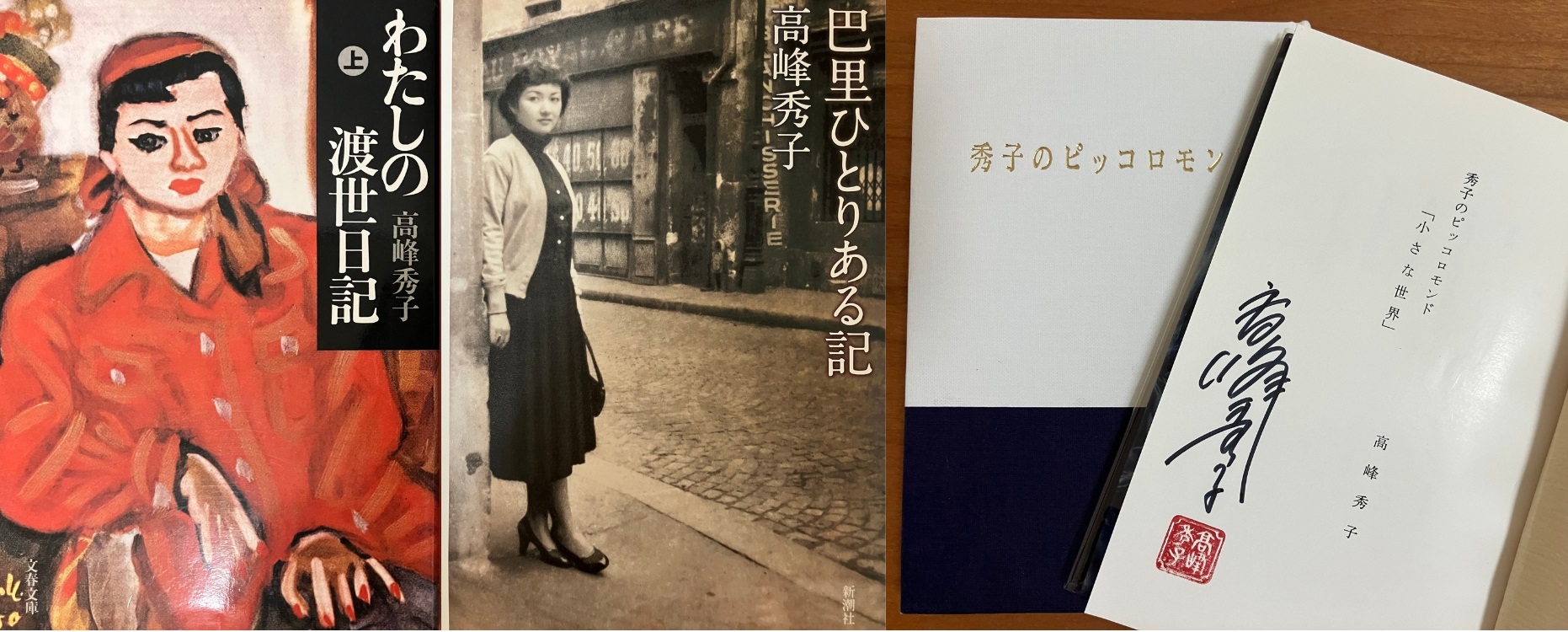
These are some of Hideko Takamine's books that I own. From left to right: her bestselling autobiography "My Life as a Traveler" (Bungei Shunju Bunko), her debut novel "A Solo Journey in Paris" (Shinchosha), and the limited edition essay collection "Hideko's Piccolo Mondo 'A Small World'" (Aoi Gallery), which comes with a serial number and is signed by her – a real treasure.
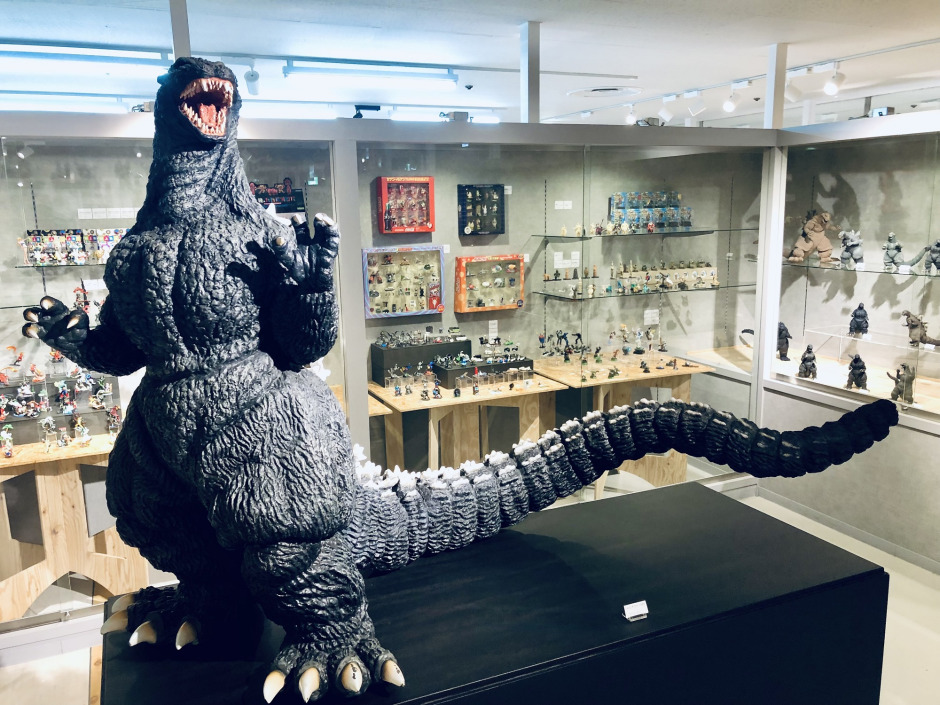
In addition to Waseda Shochiku, Waseda University has the Central Library AV Room and the Theatre Museum on campus, making it a university deeply connected to film. Being able to easily watch rare films that are not commercially available is something unique to Waseda. I enjoy my free time while benefiting from this vibrant film culture at the university.
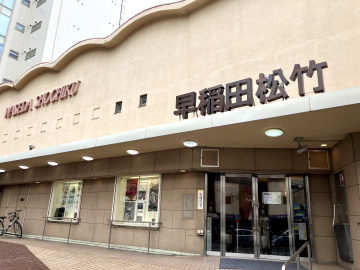
I frequented the classic movie theater "Waseda Shochiku" (Takadanobaba) many times during my student days. It was there that I first saw a film by Shuji Terayama, who, like me, graduated from the School of Education.
![[Save version] Map of the four main campuses](https://www.waseda.jp/inst/weekly/assets/uploads/2026/06/110d605cfac40346aad1d2df464a6586-940x705-1-1-610x457.jpg)