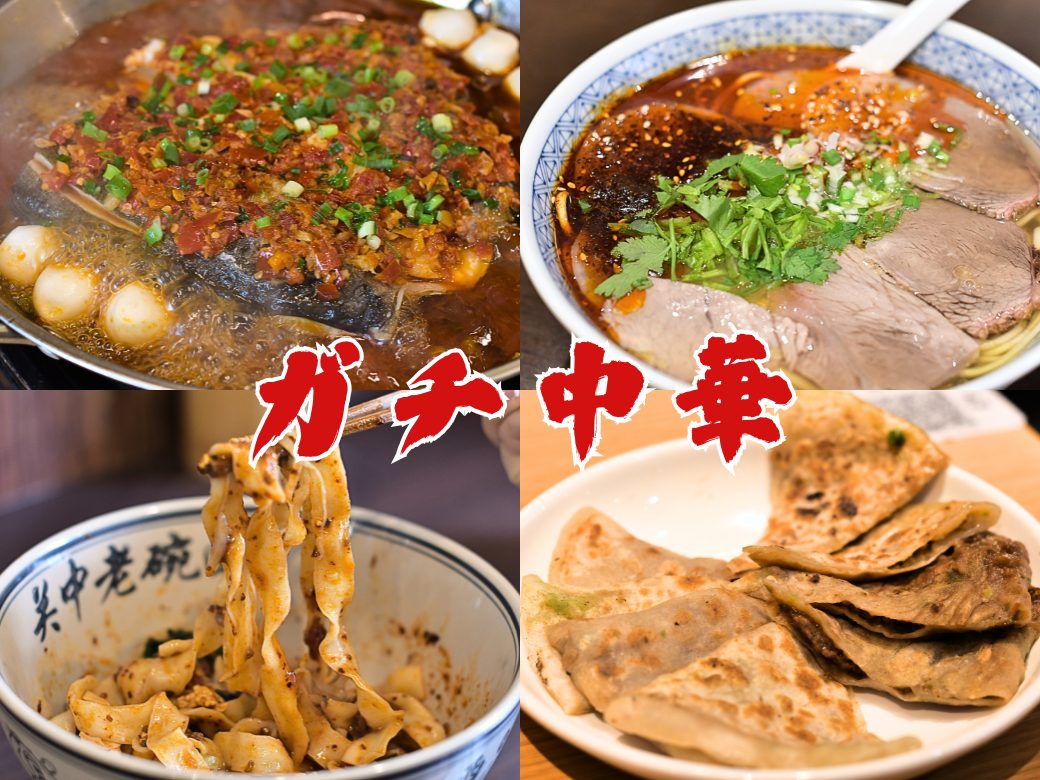
Recently, the number of "authentic Chinese food" restaurants has been increasing dramatically in the Takadanobaba and Waseda areas. Authentic Chinese food refers to Chinese food that doesn't cater to Japanese tastes. Many people have likely seen them while walking around Takadanobaba or around campus. However, even if you're curious, you may have hesitated to enter due to concerns such as "Is it too spicy?" To clear up such doubts, Waseda University student reporters from the Waseda Weekly editorial department have tried Gachi Chuka! We'll tell you about the flavors and the atmosphere of the restaurants. How about considering it as a new Waseda food option?
*All prices in this article include tax. Information is current as of November 2025.
INDEX
▼"Senseimenkan" where you can enjoy the exquisite Biang Biang noodles of Shaanxi Province
▼If you want to eat Hunan food in Takadanobaba, this is the place to go! "Shanyu TOKYO"
▼ "Shiwei" is a buffet lunch that students will love.
▼Highly recommended by a Waseda University student from China: "Longyuan Jincheng Lanzhou Clear Soup Beef Noodles"
▼The famous Beijing meat pie shop opens its first store in Japan, "Beijing Pie"
▼Regional map of each store
The reporters!
Rinka Nishimura, 3rd year student, School of Human Sciences, Waseda Weekly Reporter (SJC Student Staff)
Son Chou, 1st year, Master's Program, Graduate School of Commerce
Kanna Kawaguchi, a first-year master's student in the Graduate School of Letters, Arts and Sciences, a former Waseda Weekly reader monitor.

(From left) Nishimura, Son, and Kawaguchi
Senseimenkan: Enjoy the exquisite Biang Biang noodles of Shaanxi Province
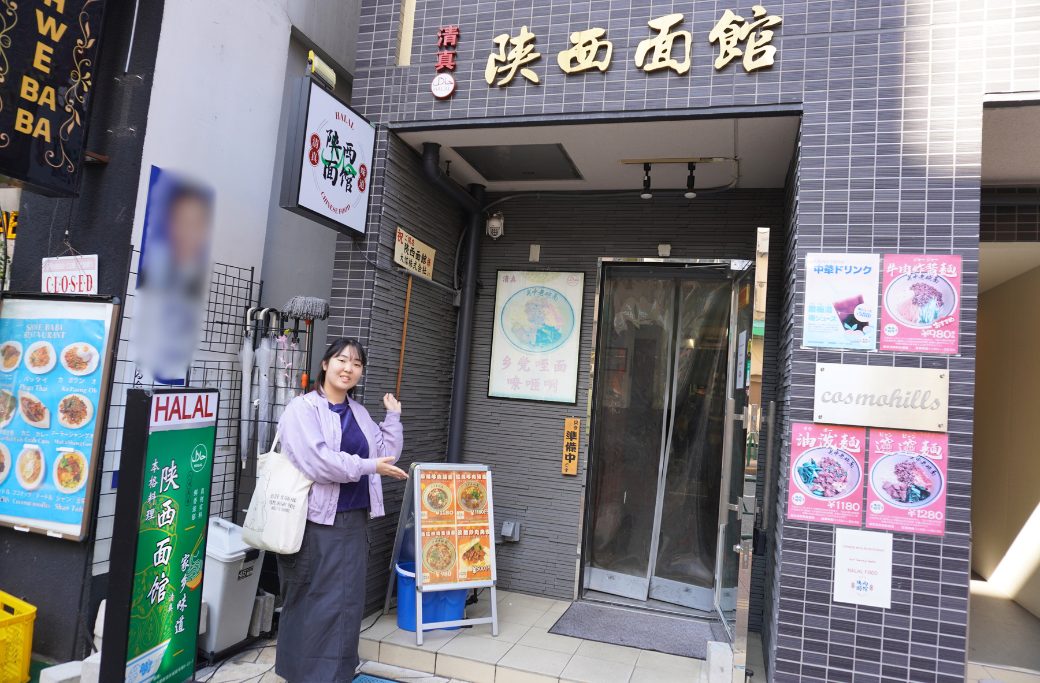
The store entrance
It's about a four-minute walk from JR Takadanobaba Station down Waseda Street in the opposite direction from Waseda Campus. Senseimenkan, which serves Shaanxi Province's specialty Biang Biang noodles, has been highly praised by Chinese students for its "taste that's so authentic it's no exaggeration to say it's authentic." Located at the eastern end of the Silk Road, Shaanxi Province has been influenced by Islamic culture, and many of its dishes feature beef and lamb. Incidentally, Biang Biang noodles are written in kanji as "𰻞𰻞men," which is known as the kanji with the most strokes in the world.
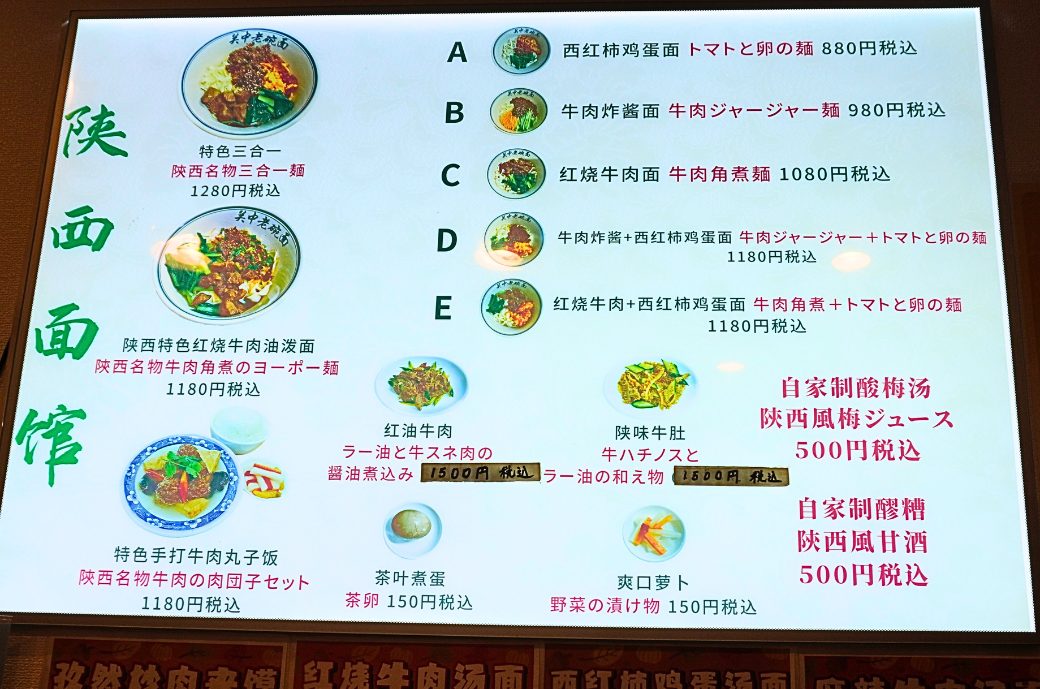
When we entered the restaurant, the owner greeted us with a smile! The menu offers seven main noodle dishes, as well as side dishes such as chili oil and beef shank stewed in soy sauce, and drinks. As this is a halal restaurant, they do not serve pork dishes or alcohol, and you can choose the spiciness of the noodles from three levels. The owner, who is from Shaanxi Province, does not speak much Japanese, but he was very friendly and helpful! He pointed out recommended dishes and told us about them.
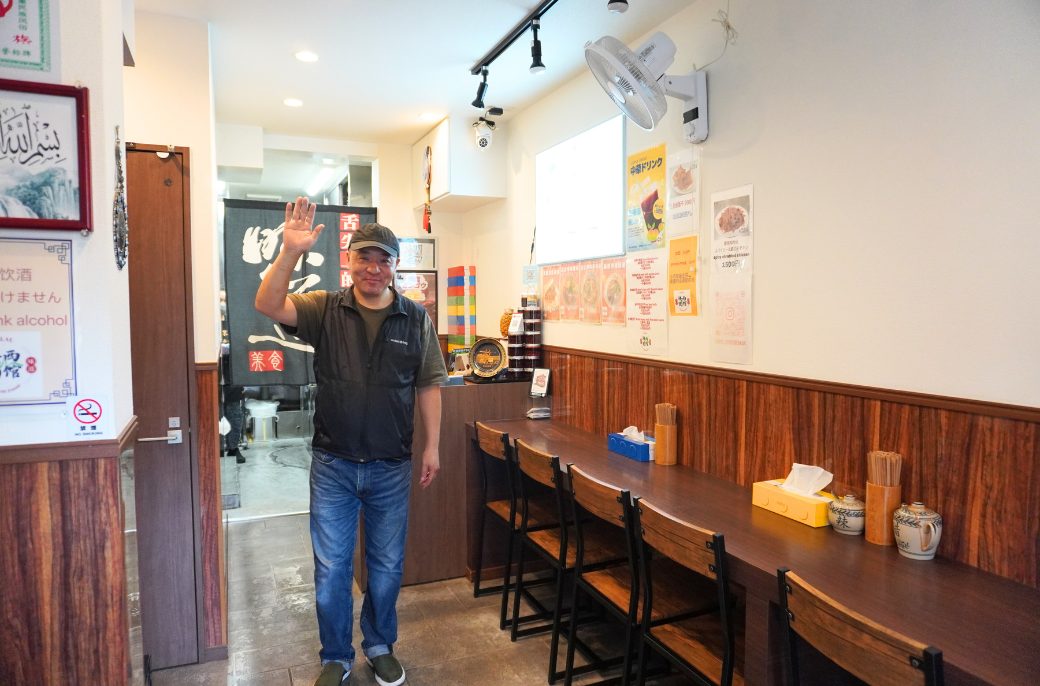
Left: The owner and the interior of the restaurant. There are 11 seats, all at the counter.
Photo on the right: A list of menus hanging on the wall
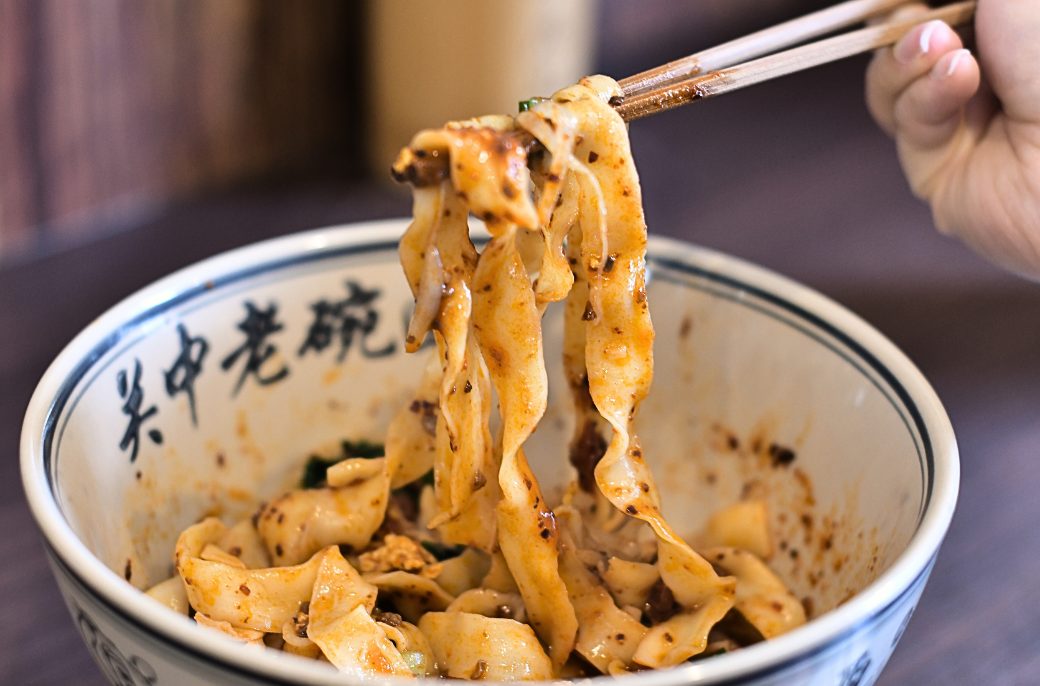
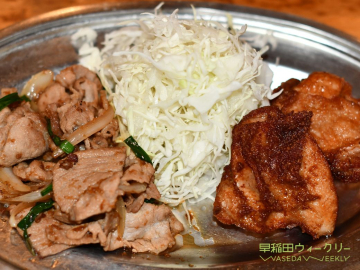
We ordered the restaurant's most popular dish, "Shaanxi Specialty Three-Heavy Biang Biang Noodles," and "Oil-Drizzled Noodles." The Shaanxi Specialty Three-Heavy Biang Biang Noodles" are wide noodles similar to kishimen noodles, and are topped with meat miso, braised beef, and stir-fried tomatoes and eggs. They're packed with ingredients, and you won't get bored of them until the very end. Mixing them well combines the sourness of the tomatoes with the eggs, creating a mellow flavor! The noodles are chewy, and one bowl is enough to fill you up.
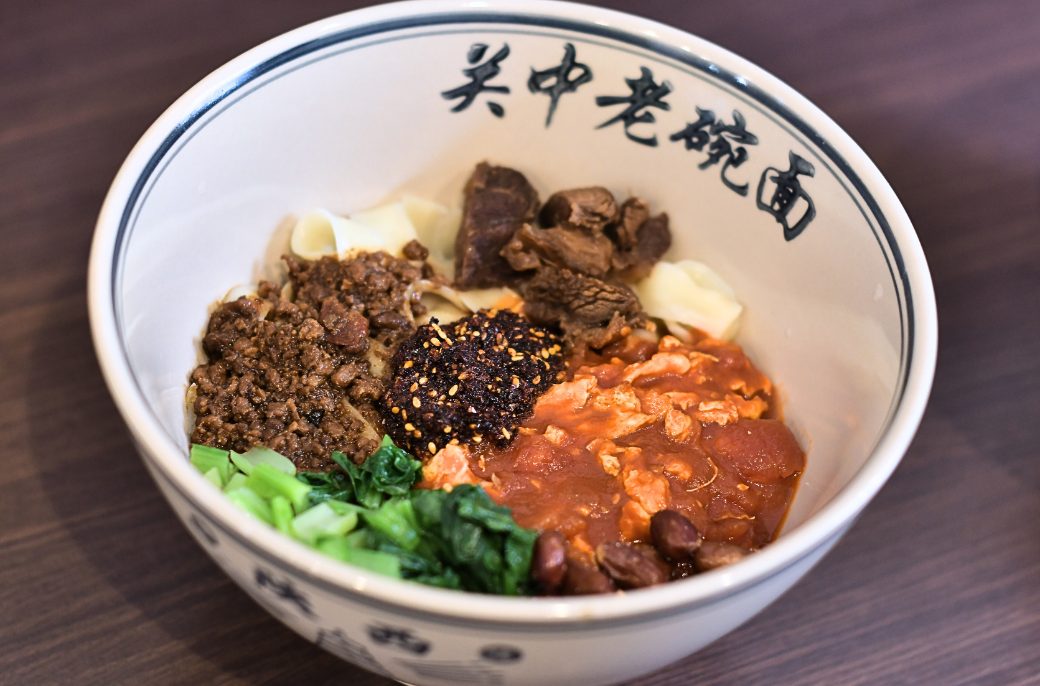
Left: "Shaanxi Specialty Three-Heavy Biang Biang Noodles" 1,280 yen
Photo on the right: Biang Biang noodles coated in sauce. The chewy noodles are perfectly coated with the miso meat!
"Oil-Drizzled Noodles" are flat, chewy handmade noodles topped with tender braised beef cubes and drizzled with fragrant chili oil. The strong vinegar flavor is accented nicely by the crispness of the green vegetables. The chef's recommended level 2 spiciness was only slightly spicy, so even those who don't like spicy food can enjoy it. It has a refreshing taste different from the Biang Biang noodles, and is also excellent!
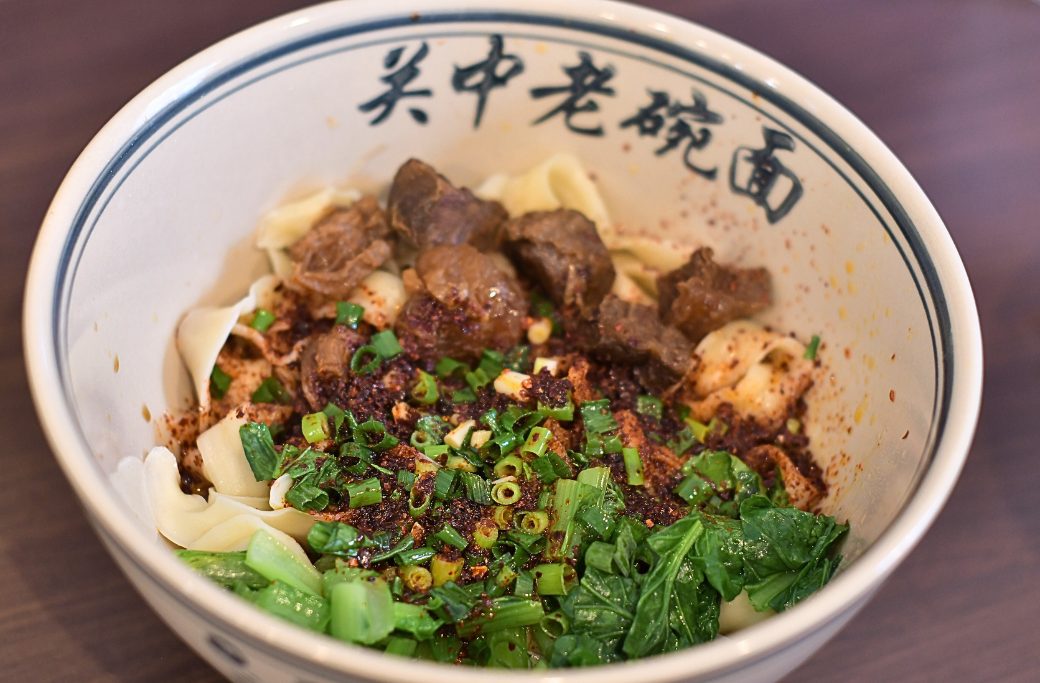
" Oil-Drizzled Noodles" 1,180 yen
The food is served quickly, so it's also recommended for eating before your afternoon classes. Why not try visiting during lunchtime?
Nishimura:
The owner is very friendly and kind! Before eating, he tells you to mix it well to make it taste better, and while you're eating, he adds peanuts as a topping for free to change up the flavor. He is full of consideration for his customers to make sure they enjoy their meal.
Store Information
【Store Name】Senseimenkan
【Address】3-12-7 Takadanobaba, Shinjuku Ward, Tokyo
【TEL】04-2947-5004
【Opening Hours】11:30~15:00、17:00~21:00
【Closed 】Tuesdays
If you want to eat Hunan food in Takadanobaba, this is the place to go! "Shanyu TOKYO"
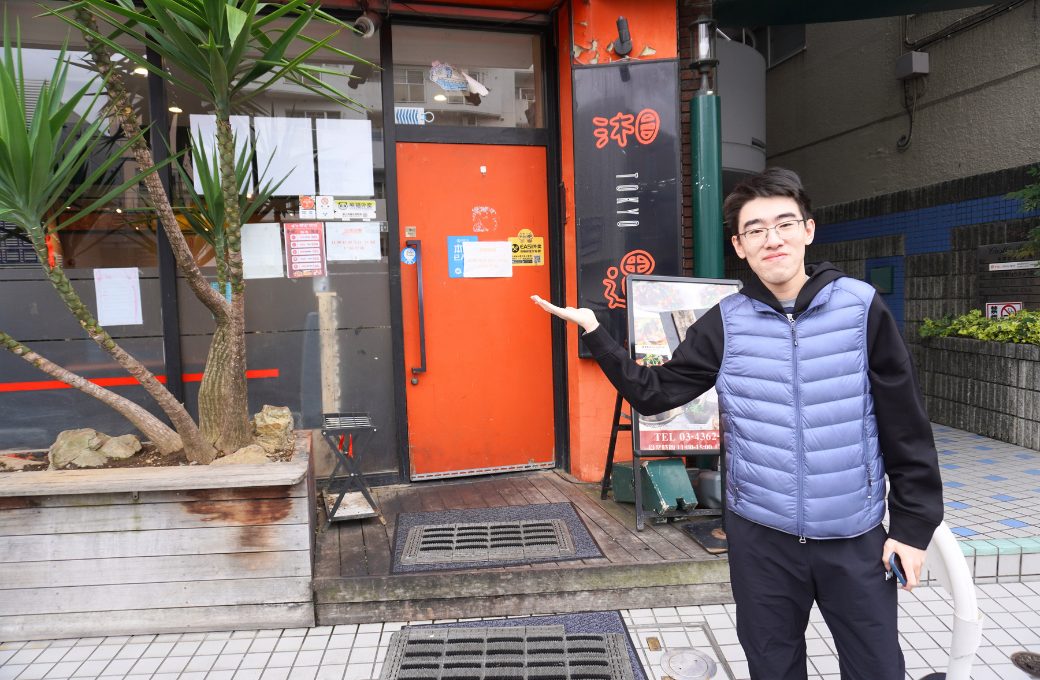
The store entrance
Shanyu Tokyo is located along the Kanda River, about a six-minute walk from JR Takadanobaba Station in the direction of Waseda Campus. The restaurant serves dishes from the Hunan region, said to be the spiciest in China, and has also been praised by Chinese students for its authenticity. Hunan Province is located in a subtropical region, and the high humidity can cause body heat to build up and blood circulation to stagnate, so people began to eat spicy food that promotes sweating as a way to combat this.
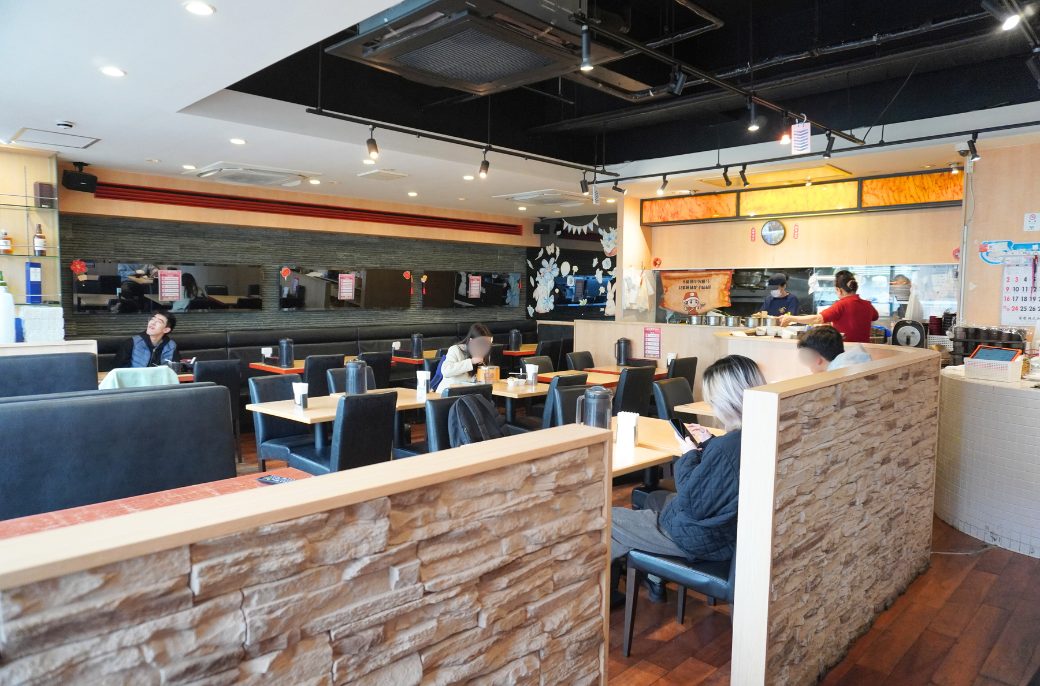
Left: Inside the store. Light pours in through the large windows, creating a bright and open atmosphere.
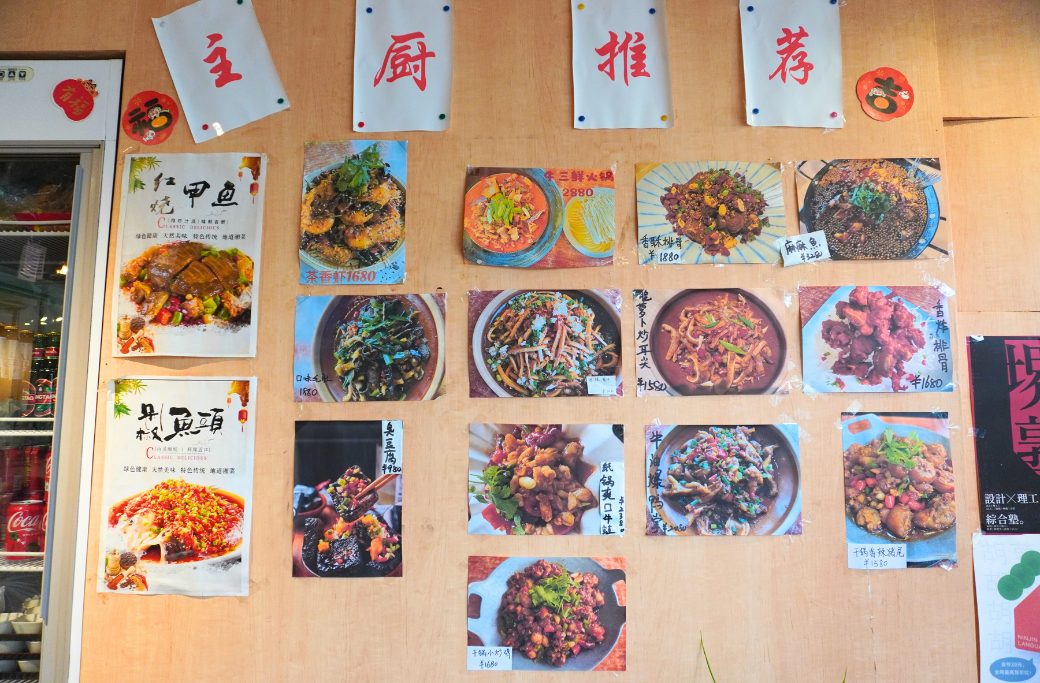
Photo on the right: Photos of the manager's recommended dishes are displayed on the wall. Lunch starts at 880 yen.
To order, scan the QR code at your seat and send it from your smartphone. It is available in Japanese and you can also see photos of the dishes, so even first-timers can feel at ease. You can also choose from four levels of spiciness: none, slightly spicy, normal, and very spicy, so even those who don't like spicy food can enjoy authentic Hunan cuisine.
The first dish we tried was the restaurant's most popular dish, "Hunan-style stir-fried beef." It's a dish made by stir-frying thinly sliced green peppers and beef with chili peppers and has a refreshing spiciness with a hint of sweetness. It's so delicious that you won't be able to stop eating rice!
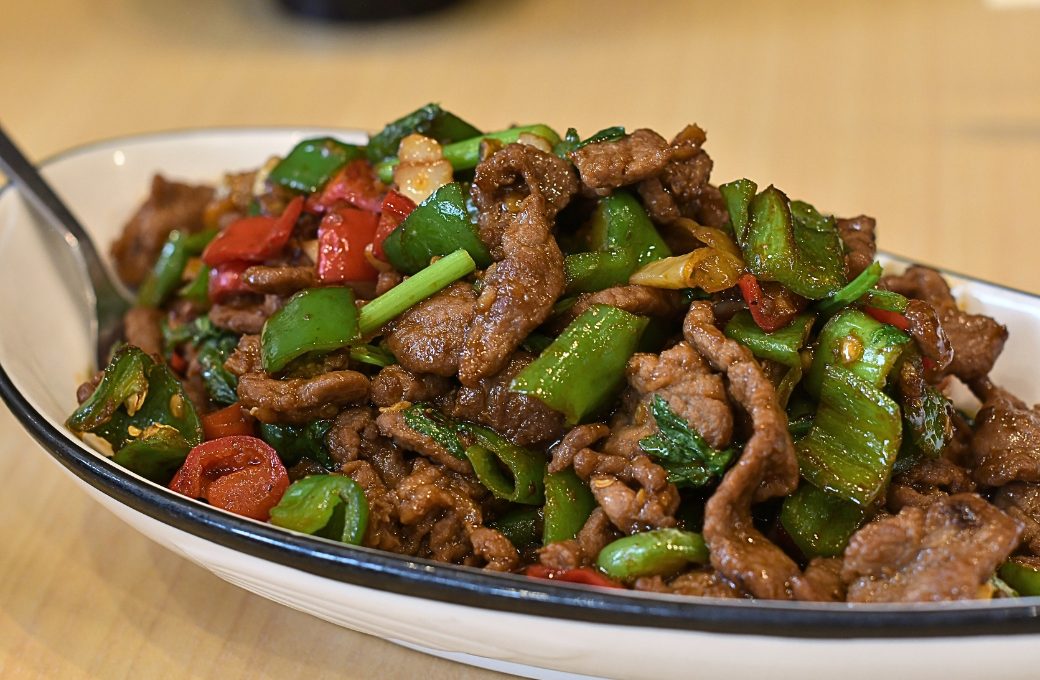
"Hunan-style stir-fried beef" 2,068 yen
Next up was the specialty, "Hunan-style steamed whole fish head." Served in a pot about 30cm in diameter, it was topped with a fish head and an incredible amount of spices, making for a very impressive dish. The fish used is a freshwater fish called silver carp, a relative of the carp, and one of China's four great edible fish (four species of fish that have been popular in China since ancient times). Apparently, people living in inland China have little access to sea fish, so the custom of eating river fish has taken root.
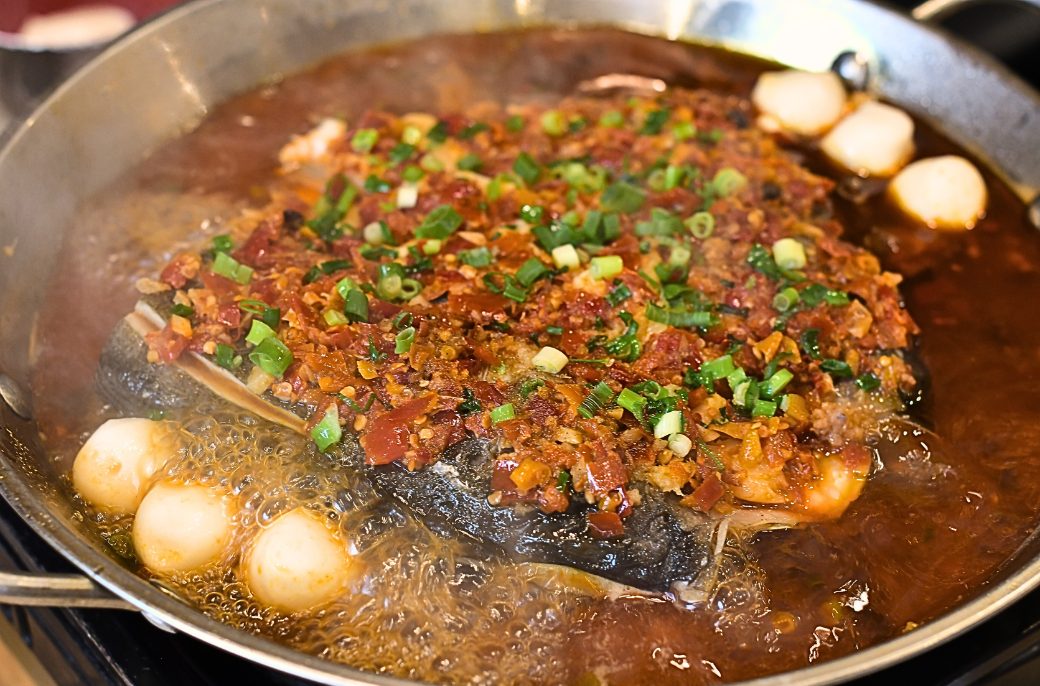
"Whole fish head steamed in Hunan style" 3,278 yen
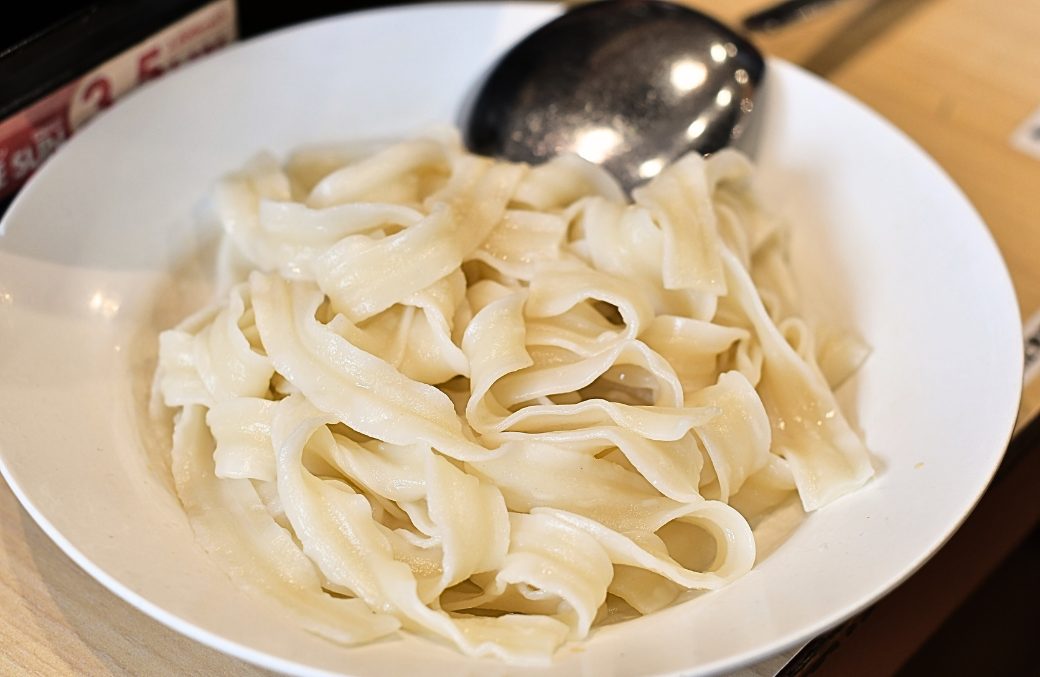
But the most striking thing is the red color. I was nervous it might be too spicy, but when I took a bite, I was surprised by how strong the flavor was! In addition to several types of chili peppers, the flavor of the large amount of garlic and ginger also stands out, so it doesn't feel as spicy as it looks. There is no fishy smell at all from the freshwater fish, and the soup clings to the fluffy white meat, creating a truly exquisite taste. This hot pot also comes with noodles to finish off the meal, and the soup, full of the flavor of fish stock and spices, clings to the wide noodles perfectly, making it irresistible.
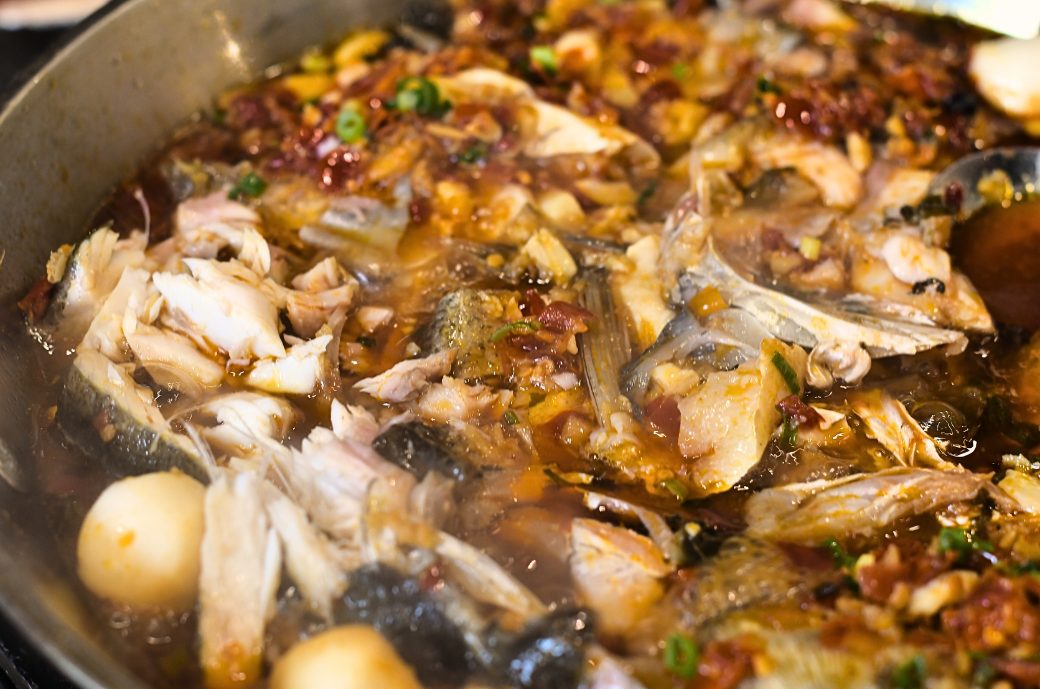
Left photo: The fish has been torn apart. It is characterized by larger bones than sea fish.
Photo on the right: Noodles included in the set. They are served boiled so you can eat them right away.
On this day, we also received a complimentary "cucumber and jellyfish salad" along with the rice, soup, boiled egg, pickled mustard greens, and almond tofu that come with the set meal. The "cucumber and jellyfish salad" is very refreshing, especially when eaten after a spicy dish. It's not too spicy, so it makes a perfect side dish.
The boiled eggs that come with the set are simmered in their shells for a long time in soy sauce and tea leaves, giving off a subtle tea aroma. Tea leaves are often used in cooking in China, and in addition to boiled eggs, they are also used in stir-fries with meat or in soups.
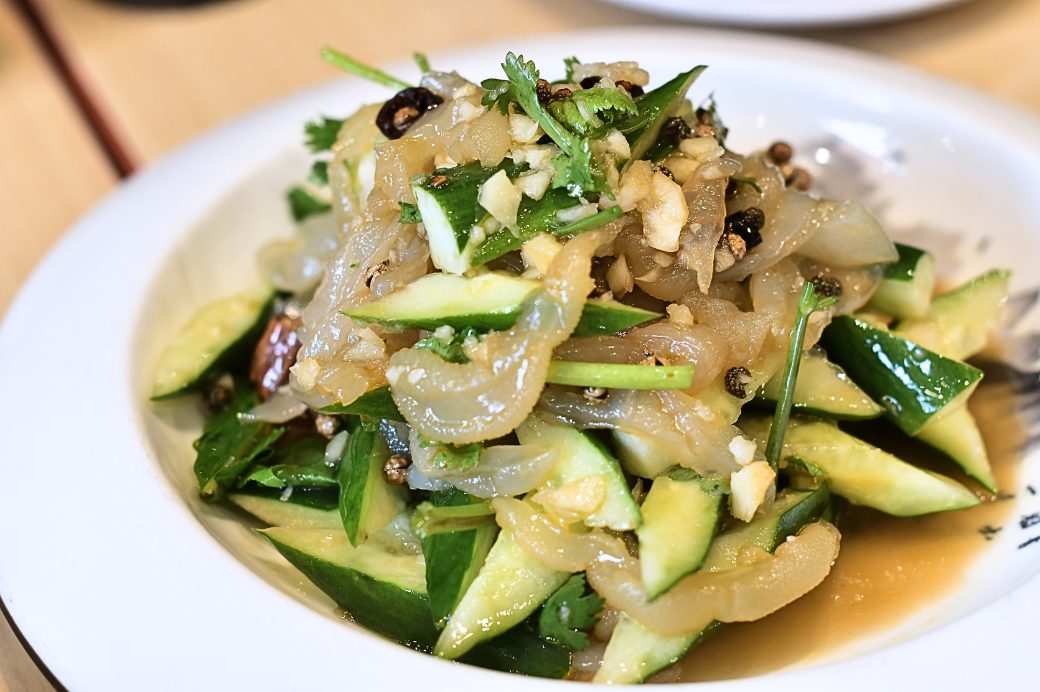
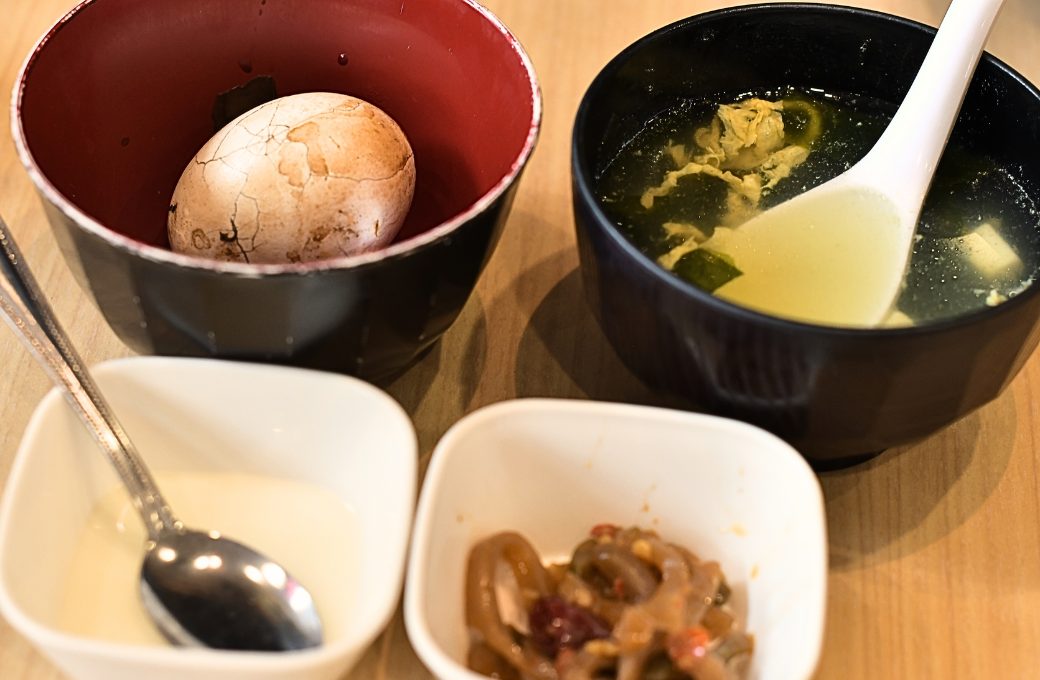
Left photo: "Cucumber and jellyfish salad"
Photo on the right: Boiled egg, soup, pickled mustard greens, and almond tofu that come with the set meal
Son:
This restaurant specializes in authentic Hunan food (Xiang cuisine) and is highly recommended. If you don't mind fish bones, I recommend the chili fish head, but I recommend ordering it with no or a mild spiciness. Their coconut juice and peach-flavored tea are also delicious drinks.
Store Information
【Store Name】Shanyu TOKYO
【Address】Castle Anzai 1F 3-10-22 Takada, Toshima-ku, Tokyo
【TEL】03-4362-6555
【Opening Hours】11:00~15:00、17:00~23:00
【Closed】 No set closed dates
"Shiwei" - A buffet lunch that students will love
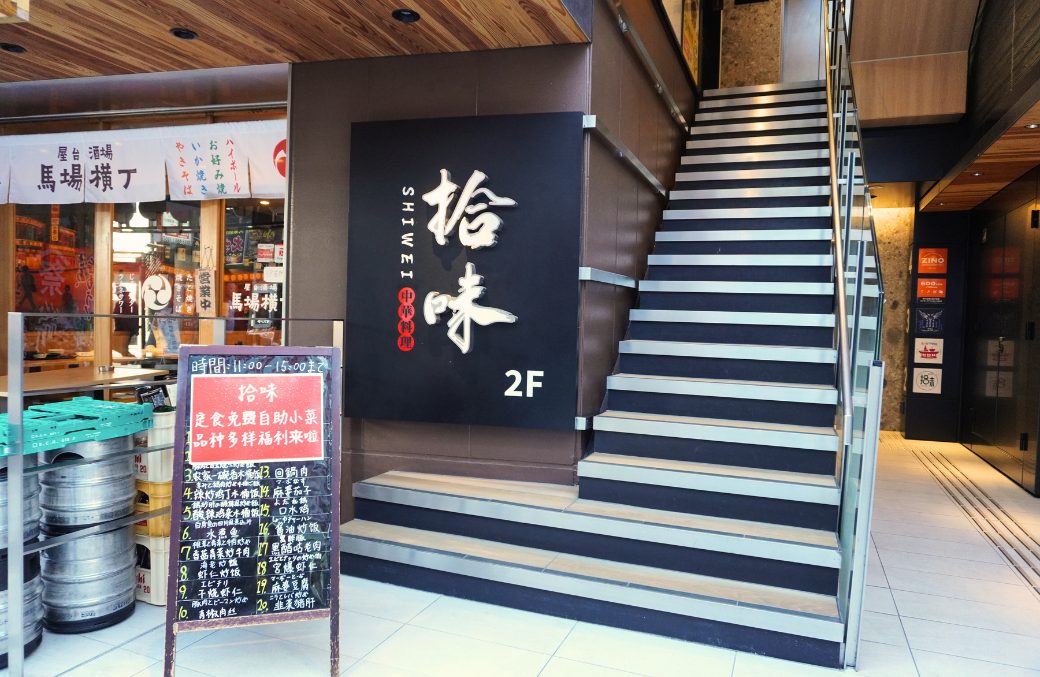
I heard from the staff at "Shanyu TOKYO" that there was an all-you-can-eat buffet restaurant in the same chain, so I decided to take the chance and check it out. It was called "Shiwei." It's about a one-minute walk from JR Takadanobaba Station and is located on the second floor of a building just after you turn off Sakae-dori Street.
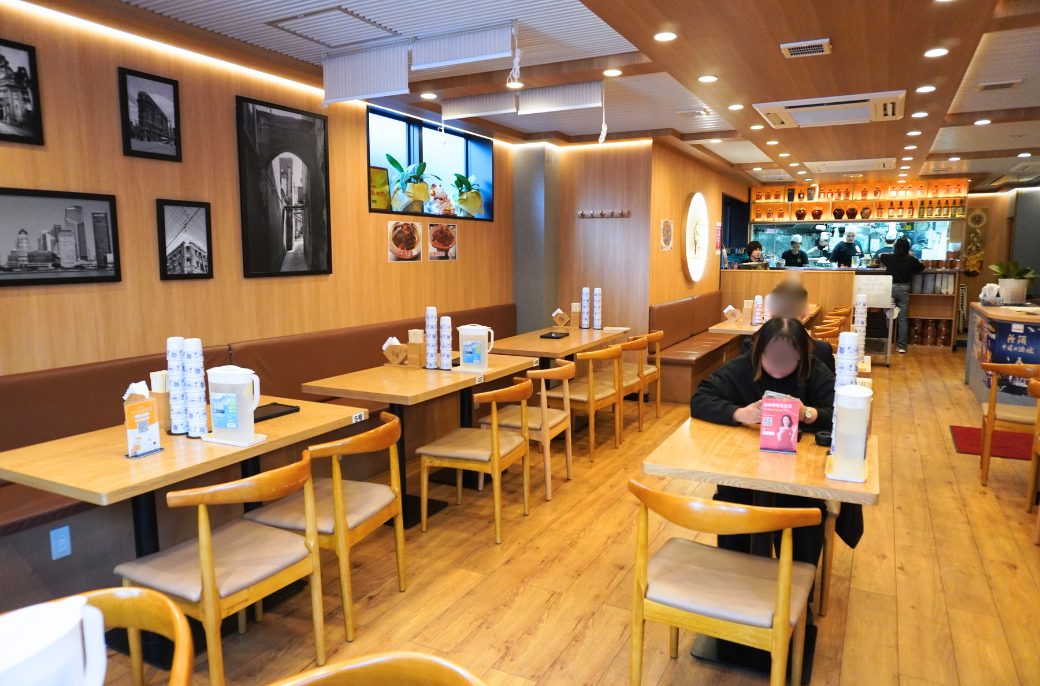
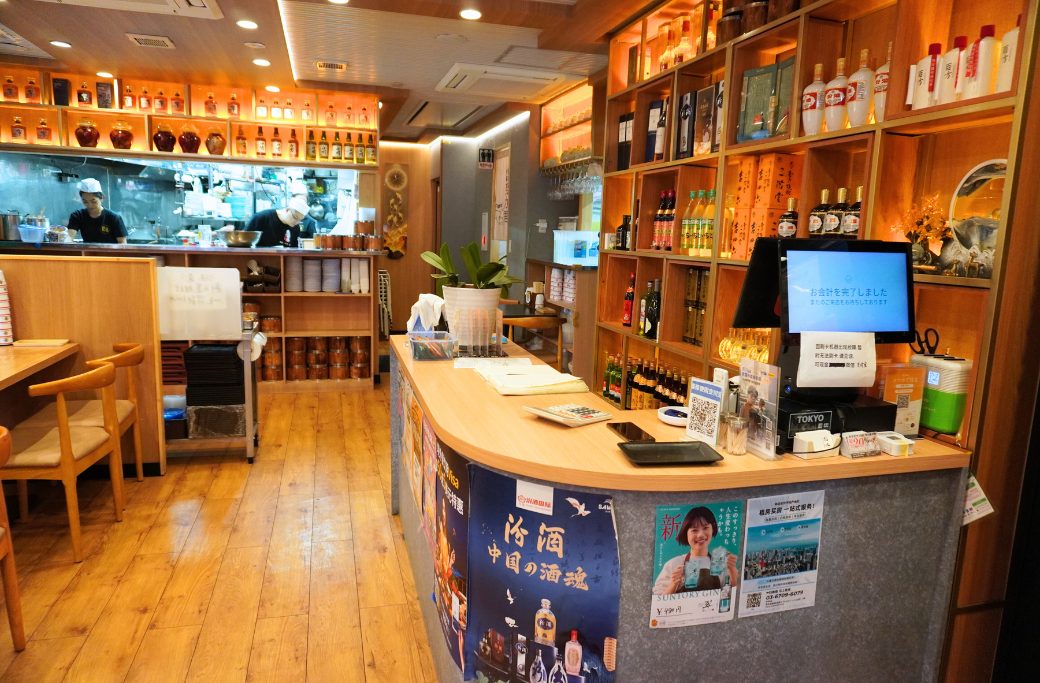
Inside the restaurant. There are about 40 seats in total, so it seems like it could be used for parties and other events.
The restaurant, which opened in January 2024, is bright and clean. It is extremely popular with international students and customers from China, as well as local working adults and Japanese students, and is often full at lunchtime. The menu is available on a tablet on the table, or you can order from your smartphone by scanning a QR code, and Japanese is also available.
The restaurant's recommendation is the all-you-can-eat buffet that comes with any order of the regular menu at lunchtime! On the menu on this day, there was a salad of pig's ears and green onions, fried noodles, pickled mustard greens, kimchi, fried bread, boiled eggs, soup, and rice. The main dish changes daily, and sometimes fried chicken or dim sum is served. Of course, the food is delicious, and not too spicy, so you can eat until you're full.
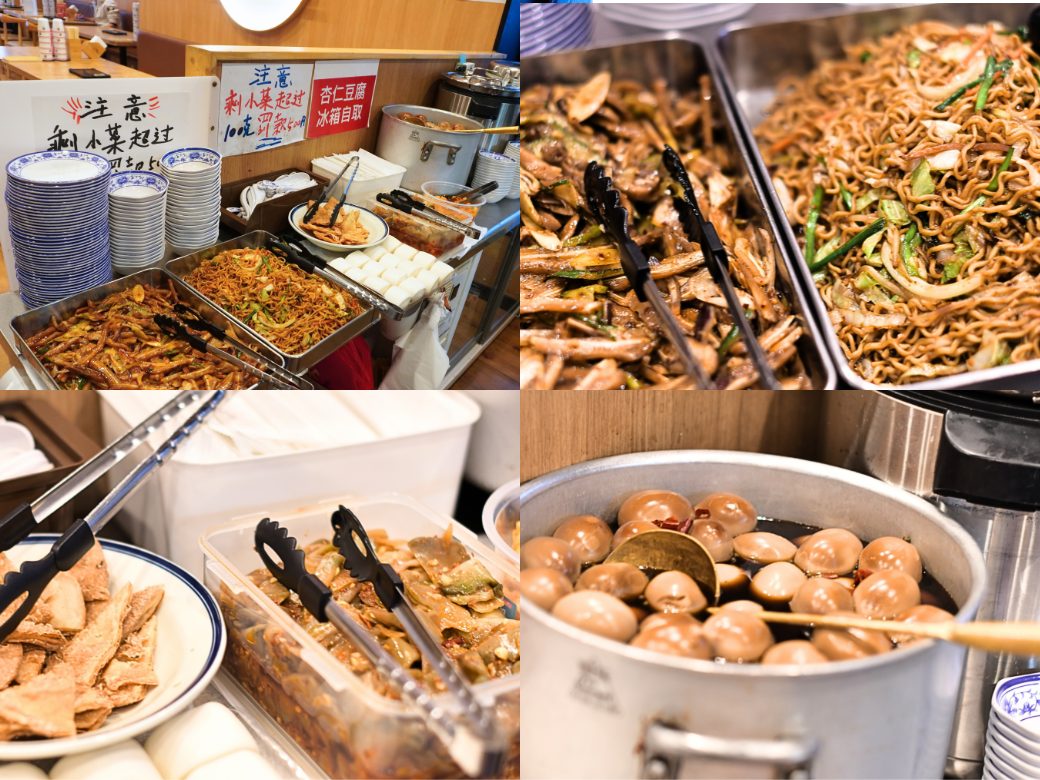
(Clockwise from top left) The buffet area, pork ear and leek salad, fried noodles, boiled eggs, pickled mustard greens, and fried bread
From the regular menu, I ordered the restaurant's popular "Fried pork and fried egg on wooden tub rice." It's a crispy fried egg served underneath a stir-fried pork and chili peppers. The meat, seasoned sweet and spicy with soy sauce and garlic, pairs perfectly with the fried egg and rice! As with "Shanyu TOKYO," you can choose from several levels of spiciness, adjusting it to suit your preferences that day and the buffet menu.
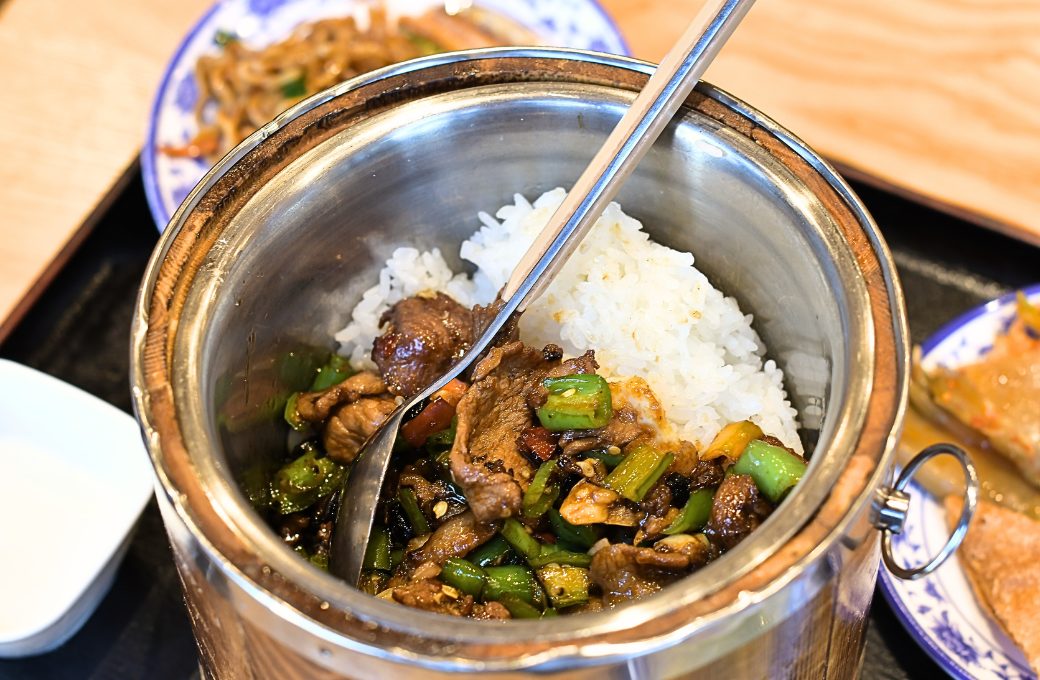
"Fried pork and fried egg on wooden tub rice" 980 yen
I also ordered the popular dim sum menu item, the "Golden Fried Bun." The delicate dough is slightly sweet, crispy on the outside, and soft and warm on the inside. The sweetness is enhanced when dipped in the condensed milk that comes with it and eating it after a spicy side dish creates an endless loop. I thought six pieces was a lot, but I ended up eating it all. If you can't finish it all, you can take it out.
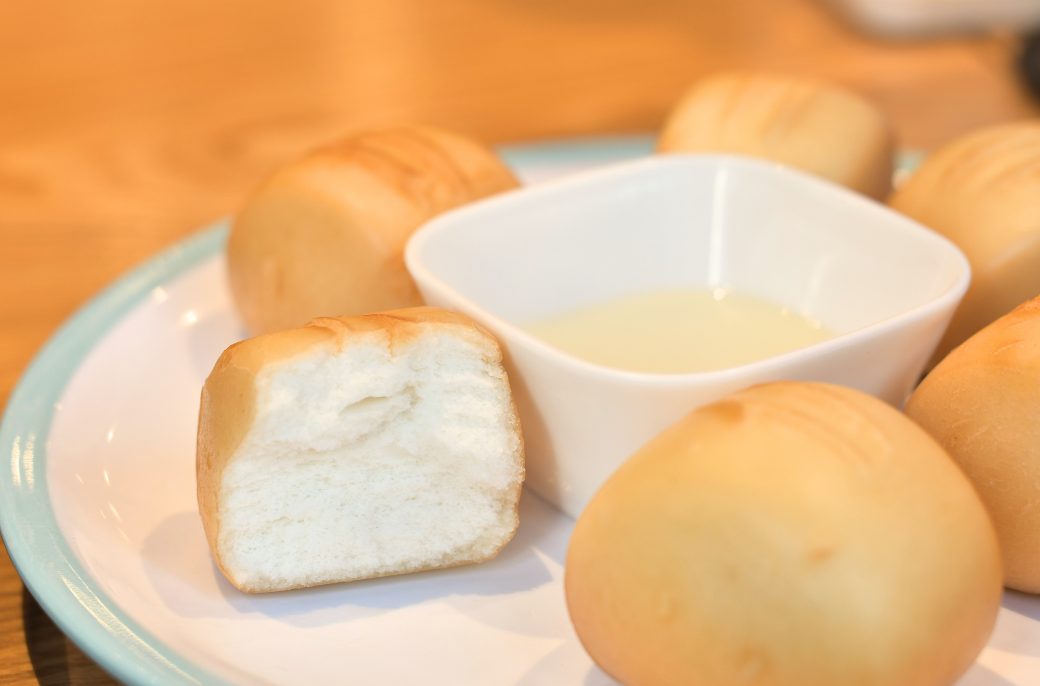
"Golden Fried Bun" 480 yen
This is a recommended restaurant when you want to eat your fill. They are open during dinner time, so why not stop by on your way home from student club or club activities?
Store Information
【Store Name】SHIWEI
【Address】RESTA takadanobaba 2F 3-2-15 Takadanobaba, Shinjuku-ku, Tokyo
【TEL】03-6690-7978
【Opening Hours】11:00~15:00、16:30~22:30
【Closed 】No set closed days
Highly recommended by a Waseda University student from China: "Longyuan Jincheng's Lanzhou Clear Soup Beef Noodles"
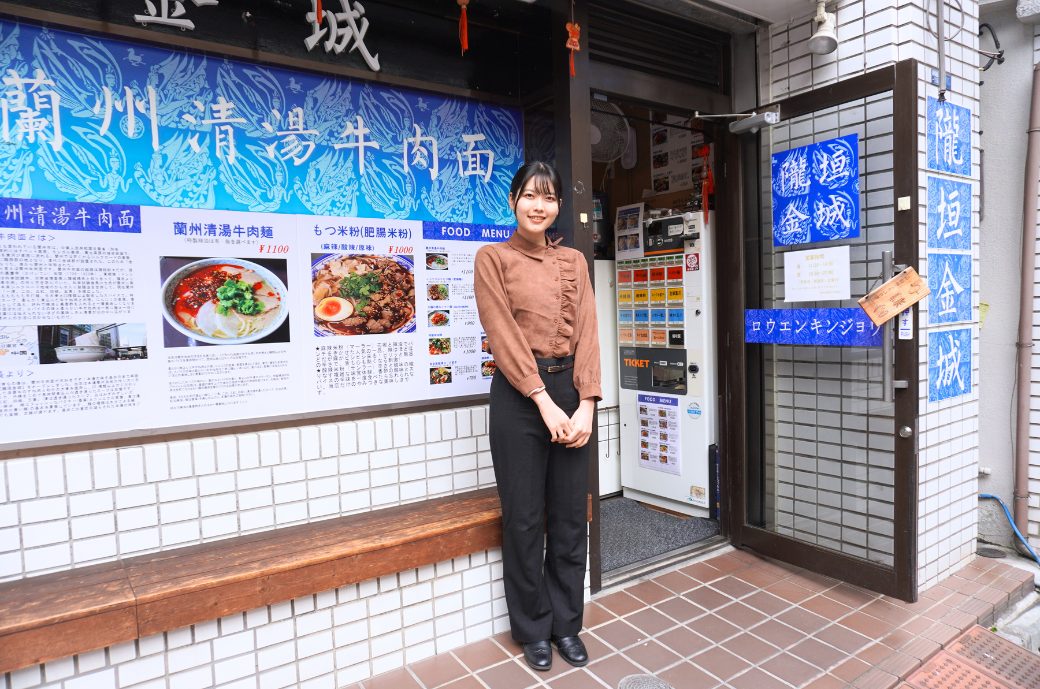
The store entrance
Longyuan Jincheng Lanzhou Qingtang Beef Noodles is located along Okuma Street, a three-minute walk from Waseda Campus. When we asked several Waseda students from China for their recommendations, they all enthusiastically recommended this restaurant!
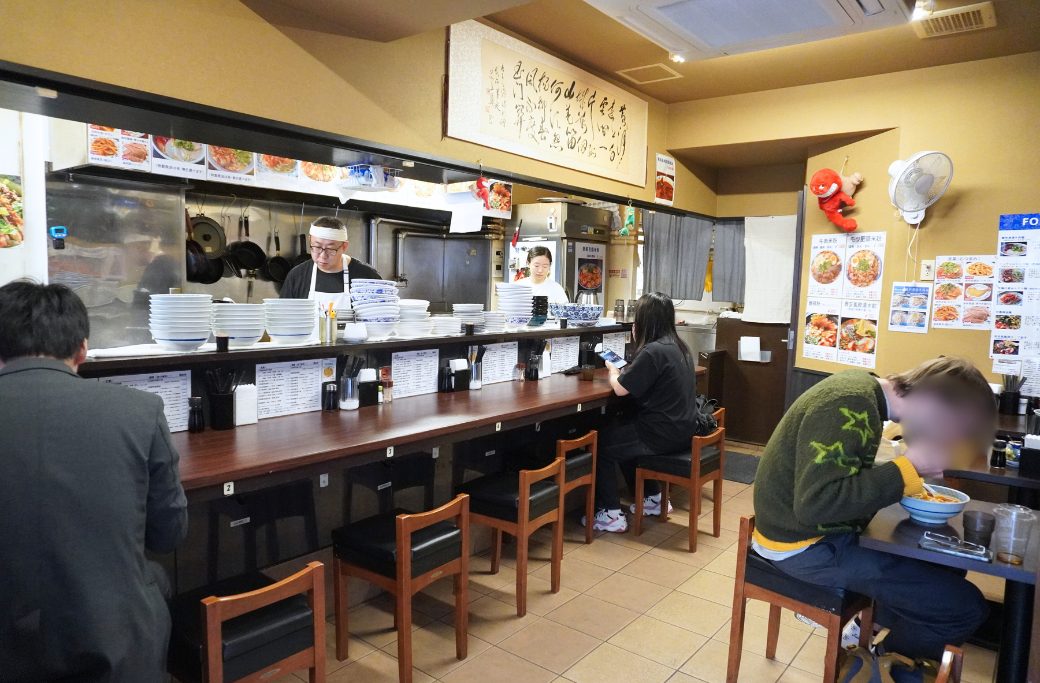
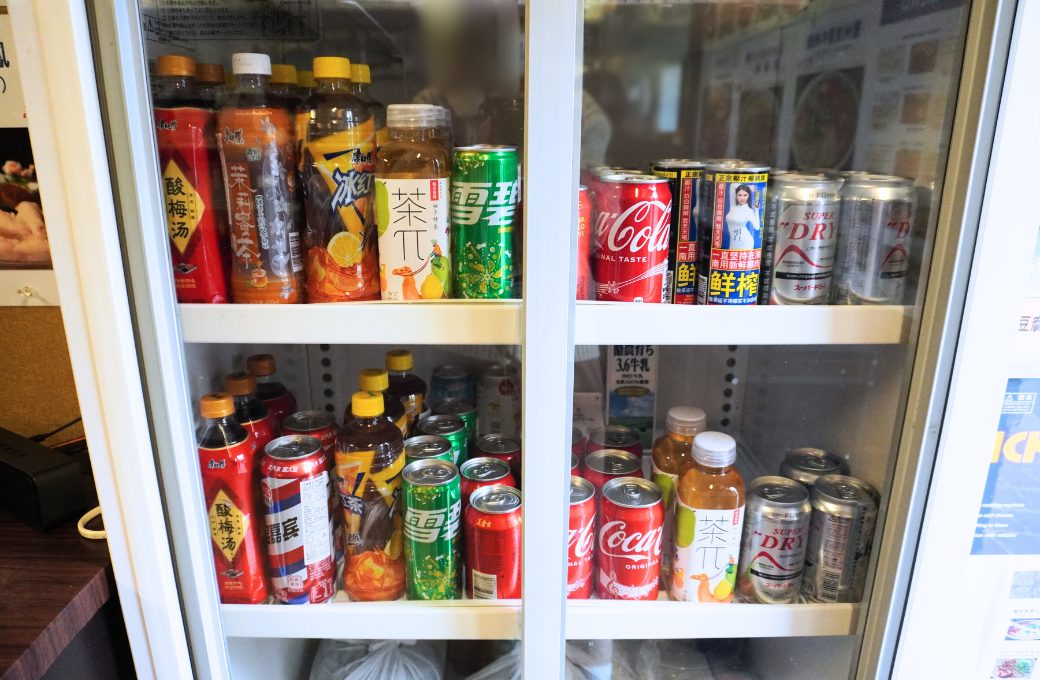
Left: Inside the restaurant. There are 14 seats in total.
Photo on the right: A wide selection of drinks popular in China
The moment you step inside the shop, the aroma of spices fills the air. You can watch the owner hand-make the noodles over the counter, giving you the feeling of being at a local food stall. The shop is frequented by a diverse clientele, from international students to Japanese students, and is especially busy during lunchtime.
In addition to the main noodle dishes, the side dishes are also recommended, so this time I ordered "Dried Tofu Salad" and "Lanzhou Ramen." You can choose from four types of noodles: thin, medium-thin, flat, and thick. You can also choose whether or not to add toppings such as chili oil and coriander, so you can adjust the flavor to your liking.
The "dried tofu salad" has a chewy texture and feels like eating noodles. It is filled with wood ear mushrooms and vegetables, making it very satisfying to eat. The combination of black vinegar and homemade dressing makes it refreshing to eat like a salad.
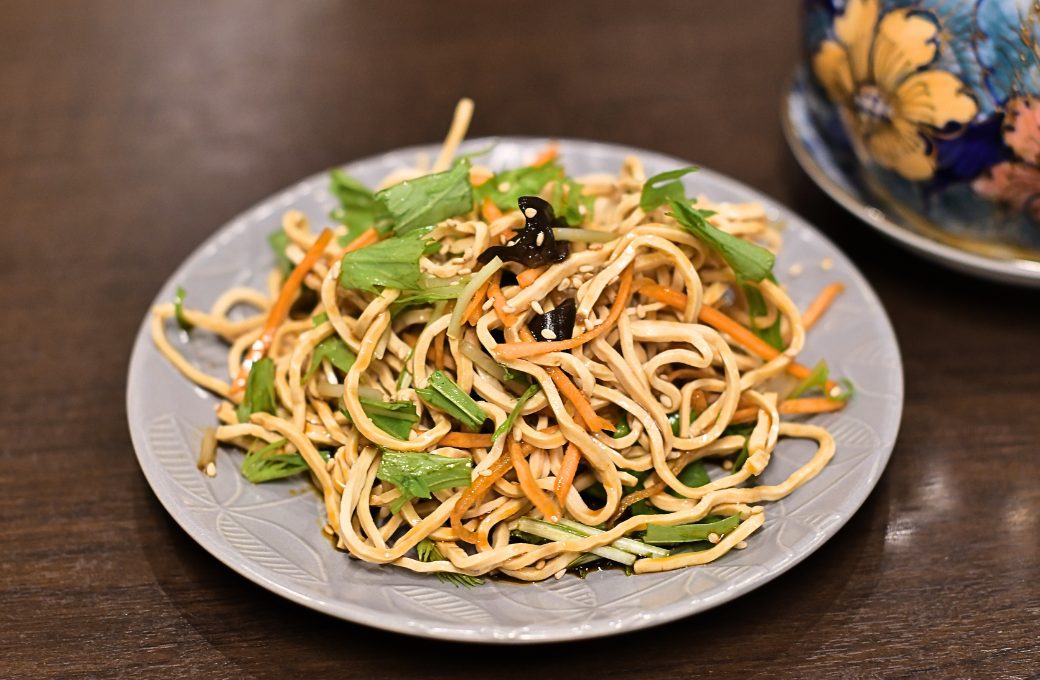
Left: "Dried tofu salad" 350 yen
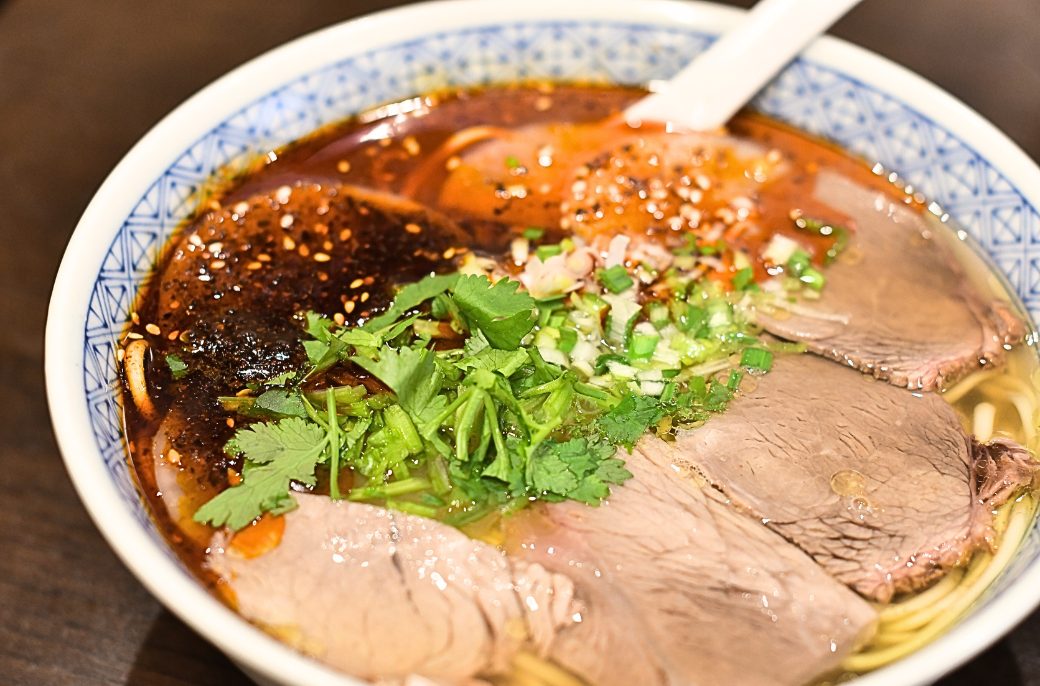
Photo on the right: "Lanzhou Ramen" 1,100 yen. I ordered the most popular medium-sized noodle.
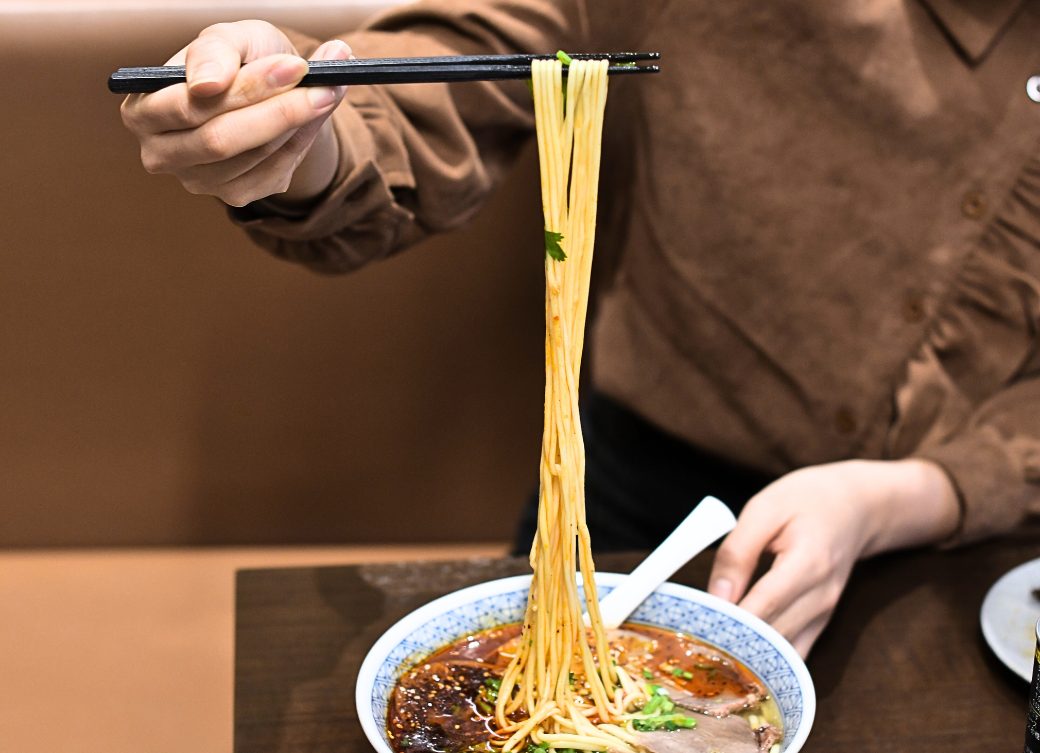
Lanzhou Ramen looks a little red and intimidating, but when you eat it, it's not that spicy. The more you eat, the more your appetite increases, and you'll find yourself reaching for more noodles.
The shop's pride and joy are their noodles, which are very long and chewy, with a chewy texture that melts away in your mouth. Topped with daikon radish, which is flavorful like oden, and thin, soft, yet meaty beef, it's very satisfying. The soup, made by simmering beef bone, beef, and chicken stock with many medicinal herbs, is full of flavor. Just the right amount of spices makes it refreshing, and you'll find yourself gulping it down. It's very close to Waseda Campus, so why not stop by for a quick exotic experience when you have some free time?
What impressed me was that you could customize it to your liking. When you order, they will ask you if you want coriander or not and how spicy you want it, so even those who don't like spicy food can enjoy it. I recommend ordering it with a mild spiciness and then adding more spiciness later with the chili oil on the table!
Store Information
【Store Name】ngyuan Jincheng's
Lanzhou Clear Soup Beef Noodles
【Address】3-12-7 Takadanobaba, Shinjuku Ward, Tokyo
【TEL】03-6233-8278
【Opening Hours 】11:00~14:30、16:30~21:30
**Lanzhou ramen will end once the soup runs out.
【Closed】Saturdays
The famous Beijing meat pie shop opens its first store in Japan, "Beijing Pie"
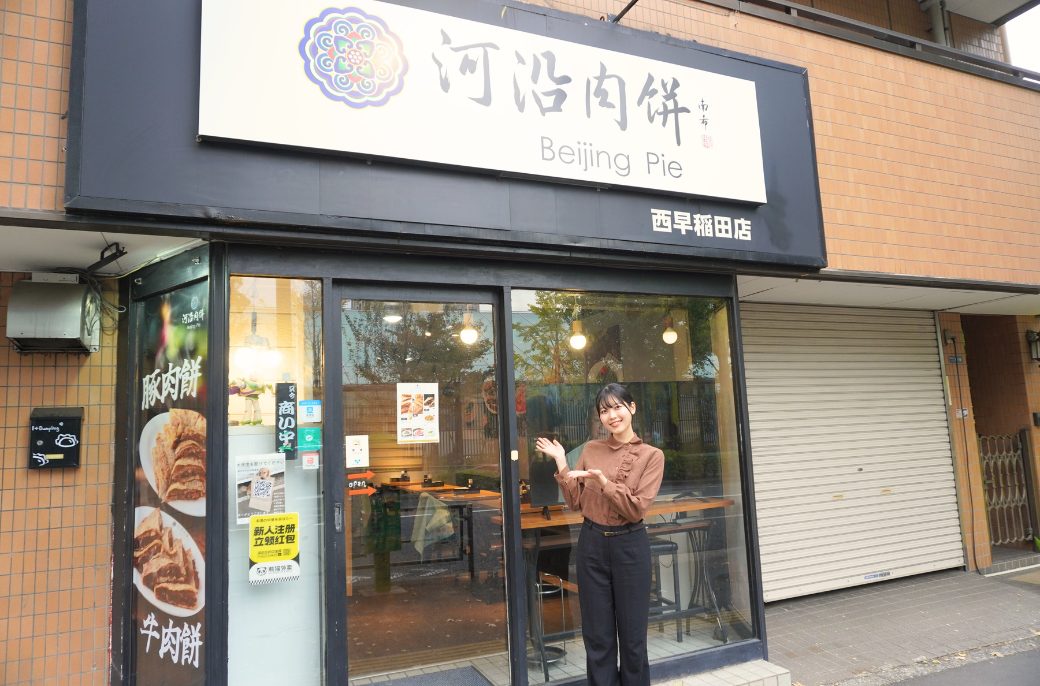
The store entrance
Beijing Pie just opened in October 2025. It's located right next to Saizeriya, near to Toyama Campus. The restaurant has eight locations in Beijing, and this is its first in Japan. Owner Zhang was originally the owner of a Japanese-Chinese translation company, and came to Japan eight years ago. While working in Japan, he wanted a more casual Chinese restaurant, so he decided to open a branch of Beijing Pie, which is run by his friend, in Japan.
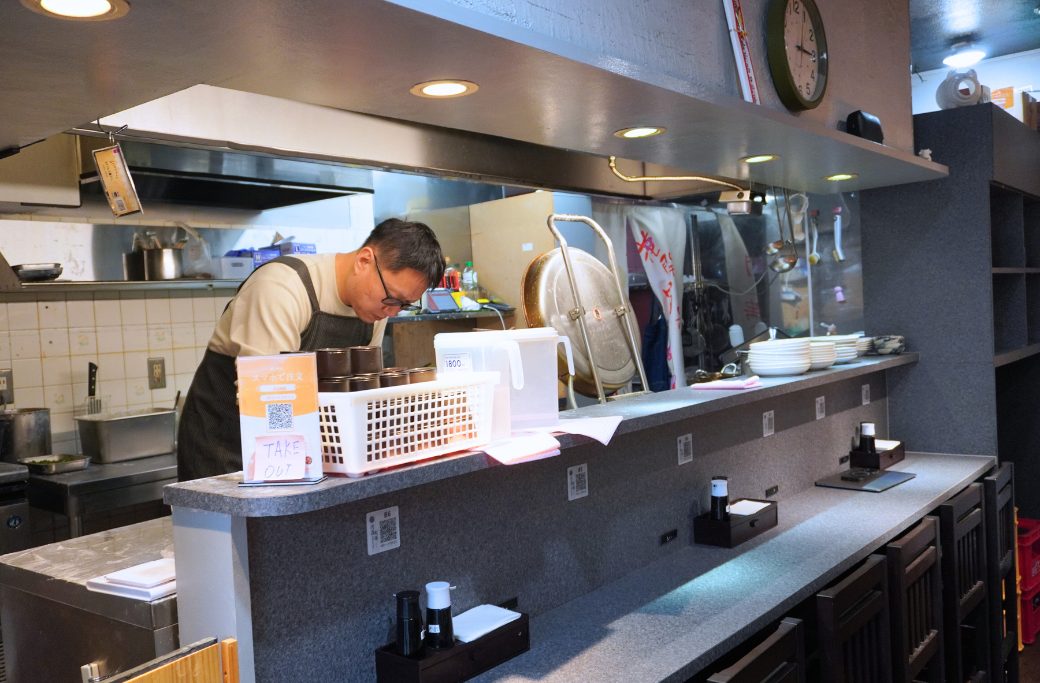
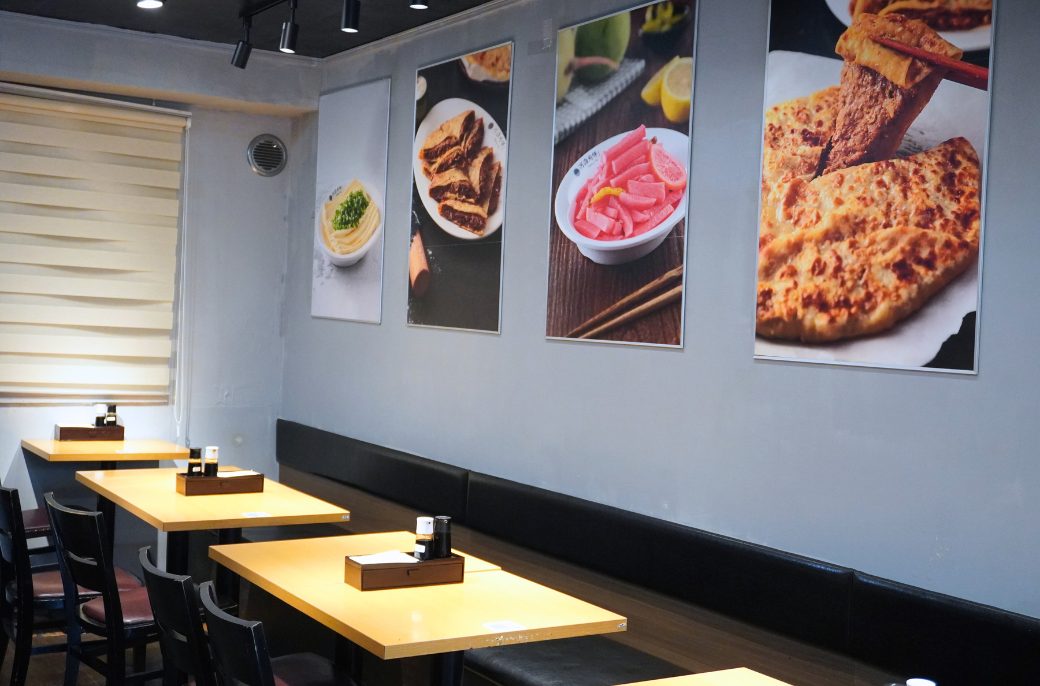
Inside the store. Orders are sent from a smartphone by scanning a QR code.
On this day, Zhang provided us with a special set of their signature dishes, "Beef Mochi" and "Pork Mochi," just for our interview. The skin is crispy and chewy, with a texture similar to a thicker, larger gyoza skin. The filling inside is coarsely ground, and both the beef and pork are mixed with plenty of green onions, kneaded well, and seasoned with soy sauce and sesame oil. Even one bite is highly satisfying. The mochi is flat like a crepe, and the filling is generously filled all the way to the edge, so no matter where you bite, you can enjoy both the skin and the filling.
The beef is rich and the pork is light, so you can enjoy the difference in flavor. It's freshly made, so it's juicy. It's not spicy at all, and one order is enough to fill you up.
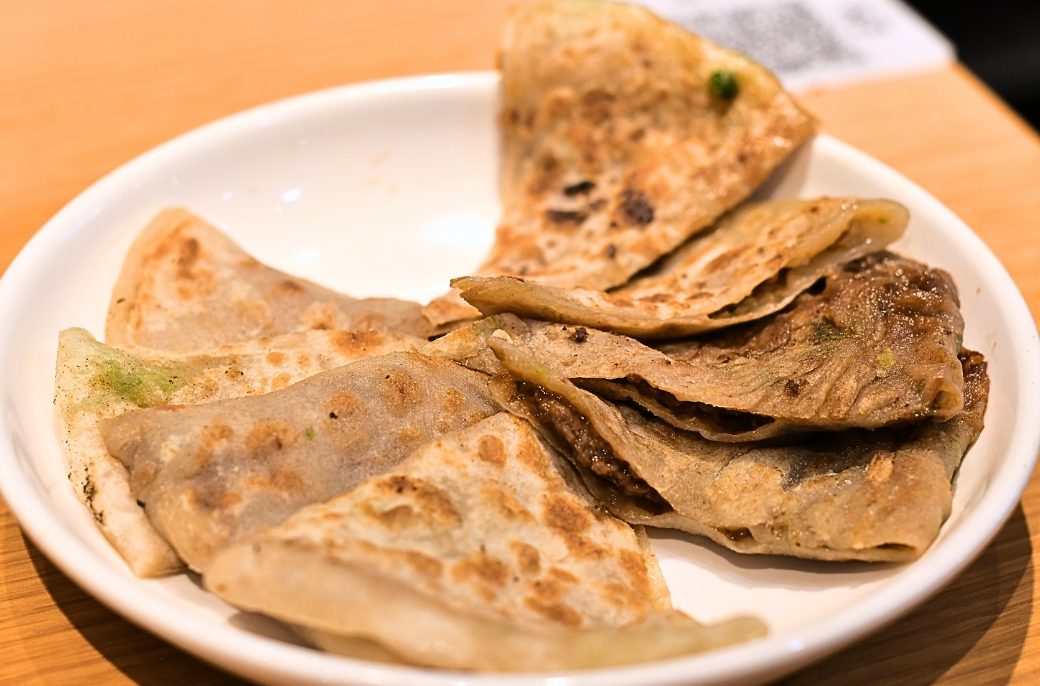
"Beef mochi" (left) and "pork mochi" (right). When ordered separately, beef mochi costs 1,180 yen and pork mochi costs 880 yen.
On this day, I also had the Sesame Black Candy Mochi. It is a thin, crunchy crust wrapped around a peanut butter-like filling made from sesame, black candy, and honey. The crust and bean paste are layered, allowing me to enjoy a variety of textures. Even though I've never tried it before, it has a comforting taste that makes me feel like I've been eating it for ages, and anyone who likes the dagashi kinako stick will love it. It's perfect not only for lunch, but also as a snack when you're tired from studying.
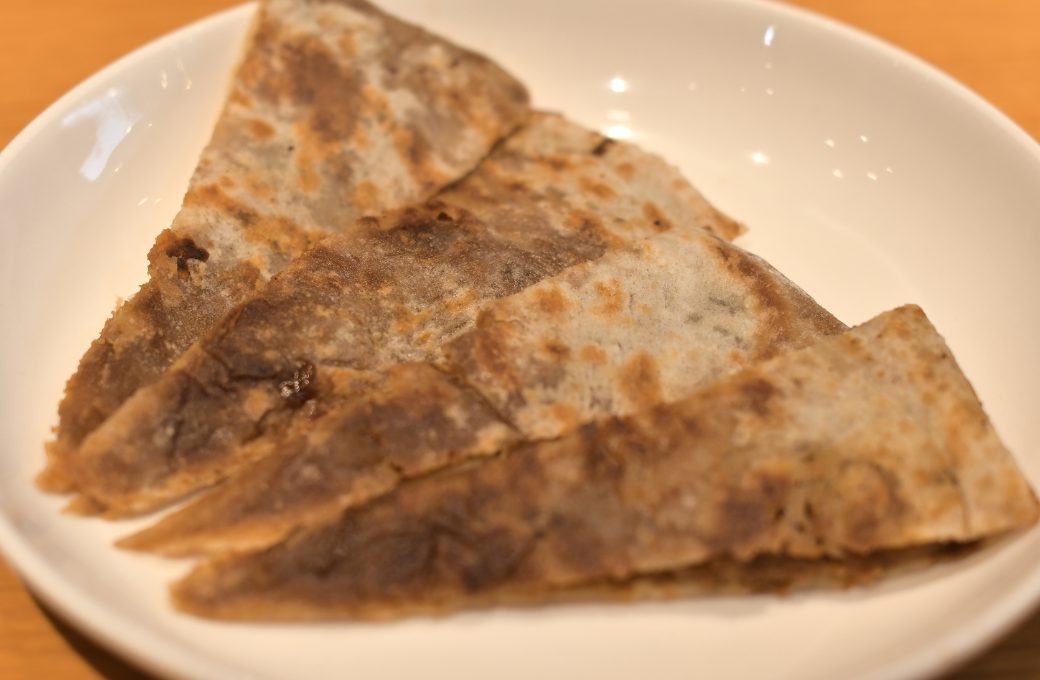
"Sesame Black Candy Mochi" 780 yen
The restaurant just opened recently and is very clean! I recommend it for lunch, a snack, or dinner. They make it after you order, so you can always enjoy freshly made food.
Store Information
【Store Name 】Beijing Pie
【Address】YK Building 1F, 2-1-19 Nishi-Waseda, Shinjuku-ku, Tokyo
【TEL】080-4953-1188
【Opening Hours】11:30~15:00、17:00~21:00
【Closed】Tuesday
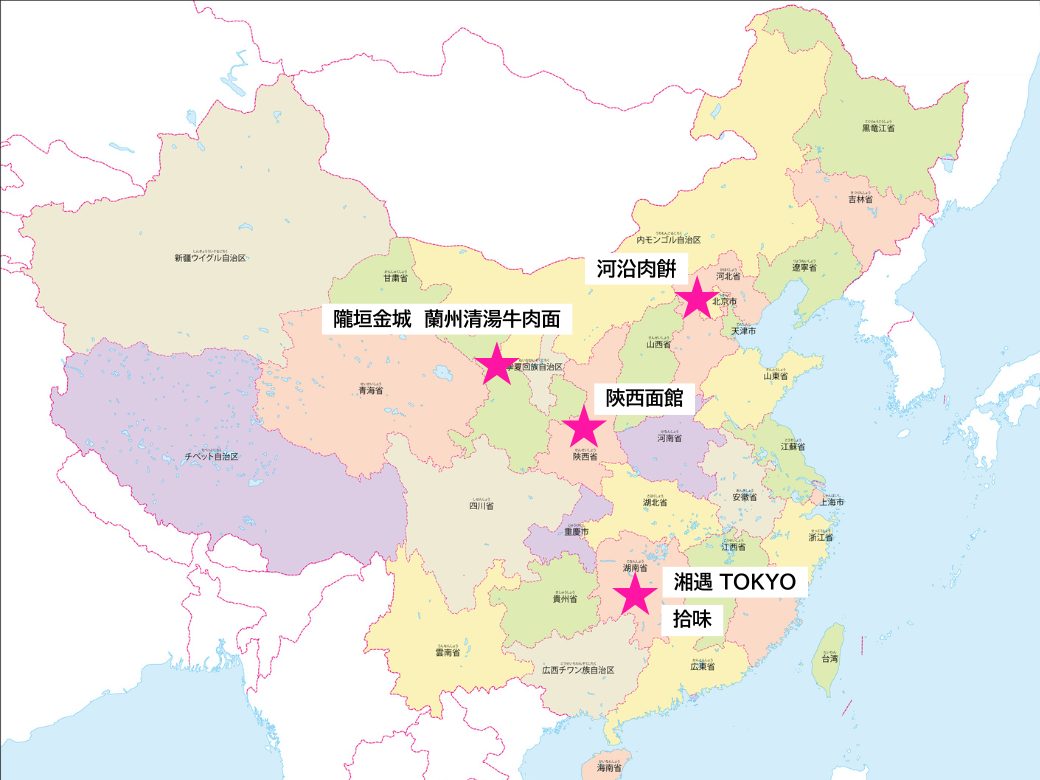
☆Regional map of each store
Although Chinese food is often thought of as one thing, each region has its own unique charm. The restaurants we visited this time serve cuisine from the following regions. When you eat authentic Chinese food, be sure to pay attention to the differences between each region!
[Next Focus Preview] "Honjo Seminar House Special" to be released on Friday, December 5th


![[Save version] Map of the four main campuses](https://www.waseda.jp/inst/weekly/assets/uploads/2026/06/110d605cfac40346aad1d2df464a6586-940x705-1-1-610x457.jpg)