This is the season when new life begins to settle down and opportunities for new encounters and communities increase. We live in an age where we are required to express ourselves in words in all sorts of situations, such as student life, job hunting, and social media, but many people worry that they "can't express what they want to say well" or "have difficulty putting their thoughts into words."
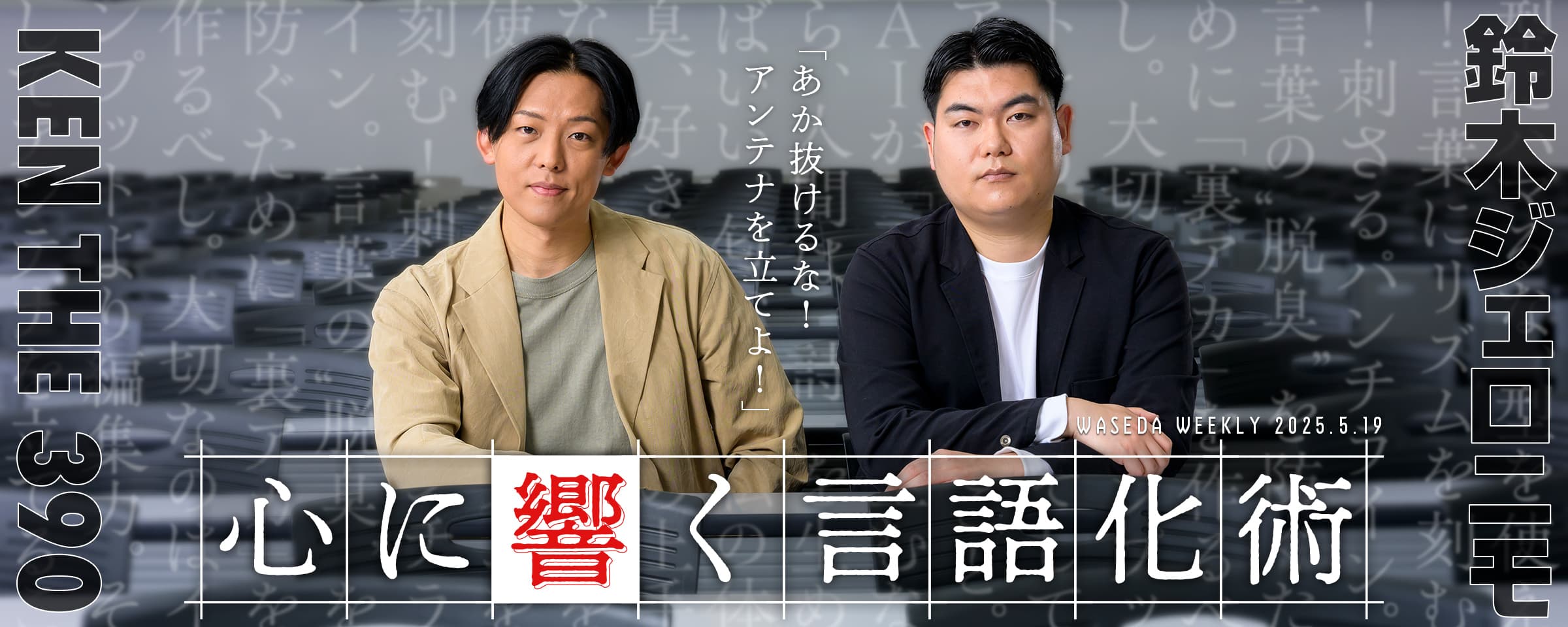
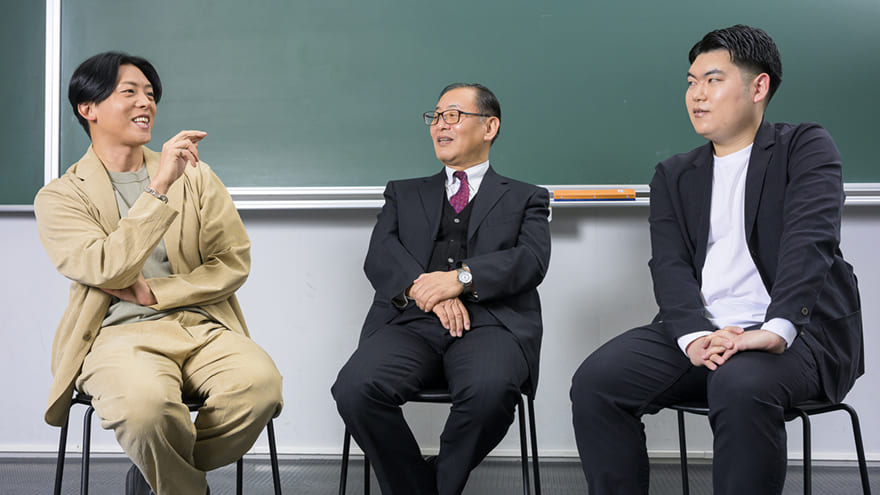
This time, we have three people who continue to confront "words" in different fields. We welcome KEN THE 390, who has honed his vocabulary at the forefront of rap and MC battles, Suzuki Geronimo, a comedian and poet whose "Explanation" series on YouTube has become a hot topic, and Professor Moriyama Takuro(Faculty of Letters, Arts and Sciences), an expert in Japanese language, as commentators, to talk about the "power of putting things into words" and the "art of communication." We will deliver new perspectives and hints to anyone struggling with putting things into words.
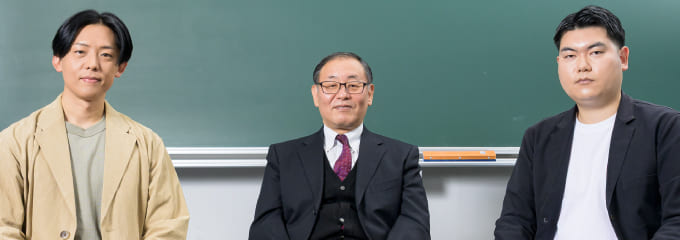
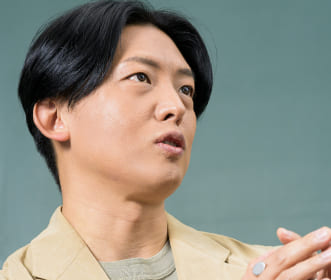
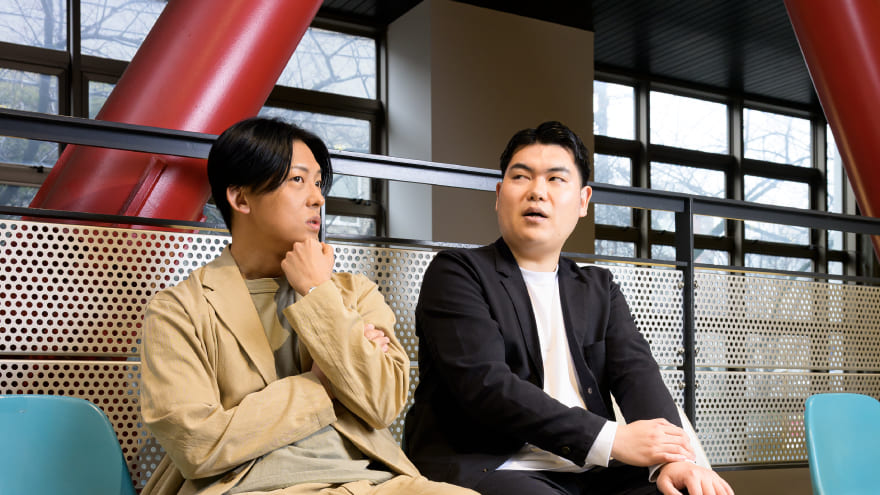
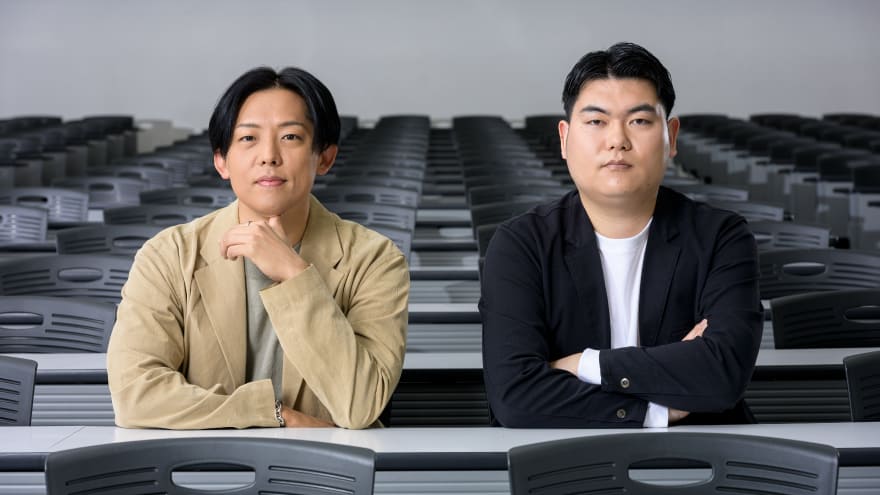
KEN THE 390 (Ken the Thank You) [Photo on the left]
Born in Tokyo in 1981. Graduated from Waseda University's School of Social Sciences in 2005. After gaining success in freestyle rap battles, he released his debut album "Prologue" in 2006. He appeared as a judge on TV Asahi's "Freestyle Dungeon," where his sharp comments and insight drew attention. In recent years, he has expanded the scope of his activities even further, taking on a wide range of projects, including providing songs to other artists, musical direction for stage productions, supervising rap for video works, and producing boy groups.
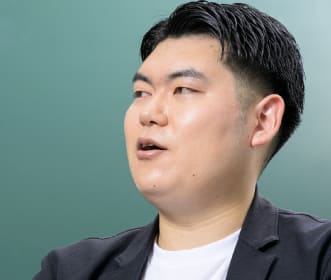
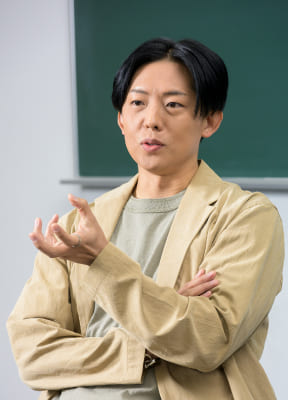
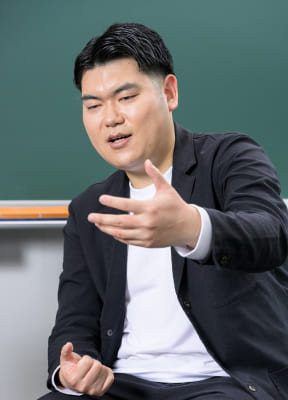
Suzuki Geronimo (photo right)
Born in Tochigi Prefecture in 1994. Graduated from School of Humanities and Social Sciences at Waseda University in 2017. Belongs to Production Jinrikisha, and after working as a comedy duo, will become a solo comedian in 2022. Reached the semi-finals of the R-1 Grand Prix 2023 and ABC Comedy Grand Prix 2024. Also attracting attention as a poet, he was a finalist for the 4th and 5th Sasai Hiroyuki Awards and the 65th Tanka Kenkyu Newcomer Award. In 2023, he will publish a small collection of poems, "A Great View If It's Sunny" (private edition). The "Explanation" series of videos posted on YouTube became popular and was published as a book titled "Explaining the Taste of Tap Water" (Nanarokusha) in November 2024.
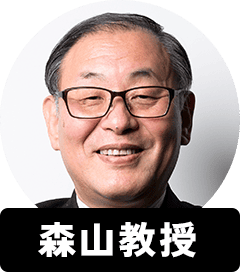
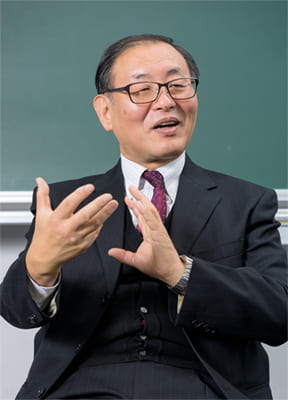
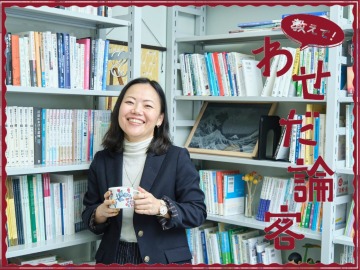
Moriyama Takuro Professor Faculty of Letters, Arts and Sciences [center of photo]
Born in Kyoto Prefecture in 1960. Completed his doctoral course at the Graduate Graduate School of Letters, Arts and Sciences, Osaka University in 1985. Doctor of Philosophy. Member of the Council for Cultural Affairs of the Agency for Cultural Affairs (Chairman of the Japanese Language Subcommittee) and member of the Japanese Language Textbook Editorial Committee (elementary and junior high schools). His main field of study is Japanese linguistics, with a focus on Japanese grammar. His books for the general public include "Hone your communication skills" (NHK Books), "Japanese grammar for appreciating expression", "Japanese for communication", and "How to write Japanese" (all published by Iwanami Shoten), "Aibaiku/Hazarigo Jiten" (Dictionary of vague and vague words) (edited and written by Tokyodo Publishing), "Clear Japanese Language Dictionary" (co-edited and written by Sanseido), and "Obunsha Standard Japanese Dictionary" (supervisor).
Don't get stuck in a mold use a mold! Rap and tanka teach the creativity of "form"
As a language specialist, How Involved with "words" Could it have come?
While working as a solo comedian, I also write tanka. My YouTube post "Explaining the taste of tap water" became a hot topic, and I published a book based on it in November 2024. Recently, I've been introduced more and more as a poet and writer, but until I became a comedian, I had no idea that I was a "word specialist." In fact, when I was in college, I was in the a cappella student club "Choco Crunch" (an official student club), where I sang, did beatboxing, and spent my time "non-textually." So now, I feel like I'm finally starting to speak baby talk, as if to fill that void, and I'm involved with words.
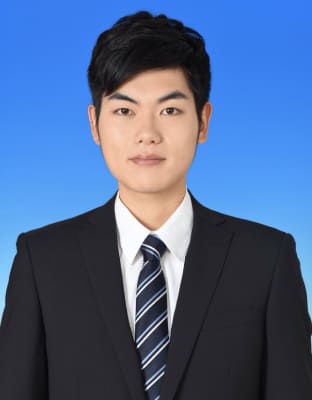
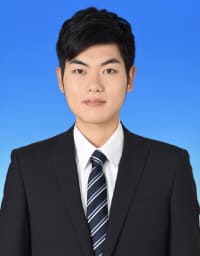
A photo of Suzuki Geronimo from his college days. He says, "This photo was taken when I was a third-year student and had mistakenly been trying to get a job."
I was originally in a band and discovered rap when I was in high school. Bands basically copy and practice existing songs, but rap doesn't have the concept of "covering" and you write original lyrics from the beginning to create a song. So the moment I discovered rap, I had already created my own song two hours later. The feeling that "this is my song" was a real shock. I continued to get into rap, and after graduating from university and working as a member of society for a few years, I made my major debut and started working solely on music.
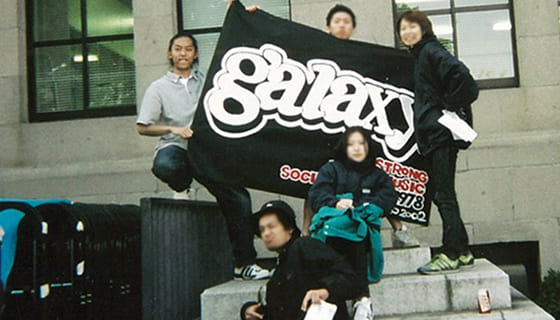
A snapshot of KEN THE 390 from his college days (top left). He was a member of the soul music research group GALAXY.
A photo of Suzuki Geronimo from his college days. He says, "This photo was taken when I was a third-year student and had mistakenly been trying to get a job."
A snapshot of KEN THE 390 from his college days (top left). He was a member of the soul music research group GALAXY.
It seems difficult to write lyrics that rhyme I have an image.
The act of "rhyming" is certainly a restriction, but I think it was because of it that I was able to write the lyrics. If you were given a blank page and told to "write how you really feel," you honestly wouldn't know what to write. But if you write your own name and think, "I'll try to rhyme this word," then a "rule" is born. By rhyming, you can feel the words just come down from the sky beyond your imagination, like, "There are words that can rhyme with this word."
I listened to it as if it were my own story (laughs). The words of tanka are drawn out precisely because of the "5-7-5-7-7" format. Of course, I am the one who writes them, but I think of them as "my words being called out by the tanka." The format deepens my love for tanka, and I feel like the words are placed in the communication between the tanka and myself.
Listening to the two of you talk, I realize the importance of "form" and the fun of "breaking the mold" that can only be said because of it, and that even when breaking the mold, there is some underlying principle. There are various levels of "form", but first of all, there is an aspect to it that having a "form" makes it easier to express. It is actually more difficult when you are told to express freely. On top of that, expressions that break the "form" become interesting. For example, free-style haiku poet Taneda Santoka's "The taste of the water is so good that a frog cries" is interesting precisely because it deviates from normal grammar. However, I also think it is interesting that it is not just a deviation, but that at the root there is an underlying principle of grammar.
Say putting rhythm into the leaves! Why is rhyme so pleasing?
Rap conveys words through rhyme and rhythm there is a feature in that place. KEN (THE 390) rhymes in Japanese what to keep in mind when stepping on do you have it?
Hip-hop and rap are English cultures that originated in America, so we have a strong sense of translating them into Japanese. For example, Japanese uses one syllable per character. In English, rhyming words like "Pop" and "Top" sound short, but in Japanese, each character is always one syllable, like "po/t/pu" and "to/t/pu," so it takes a long time to rhyme. Rappers don't like that in Japanese, and want to make their rhymes shorter and more English-sounding, so they've tried all sorts of things, like rolling their tongues or emphasizing vowels to rhyme.
Specifically, how to step will it be like this?
In the song "OK," the rhymes are "The goal is the solo stage/It's getting thicker/Boys band." By not vocalizing the "n" in "Boys band" and weakening the "i" to create an attack on the "ou" in "bo," "GOU RU," "DOKU DANJ OU," "KOKU NA RUYO," and "BOU IZU" sound like rhymes. Also, "Dimensions are different" and "Literacy" don't sound like rhymes at all, but if you align the accents on "JIGE" and "RITE"...
Wow, that's amazing! I can certainly hear it. If I had told Hagiwara Sakutaro (the poet) about it, he would have cried tears of joy. He wrote that Japanese poetry is difficult to rhyme, so it's hard to express verbosity, but if you work on your pronunciation like in rap, there are infinite possibilities.
The rhythm of Japanese has a big impact on how it is conveyed that's what they are doing. Geronimo, do you ever feel there is a rhyme in your comedy?
In Japanese Bon Odori, you keep the rhythm in your head, like "tatan ga tan." That's close to the sense of rhyming at breaks and punchlines that KEN mentioned, and I think Japanese people tend to feel comfortable with "breaks here." In the same way, in comedy communication, it's more effective if you know exactly where the punch line is going to be, rather than always saying funny things. Sometimes it's easier to get the message across if 90 of them are normal words and only the last 10 are funny, rather than lining up 100 funny words.
Thorn the punch line is "Surprise" x "Inspiration" x "Life"
In conveying the words, The trouble of not being able to find words that resonate with people There are many people who have I think so. Rap is all about words that leave a strong impression. Also known as the "punch line" to create a punch line What do you think is important?
I think the most important thing about rap is "surprise." Whether it's lyrics or MC battles, how much the listener is surprised by the words is important. To do that, it's necessary to choose words that make a big leap, but it's also important to create "time to make them think."
The verses, which are the A and B parts of a rap song, are basically made up of 16 bars (※), which is similar to the structure of comedy that Geronimo mentioned. This is because rap also has a repetition of a setup and a punch line. The punch line, which separates every four bars, is catchy, so even if the best rhyme is placed in the first bar, it is not a surprise. Rather, the setup builds up anticipation at first, making the audience wonder "What kind of punch line will come?", and then the moment the rhyme that exceeds their imagination comes out, the audience erupts in excitement.
(※) In the lyrics of the above-mentioned "OK," the lines "The stage is yours" and "It's getting thicker" each become one bar of the punch line.
Wow, I totally get it! We often have expectations when we listen, so unless you can surprise us in a good way, it's not interesting. But you can't make a sudden leap, so you have to subtly lay the foundation. In that sense, I think the structure of the story is very important. The same goes for presentations and papers. Furthermore, in terms of performance, the "sound" itself, for example, leaving a short pause in the words or adding emphasis, is also important in relation to the structure. I think students should be aware of these things too.
So what's the punch line? Will it resonate with the listener?
Freestyle is a strange thing, even if you prepare a phrase thinking "This punch line will definitely get the audience excited" during an MC battle, if it smells even a little bit of preparation, it will not be exciting at all. On the other hand, if the words really come to you at that moment, it will get the crowd excited all at once. Even if it is a rhyme that you have done in the past, the feeling that you have taken it out at this moment will be conveyed to the listeners.
I can totally understand that feeling. In my case, I think the most important thing to "communicate" is to be naked. I have the impression that words that are conscious of "I want to say this" or "I want people to think this" don't get the message across very well.
I also think that being honest is the most important thing. Another thing is that when thinking about the words you want to convey in rap, it's important that the speaker's background is clear. For example, rappers are often ridiculed for writing lyrics that say "Thank you, Mom," probably because of their street image. But "Thank you, Mom" has a completely different ring to it when it's said by someone who graduated from Waseda University without financial difficulties, and when it's said by someone who was raised by a single parent and graduated on Scholarship while barely making ends meet.
Indeed, life is in those words. How you receive it depends on whether you have it or not. It will change.
In rap, you can't soften your words. If you put into words the history between you and your mother in detail and specific terms, and say "Thank you, Mom," it really hits home. That's the appeal of rap.
Say to prevent the leaves from "deodorizing" Create a "secret account"
Students who want to improve their ability to communicate with words. Is there anything you can do in your daily life?
I really sympathized with what KEN said about the importance of the context and background of "Thank you, Mom." That's because I think the end goal of "valuing words and putting them into words" is similar to "deodorization." It's about "how to remove the smell from your words." However, I think the challenge is the opposite: "how to say words that have your own smell attached to them."
Even when expressing gratitude to one's mother, for example, "I put frozen rice in the miso soup bowl and it broke when I put it in the microwave," there is a personal smell attached to such a unique episode. If one is aware of that smell and can put it into words, it will be easier to convey it as "one's own words."
In order to have such "your own words" is there anything I can do?
What I would say to people who are struggling with words is to "make the most of your secret account." On your main account, you post things like "I have a live show today. Please come," and on your secret account, you write things you can't say in public, like "I don't really want to go, but I decided to because the fee is good." I think that knowing what you really feel but can't say in public, in other words, the smell of yourself that you don't want others to smell, is actually something that you shouldn't throw away when dealing with words.
What's important is editing ability rather than input. And erecting an antenna
To acquire rich linguistic expression don't we need input too?
People often say that you need to increase your vocabulary by inputting information, but I think that "editing ability" is more important. Even if you're talking about the same thing, the impression you get from the receiver will be completely different depending on who 's telling it. For me, listening to comedians or watching variety shows is often more useful as input.
I also think that editing skills are important. In my own words, it is the "ability to disengage words." When you eat something salty, it is easy to convey if you say, "It tastes like the salt on the rocks on the beach." But wouldn't it be more surprising if you disengaged all the words and said, "It tastes like rocks"? If you think that what you actually felt was "the taste of rocks," try saying it as it is without adding any unnecessary explanation. Tanka, with its 31-syllable constraint, is a treasure trove of ways to disengage words, so I like to think of it as input, coming into contact with such words and getting rid of the fear of disengaging words.
Also, I think it's important to have an antenna. For example, if you have an antenna for "what is needed for my rap," you'll naturally pick up on anything in your daily life without consciously trying to input it, and you'll feel like "I can use this in my next rap." On the other hand, if you don't have an antenna, you'll feel like you just ignore everything you see.
I really empathize with what you two have said. It is often said that vocabulary is important, but in fact, what is even more important is the "ability to construct expressions." In order to acquire such abilities, I think that Geronimo and KEN always consciously or unconsciously have an analytical perspective in their daily lives, such as trying to use a metaphor that is a little distant, trying to express something in a synesthetic way with a different sense, or thinking about which expression is better than this other expression. I feel that such "keeping your antennae up to think about expressions" is extremely important not only in Japanese language studies, but also in your activities in the entertainment industry and in everyday communication with students.
I f AI can produce the "right answer," Humans should create "poetry"
The influence of SNS on text Communication has increased dramatically, and recently With the emergence of generative AI such as "ChatGPT", The language environment is changing dramatically. What is required in the future What kind of word do you think it is?
When expressing yourself on social media, you may be worried about making mistakes and put the brakes on your output. But with the advent of generative AI, anyone can write "correct-sounding" sentences. When you think about it, is there really that much value in writing perfectly correct Japanese on your own? I wonder. So I think we 're entering an era where value will be placed on honest words that accept the risk of making mistakes, and the courage to honestly output what you really think, rather than on correct words.
I would also like to pay attention to my own "smell," or how I am making mistakes and misunderstandings. For example, the stars in the night sky already exist, but it is humans who have connected the arrangement of stars into "constellations." Even though "Scorpio" does not actually have the shape of a scorpion at all, the act of drawing a "constellation" there shows the human element. So I think it would be better to leave the efficient task of connecting the arrangement of stars with straight lines to AI, and aim for sentences and a style of writing that draws one's own "constellation."
The courage to accept mistakes and The imagination to discover relationships in the world It's something that can't be replaced by AI. In that sense, Writing poetry is also a way of expressing yourself. Could this be a way to take it on?
I think that the act of writing poetry or lyrics, not just rap, has a detox effect in itself. Writing lyrics can encourage you, or release your feelings of frustration and make you feel better. Even if it's not a job, I think it's an important act in life, so I want everyone to experience that feeling at least once.
In his book "My First Tanka," poet Hiromu Homura says that if Ami Hiraoka's tanka "We're cute as we line up in front of the Great Buddha to take a photo" is rewritten to "We're so small as we take a photo in front of the Great Buddha," the poetic value is instantly lost. "Very small" is a word that conveys social value, and it removes the element of conveying one's own preconceptions and feelings. Nowadays, when you try to write what you actually think, it tends to be deodorized by AI-like correct Japanese, but I think that writing poetry is the act of consciously trying to add a scent without being swayed by that.
My smelly body odor, If you love something, you will become good at it
Finally, for students Please leave a message.
The college years are a time of deodorization, as they are often referred to as the "university debut" or "becoming more sophisticated." It's good to become more sophisticated and your body to become more socially relevant, but by asking yourself, "What is it about my smell that still doesn't go away?" I think you can get closer to the root of the "indescribable things" that are bothering you. So, "don't let your words become deodorized as well." That's my message.
When you output something, your driving force is a strong feeling that "I love this!" I think that being a student is a good time to find what suits you, so if you haven't found what you like yet, try to get in touch with a wide variety of things. And when you find something you like, don't be shy to express it. You can't be perfect all of a sudden, so I think it's important to be relaxed and output your ideas.
I believe that the more you output, the better your output will be. I also want you to develop a love for expression. It's okay to get down to it, but I want you to enjoy expressing yourself. It's also important to be exposed to a variety of forms of expression and broaden yourself. In order to break the mold, it's necessary to have a certain degree of mastery of various forms. Furthermore, it will surely be helpful to take a moment to think about your words analytically. During your precious student years, learn and take on a wide range of challenges, and enjoy a variety of forms of expression and your expressive self to the fullest.





While working as a solo comedian, I also write tanka. My YouTube post "Explaining the taste of tap water" became a hot topic, and I published a book based on it in November 2024. Recently, I've been introduced more and more as a poet and writer, but until I became a comedian, I had no idea that I was a "word specialist." In fact, when I was in college, I was in the a cappella student club "Choco Crunch" (an official student club), where I sang, did beatboxing, and spent my time "non-textually." So now, I feel like I'm finally starting to speak baby talk, as if to fill that void, and I'm involved with words.