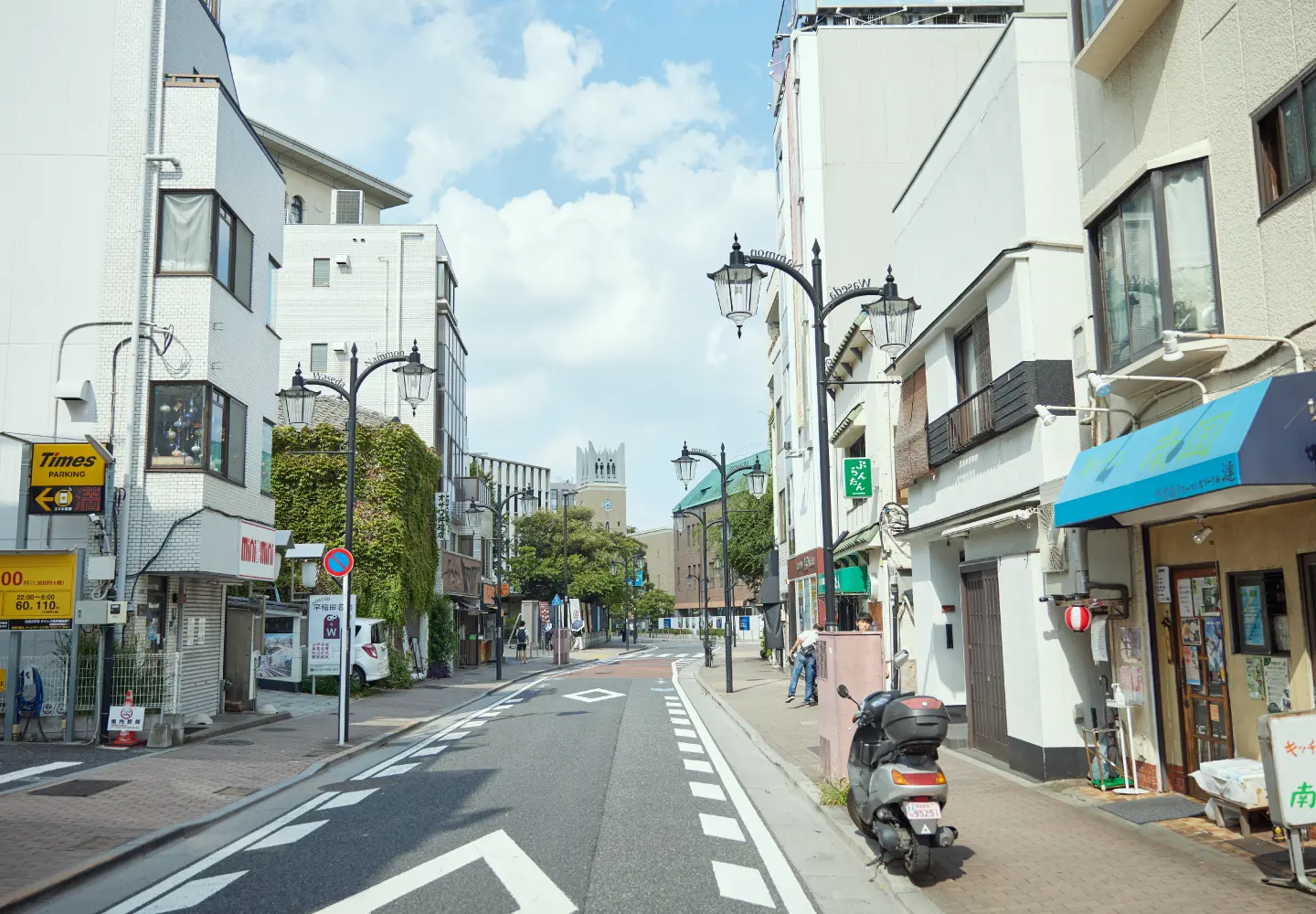
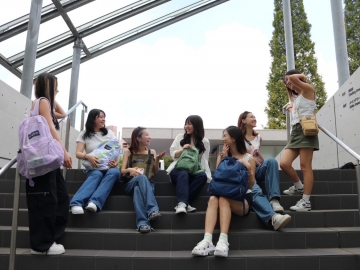
As you walk around Waseda Campus, you'll notice that the number of second-hand clothing stores has increased in recent years. These unique stores have taken root in the Waseda area, starting with the long-established Ambition and Marumi Shoten, both with over 20 years of history, as well as BEATNIK, which opened after the COVID-19 pandemic, and the recently popular unmanned second-hand clothing stores SELFURUGI Waseda and NOTIME Waseda.
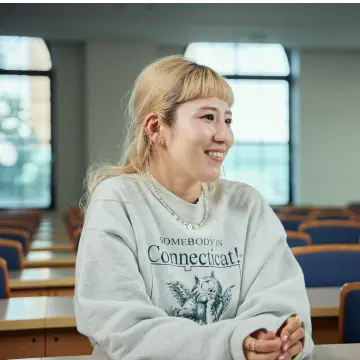
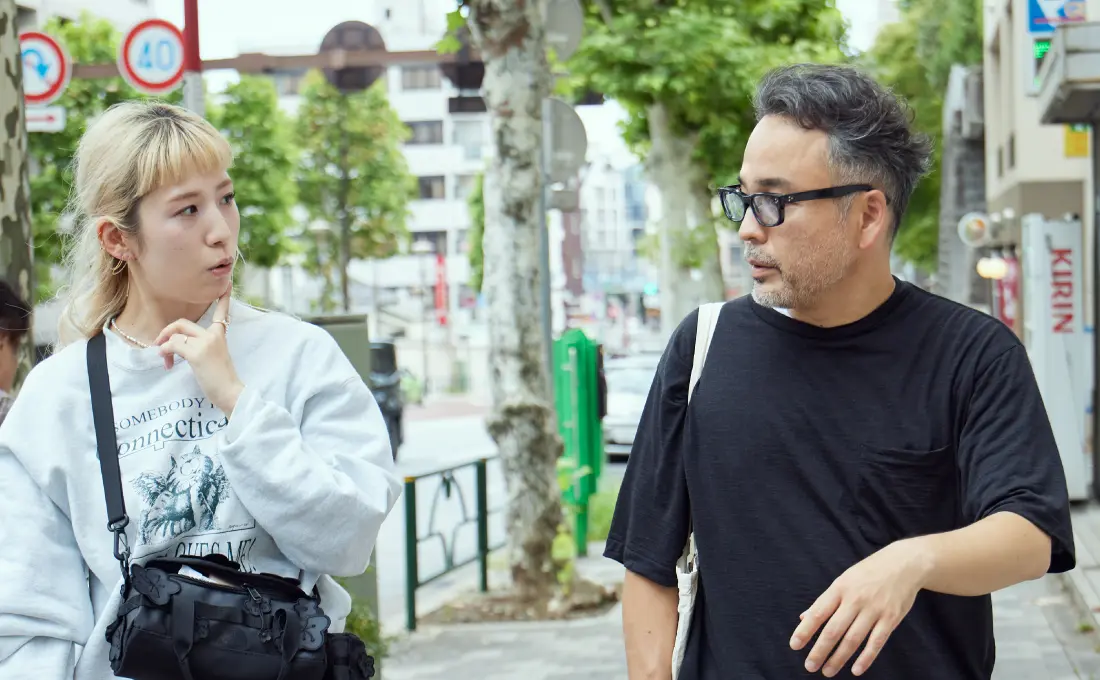
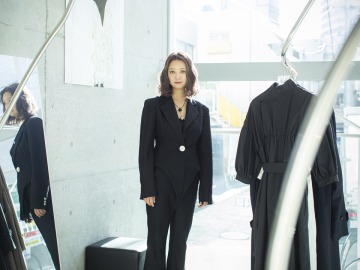
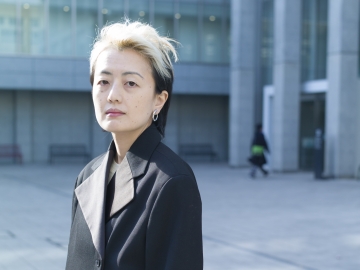
This time, we visited the second-hand clothing store Marumi Shoten and BEATNIK together with Alumnus and editor-in-chief of the magazine POPEYE, Machida Yuji, and fashion writer and editor Sato Azu.
Why are more and more second-hand clothing stores opening in Waseda?
What is the appeal of fashion and vintage clothing that vintage clothing store owners want to convey to Waseda students?
And how do you find a fashion style that suits you when university life revolves around casual clothing?
To find the answer, we walk down Waseda's vintage clothing street.
Born in Tokyo in 1977, he graduated from School of Social Sciences at Waseda University in 2001. After graduation, he joined Magazine House Co., Ltd., where he worked in the editorial departments of "anan" and "BRUTUS", before assuming his current position in 2019. As editor-in-chief, he continues to provide information to the younger generation on a wide range of topics, from men's fashion to culture.
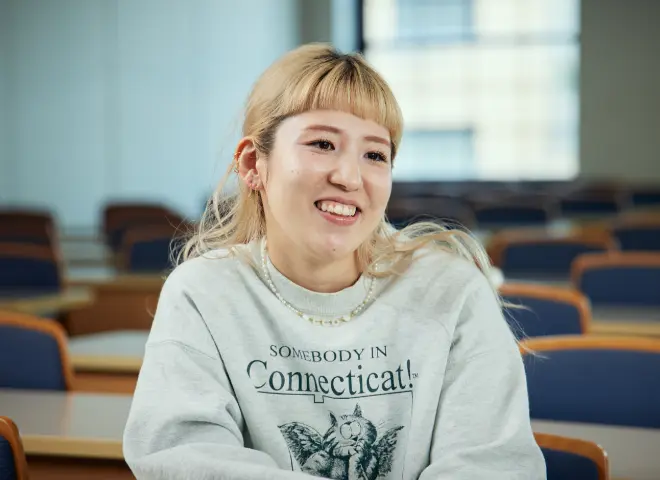
Born in Kanagawa Prefecture in 1992, she graduated from School of Culture, Media and Society at Waseda University in 2014. While at university, she was a member of the publishing group ENJI (an official student club) and built connections with the fashion industry through activities such as producing a free paper. She currently covers a wide range of fashion scenes both in Japan and overseas, and is active at the forefront of the industry. She also serves as a part-time lecturer at Bunka Fashion College.
--Today, we'll be taking you two on a tour of second-hand clothing stores in Waseda. By the way, when was the last time you came to Waseda?
Sato:
This is my second time coming to Waseda this week. The other day, I went to Cafe GOTO, a cafe I've loved since my student days, and had cheesecake.
Machida:
I used to go there occasionally too. I think the one I went to most often when I was a student was "Merci".
─Machida and Sato are currently active in the fashion industry. What kind of clothes did you both wear when you were students?
Sato:
I've loved clothes since I was a child. However, I didn't know what looked good on me... Especially when I first entered university, I was lost and tried wearing vintage clothes and trying out the Mori Girl (※1) style. On the other hand, I was a member of the publishing group ENJI, so I was surrounded by a lot of fashionable kids. So when I look at photos from that time, I feel even more embarrassed (laughs).
However, I think it was around the time the Isetan Shinjuku store was renovated in 2013 that I started to see more and more Japanese collection brands (※2) such as "beautiful people" and "TARO HORIUCHI," and I became more and more fascinated. I spent almost all of my part-time job earnings as a student at Isetan.
Machida:
When I was a student in the late '90s, the "street" genre was booming, and I often went back and forth with my friends between Harajuku and Daikanyama. We went to places like "NOWHERE," "ELT," "MADE IN WORLD," and "HECTIC." I also liked "Neverland" in Ebisu.
However, as a student I didn't have much money, so I was just an ordinary student who aspired to wear the clothes that I saw in magazines.
- (※1) A natural fashion style that was popular around 2010 and was inspired by girls who looked like they lived in the forest.
- (※2) A fashion brand that releases fashion items based on a specific theme or concept each season through fashion shows and exhibitions.
─Once again, today's theme is "vintage clothing." Do you two usually wear vintage clothing?
Sato:
I wear what suits me now, regardless of era or brand, including second-hand clothes.I often travel to many places both in Japan and overseas for work, and I often buy things at local second-hand clothing stores as souvenirs. When I find something that is hard to come by these days, or something that seems like it can only be found in that area, I can't help but pick it up.
今日着ているトップスも古着なんですよ。手書きで「I Love You Mom!」と書かれていて、きっと誰かがママにプレゼントしたものなんだろうなって。そういうストーリーを感じられるのが好きなんです。
Machida:
I used to wear a lot of second-hand clothes when I was a student, but I hardly ever wear them now. When I'm working, I don't have much time to look for second-hand clothes. Also, when an older guy like me wears second-hand clothes, they just look really "old" (laughs). After all, they look better on younger people.
Recently, we did a special feature on vintage clothing for POPEYE, and one of our young editors said that "the more faded an item is from the sun, the more valuable it is," and that there are "specialty stores that only collect worn-out clothing." So even "dirt" and "deterioration," which would previously have lowered its value, now have value. Rather than vintage clothing with its rarity or historical value, today's vintage clothing from the 1990s onwards has a youth culture feel to it, in the sense that people are finding new value in it themselves.
--First, we'll visit Marumi Shoten, a second-hand clothing store that has been operating in Waseda for 20 years. Why did the owner, Jitsukata-san, decide to open a second-hand clothing store in Waseda?
Jitsukata:
Student towns are interesting places to be a store owner. If customers like your store, there's a good chance they'll continue to come while they're still in school. And the customers change every year.
Among them, Waseda is a special town. I have the impression that Waseda students are very passionate people. They gather in this town not only while they are students, but also after they graduate. In fact, there are many alumni who continue to visit this shop. I really like this unique Waseda culture.
Machida:
What countries and eras of products do you have a lot of in this store?
Jitsukata:
We deal in Japanese vintage clothing from the 1960s to the present day. Our concept is "high-quality products at low prices." We don't focus on brands, but instead stock high-quality clothing with excellent tailoring and high-quality materials.
Sato:
Actually, I used to shop at Marumi Shoten when I was a student, so today I felt very nostalgic. I always thought their prices were reasonable back then, but I was surprised that the prices haven't changed even now, more than 10 years later. I can't believe that high-quality 90s T-shirts have been remade in a modern style and can be bought for around 2,000 yen!
Jitsukata:
I believe that secondhand clothing stores should never forget to respect the process that goes into making clothes. Setting prices that are too low is not good, but at the same time, since these are secondhand clothes, we must also be conscious of keeping prices that are affordable. We set our prices with that balance in mind.
--If you can get good quality items at reasonable prices, second-hand clothing seems like an attractive option for university students. However, many students who wore uniforms up until high school might think, "Second-hand clothing seems difficult" or "I don't know what to choose."
Jitsukata:
First of all, fashion is free. So the first thing you should do is find out what it is you like. It doesn't necessarily have to be clothes. It can be movies, music, social media, anything. From there, you might naturally find yourself thinking, "I'm curious about the clothes the heroine wore in that movie," or "I want a T-shirt of that band."
I think Waseda is a very blessed city as a place to expand your interests in this way. Waseda has long been home to numerous second-hand secondhand book, restaurants, izakayas, record shops, and movie theaters. Recently, the number of cafes and second-hand clothing stores has also been increasing. It's a small area, but I don't think there are many places that are as culturally rich as this one, so I hope you will visit many different places and have as many experiences as you can.
Machida:
Even if you know what you like, choosing clothes that suit you or that you want to wear can be a different challenge.
Jitsukata:
For example, there are dozens of different shades of blue. It is said that there are over 100 shades of white. Vintage clothing in particular changes color over time and with the environment. In other words, even if you think a color doesn't suit you, you might find that it suits you in vintage clothing. I hope you will experience the fun of making such discoveries.
--Now, we'll have Sato and Machida put together outfits for students using second-hand clothing from Marumi Shoten.
Sato:
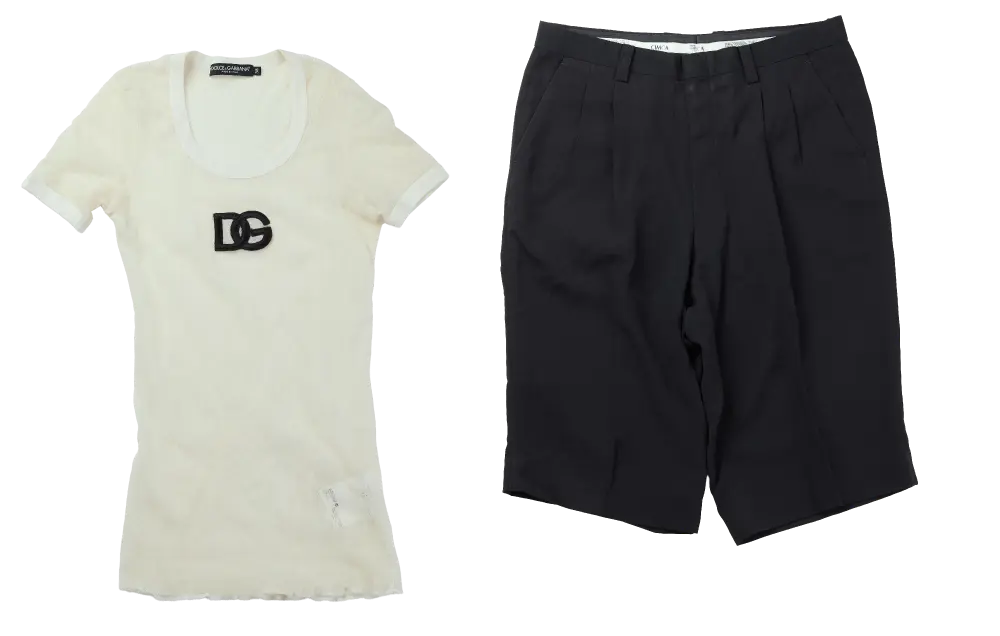
There's something I've been interested in for a while now... This mesh top from Dolce & Gabbana is so cute! It's long and has a silhouette that's different from the current trend, but that's what makes it so interesting.
The wearer can take clothes made in a different era and give them a modern look with accessories, makeup, hairstyles, etc. I chose these items with the idea in mind that the beauty of vintage clothing is that it allows you to express your own individuality with ideas and ingenuity.
Machida:
First up, I have these 48-inch 80s striped slacks from Wrangler Japan. They can sew them in the store, so you can shorten the length, and even add tapered (※3) if you like. Then, tighten them with a belt. For the top... this 90s-style dungaree shirt (※4). It looks simple from a distance, but up close it has a more distinctive look. If you're in your 20s, I think you can wear it in a unique and cute way.
- (※3) The silhouette is loose around the waist and thighs and tapers towards the hem.
- (※4) A shirt made from fabric woven with colored threads as the weft and undyed white threads as the warp. Because the white of the warp threads stands out, the shirt is characterized by a lighter color than a denim shirt.
Sato:
Come to think of it, when I was a university student, there was a time when I used to wear a boater hat (※5), a dungaree shirt, and a floral flared skirt. It brings back memories.
Jitsukata:
One of the charms of Japanese secondhand clothing is being able to find clothes that you used to wear. At Marumi Shoten, we stock items that have been remade to fit modern styles and lengths while still retaining that nostalgic feel. We also offer in-store alterations, so please come and talk to us about any clothing concerns you may have.
- (※5) A type of straw hat characterized by its flat, round shape. It became popular around 2010, coinciding with the Mori Girl and natural fashion boom.
- address
- Kobayashi Building 1F, 2-16-17 Nishi-Waseda, Shinjuku-ku, Tokyo
- business hours
- 12:00~20:00
- closed on
- Irregular holidays (announced on SNS)
- @marumishouten
─Next up, we'll be visiting BEATNIK, which opened in 2020. Shop owner Kanda-san, why did you decide to open a second-hand clothing store in the Waseda area? Please tell us about the store's features as well.
Kanda:
"BEATNIK" opened in August 2020. It operates as a second-hand clothing store during the day and transforms into a bar from 8pm. Tables and chairs are set out, creating a space where you can enjoy a drink.
The vintage clothing we carry is mainly from the 80s and 90s, purchased from Los Angeles. Among them, we have a selection of items with unique designs and silhouettes that I like.
There are many one-of-a-kind items that can be purchased at reasonable prices, and it's easy to create a fashion that is unique to you. There are an increasing number of young people who like vintage clothing, and many of them actively use social media, so I had always wanted to open a vintage clothing store in a student town. Of the several places I picked, Waseda was the one that I found a connection with.
Machida:
You've been running a second-hand clothing store in this town for five years. What kind of impression do you have of Waseda students?
Kanda:
Many Waseda students have studied hard up until high school. Perhaps because of this, I get the impression that many of them say, "I want to get into fashion, but I don't know where to start."
In fact, there are quite a few students who come to our store saying, "This is my first time buying second-hand clothes." BEATNIK is located close to both Waseda Campus and Toyama Campus, so it may be easy to visit.
Also, I personally feel that a defining characteristic of Waseda students these days is that they are "undistinguished." Many of them wear basic items and keep their outfits simple. That's why I think BEATNIK's unique items are easy to wear.
Sato:
However, it can be quite difficult for students who want to start enjoying fashion to choose unique items. I made a lot of mistakes when I was a student too.
Kanda:
That's right. I would like people who say, "I don't know what to choose" to come to the store. Even if we have the same concerns, each person's body shape and preferences are completely different. That's why we suggest items while considering the size and whether the person will be able to use them for a long time.
I might recommend something unique that you've never worn before. You might be skeptical at first, but once you try it and find you're hooked, you'll start to see your own preferences and suddenly find fashion is more fun. I've seen a lot of customers like that.
It's strange, but once you start enjoying fashion in your own style, you start to look more confident.
─What kind of “quirks” do BEATNIK’s clothes have?
Kanda:
For example, there is a shop coat (※6) with paint marks still visible. It is likely the workwear worn by a painter while on the job. A shirt with damage concentrated on the left side may indicate that the owner was left-handed. A pair of denim pants with a clear square mark in the pocket suggests that a work tool such as a barcode reader was always kept in that pocket.
I love vintage clothing because you can feel the story behind it from its unique quirks. Enjoy fashion in your own way, living in the present, while feeling the historical background and trends of that era. I think that's the unique appeal of vintage clothing.
- (※6) Work coats were originally worn as work clothes in France around the 19th century. With their relaxed silhouette and simple colors, they have become popular as a fashion item today.
─Finally, could you tell us about one piece of vintage clothing from BEATNIK that caught your eye, Sato-san and Machida-san?
Sato:
I'm also interested in this flashy jacket... But if I had to choose one, it would be the dog T-shirt. I'm drawn to anything with animals on it. Plus, it's big and cute! It seems like it would be fashionable.
Machida:
I'm going with a hoodie from the American rock band "Grateful Dead." A friend of mine is crazy about their successor band, "Dead & Company," and thanks to him, I've recently started reading their books and watching their movies.
Kanda:
I also love the Grateful Dead! I used to attend their fan event "OSHINO DEAD" held in Oshino Village, Yamanashi Prefecture almost every year.
Machida:
Were you a Deadhead (a collective term for passionate fans of the Grateful Dead)?
Kanda:
That's right. There are a lot of band items in secondhand clothing, so one of the charms of this is that you can have lively conversations like this. And the reason behind your choice, such as "because it's my favorite band," shows your individuality. Please feel free to come visit us at the store. You might just discover something you like.
- address
- Suzuki Building 1F, 2-1-4 Nishi-Waseda, Shinjuku-ku, Tokyo
- business hours
- 14:00-20:00 (Bar time from 20:00-25:00)
- closed on
- Sunday
- @beatnik_tokyo
--After actually holding the second-hand clothes in your hands and listening to the store owner's stories, what did you realize about the appeal of second-hand clothes and fashion?
Machida:
I feel a very refreshing "lightness" in the fashion of young people today. In our time, I think there were unspoken rules like "match this brand with this brand." But today's students aren't bound by those brands or history or theory, they choose and combine freely based on their sensibilities. I think that this "lightness that transcends boundaries" is what will make fashion interesting in the future.
Sato:
Today's students have probably barely experienced the 2000s, let alone the 90s. Perhaps that's why they can freely enjoy clothes from an era they're unfamiliar with. Having lived through that era, Machida and I tend to search for the "right answer." But young people use vintage clothing as a "tool" to express their individuality. That freedom is very modern, isn't it?
Machida:
The nature of secondhand clothing stores has also changed. In the past, there were stores that specialized in American vintage clothing, or stores that specialized in European designers, and each had a clear distinctive feature. But now, while genres have become more subdivided, such as stores that specialize in Harajuku brands from the 90s, or stores that only collect corporate merch (promotional items), I also feel that there are an increasing number of stores, like the two stores we visited today, that select items that strongly reflect the personality and values of the store owner.
Also, the clothes currently lining up in secondhand clothing stores are the clothes we wore in the 90s and 2000s when we were students. If I think about it objectively, these clothes are already 20 to 30 years old, so it's the same feeling as when we were looking for secondhand clothes from the 60s and 70s. In other words, it's only natural, but it still feels a little strange to think that the clothes we wore have become secondhand. Perhaps the next generation will find new value in the clothes that students today think, "I won't wear them anymore."
─Finally, do you have a message for Waseda students who want to enjoy fashion?
Sato:
First, wear the clothes you want to wear. And make lots of mistakes. I was also lost in my student days, but I think it was those mistakes that helped me find my own style. It's interesting that now it's become my job.
Another thing I want to convey is to choose quality items. Secondhand clothes have been passed down for decades because of the quality of the materials, the high level of sewing techniques, and the passion of the maker. At the store I visited today, the owner also helped me choose clothes, so not only those new to secondhand clothes, but also fashion novices can visit with confidence.
Clothes cannot be discussed solely in terms of style. They are also about culture, history, and craftsmanship. As someone involved in the fashion industry, I would be happy if people could enjoy clothes while also considering these backgrounds.
Machida:
We talked about choosing high-quality items, but I've heard that older shoes, for example, often have better leather quality and are better made than newer ones, even if they're from the same brand. In other words, there's more to secondhand clothing than just being cheap. King Charles II of England apparently wears shoes and clothes that have been repaired many times. I think that good quality items last longer, and clothes that are worn for a long time truly become a part of the wearer.
Of course, the basic premise is that you should wear whatever clothes you like, but I personally believe that "clothes you like" and "clothes that suit you" are different. First, try on the clothes you like, and then choose from them the ones that make you feel comfortable and that let you be yourself. There's no need to go along with trends, and there's no need to force yourself to not go along with them. I think that size is the thing that shows the most about the times, but a stylist I respect also said, "I can't trust people who keep changing the size of their pants" (laughs).
In other words, fashion is like a Zen riddle. I think that rather than expressing individuality through clothes, people who allow the clothes they wear to become their individuality are ultimately more fashionable.
Sato:
If you don't know what you want to wear, I recommend starting by thinking about what clothes you absolutely don't want to wear. If you don't like solid colors, try patterned ones, and if you don't like patterned ones, choose solid colors. By narrowing down your choices by process of elimination, you'll probably discover things you like that you didn't even realize you liked.
Machida:
I hope you will also read POPEYE and use it as reference. Our strength is that we are not overly fashionable, so we recommend it to people who are just starting to become interested in clothing.
We have compiled a list of second-hand clothing stores in the Waseda area, including the two we visited this time. We hope our readers will check them out.
Interview/text
Nana Naka (Graduated School of Education in 2010)
Design and Coding
J2 Complex Co., Ltd.
photograph
Jin Tange


Machida:
In 2024, there was a workshop for young filmmakers hosted by CHANEL at the Okuma Memorial Hall, with Director Hirokazu Koreeda (Professor Faculty of Science and Engineering) in attendance. I've been here since then. The last time I came before that was more than 10 years ago.