Sally Fujimoto
School of Law – Class of 1986

Greetings. My name is Sally Fujimoto, and I graduated from the School of Law in March 1986.
I currently serve as the Executive Director of a non-profit organization called Shokookai of Portland (the Japanese Business Association of Portland), located in Portland, Oregon. It is slightly different from the chambers of commerce established under Japan’s Chamber of Commerce and Industry Act or the Chamber of Commerce Act; we do not provide things like loans to small businesses as they do in Japan. Instead, it was established in 1966 as a hub where Japanese companies expanding into Oregon—primarily in the Portland metro area—can gather to network and exchange information. Since Intel has a factory here, the region draws many Japanese semiconductor-related suppliers. Out of the estimated 180 Japanese companies operating statewide, nearly 80 are registered as members.
We also operate the Portland Japanese School, a Saturday supplementary school, so that the children of expats can keep up with Japanese education when they eventually move back home. We have about 320 students ranging from kindergarten through high school studying Japanese language arts and mathematics in Japanese in accordance with Japan’s national curriculum guidelines. My scope of work involves overseeing all of these activities. While we used to primarily cater to children who were born in Japan and moved to Portland due to their parents’ overseas assignments, a shrinking birthrate made running the school financially challenging. Consequently, about 15 years ago, we opened our doors to permanent residents as well. Today, they make up about 30% of our student body.
The students attend local American schools from Monday to Friday, and then come to our school on Saturdays. Facing the pressure of mastering an unfamiliar language in an unfamiliar land, these kids are working incredibly hard to keep up with their Saturday-only classes through homework that uses the exact same textbooks as schools in Japan. They are putting in an immense amount of effort while caught between two cultures and languages. While an increasing number of kids drop out around third or fourth grade when the Japanese textbook material gets tougher, there are also those who stick it out until the very end and successfully graduate from our high school program.
Going to school on Saturdays is tough enough for adults, let alone children. When asked what drives them, many students say that beyond the academics, it’s getting to see their Japanese friends and being able to eat the Japanese lunches their parents made without being stared at or treated like an oddity. This year, my fourth as Executive Director, I have started dreaming two dreams. You might call them wild ambitions, but they are: 1) to produce a future UN Secretary-General from among our graduates, and 2) to send one or more astronauts into space.
What sparked this line of thinking was a connection I happened to make a few years ago with a former close aide to President Obama. Through this well-connected individual, I attended a seminar where I met the UN Representative for South Sudan, which was fighting its war of independence at the time. The speech given by this young, energetic representative was absolutely phenomenal. I was deeply moved by her love for her country and her dedication to supporting working women, so after the talk, I went up to speak with her directly alongside an intern student I happened to have brought with me. In that moment, I thought about how wonderful it would be if a young international student like her could experience an internship at the UN, even just once, so I asked the Representative about it. She told me that while there were no immediate openings, I should definitely follow up with her later. In my mind’s eye, I could see young Japanese women interning at the UN and other global institutions. I imagined how thrilled they would be when they returned to Japan or looked for jobs in the U.S., and that single line—”Interned at the United Nations”—on their resume started opening incredible doors that would have otherwise remained firmly shut. When I imagined what kind of future would await them, it filled me with immense joy. I developed a fierce desire to reach out to various organizations in New York and Washington, D.C. (where I happen to have a few connections) and start sending interns over! A UN internship is something I would have loved to do myself if I were still young. Unfortunately, I never had that kind of opportunity back then, but the thought that I might now be able to pave the way for others was incredibly exciting.
By extension, I started thinking that if we are aiming for the UN anyway, a Japanese person absolutely must become the UN Secretary-General one day. Japan has an infamous reputation for writing checks but not sending people—or rather, not being able to send people. However, now that Japan is experiencing a massage wave of inbound tourism from around the globe and appreciation for Japan’s strengths is spreading at lightning speed, I felt that now is the exact moment to achieve what Japan hasn’t been able to do in the past. Our graduates understand both Japan and America, speak both Japanese and English, and are uniquely positioned to become truly global citizens. On top of regular classes, our school takes every opportunity to expose them to Japanese culture. My seemingly far-fetched hope of producing a UN Secretary-General from Japan—and specifically from our school—has only grown stronger after seeing the recent, utterly inhumane treatment of ICC President Tomoko Akane. If the UN Secretary-General were Japanese, and if the number of Japanese staff members increased to a level that matches the financial contributions Japan makes, I dream that such terrible treatment would be immediately flagged and corrected.
Additionally, a chance encounter last year led me to meet someone working at a prominent AI company. According to them, these tech companies and their leaders are already thinking about what kind of society they will build and what kind of hegemony they will aim for once they colonize other planets in the future. How many people in Japan right now are genuinely, seriously thinking about things on that scale?
At most, people back home are focusing on US-Japan or Sino-Japanese relations. If you talk about actually going out into space and living there in the not-so-distant future, you would probably still be laughed off as a mere dreamer. In America, however, there is a small but definite group of people who are taking this completely seriously. It reminded me of when the iPhone first came out. I remember the old days when mainframes sat in massive, sprawling computer rooms. Back then, if you told someone that all of that would eventually fit into the palm of your hand, they would have thought you’d lost your mind. Yet, that became our reality. We are living in an era of massive transformation where things that once belonged strictly to the realm of science fiction—like flying cars—are about to become reality. I want our graduates to leverage their knowledge, experience, and language skills to leap out into the cosmos. Even when they feel like throwing in the towel over dry schoolwork or an overwhelming mountain of homework, I want them to know that beyond that grueling effort lies a step toward realizing a massive dream—one where the future of not just their own country, but the entire world and the planet itself, rests on their shoulders. I feel like this perspective could give them a bit of extra motivation.
I am still brainstorming what concrete steps I can take to make this happen, but for starters, I want to invite professionals who are currently making waves in various fields around the world to speak to the children. I want to inspire them to dream big and give them the confidence to say, “I can do this too.” If anyone would like to nominate themselves or recommend someone else, I would love to hear from you. It would be even better if they just so happen to be a fellow Waseda alum (haha).
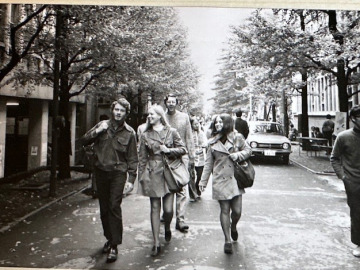
In all honesty, the fact that I am cooking up these dream-like, seemingly wild ideas might just be because I studied at Waseda. The four years I spent there were the happiest time of my life. There were truly all kinds of people there—unconventional, uniquely creative, and a little eccentric in what they did. Since I was that kind of person myself (haha), it was pure joy to be surrounded by like-minded people for the first time in my life. I would love nothing more than to go back to the Waseda of those days, where people who didn’t fit into a mold—the ones who, to put it nicely, were free spirits, and to put it bluntly, were treated as weirdos who colored outside the lines of society—felt perfectly at home. Nowadays, I amuse myself by daydreaming about how entertaining it would be if I became an even bigger eccentric myself.
Thank you so much for indulging my long and grandiose musings.