Research Theme
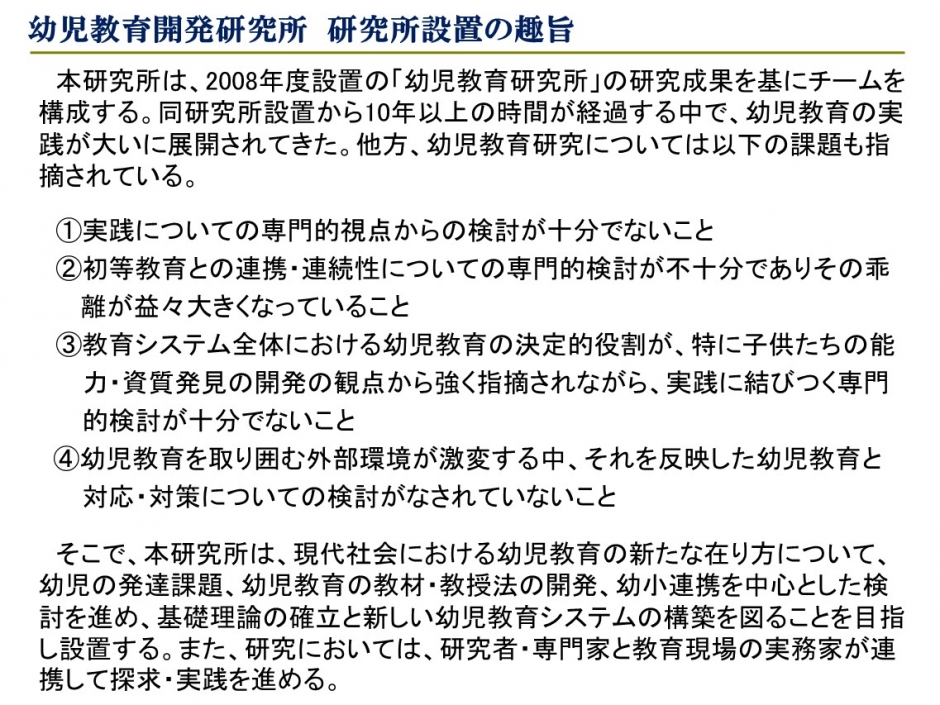
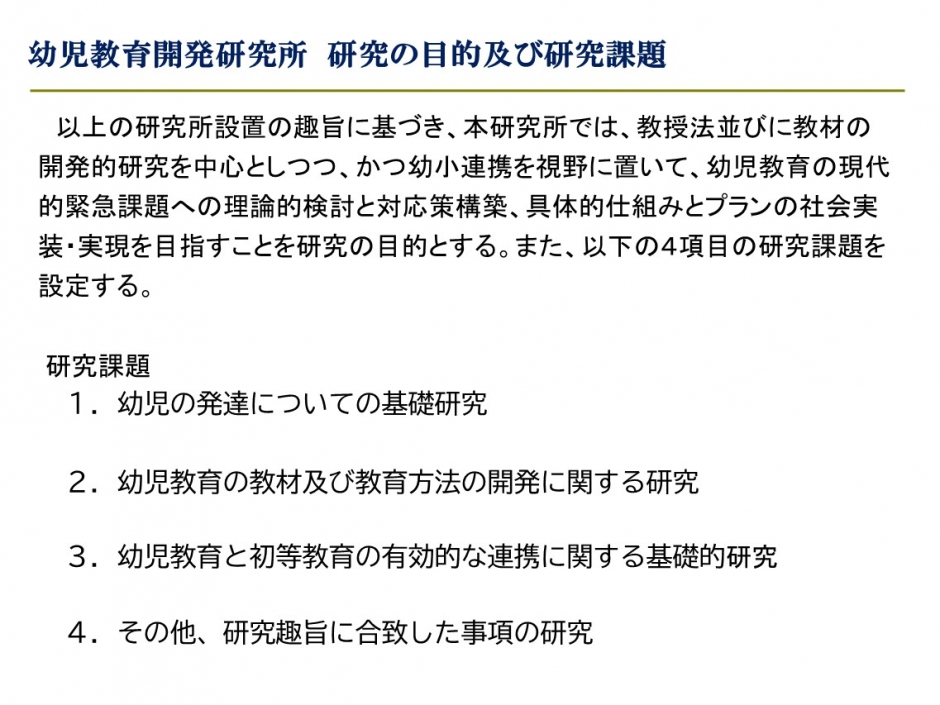
The external environment surrounding early childhood education is undergoing drastic changes. In addition to the establishment of the Children and Families Agency in 2023 and the current state and systems of early childhood education, issues of connectivity with research in related fields such as neuroscience and information science are being raised, as are questions about how to address issues arising from changes in social structure. In particular, in relation to social issues, the need for new research in line with increasing internationalization is increasing. For example, developing foreign-language teachers and childcare workers and developing curricula to care for the children of foreign engineers working in semiconductor factories in Kumamoto and Hokkaido, as well as those of foreign families working in factories and companies, has become a pressing issue for local governments and competent authorities. The Early Childhood Education Development Research Institute (FY2021-FY2025) has focused its research on the following three themes: 1) bridging the gap between practice and specialized knowledge, 2) exploring connectivity with primary education, and 3) collaborating with other fields related to early childhood education, such as neuroscience. Many of the findings have been reflected in early childhood education practices and have influenced new approaches and practices.Furthermore, its predecessor, the Waseda University Early Childhood EducationResearch Institute, dates back 10 years and has steadily accumulated results. Given
the extremely limited number of research facilities engaged in this research, it is significant that this institute will continue to serve as a base for research activities.
Therefore, we have decided to extend the establishment period of the Early Childhood Education Development Institute and build on the results achieved so far by tackling new challenges. Specifically, we will a) examine the hardware aspects of early childhood facilities and conduct research into human resource development, b) develop programs and teaching materials that reflect the results of proximal science, c) analyze effective ways for educators and parents to interact in early childhood education, and d) verify and demonstrate new early childhood education practices (including operation) based on a) through c) above, with the aim of widely sharing the results of these efforts with early childhood education facilities and society.
the extremely limited number of research facilities engaged in this research, it is significant that this institute will continue to serve as a base for research activities.
Therefore, we have decided to extend the establishment period of the Early Childhood Education Development Institute and build on the results achieved so far by tackling new challenges. Specifically, we will a) examine the hardware aspects of early childhood facilities and conduct research into human resource development, b) develop programs and teaching materials that reflect the results of proximal science, c) analyze effective ways for educators and parents to interact in early childhood education, and d) verify and demonstrate new early childhood education practices (including operation) based on a) through c) above, with the aim of widely sharing the results of these efforts with early childhood education facilities and society.
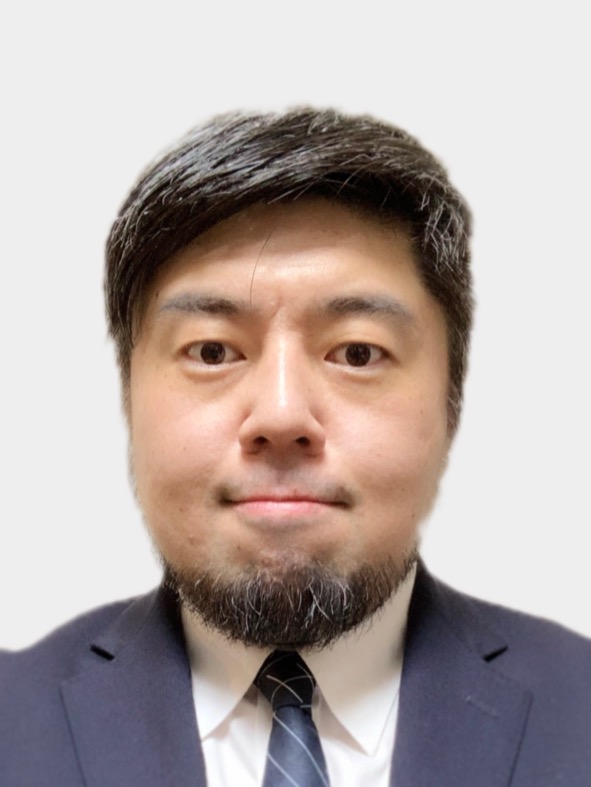
Research Director
Project Members
- YUKAWA, Tsugiyoshi
- AUCHI, Haruo Professor, School of Education, Faculty of Education and Integrated Arts and Sciences
- KUMAGAI, Yoshiaki Professor, School of Education, Faculty of Education and Integrated Arts and Sciences
- KUSUMOTO, Noriaki Professor, School of Education, Faculty of Education and Integrated Arts and Sciences
- NIE, Jingjing Assistant Professor(non-tenure-track), School of Education, Faculty of Education and Integrated Arts and Sciences
- NOGUCHI, Hodaka Professor, Graduate School of Education, Faculty of Education and Integrated Arts and Sciences
- AMEMIYA KAZUKI
- BRUECKNER, Stefan
- FUJITA, Ichiro
- HASEGAWA, Yoji
- INOMATA, Daiki
- ISHIKAWA, Hiroaki
- JIANG, Hua
- KANEKO, Ritsuko
- KUMAGAMI, Fujiko
- OHYAMA, Kenichi
- ONAKA, Tatsushi
- SAKAI, Toru
- SATO, Yukiko
- SEKI, Tatsunori
- SHIGEMURA, Toshimitsu
- SUGIYAMA, Daiki
- WARAGAI, Tomoki
- YOMOTA, Yoshinori (Tsuyoshi)