
From the Director
Director of the Advanced Research Center for Human Sciences
Satoshi Akanuma
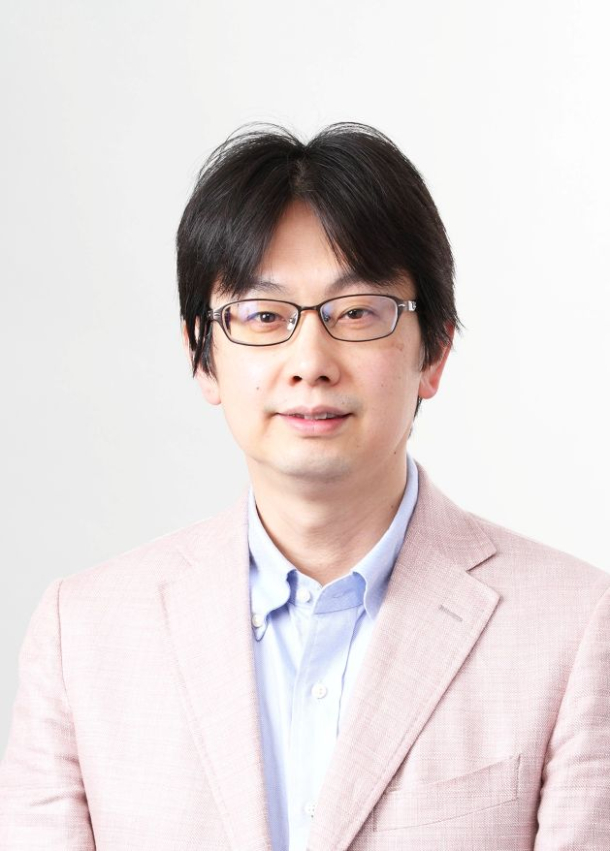
What does it mean to be human? Where did we come from, and where are we headed?
As a researcher studying biological evolution, the origin of life, and astrobiology, I find these questions both deeply familiar and remarkably difficult to answer. Like all living organisms, humans are products of a long evolutionary history. Yet we have also developed cultures, built societies, and profoundly transformed our environment. Advances in science and technology have opened new possibilities, while the world today continues to face complex challenges, including global environmental change, conflict, inequality, and discrimination.
The Advanced Research Center for Human Sciences seeks to foster curiosity about human beings and the environments in which we live, contributing both to new discoveries and to addressing the challenges facing society.
The Center, together with the School of Human Sciences and the Graduate School of Human Sciences, forms part of the Faculty of Human Sciences. A defining feature of our research and education is our commitment to an interdisciplinary approach. Understanding human beings requires us to consider not only our biological characteristics and evolutionary history, but also the many dimensions of psychology, behavior, culture, and society. Dialogue with researchers from different fields can lead us to ask questions we might never have considered on our own. At the Center, we promote interdisciplinary research through collaborative projects that bring together the knowledge, perspectives, and research methods of scholars from a wide range of disciplines.
At the outset, it is not always clear how a particular line of research will prove useful. Indeed, research that begins with simple questions such as “Why?” or “I want to know” can, over time, lead to unexpected discoveries and even significant changes in society. This is also true in basic research on molecules, protein, and the origin and evolution of life. Even when results are not immediately apparent, the Center seeks to foster a research environment where researchers can freely pursue their own questions.
In addition to commissioned research and collaborative projects with external organizations, the Center actively promotes partnerships with various regions across Japan, including Tokorozawa City in Saitama Prefecture, where our Tokorozawa Campus is located. Dialogue and collaboration with local communities and organizations can bring new perspectives to research. We hope not only to contribute to society through our research findings, but also to open up new avenues of research through our engagement with society.
Supporting the next generation of researchers is another important mission of the Center. We aim to convey the excitement of research to undergraduate students, provide graduate students with a supportive environment in which they can devote themselves to their work, and create opportunities for early-career researchers to take on new challenges. To this end, the Center supports collaborative research projects involving early-career researchers from different fields and offers lectures and other programs, including sessions on preparing research grant proposals, to help researchers develop essential skills.
When different forms of knowledge and ways of thinking come together, unexpected discoveries can arise. In biology, new functions and complexity can emerge from interactions among simpler components, and research can develop in much the same way. One of the interesting aspects of research is that we cannot always know what will emerge until we try. By respecting the intellectual curiosity and freedom of individual researchers and encouraging collaboration across disciplinary and institutional boundaries, the Center will continue to explore new possibilities for human beings and society.
(October 12, 2026)