


“Letters from the Haruki Murakami Library”―謝曉虹 (Dorothy TSE Hiu Hung)
2026.07.03

“Letters from the Haruki Murakami Library” is a series consisting of letters written by guests of the Waseda International House of Literature, inspired by their visit.
We are pleased to present a letter by Dorothy TSE, a Hong Kong-based novelist who stayed at the Library in May 2026. She wrote this letter during her stay, inspired by her time at the Waseda International House of Literature.
Dear S/H,
As I write this letter, you are not behind those walls anymore, but let me imagine as if this is still the only way to reach you.
If I am honest, for those few years, I never wrote to you because I had anything important to say. It was only my mind that made me. We knew very well that every sheet of paper had to pass through the scrutiny of some strangers. One had to feel around the edges of what could be said. The written words were less important than the chore of the thing: to go and purchase the paper, to put down stroke after stroke, trying to match the heavy way your own hands used to work. Then there was the walk to the post, and the waiting. But that was how the words came clear of their harness. Whatever was written down, the thing I wanted to say had been said with the hand dropping the envelope into the box.
We live in a big factory of language now, where words are turned out by the thousand. I want to keep a hold of how the hand moves when it is being honest and I want to remember how I believe words can carry one right through the stone.
The invitation arrived in March: two weeks as writer-in-residence at the Haruki Murakami Library. I knew then that you would love the place, which is housed within Waseda University and yet remains entirely open to the public.
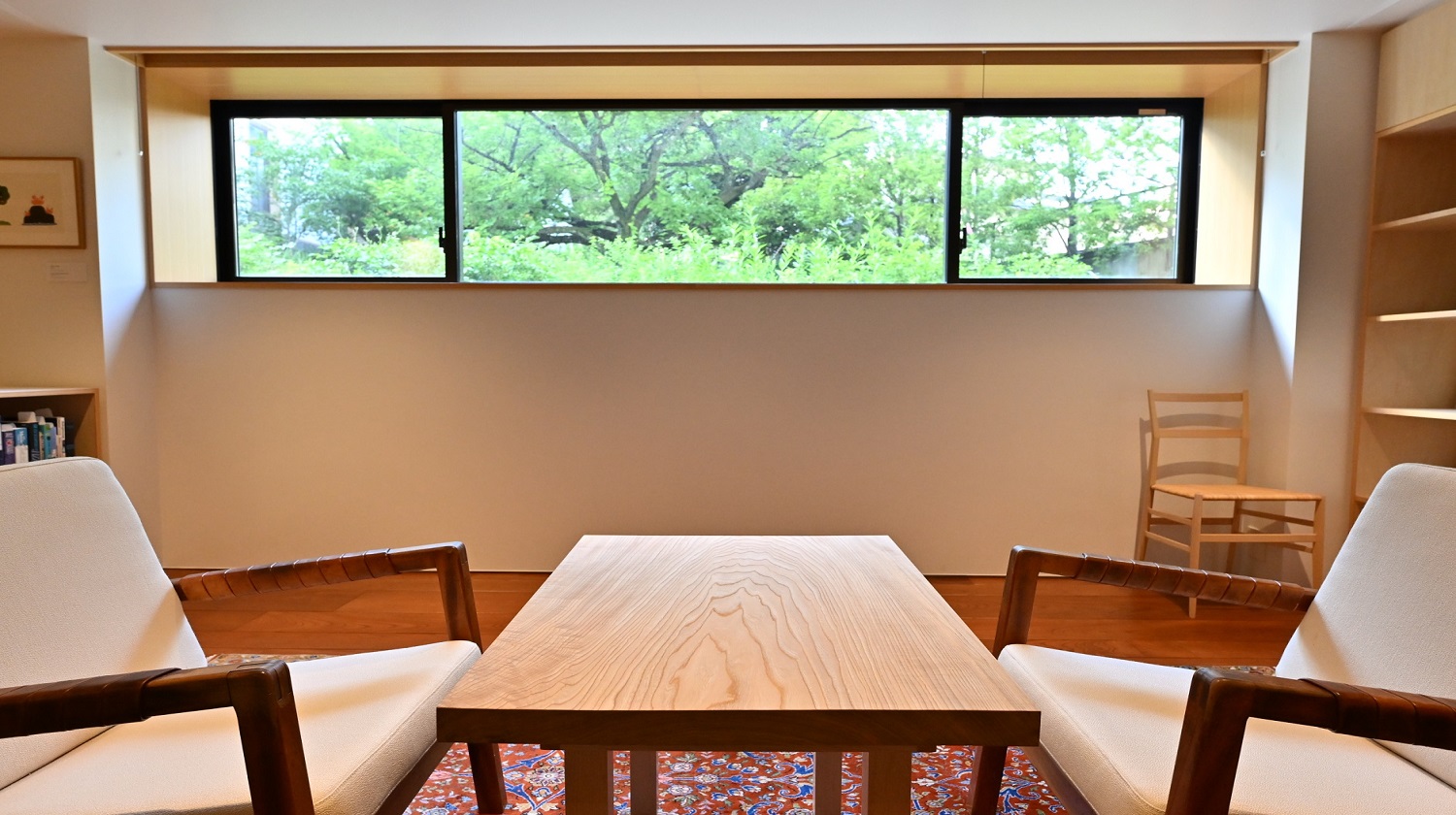
There are great sheets of glass here, making you feel you could see through everything. But the tunnel-like designs outside the front door and along the staircases remind you that there are always hidden spaces. And who wouldn’t love those reading chairs, shaped like cracked eggshells, that wrap you up inside and hold you soft?
Down on the first floor, jazz music played without stopping, and in the basement, students ran a cafe called the Orange Cat. I ordered the seasonal tea that afternoon and a plain donut. I don’t have a sweet tooth, but how could I resist a donut in a Murakami library? I asked the girl at the counter if she knew of the Murakami donuts, leaving her eyes with perfect lashes blank for a moment.
You know well those characters who became “donut-ized” in Murakami’s stories. For a soul who wakes up to see only the hole in the center of life, then nothing less than the dark urge to rob a bakery can bring them back. I took up my tray and found a seat where no one sat opposite. Biting into my donut there, I laughed quietly to myself—the sort of laugh shared among a secret society, bound together by books.
Hannah Arendt once described our shared world as a table. She said it stays alive in the distance created by the uniqueness of each individual and holds together by the love and courage it takes for them to stand up and say what they truly think. But if people can no longer show their faces, what becomes of the world? My mind turns to Bruno Schulz, who was shot dead by the Gestapo while still clutching his ration of bread. He had his own way of looking at the table—in a world connected through books, it’s like holding hands underneath the wood.
The Haruki Murakami Library is about more than the man himself. Murakami is a writer, yes, but he has also spent years at the devoted labor of turning English into Japanese. Those invited for residencies here include not only writers, but even more so, Japanese-language translators from different countries. This explains why the building’s official name is the International House of Literature, and why the people I come across have a certain way about them that I’m fond of. They are the ones who cross and shift the borders of language. Or, perhaps I should ask: what are translators if not people who like to climb over walls?
To prepare for a public reading, my host suggested translating one of my stories, “Chewing on Words,” into Japanese. That was how a piece written nearly twenty years ago—one I had almost forgotten—came back to greet me, foretelling how a city would be partitioned and whose speech would go missing. The story felt like an old friend from back home, sharing the taste of what it’s like to chew on words left unsaid, bit by bit, until they disappear.
What does it mean to be a resident at a library? I was set up in a guest house and given an office inside the building with two wide desks. But what mattered was the access card: it let me reach the floors where the public wasn’t allowed, and slip in and out of the building like a shadow after the lights had been turned off. I could turn a somersault or dance through the empty passages, wave a hand to the café staff washing down the counters before locking up, and leave by a hidden door in the basement—startling some quiet student sitting at an outdoor table, looking at his phone.
And then it was dinner time. A few friends joined me to walk through the streets of a still-cool May in Tokyo until we found our way into an izakaya. My three companions kept up the “international” flavor of this trip: the Japanese poet Y who lives in the city but writes his work only in English; the visiting poet C whose family had moved from mainland China to the US when she was a child; and one more poet, J, who was from America but now lives in Hong Kong. Yes, they were all poets, and I was the lone fiction writer.
Y started on a beer and brought up Haruki Murakami.
“So, you’re a resident at the Murakami Library. Do you think you’ll see him? What if you’re sitting there at your work, and he walks right in?”
“Who’s to say? It could happen easily enough,” I said, and shrugged my shoulders.
“Why would he come to the library at all?” J said then. “You’re the one who writes stories. You have to give him a motive.”
“So now we’re imagining how I met him in his own library, right?”
And that was how it went. I took up the challenge the poets had laid down for me.
A sudden desire came over M. He had to hear its voice—the grand piano that had once stood in his Peter Cat bar and was now kept in the library, down in a corner of the basement café. If he walked onto the college grounds and looked through the great sheets of glass, he could see it there sitting in silence. But he knew the students from the university jazz club were to play this afternoon. A young man would use his fingers to bring the music out of that old black Yamaha once again.
M had no liking for crowds. Though he had stood before the public many times, he never took to being the one all eyes looked at. And once people began to notice you, it was no easy thing to settle your mind to enjoy the music. Yet there he was, in his T-shirt and casual trousers, intent on grabbing a coffee and a donut, finding himself walking onto the campus. First, he came upon the backs of the players, their arms wrapped close around the double bass, the trumpet, and the saxophone, and the crowd sitting there before them, some smiling, others with their mouths parted. Then he moved on, and saw his own piano, and the side of the boy’s face as he played. Their performance looked like a pantomime behind those glass sheets.
He remembered the access card in his wallet. The director had pressed it into his hand on the day the library opened. He had thought he would have no use for it, but now he held it against a hidden door and the light blinked red. The lock clicked open. Coming in this way brought him out by the till in the café. He could hear the music from there, though the notes of the piano were faint, flickering behind the other sounds. Someone brewing a pour-over was deep in his work, and the people waiting for their drinks were all looking the other way, toward the players.
No one saw him come in. He stepped into the elevator by the door and could not help smiling at the sight of himself in the long glass. But where was the best place to catch the music? He ran his card over the sensor, and pressed every button on the panel.
The elevator doors kept opening and shutting. M saw floors lined with rows of books and dark, empty offices, but he stayed where he was. The elevator came to a stop at last on the fifth floor, under the roof. He wondered if it would carry him down again, but he laid no hand on the buttons. He only stood in the white box, waiting for whatever would come next. It was then the thing began to move again. The fourth floor, the third, the second. He heard a dry clicking sound, like teeth on a gear. The light for the number two went out, and no other light came on to take its place.
When the doors parted, the opening looked small. The doors of the lift itself were the same as they had been, but to go out was like stepping into a tunnel that was narrowing. He had to stoop low, altering his stride. He could not tell if he had passed through or not; his body felt smaller now, caught between a low ceiling and the wooden floorboards beneath his sneakers. The floor was thin, and it gave a small, steady shudder—oh wow, was it because of the music? It vibrated like the skin of an eardrum. He wondered if he had walked right inside the ear of the building itself. But he was glad all the same, for he had come just in time to catch a solo on the piano. He felt he had never been so near to the voice of that old instrument as he was then.
The day, however, did not go so well for D. She had spent the best part of the afternoon at her desk on the fourth floor, with the dull light of the screen against her face, troubled over nothing more than what sort of hat a character in her story should wear until she finally decided to step out and catch the last bit of the show.
But the library’s only elevator wasn’t behaving quite right. There were no lights behind the numbers on the wall. She pressed the button multiple times and waited long enough, and yet it showed no signs of life. She turned to the stairs, which she had never needed before. She actually had to hunt for them. On each floor, they were hidden in unexpected places—one was tucked behind a bookshelf filled with volumes in languages she couldn’t read, another required pushing a knobless panel disguised as a wall covered in drawings of a sheepman. After a while, she lost track of the floors entirely, and could no longer tell if she was even getting closer to the basement.
Then she came across a flesh-toned door that looked completely normal, except it was at most half the size of the others. She hesitated, unsure if she should open it, but did so anyway. As she peered inside, the space seemed twisted in a way that made her dizzy. At the far end stood a man, smiling to himself. The strange sight gave her a turn. Having no desire to be sent away before her residency was through, she shut the door in a hurry before he could notice her.
The only good thing about the afternoon, she thought to herself later on, was the sound of the piano. But she would also remember how, while clapping her hands among the audience in the basement, the ceiling above her seemed to give back a thin, steady echo.
I cannot say if C found our storytelling game too childish, for she did not join in. She did, however, tell us of another matter concerning walls.
She said she was conducting research on the poems of Angel Island in California—poems carved into the walls by immigrants out of grief and hardship while trapped there during the first half of the twentieth century, waiting for clearance. Of the hundreds of thousands who passed through, some one-third were Chinese, and they had left behind a great many poems written in the classical style.
The barracks on the island were built of wood. Those poems, carved into the walls by those who dared not leave their names, had once been covered over with paint and putty by the immigration officers—an act intended to erase them, yet one that ultimately preserved them. But without the park ranger who came in 1970 with a flashlight, just before the buildings were to be torn down, these words might never have been discovered. It was only then that the work of preserving, translating, and studying them began.
Next time when I see you, I’ll tell you about my meeting with Haruki Murakami in Tokyo.
No, it was not in the secret passages of that library—and yet, if our world doesn’t possess hidden tunnels, how could I have come to know translators like Motoyuki Shibata, Asa Yoneda, and Akane Oikawa—who carried my words to another time and place? And how else would I have been brought to sit across a table from Mr. Murakami? There, I could thank him for what he said of the egg and the high wall when he received the Jerusalem Prize in 2009—words we once caught and held so steadily.
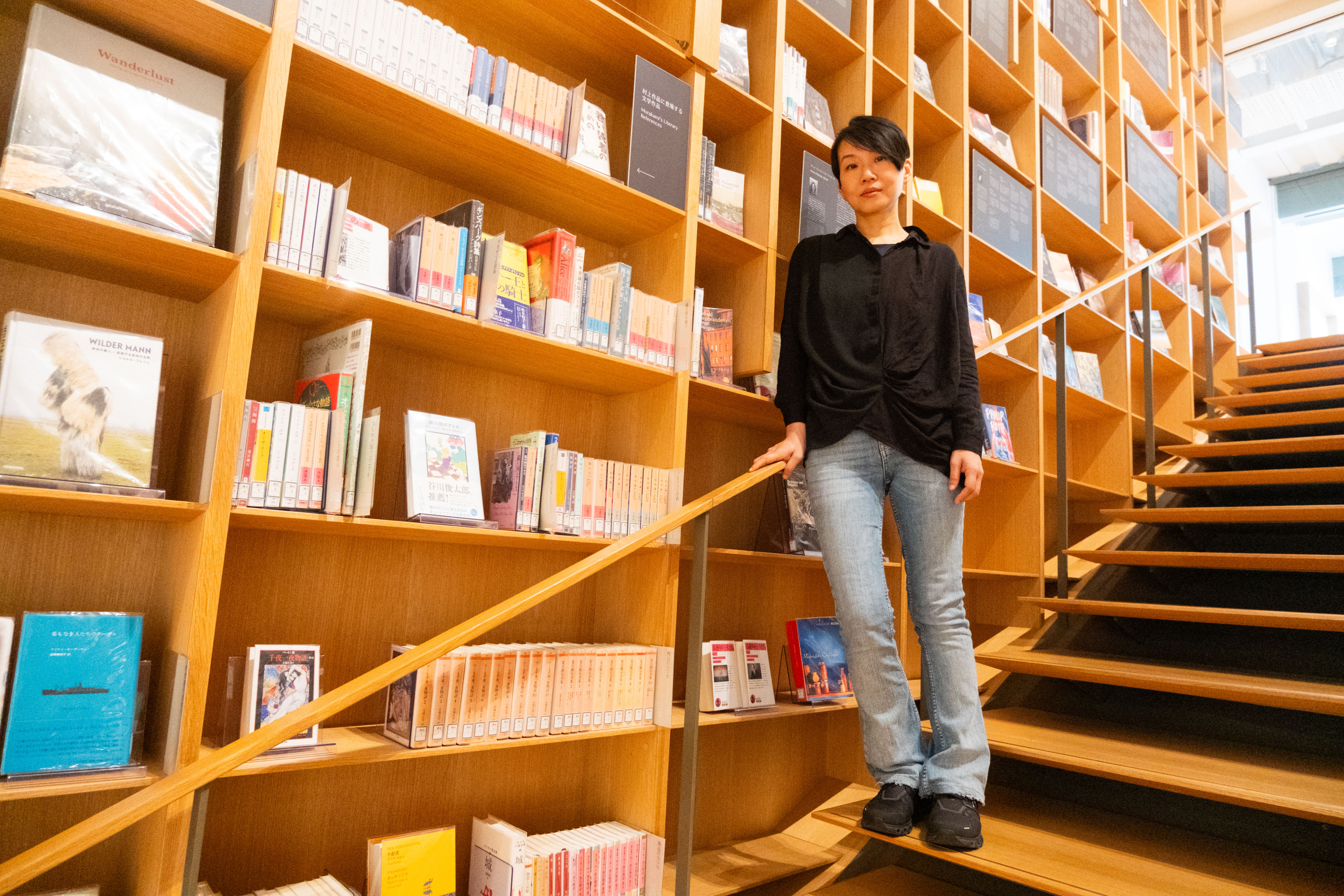
謝曉虹 (Dorothy TSE Hiu Hung) is a Hong Kong–based novelist and short story writer. Her books include 好黑 (So Black) and 無遮鬼 (Ghost in the Umbrella). She is also a literary critic and translator, and a co-founder of the Hong Kong literary journal Fleurs des lettres. She has received the Hong Kong Book Prize, the Hong Kong Biennial Award for Chinese Literature, and Taiwan’s Unitas New Fiction Writers’ Award. Her short story collection Snow and Shadow, translated by Nicky Harman, was longlisted for the Best Translated Book Award. Her debut novel 鷹頭貓與音樂箱女孩 (Owlish), translated by Natascha Bruce, was a finalist for the National Book Critics Circle Gregg Barrios Book in Translation Prize. Her latest novel, 逝水流城 (City Like Water), also translated by Natascha Bruce, received an English PEN award.
Related
-
“Letters from the Haruki Murakami Library”― Rebecca Brown
2025.12.02
-
“Letters from the Haruki Murakami Library”― Camilla Grudova
2025.10.20
-
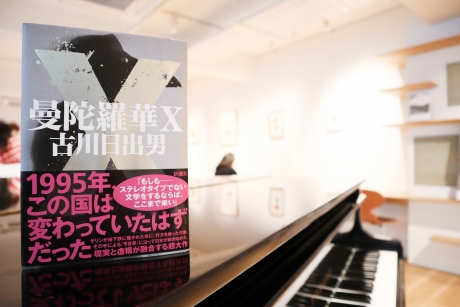
Memories of Things That Never Happened to You
2022.12.12
- Hideo Furukawa
-
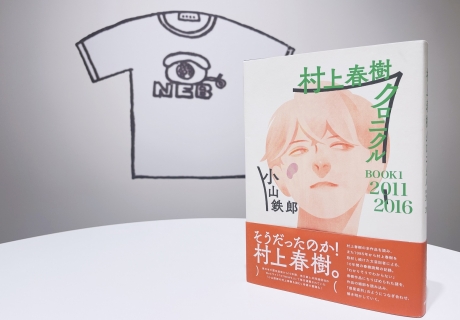
Historical Consciousness and “Boomerang” Thoughts in the Works of Haruki Murakami
2022.05.08
- Tetsurō Koyama
-
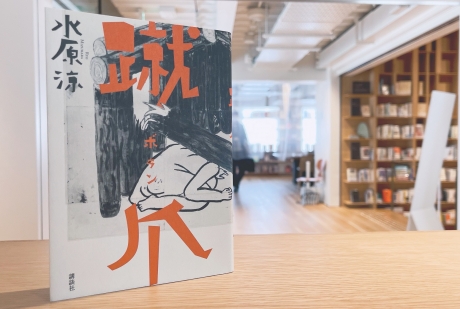
Useful Landscape
2022.03.28
- Ryō Mizuhara
-
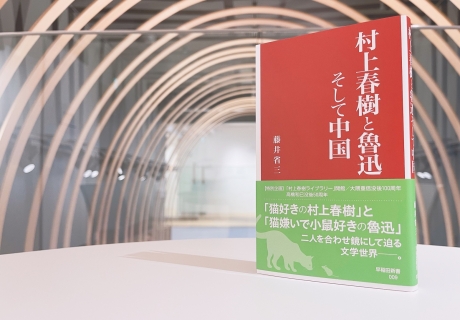
My Personal History with the Literature of Haruki Murakami
2022.02.25
- Shōzō Fujii