


“Letters from the Haruki Murakami Library”― Rebecca Brown
2025.12.02

“Letters from the Haruki Murakami Library” is a series consisting of letters written by guests of the Waseda International House of Literature, inspired by their visit.
Our second letter comes from Seattle-based writer Rebecca Brown, who stayed with us in June 2025. Like Camilla Grudova, she was inspired by her time at the Waseda International House of Literature to reflect and write during her stay.
Dear Dick Galloway,
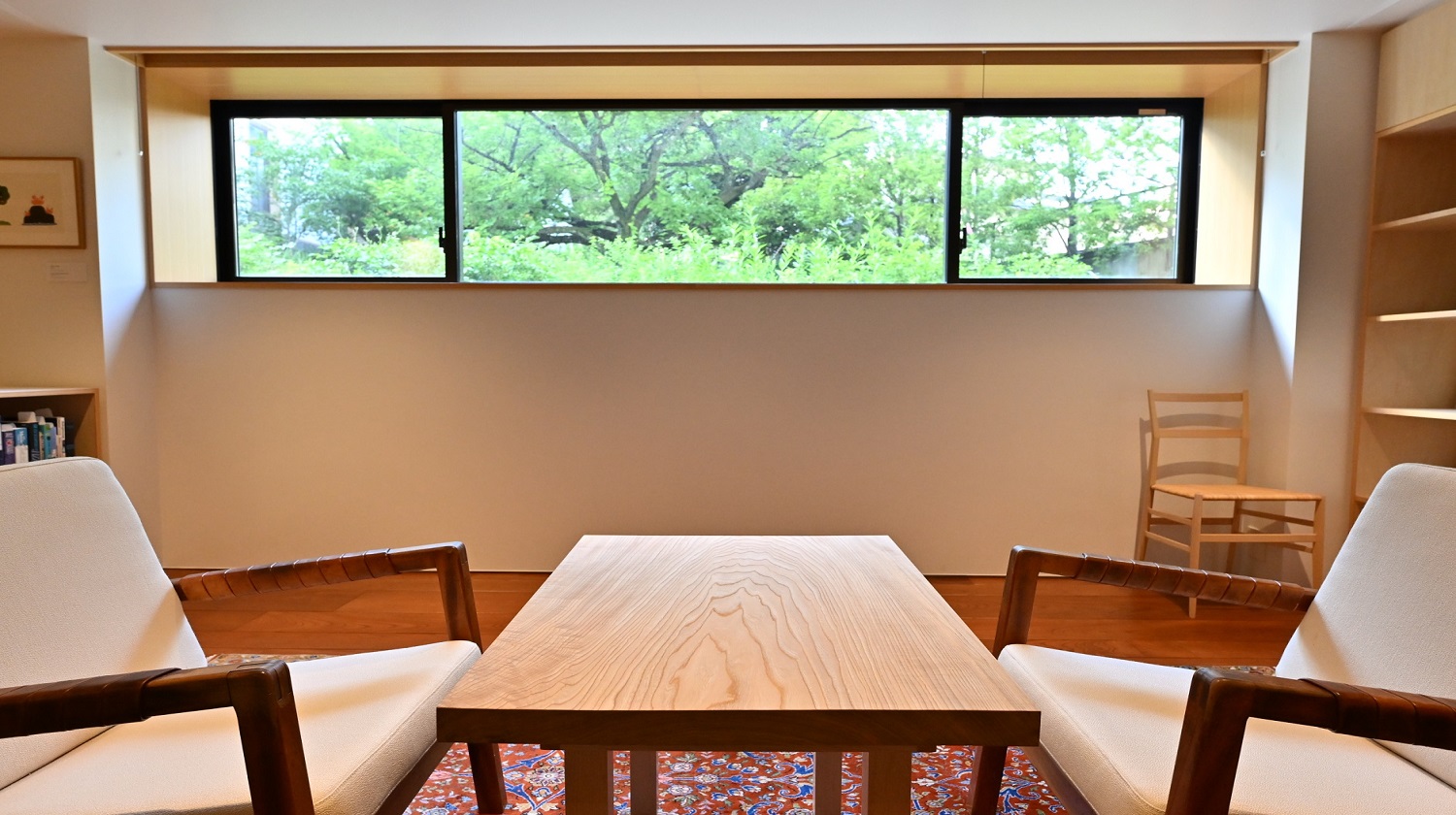
I got back from Japan recently and I have been wanting to write you a letter. I went to Japan courtesy of the The Waseda University International House of Literature/The Haruki Murakami Library in Tokyo. It’s a great place designed to bring people together from around the world together. I met with writers and translators and old friends and did some events and even some writing of my own. I worked in my apartment in the mornings, then about midday I would head over to the Murakami library to sit in the cafe with lunch and a coffee and read and listen to music. Most afternoons I went for a walk.
One afternoon I went to the Tsubouchi Memorial Theatre Museum, which is across from the Murakami library, and wandered through the exhibits of masks and puppets and performance playbills and TV and video clips from Japanese and world theater. Fantastic stuff.
The room with the post-mid 20th century Japanese theater, though, felt different. In that room I saw stills from plays where the sets were bleak, gray and broken, like the aftermath of a bombing, and the actors were costumed in drab, torn, dusty looking clothes and make-up that hollowed their cheeks to look if they were starving. The exhibit descriptions didn’t talk about what it was like to make art in Japan after World War II, but I couldn’t not think about that.
Not too far from my apartment is the Soseki House and Museum. I don’t know if you’ve heard of him but he was a great writer from the early 20th century, and his books inspire me because they are all over them map – heartbreaking novels about friendship and grief, a satire from the POV of a cat, evocations of strange dreams – and are imbued with a intense awareness of the how fast the world around Soseki was changing.
I wish I’d asked you when you were alive what it was like to be raised when you were, then go through World War II, then the protests of your teenage kids against Vietnam, the feminist movement and a gay daughter. Actually, I do know about the latter; you accepted and loved Chris’s being gay as soon as she told you, and you embraced me as a daughter when she brought me into your family.
From the outside, the Soseki house museum is sleek and clean, all glass and reflective metal. Inside, there’s a partial reconstruction of his house so you can get a sense of Soseki’s studio and how he lived with his wife and kids and entertained his visitors. I followed the cat paw prints that guided me through the exhibits and wandered around outside in the garden. When I got back to my apartment later and looked it up, I read that the house had been rebuilt “after the war.”
I had read this same phrase before when I’d gone to see another house in my neighborhood The Sekiguchi Bashoan had also been rebuilt “after the war” on a site Basho had lived. The casualness and the frequency of that phrase, which I saw other places too, kept nagging me. I thought about how much had to be remade “after the war.” The effects of the war were not abstract in Japan, but material, unlike in the US where, until 9/11, our mainland had never been attacked from abroad.
How do people get over war? How long does that take? How does someone go from hating their wartime enemy to not? I felt stupid even thinking this, like a naive kid who whines for the first time about life not being fair. But walking around in a city that had been bombed, in the country that had been bombed by nukes, made the war and its aftermath feel visceral.
When you were a little boy, Dick Galloway, you had an important experience. The story Chris tells me is that your 5th grade teacher came into class one day with a stack of envelopes and asked if anyone wanted a penpal. You raised your hand and picked a name and began corresponding with a Japanese boy. His name was Masami Yamata and you two kept writing each other for years. You two stopped writing letters during World War II, then after the war, Masumi wrote you again and you wrote him back. You two wrote to one another for years, through boyhood and adolescence and becoming adults, through marriage and fatherhood. Chris remembers the time that Masami Yamata came to visit your family in Wisconsin. She was ten then, the same age you were when you started exchanging letters with Masami. Masami Yamata brought your wife, Pat, a set of Noritake china, and for the kids The Little Peach Boy, a children’s book of Japanese fairy tales. The Menasha, Wisconsin newspaper devoted a full page to an article about Masami’s visit, including a quarter page photo of you, Pat, Masami and the Noritake china. This was in the late 1950s, a dozen years or so after we had dropped the nuclear bombs on Hiroshima and Nagasaki. Had any Japanese person visited Menasha since then? Had any Japanese person ever visited Menasha before? Had anyone there ever had a Japanese friend?
The Galloway kids read that book of Japanese fairy tales for years. Chris especially loved the story of the little peach boy. It’s a great story about good overcoming evil. Chris attributes to it her love of Japanese culture – studying Ozu and Kurosawa in college, watching samurai movies with her son, introducing her grandkids to Miyazaki movies and reading everything from Chikamatsu to Murakami.
In the early 2000’s. when Chris and I were in Japan, she took the train to Nagoya, where Masami Yamata lived. When she got off the train a Japanese man in his 80’s walked up to her and said, “I am Masami Yamata, Dick Galloway’s friend.”
The neighborhood I stayed in when I was visiting the International House of Literature is full of students, so there are tons of places for cheap eats. I recognized a lot of names from home: McDonald’s, Subway, Starbucks, 7-Eleven. I saw stores with English language names like “Family Mart” and “Freshness Burger”. It felt like Japan infused by America and the students loved it. I thought of our grandkids, the age of those students, who grew up on anime and samurai movies and thinking that Japanese culture is cool.
I think I’m writing you this letter, Dick, partly because, like most people I know, I feel a lot of despair about the world. The Genocide in Gaza, destruction in Ukraine, Trump’s horrible America rounding up and abusing immigrants and refugees, my horrible America…. I feel a lot like people are the worst, and I am trying to make room in my head for something else. I want to believe that people, individual people and groups of people in nations, can change and move towards goodness after awfulness.
You and Masami were friends, Dick Galloway. You wrote past the war your countries fought and renewed your being friends. A Japanese man gave some American kids a book and it opened up an entire culture to one of them.
Readers and writers and translators from all over the world come together to an International House to listen and talk and learn from each other and maybe even write letters and turn into friends.
These things all give me hope.
Thank you.
Sincerely,
Rebecca Brown
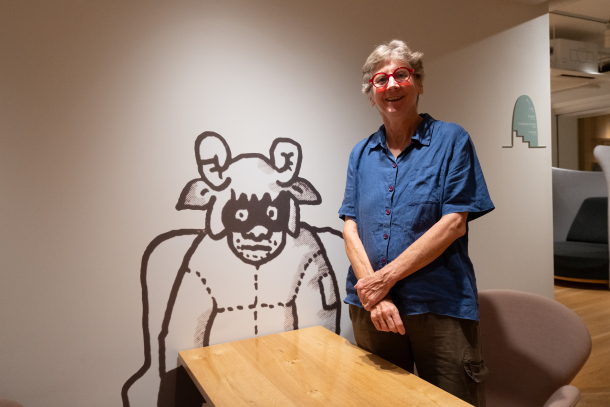
Rebecca Brown
Rebecca Brown is a writer based in Seattle. Her works translated into Japanese include The Gifts of the Body, The End of Youth, The Dogs, Excerpts from a Family Medical Dictionary, Not Heaven, Somewhere Else, and Woman In Ill-Fitting Wig (with paintings by Nancy Kiefer). Her acclaimed work The Gifts of the Body was reissued by Twililight on June 20, 2025.
Related
-
“Letters from the Haruki Murakami Library”―謝曉虹 (Dorothy TSE Hiu Hung)
2026.07.03
-
“Letters from the Haruki Murakami Library”― Camilla Grudova
2025.10.20
-
Memories of Things That Never Happened to You
2022.12.12
- Hideo Furukawa
-
Historical Consciousness and “Boomerang” Thoughts in the Works of Haruki Murakami
2022.05.08
- Tetsurō Koyama
-
Useful Landscape
2022.03.28
- Ryō Mizuhara
-
My Personal History with the Literature of Haruki Murakami
2022.02.25
- Shōzō Fujii