"I want to create a future where it's commonplace for university students from urban areas to attend local events."
Hiroto Maruta, 3rd year student, School of Creative Science and Engineering
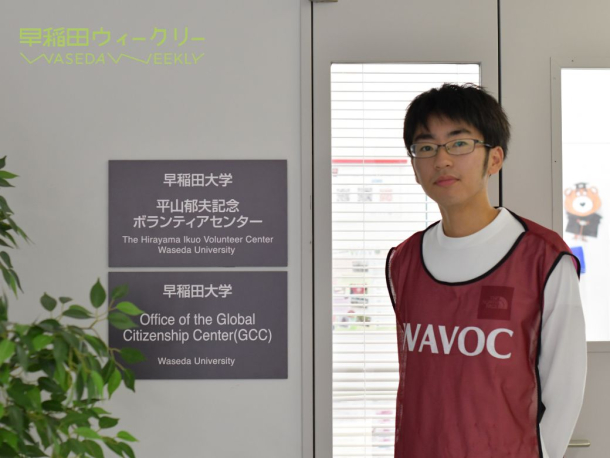
In front of The Hirayama Ikuo Volunteer Center (WAVOC) (WAVOC) in Building 99 Waseda Campus
Starting from his childhood memories of the Great East Japan Earthquake, Maruta, a third-year student in the Faculty of Creative Science School of Creative Science and Engineering has been involved in activities in Rikuzentakata City, Iwate Prefecture, organized by the The Hirayama Ikuo Volunteer Center (WAVOC), and disaster relief volunteer work on the Noto Peninsula. Until the end of October 2026, he was living a dual-city life between Tokyo and Fujinomiya City, Shizuoka Prefecture, as an intern for the "Regional Revitalization Cooperation Team." To date, he has visited a diverse range of regions and built relationships with 18 municipalities. We delved into the source of Maruta's passion, as he says, "I want to create a future where it's commonplace for university students to visit local communities."
—What sparked your interest in disaster relief volunteering?
I've always loved traveling, and I've already visited all 47 prefectures of Japan twice. When I was in high school, I was on a typical tourist trip, visiting all the classic tourist spots, when I suddenly realized, "I'm just following a guidebook." I realized there were no new discoveries for me there. I wanted to do more than just superficial sightseeing; I wanted to immerse myself in the local community and learn about the real lives and voices of the local people. That strong desire was the initial trigger for my interest in volunteering and community activities.
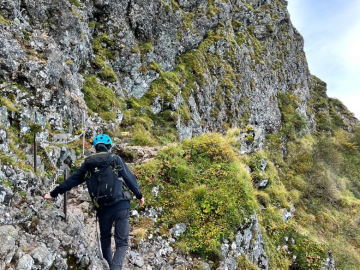
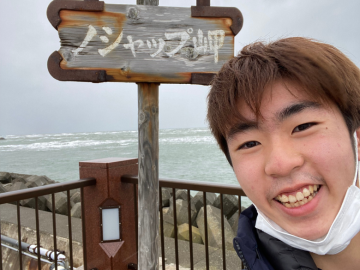
Photo on the left: A photo taken when he hiked across the Yatsugatake Mountains in high school.
Photo on the right: A photo taken when he traveled to Wakkanai City, Hokkaido in high school.
Another starting point is the Great East Japan Earthquake, which I experienced when I was five years old. At the time, I was living in Tokyo and have almost no memory of the earthquake itself, but the sight of the huge fire that broke out in a place visible from my house left a strong impression on me. As I grew older, the event of the earthquake became deeply ingrained in me, and every time I saw news reports about the earthquake, my feelings for the affected areas grew stronger. And the desire to "visit the area someday and observe a moment of silence" grew stronger. With this background, my interest in disaster relief volunteering grew when I was in high school, and when I went to university, I took the plunge into full-fledged activities on the ground.
--I've heard you're actively working in disaster-stricken areas such as Rikuzentakata City and the Noto Peninsula. What kind of activities are you doing there?
During the summer of my first year of university, I visited Takatamatsubara Memorial Park for TSUNAMI Disaster in Rikuzentakata City for the first time. I was captivated by its charm, drawn in by the vastness of the sky, something you rarely experience in the city center, and by the park's scenery. Since then, I've visited two to three times a month, and sometimes even every weekend. Counting it up, I spent nearly 100 days a year in Iwate. Until the end of fiscal year 2025, as a member of the "Rikuzentakata Project," I was involved in the planning and operation of the Great East Japan Earthquake memorial event, "3.11 to the Future - A Day Where Everyone's Thoughts Gather," and utilized the knowledge I gained in my undergraduate studies to design and implement the "Hikari no Hikari" (Monument of Light) illumination of the seawall at Takada Matsubara Tsunami Reconstruction Memorial Park.
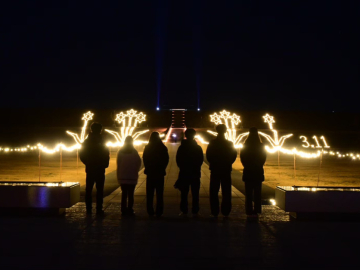
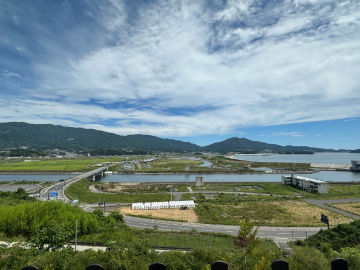
Photo on the left: A photo taken in March 2025 with members of the "Hikari no Hi" project.
Photo on the right: Takada Matsubara Tsunami Reconstruction Memorial Park. This park is also famous for its "Miracle Pine Tree."
However, the first program I participated in after entering Waseda University wasn't actually in Rikuzentakata City, but rather the "Noto Peninsula Earthquake Volunteer Program" that I took in May of my first year. Since then, I've continued to visit Noto every three months.
The reason I chose Noto was because I wanted to see with my own eyes the process of recovery from immediately after the earthquake. More than 10 years had passed since the Great East Japan Earthquake, and a new town had been formed in Rikuzentakata City. I had seen the finished town, but I didn't know the process of how the town was built over the past 10 years or the struggles of the people involved, so I felt frustrated that I couldn't truly understand the background of the town's and people's recovery.
When I actually visited Noto and listened to the voices of those living in temporary housing, I witnessed the struggles that never fade with time, and the real struggles of people trying to live in that land even in a situation where the future is uncertain. I deeply felt that "reconstruction" is not something that can be achieved overnight, and that it requires visiting the area over a much longer period and continuing to stand by them.
—What are some of your most memorable experiences from your disaster relief volunteer work?
The words of a senior from Iwate University, who I met through running the Rikuzentakata Project, have left a deep impression on me. This person was affected by the disaster in Ishinomaki City and lost family members in the tsunami, but their words, "Because we received support from so many volunteers, it's now our turn to give back," really struck a chord with me. I was born and raised in Tokyo, and went straight from the affiliated high school to Waseda University, so I didn't have any friends who had experienced the disaster or anyone who could directly share their tsunami experiences. It was only by jumping into community activities that I was able to meet people directly affected and from diverse backgrounds, and I truly felt that my perspective had broadened significantly.
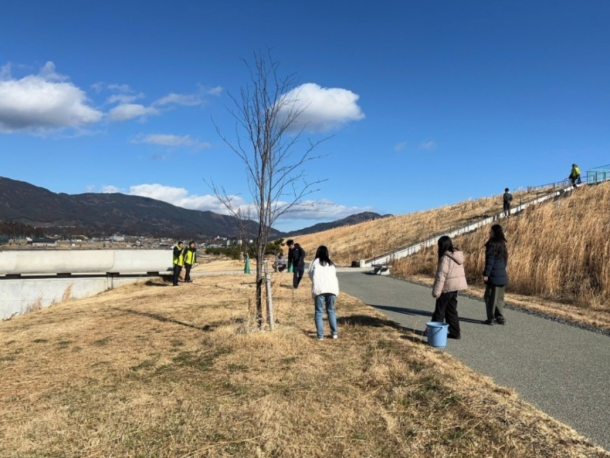
Preparations are underway to install lights on the seawall within Takada Matsubara Tsunami Reconstruction Memorial Park.
—You interned as a "Regional Revitalization Cooperation Team" member in Fujinomiya City, Shizuoka Prefecture until October 2026. Why did you choose to start your activities in Fujinomiya City?
Through my deep involvement with the community, I realized that volunteering alone had its limitations in terms of sustainability, and I began to think about creating a system that would allow people to continue to be sustainably involved with the community. Therefore, from July 2026, I undertook a four-month internship, experiencing a dual-location lifestyle, commuting between my home in Tokyo and Fujinomiya City. Fujinomiya City has a population of approximately 120,000, but there are no universities within the city. In an environment where youthful energy is difficult to reach, my mission was to increase the number of "related population"—people who will continue to be involved with Fujinomiya City in the long term.
Specifically, I planned activities such as attracting university students from urban areas to participate in seminar camps and organizing opportunities for local high school students and urban university students to interact directly. Up until now, I had been working in settings that someone else had prepared for me, but through this internship in Fujinomiya City, I realized the difficulty of being on the ground as a "connector for the community."
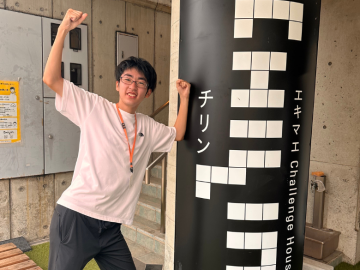
A photo taken during an internship with the Fujinomiya City "Regional Revitalization Cooperation Team." "Ekimae Challenge House CHILL IN" is a community hub that supports young people's new challenges.
--Please tell us your future goals.
My goal is to be a "coordinator" who can connect students living in Tokyo with communities throughout Japan, creating relationships that enrich both sides. I want to build upon the connections I've made with wonderful people and communities so far, one day creating a large-scale cyclical system that will encompass all of Japan. What I ultimately want to realize is a future where "university students in urban areas routinely visit local communities."
Currently, as a first step, we are preparing to incorporate our business in February 2027. Leveraging our experience and network in the region, which we have been deeply involved with, we are conducting a pilot project to match the challenges faced by local governments and businesses with urban university students who want to get involved in the region.
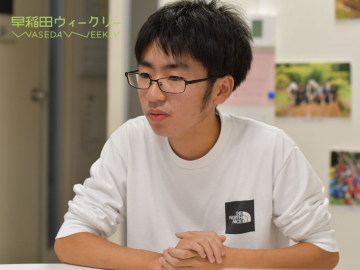
Maruta being interviewed
940th
Interview and text by: Waseda Weekly Reporter
Nanami Yoneda, 4th year student School of Social Sciences
【Profile】
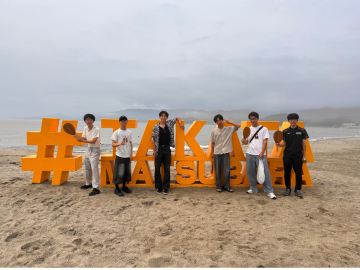
A photo with friends from the Waseda Frescobol Club. Maruta is on the far left.
Graduated Waseda University Senior High School. His hobby is playing frescobol, a beach sport originating in Brazil. He loves it so much that he plays once a week, and eventually founded the "Waseda Frescobol Club." His recommended class is "Verbalizing Experiences," offered by GEC. He also completed an internship in Fujinomiya City and recently established the Fujinomiya student club" Miyalabo."
Instagram: @maruchan_3776