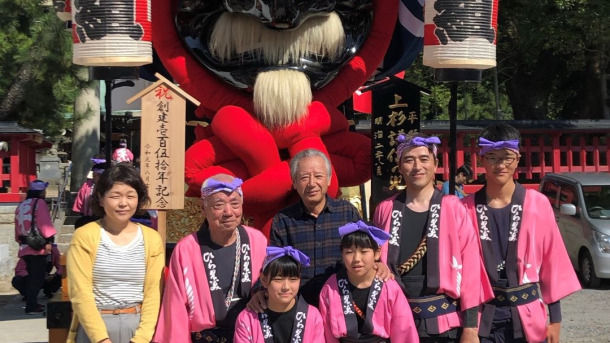
At the 150th anniversary of "Uesugi Kenshin's Helmet" in 2019 (the author is on the far right)
Waseda Hometown Ambassadors are students from Japan and around the world who come to Waseda and introduce their hometowns. This time, Toshiki Kimura, who is from Saga Prefecture, will introduce the charms of his hometown.
"What is there in Saga Prefecture?" Read to find one answer to that question is here
Toshiki Kimura, first-year student, Graduate School of Education (Graduate School of Teaching), Department of Advanced Teaching Practice
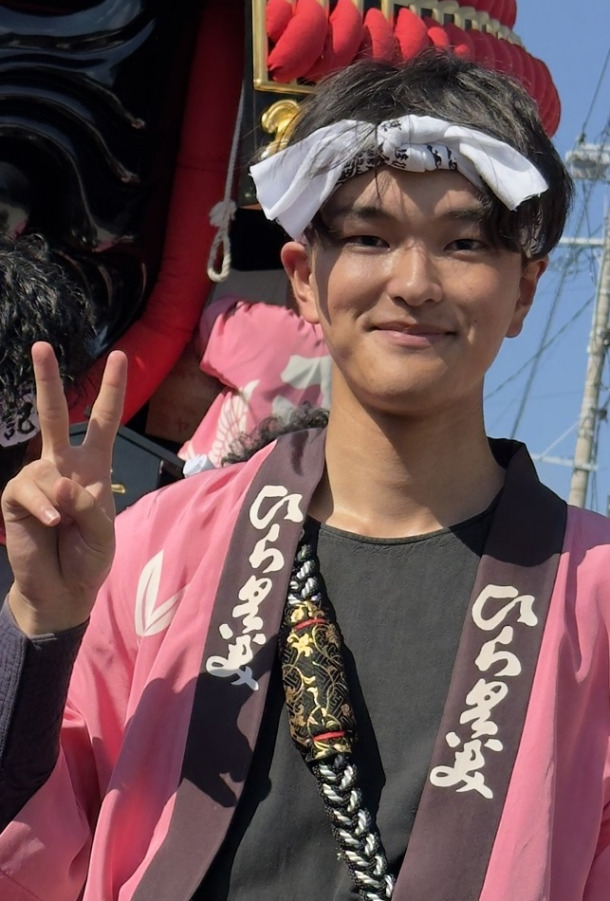 When I introduce myself and tell people where I'm from, I'm often asked, "What's there to see in Saga Prefecture?" It's true that compared to neighboring Fukuoka and Nagasaki prefectures, Saga may not be as well-known as a tourist destination.
However, Saga Prefecture has a deep connection with Waseda University. It is the birthplace of Shigenobu Okuma, the founder of Waseda University. His birthplace and the Okuma Memorial Museum are located about a five-minute drive from JR Saga Station. Karatsu in Saga Prefecture is also home to Waseda Saga Junior and Senior High School, which are affiliated with Waseda University.
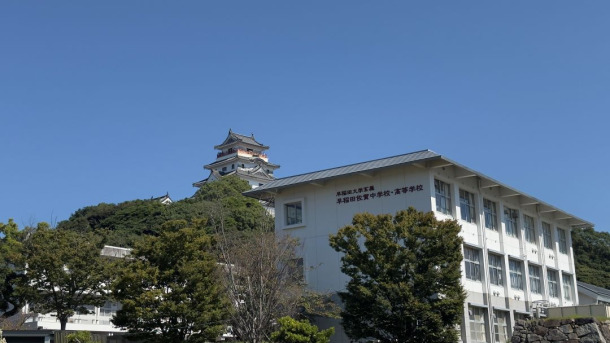
Waseda Saga Junior and Senior High School with Karatsu Castle in the background (photographed from east side of the castle, Karatsu)
The name "Karatsu" in my hometown of Karatsu, Saga Prefecture, comes from the combination of "Kara" (foreign country) and "tsu" (port). Facing the Genkai Sea, an area of water stretching across northwest Kyushu, the city has long flourished through exchanges with the continent. Karatsu Castle stands in the center of the city, offering panoramic views of the city, the sea, and Niji-no-Matsubara, one of Japan's three largest pine groves and a nationally designated special scenic spot. The ruins of Nagoya Castle, a nationally designated special historic site built by Toyotomi Hideyoshi as a base for dispatching troops to Korea, straddle Karatsu and Genkai, where visitors can learn about the history of this area, a time when feudal lords from all over Japan gathered.
Karatsu ware, designated as a national traditional craft, is a type of pottery characterized by its rustic texture and colorful decorations, made from coarse clay, and has a tradition dating back over 400 years, making it older than the nationally famous Imari ware and Arita ware. Yobuko, located further west than Karatsu, is also famous for its fresh squid.
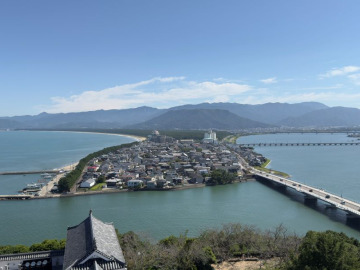
Left photo: Niji-no-Matsubara seen from Karatsu Castle. The greenery visible along the coastline is all pine grove.
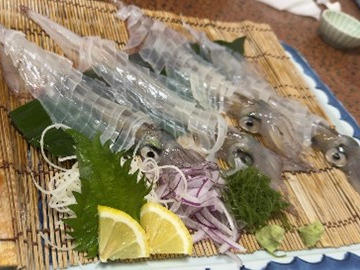
Photo on the right: Yobuko squid. Very fresh and delicious!
Karatsu Kunchi, the annual autumn festival of Karatsu Shrine, is held every year from November 2nd to 4th. Originating in the Edo period, each of the 14 castle towns has its own float, and each has maintained its own unique style. The gorgeous, lacquered floats, with designs ranging from lion heads and helmets to sea bream, were registered as a UNESCO Intangible Cultural Heritage in 2016. Over the three days, 500,000 to 600,000 people visit, captivated by the sight of the floats making their way through the narrow alleys, their dynamic movements as they turn corners, and the reverberating sounds of the music, creating a lively atmosphere throughout the town.
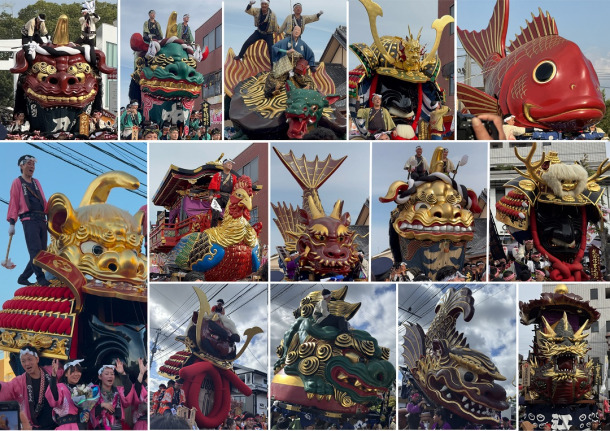
Unique floats made between 1819 and 1876
A special float for me is Hirano-machi's No. 10, "Uesugi Kenshin's Helmet" (created in 1869). My ancestors lived in this town and were involved in the festival, so I have participated as a musician and puller since I was a child and have practiced flutes and drums with the town and the Karatsu Hikiyama Hayashi Preservation Society. The moment when participants and spectators call out "En-ya!" and "Yoi-sa!" in unison with the music is thrilling for both participants and spectators. After completing graduate school, I plan to return to Karatsu as an elementary school teacher in Saga Prefecture, where I hope to pass on this festival to the next generation.
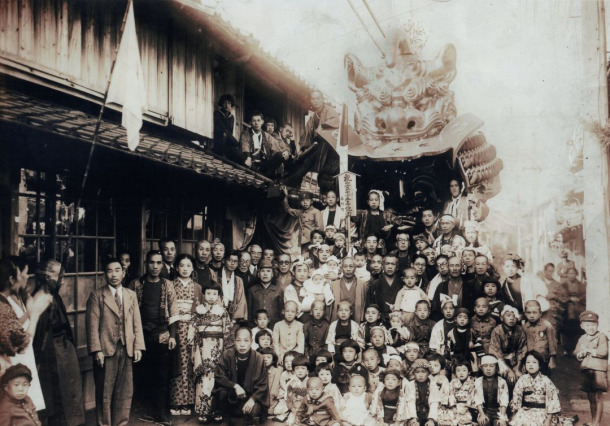
Uesugi Kenshin's helmet, photographed in 1944. The author's ancestor can be seen to the right of the float. (Photo provided by Toshiharu Kimura)
I currently live in Kanagawa Prefecture's Kyukeisha Juku, which was originally established as a dormitory for people from Karatsu and is still home to many students from Saga. There, too, I practice flutes and drums with local children, and every October we hold a festival with floats modeled after the Red Lion, so I can feel the atmosphere of Karatsu Kunchi even in this faraway place.
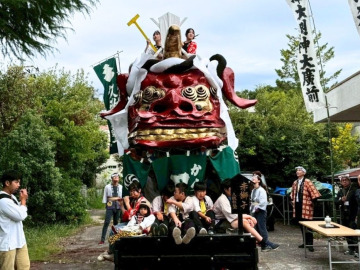
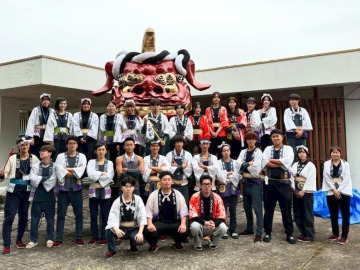
The Hikiyama Festival at Kyukeishajuku in Asao Ward, Kawasaki, was held in October 2025. Local children (left) ride on the floats, and a dormitory student from Kyukeishajuku (right)
Karatsu Kunchi is a festival that unites people across generations and regions, connecting the town and its people. The town of Karatsu is not only spectacular on the day of the festival, but you can also enjoy its diverse charms at any time, such as Karatsu ware, Yobuko squid, and the scenery of the castle town. It is easily accessible from Fukuoka City, so be sure to come and experience the charm of Karatsu town and its festival.
◎ This is what Saga Prefecture is like ◎
Saga Prefecture is located in the northwest of Kyushu, bordering Fukuoka and Nagasaki prefectures. It has a population of approximately 790,000 (as of April 2025) and an area of approximately 2,440 square kilometers. The northern part of the prefecture faces the Genkai Sea, while the southern part is dominated by the Saga Plain, making it a thriving agricultural region. Nori farming and tidal flat fishing are also carried out along the Ariake Sea coast, making Saga Prefecture one of the leading agricultural and fishery prefectures in Japan. Saga City, the prefectural capital, is located in the central part of the prefecture and has a history of thriving as a castle town of the Saga Domain during the Edo period. Furthermore, Kanzaki District in Saga Prefecture is home to the Yoshinogari Historical Park, designated as a special national historic site.


![[Save version] Map of the four main campuses](https://www.waseda.jp/inst/weekly/assets/uploads/2026/06/110d605cfac40346aad1d2df464a6586-940x705-1-1-610x457.jpg)