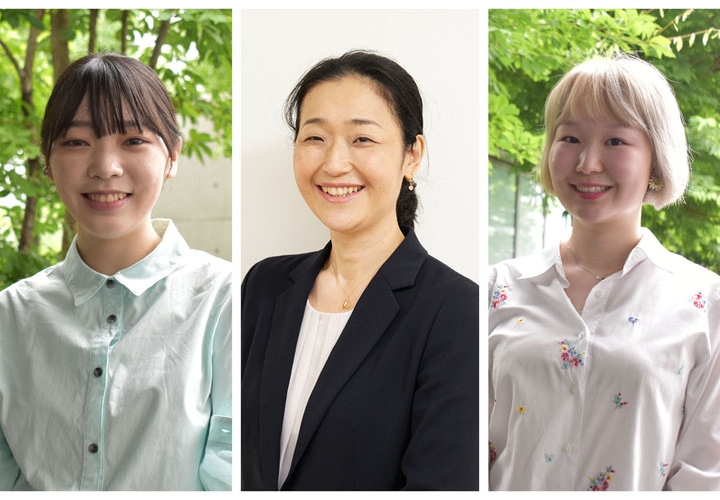






Born in Tokyo in 1980. Graduated from Waseda University School of Letters, Arts and Sciences I in 2005. While studying at university, he started the love banana collecting unit "Momoyama Shoji" and has listened to the concerns of over 1,200 people so far. His books as Momoyama Shoji include ``Love Counseling for Survival'' and ``Everything about Love Other than Being Popular and Being Loved'' (both published by East Press).


Being from an all-boys school, I don't have zero experience with relationships, but I have almost no experience with relationships within the same community. I believe that love can be a stimulus for life, and although it may not be essential to life, I think it can be an important element. However, as I became a university student and was able to spend my time without any particular problems even if I didn't interact deeply with the people around me, I recently started to lose track of how to communicate with others to create a romantic atmosphere.


I find it difficult to communicate with others. I also went to an all-boys school, so I feel like I understand. Unlike matching apps or group parties, the university community is not a place to meet people for the purpose of love. In order for love to develop, you need to let nature take its course, but it's not that easy.
Lately, I've been hearing a lot from college students about the risks of causing problems within the community. ``What would I do if my words or behavior were perceived as harmful by the other person?'' ``Rumors spread quickly on social media, so it's scary to think about what will be said and where.'' In a world where gaffes and harassment have become social issues, it's no wonder you're hesitant to invite someone out for dinner or a date.
The key point is whether or not you should create the ``romantic atmosphere'' that the consultant is talking about. It is not necessarily true that communication that can lead to romance is essential, such as bringing the two of you into a relationship alone, having erotic conversations, and listening to the other person's views on love. For example, while working together, you may feel that ``this person is great.'' Rather, they share the foundations of human trust, such as a sense of security, peace of mind, and risk management. After that, moving on to romance at the end may be a better match for you.
A few years ago, actions such as having a meal alone under the guise of student club errand were shared as a how-to. But now it could be a violation of the rules. How about honestly telling your partner that you're interested in them, saying, ``I want to go out to dinner with you,'' and building your relationship step by step? If you understand that you have a strong understanding of what the other person might be in trouble for, and you don't want to trample on their feelings unnecessarily, then they won't feel bad about it either.


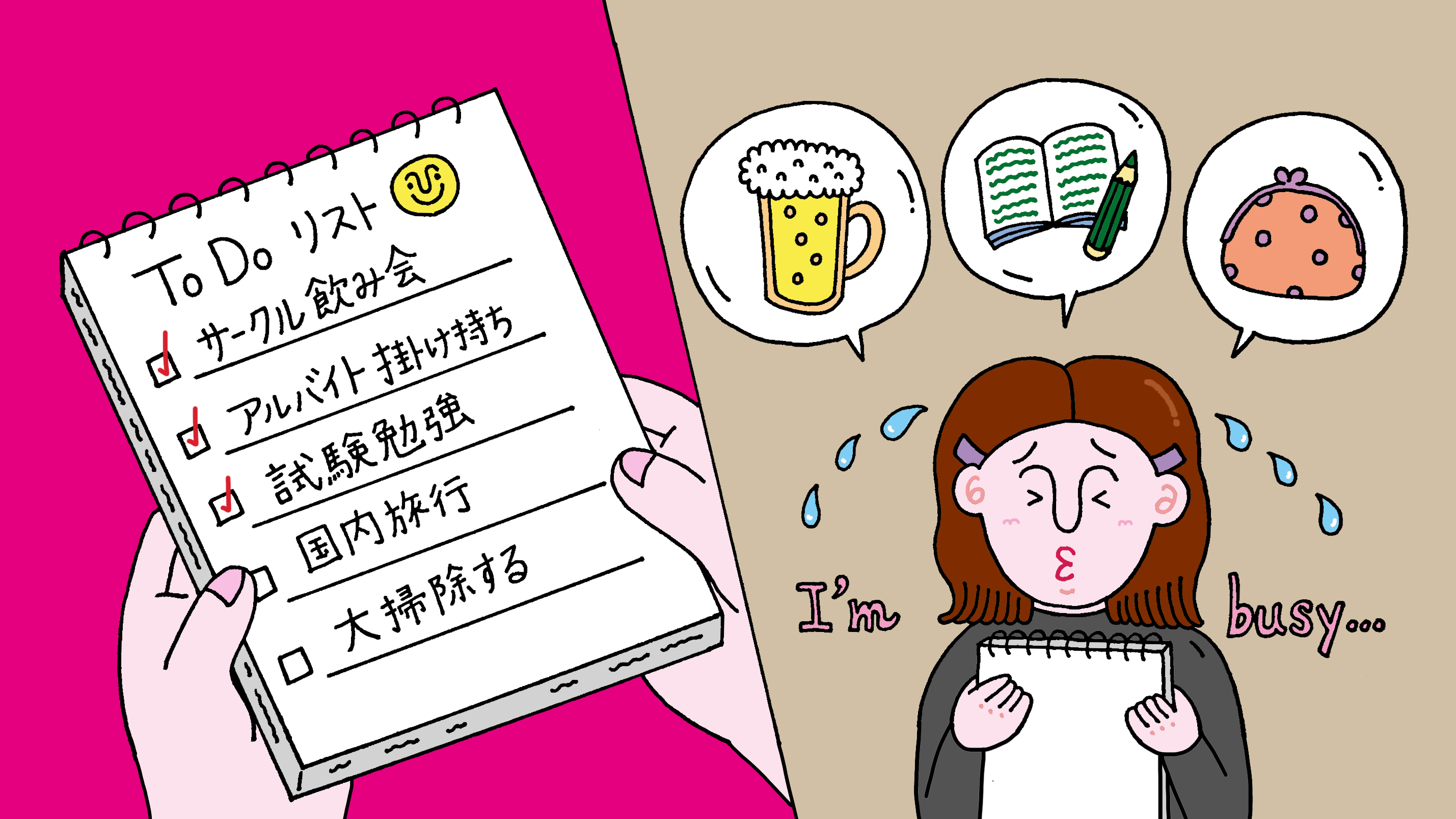
I don't want to fall in love. I'm busy living my own life, and giving my emotions away to other people can destroy my emotional stability. I don't think love is important, but what is important when you find someone you want to have a relationship with, what you can get out of it before or after you meet that person. I see a lot of people around me who have strong emotional ups and downs, who cry to their lovers right away, or who get angry when they're mentally unstable, and I find love to be a chore.


Modern university students appear to be really busy. Society is burdening us with many issues and pressure to ``increase productivity,'' ``use time effectively,'' and ``do what we need to do now to prepare for the future.'' There are so many tasks to handle, and it's difficult to handle them unless you keep your mind and body in good shape. I understand that the client's ``doing the best he can to make a living'' is a situation like this, but it's not unreasonable for him to feel that love is a chore in such a situation. There's no need to think of yourself as weird because it's a problem created by social structures, not individuals.
It is true that love is inferior to university studies and internships in terms of cost performance, cost performance, and returns. Not only will it be worse, but your schedule, goals, and to-do list will become a mess (lol).
On the other hand, love is considered wonderful because it involves facing the emotions of the moment with all your might. It depends on the time and situation, but if you cry or get angry, it's because you have high expectations of the other person. This is because they believe that even if they express their feelings, the other person will not break down. For example, children become violent because they feel that it is okay to be violent towards their parents, and in environments where there is really little connection between them, there are cases where children grow up to be overly nice children. The dynamism of intense emotional ups and downs also has the aspect of enriching life. I feel jealous too, but perhaps humans have a desire to be disturbed.
Even in the long run, the dynamism of love will color your life. On the other hand, if you pursue only productivity every day, it may be fulfilling at times, but it is questionable whether it will remain as a page in your memory. For example, five years from now, you may have memories of ``I had a fight with my boyfriend at this bar,'' but I don't think you'll look back and say ``I accomplished 10 things on my to-do list that day.'' (laughs) There's nothing wrong with finding love a hassle, but what you should be concerned about is the possibility of boredom. Sometimes it might be useful to shake yourself up a little. I think one of the gateways to this is the option of love.
Born in Tokyo in 1984. Dropped out of Waseda University School of Law in 2008. In 2006, she debuted as a drag queen by winning the Young Crossdresser Grand Prix in her first appearance. Since then, he has appeared in numerous events, artist concerts, PVs, fashion shows, commercials, plays, movies, etc. On his YouTube channel ``JUDGE ME,'' he provides advice to young people.


I think love is important because spending more time with others enriches your life. If you have a lover, you'll probably have more fun meeting them and going on trips. I currently have a boyfriend whom I met through a matching app. However, I don't like it at the moment. The third time we met, he confessed his feelings to me, and I said ``I don't hate him, and maybe I'll fall in love with him eventually.'' Isn't this kind of relationship good? Should I fall in love with her properly before we start dating?


I think it's perfectly OK to start a relationship thinking, ``Maybe I'll fall in love with you eventually.'' In fact, it is an extremely rare case that the feelings of both parties are "50:50" and equal. When it comes to love, isn't it common for one person's feelings to be heavier or lighter?
It is true that the ``love supremacy'' that ``the best thing for lovers to do is to love each other and be harmonious'' has covered the world like a religion. But in reality, I don't think a sincere love without any lies exists in the first place. All relationships are built with a little bit of sincerity and a lot of planning and calculation. You don't have to worry about whether you like it now or not. If you're going to force it, why not set a time limit for yourself, and if your feelings don't move when the time comes, say goodbye with compassion and kindness? I think that's what honesty means.
What caught my attention was the first half. I wonder if love is great because it increases the fun of meeting people and going on trips...? It may still be a good time to have a lover. However, there may come a day in your long life when you will move on to a phase where you are truly in love with someone, love them, and are loved by them. Only then will you be able to feel the essence of love.
That's why you should have lots of crappy relationships when you're young (lol). Because someone did something dishonest to me, I started to value people. I also feel grateful to be cherished. After experiencing the worst sex, you should be able to have the best sex. However, if you both agree and don't want to get pregnant or get sexually transmitted diseases, don't forget to use contraception.
I myself have had bad relationships and experiences that didn't even lead to that, so I am able to live happily now. Don't worry about what's going on around you and enjoy your love life freely.


Honestly, I don't care if I want to be in a relationship or not. It's something you can do if you have the right timing and luck. I think it's best to just enjoy it. Because if you depend on it too much, you will sacrifice yourself and deplete yourself. I have never had any romantic feelings. I have been with someone for 4 years now, but I don't feel anything like what is commonly called ``heart-throbbing.'' I'm wondering if it's okay as is.


First, regarding the presence or absence of romantic feelings. There are many people in the world who are ``asexual'' who do not have sexual desire for their partner, and ``aromantic'' who do not have romantic feelings for their partner. If you've been together for four years even though you don't have a crush, I think it's a good relationship. If you can avoid being too dependent on your partner right now, it's probably a very solid relationship.
So, apart from good or bad, what is “excitement”? This cannot be expressed in words. If I had to say it, it's a heart-pounding ``tuktoon'' (lol). There is a widespread belief in the world that ``excitement is paramount,'' and there is a tendency that ``if the excitement stops, love is over.'' I think that kind of thinking is nothing more than nostalgia for the days when I was excited. As you gain experience, you'll find more premium things than excitement, and the sense of fulfillment that peace brings will also increase.
I fully agree with the client's idea that ``if the timing and opportunity are right, we can do whatever we want.'' On the other hand, I personally think that love is fun precisely because it involves sacrificing oneself and consuming oneself.
Looking at other people's consultations, I get the impression that they all have their lives and careers planned out too firmly, and they tend to want to avoid conflict and exhaustion. But, most of my life plans don't go well. On the day of Waseda University's Entrance Ceremony, I never thought for a second that I would become a drag queen in the future (lol).
In life, isn't it more important than ``how to make plans'' and ``how to behave when plans go awry''? That flexibility, ``usable muscles,'' is what's important in both love and life. Everyone at Waseda is very smart, so I would like them to improve on that aspect as well. Even if you get promoted and become an elite and have many subordinates under your command, you can meet strange people while you're young, fall in love with someone who has different values than you, and expand your knowledge by hanging out in strange towns once in a while. You can also think that you will learn imperial science to control people's hearts.
Well, even if older generations like us seek love advice, it doesn't really resonate with younger people. Anyway, enjoy your love life now. If you fall down, just get up again. That's it for today. how do you do.
Born in Nagasaki Prefecture in 1973. Completed doctoral course at Waseda University Graduate Graduate School of Human Sciences in 2004, Ph.D. (Human Sciences). Since 2020, Associate Professor at Hyogo University of Education Graduate School of School Education. I am conducting research on marriage, pregnancy, childbirth, and family formation from the perspective of family sociology. Love is also mentioned in the media. His books include ``The Era of Unmarried Life'' (East Press). Currently preparing a co-edited book with Yuki Takahashi, ``Sociology of Love (tentative title)'' (Nakanishiya Publishing).


I think love is necessary to some degree because it deepens bonds that are different from those with friends and family and enriches life even more. For example, you can have valuable experiences such as being cared for by someone other than your family and thinking about things together. However, ideas, values, and customs do not necessarily match those of the other person. I often worry about how to compensate for our differences.


I think values and customs don't have to match. The person asking the question is probably assuming that there are only a limited number of people with whom they can share their private relationships. However, ``bonds that are different from those of friends and family'' must exist outside of lovers. You can share your life with roommates in a shared house, and there are some perspectives on life that you can only learn from your seniors and bosses. If you seek all of these elements in your lover, the number of ``differences'' will increase accordingly, and you will end up at an impasse. While dividing the important things into smaller parts, we limit the elements we look for in a romance. Isn't that kind of perspective necessary?
However, it is not easy. This is because we are living in an era of "individualization." Until about 30 years ago, there was a time in Japanese society when people shared a large set of values. Based on corporate systems such as lifetime employment and seniority, people graduate from university, get a job, get married around age 30, raise children, buy a house, and live on their pensions in retirement. Many people lived along this life course.
In modern times, that system has been dismantled. In sociology, it is called ``norms,'' but the ``common sense'' that governs people's lives is disappearing, and people must decide for themselves ``what to follow.'' Especially in private areas, where there are few opportunities to listen to what others have to say, the criteria for making judgments is becoming increasingly difficult.
Furthermore, semi-fictional and stimulating information comes in from social media, such as ``a couple who respect each other's values, always smile and have fun, and are outwardly attractive.'' Then, everyone will want every element in their lover.
These are difficult times, but let's take the fact that norms have weakened and options have increased as a positive. In the past, there were norms such as ``If you don't fall in love, you're half-life'' and ``It's admirable to have a lot of sexual experience,'' and social behavior was often restricted based on gender. Now you can decide for yourself what values you really value. Instead of being bound by constraints, return to your true self and think carefully about the values you value.


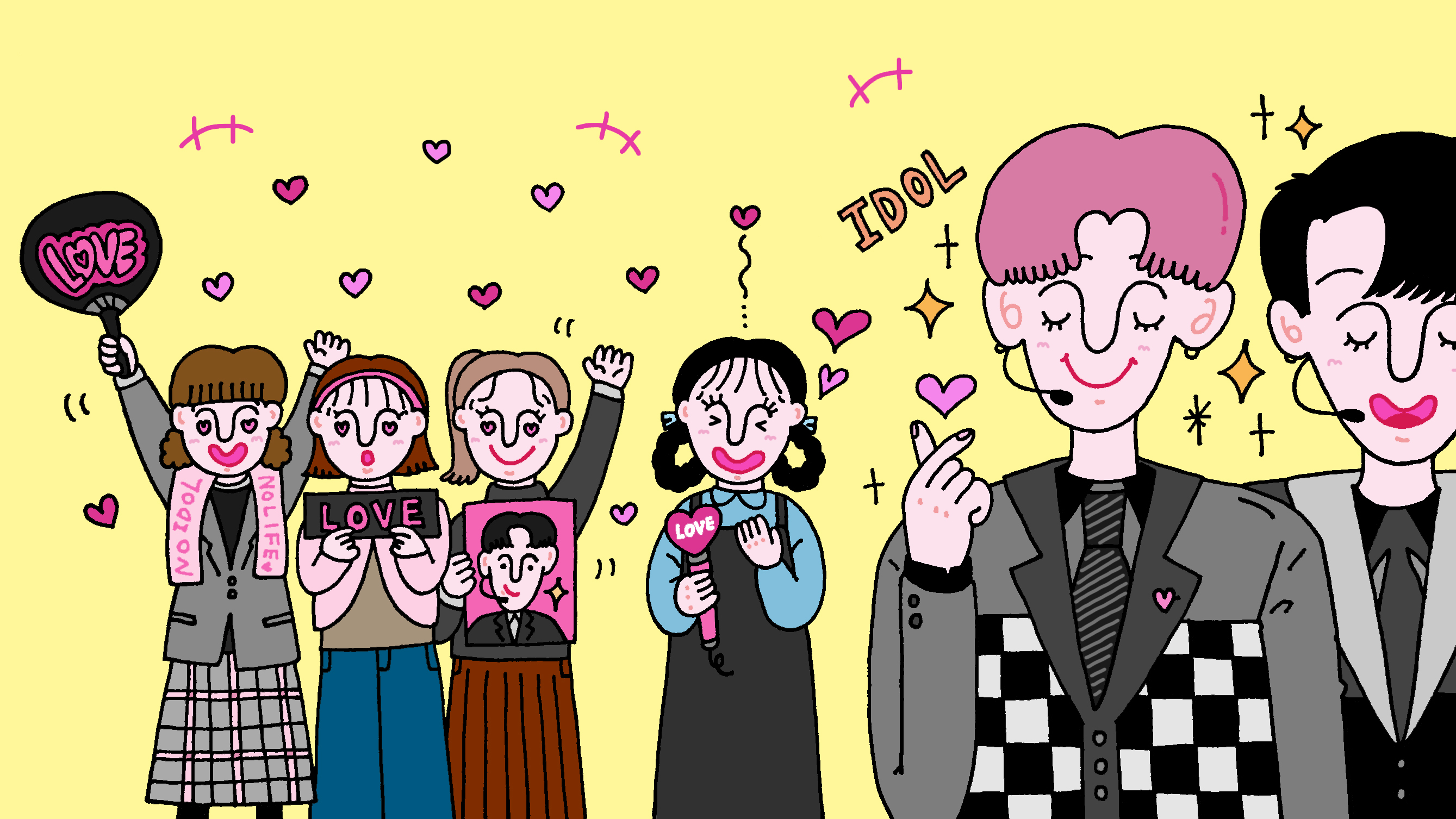
I don't think love is that important. There is somewhere within me the desire to live my own life without being influenced by others. Actually, I only get excited about ``Oshi(Favorite)''. I'm happy enough the way I am, but to be honest, I sometimes worry about whether it's okay to not fall in love with a real person. Can a crush on someone be called love?


Love for Favorite(Oshi) is a very interesting theme. It's an interesting question, so please become a sociologist (lol). The idols and artists who are the targets of their support are the ones who are doing everything they can to make the other person's heart flutter. There is also a lot of talk about ``fictromantics,'' where people have romantic feelings for fictional characters, and recent two-dimensional works are of very high quality. I think it's an understandable worry, and there's nothing wrong with being excited about pushing things.
When you think about it by incorporating the element of love into it, the world you see expands. ``I'm only excited when I recommend it'' is like saying ``When I think of sushi, I think of fatty tuna,'' and ``When I think of meat, I think of Kobe beef.'' If we think of love as something "extraordinary," then romantic dates and bright presents would fall into this category. From this point of view, I think it will be difficult to find someone who can win against the push of "Tokimeki Zenfuri".
On the other hand, love also has the charm of fostering fun and intimacy through the accumulation of small, everyday activities. If you think about it from that point of view, there may be a sense of value that ostracism is just a part of entertainment, and that there are other important things in love. Is love a daily thing for me? Is it something out of the ordinary?
Let's take a slightly more macro perspective. What Ookatsu and extraordinary love have in common is the aspect of consumption behavior. Media and SNS provide contexts related to love from various angles, such as ``A date spot you want to go to with your lover!'' Being immersed in it also means being sucked into the marketing whirlpool.
Furthermore, you need to be careful about people who use others as objects of “consumption.” Particularly in recent years in Japanese society, cases of people approaching their partners solely for sexual purposes and cases of them becoming victims of violence have become noticeable. There is an underlying asymmetry in gender and power, but it is also true that relationships have become easier to form on the internet, making it even harder to see the other person's true intentions.
Truly close relationships develop outside of power balances and money. In terms of protecting yourself from the consumerist society, you should prepare yourself for the idea of ``eating otoro and kappamaki à la carte.''
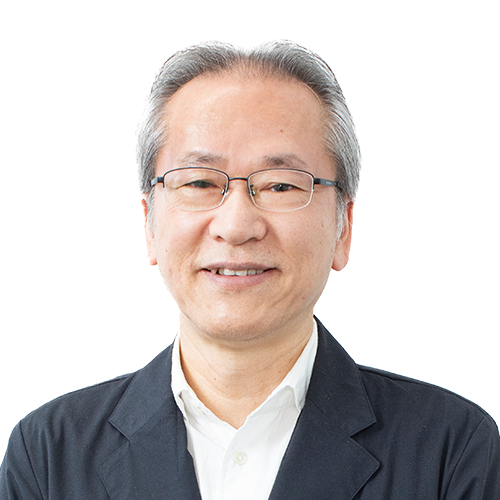
Born in Tokyo in 1955. Dropped out of the doctoral course at Seijo University Graduate Graduate School of Letters, Arts and Sciences in 1983. Professor School of Education, Waseda University. Specializes in modern Japanese literature. Using contemporary thought as his weapon, he analyzes literary texts and presents readings that are linked to the situation of the time, and has attracted attention. His publications include ``Reading ``Sanshiro'' with Students'' (Shinchosha), ``Why Does ``Sanshiro'' End in Tragic Love? - Understanding Modern Literature through ``Misplacement'''' (Shueisha), and ``Who We Are 100 Years Ago: Seen from Miscellaneous Books.'' “Man and Woman” (Kodansha), etc. In his seminars, he deals with novels that include romance, and he often receives love advice from students.


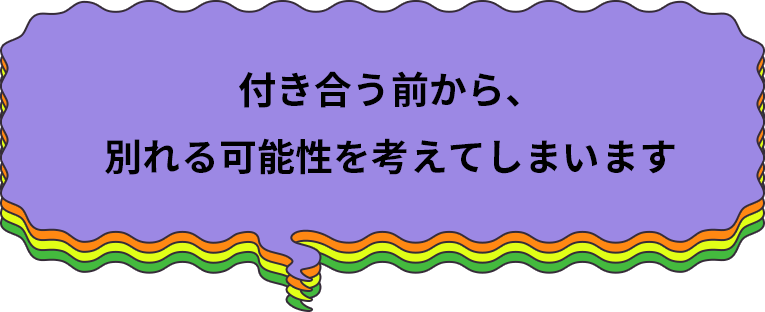
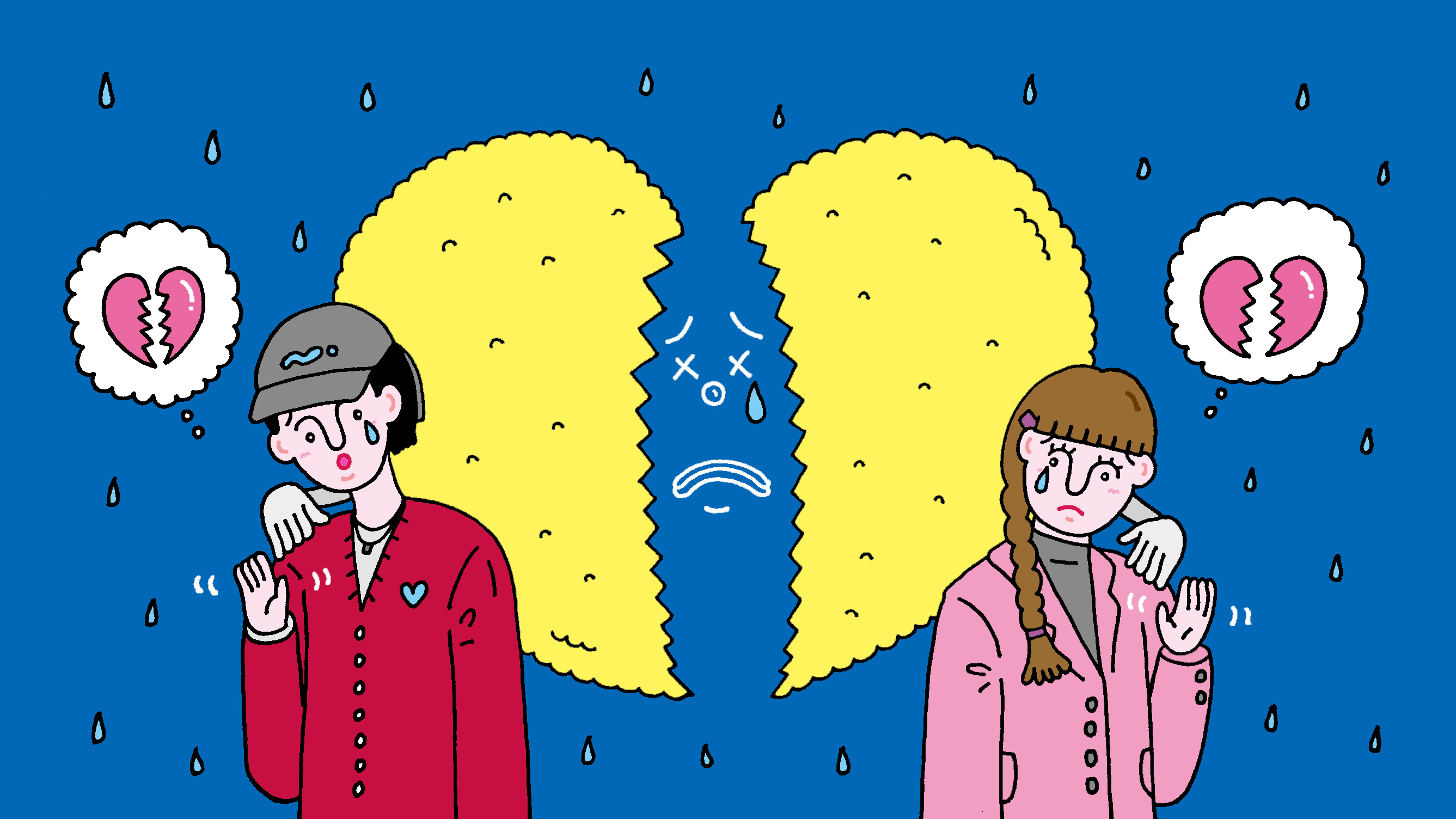
I think love is important. This is because in order to love someone, you need to improve yourself, and as a prerequisite, you have to accept yourself as someone who can be loved (= the state of liking yourself). On the other hand, in reality, I'm the type of person who falls in love easily and gets bored easily. Even before we start dating, I think about the possibility of breaking up. Especially in the university community, I'm afraid that I might end up feeling like, ``I shouldn't have started dating if it was going to make things awkward.'' Is there a way to break up without leaving any regrets?


The first thing I would like to consider is whether love is an "instinct" or a "culture" for humans. For my generation, love was probably something close to instinct, like, ``Before I knew it, I had fallen in love and fell in love with someone.'' I never tried to improve myself in order to fall in love with someone, and I never thought about the possibility of breaking up even before we started dating.
I think young people living in the Reiwa era are beginning to see a gap in the image of love that was a natural progression, and have begun to see it as a "culture." In order to relativize love and see it as an event that is outside of ourselves as one of the events officially recognized by society, we think ``Is there any problem?'' ``Will it be beneficial?'' ``Will it hurt?'' Put it away. In this way, a new love culture is built, but it takes about 20 to 30 years. We are currently in a period of cultural transition, so the criteria for judgment are ambiguous. You are all living through difficult times.
Cultural ideas about love change over time. Focusing on heterosexual love, during the Edo period, when men were dominated by women and men, samurai, the upper class, lost the means of dating men and women, and there was no concept of "dating." In the Meiji period, biology was introduced from the West, and the idea that ``women are human beings just like men'' (how rude!) is thought to have become widespread for the first time. This is why men become interested in women, but because they have never had a relationship with them, they do not understand women's psychology. Futaba-tei Shimei's ``Floating Clouds'' is said to be the beginning of modern literature, and it tells the story of the main character, Bunzo Utsumi, who was fired from a government job and is unable to understand a woman named Ose, and is at the mercy of him. In this way, the modern era was a time when intellectual men could not understand women. There, men desperately studied and dreamed about love by reading romance novels and women's magazines.
Romance became natural during the late Showa period and Heisei period, when free love was popular. Recently, however, love culture has changed again due to the influence of globalization, the spread of the Internet, and the pandemic. A culture that discriminates based on gender, class, region, etc. must be eliminated and a new culture must be created. Since there is no established format, you have no choice but to use yourself as the standard.
However, if you think too much, you won't be able to move forward. Try to fall in love more and more with the attitude that you will improve as you date. By the way, whether things are going well or if you break up, it's inevitable that you'll feel awkward in the community (lol).


I think one of the elements of an intimate relationship is sharing information that others don't know. This is information that makes you feel your weaknesses, shame, and pain. I want to be in a relationship because when I try to convey information, it gives me a chance to organize my life and look at it objectively. However, there is someone in the same department that I find attractive. I'm in a state of unrequited love, and it's hard to find an opportunity to talk. I find myself thinking things like, ``Will people dislike me if the story becomes too circular?'' Am I thinking too much?


You're thinking too much. What particularly stuck with me was the word "information." It is true that there are times when friends become closer after learning a secret that only the two of them share. However, what is more important is the feeling that ``we were able to keep a secret just for the two of us.'' The interaction itself is meaningful; it doesn't really matter what information is shared.
Once you really start falling in love, you probably won't have time to look at yourself objectively. Everyone is full of flaws, so the embarrassing parts will eventually come through. The same goes for being roundabout, and it is important to make the other person think that you are trying your best to talk to them. What you convey is your feelings, so it doesn't matter what you say or how you say it.
Unrequited love, which can maintain its beautiful form only in your heart, is the most wonderful love. But that's the same as looking at the cover of a novel and thinking, ``What if I don't like it?'' and not reading the contents. Whether it's fiction or reality, a story begins to move after its departure. The main character moves into the future while being swayed by various incidents. I also experienced a major heartbreak, so in order to forget the pain of heartbreak while I was a ronin, I read all the works of modern literature and became a literary researcher (lol).
For those of you who are worried, let me introduce some recommended literary works. One is Natsume Soseki's ``Equinox''. The main character, Sunaga, who is introverted and lacks the energy to take action, feels jealousy towards the innocent Chiyoko for the first time, but is sure to be overwhelmed by the violent and cruel image of their love. A characteristic of love is that it flares up with jealousy, and through the story you can learn what it feels like.
The other is ``Friendship'' by Saneatsu Mushakoji. Two best friends, Nojima and Omiya, have feelings for a woman named Sugiko, but Sugiko hates Nojima with all her might. Without noticing this, Omiya recommends Nojima to Sugiko. There (or should I say "there") Sugiko makes a wonderfully deliberate move in order to obtain Omiya, but this structure is really interesting. How crazy things can happen in love. This is a work that teaches us that.
The state of being stuck and unable to understand love or the other person is a reflection of the Japanese people who lived in the modern era. Why not take a step into the story of their lives by reading the modern literature they read as troubled readers?
Click here for books recommended by Professor Ishihara
Natsume Soseki “Equinox” (Shinchosha)
Sunaga is a sincere but introverted introvert, and his cousin Chiyoko has pure emotions and acts without fear. An introverted modern intellectual who plays with his self-consciousness, centering on the love problems between Sunaga, who loves but fears his girlfriend, and Chiyoko, who is irritated by his lack of enthusiasm and sometimes mocks him, but is attracted to him deep down. depicts the suffering of Soseki's bloody battle with his own self, who has identified with Sunaga, begins now. (From Shinchosha website)
https://www.shinchosha.co.jp/book/101011/
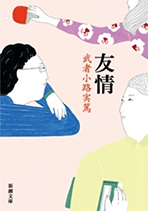
Saneatsu Mushakoji “Friendship” (Shinchosha)
Screenwriter Nojima and up-and-coming writer Omiya have a strong friendship. Nojima loves Omiya's cousin and friend Sugiko and asks Omiya for help, but Sugiko, who is attracted to Omiya, rejects Nojima's love and sends a love letter to Omiya, who has left for Paris. Nojima endures the pain of heartbreak and vows to duel Omiya on the job.This masterpiece of Mushakoji literature, which meticulously depicts the conflicts between friendship and love in youth, has been read through the ages. (From Shinchosha website)
https://www.shinchosha.co.jp/book/105701/