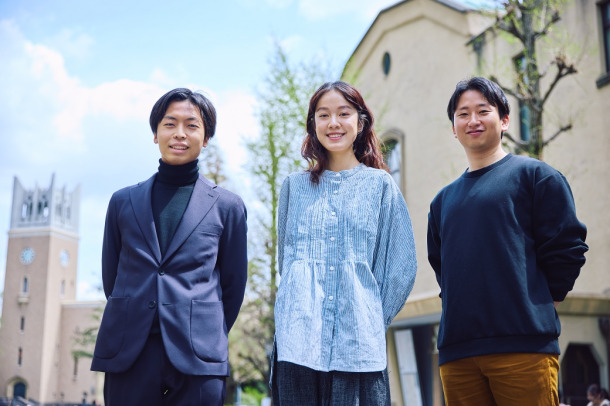
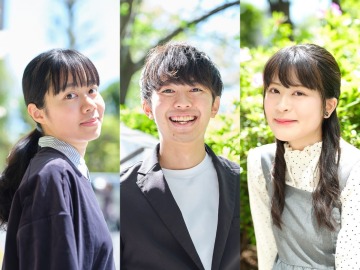
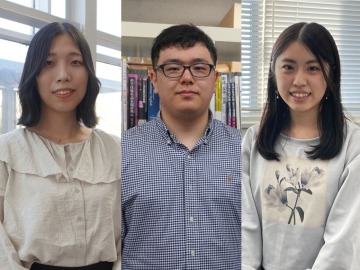
From left to right: Kamei, Chen, and Namiki.
"What exactly do you do in graduate school?" You might be surprised how little people know about graduate school, from classes and research to daily routines. Many undergraduate students might be interested but haven't quite pictured themselves in that situation. This time, we interviewed three graduate students from different fields and backgrounds. We asked them about their reasons for wanting to go to graduate school, their daily lives as graduate students, and how they approach research—the often-hidden aspects of graduate school life. In addition, we've included a Q&A section addressing common questions about graduate school. Please use this as a guide when considering graduate school!
▼Graduate School of Creative Science and Engineering: Kaidai Namiki (from the Faculty of Creative Science and Engineering)
Balancing "growth" and "enjoyment" through proactive learning.
▼Graduate School of Law: Yuta Kamei (School of Law graduate)
The skills I acquired with my master's degree and during my graduate studies are my weapons in the real world.
▼Graduate School of Social Sciences: Yuji Chen (School of Social Sciences)
An environment where daily life itself is connected to research, and learning can be put into practice in everyday life.
◎Frequently Asked Questions about Graduate School
Balancing "growth" and "enjoyment" through proactive learning.
Miharu Namiki, 2nd year master's student, Department of Management Systems Engineering, Graduate School of Creative Science and Engineering
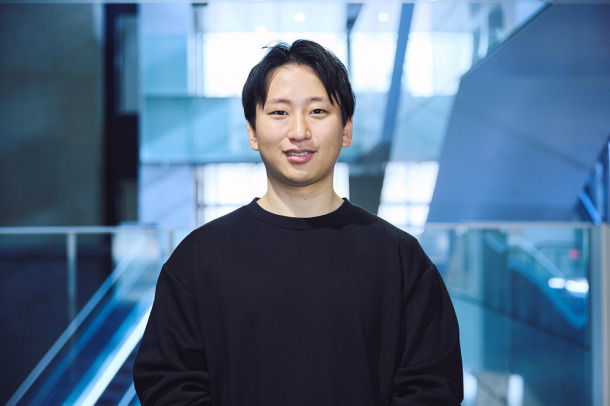
At Building 3 on Waseda Campus
—When did you start thinking about going to graduate school?
When I entered undergraduate school, I hadn't decided whether to get a job or go on to graduate school. However, in my third year of undergraduate studies, joining Professor Takashi Hasuike 's laboratory suddenly made me much more interested in graduate school. Seeing senior students presenting at international conferences and witnessing the supportive environment of the laboratory made me think, "I want to present on the world stage, just like the upperclassmen I admire." I also developed a desire to publish a paper that had passed peer review by experts (*1) and whose academic value had been recognized, so I decided to pursue graduate studies to gain more experience.
*1 A system in which experts in the field evaluate the content of academic papers and research results as third parties.
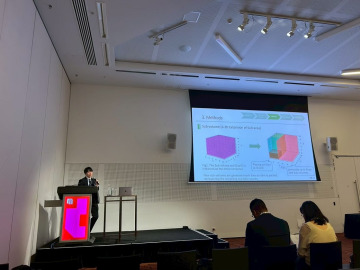
This is a photo of a presentation given at an international conference held in Melbourne, Australia in December 2025.
—What kind of preparation did you do for the graduate school entrance exam?
I diligently continued studying during my undergraduate years and applied for the university's recommendation-based entrance exam, which mainly consisted of an interview. For the interview, I focused on clearly communicating what I wanted to do in graduate school and what I was interested in, and I organized my thoughts while consulting with my research lab professor.
First of all, graduate school varies greatly in atmosphere and research approach from lab to lab, so where and from whom you learn is crucial. That's why, during my third year of undergraduate studies, I actually visited labs and carefully considered whether the environment was right for me before making my decision.
—Could you tell us about the research topic you are currently working on?
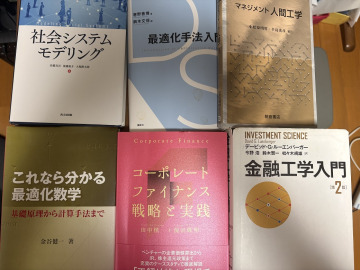
Reference books I usually use for research
I am researching algorithms that calculate the optimal cargo placement for truck and ship containers. My goal is to improve loading efficiency and thereby contribute to solving social issues such as "reducing CO2 emissions" and the "2024 logistics problem" (*2).
I've always loved the sea since I was a child, and I was fascinated by the sight of large ships transporting cargo. In addition to that interest, I arrived at this topic as a field where I could utilize the programming and mathematical optimization skills I cultivated in high school and undergraduate school.
*2 The imposition of limits on overtime work for truck drivers has exacerbated labor shortages, raising concerns about reduced transport capacity, delivery delays, and increased logistics costs.
—How has your learning style changed compared to when you were an undergraduate student?
The biggest change is that I've become proactive in my learning. During my undergraduate years, my learning was mainly passive, simply attending assigned classes. In graduate school, however, I've shifted to a lifestyle where I proactively create my own schedule, choosing classes that interest me and even organizing and participating in seminars. As a result, I can flexibly adjust my schedule and easily balance student clubs and part-time jobs. Also, since everything I learn connects to my research and interests, I naturally feel a desire to learn more, and the burden of studying and research has decreased significantly.
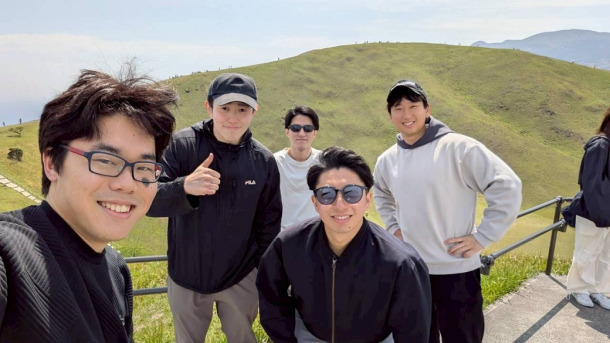
At Mt. Omuro in Ito, Shizuoka. He went to the Izu Kawana Seminar House with his research lab mates, enjoying not only research but also local fresh fish and nature (Namiki is on the far right).
—What are your plans for the future after graduation?
I plan to join a comprehensive developer that also focuses on logistics, and I intend to pursue a career in urban development. As stated in the motto of the Graduate School of Creative Science and Engineering, where I study, technology only truly shows its value when it is implemented in society. I want to apply the engineering fields I have studied so far, such as mathematical optimization and machine learning, to actual cities and people's lives, and be involved in urban development that will make people feel, decades, or even 100 years from now, that "this technology has enriched our lives."
-- Do you have a message for undergraduate students?
I completely understand the dilemma of deciding between getting a job and going to graduate school. However, having actually gone to graduate school, I've found that my days are even more fulfilling than when I was an undergraduate. Because I can use my time at my own discretion, I can make the most of each day, including student clubs, leisure activities, and part-time jobs, and I can feel a great sense of growth through the two years of proactive learning. I believe that the ability to balance enjoyment and growth is the greatest appeal of graduate school.
Graduate School of Creative Science and Engineering
Website: https://souzou.w.waseda.jp/
◆Regarding graduate school admissions in the School of Fundamental Science and Engineering and Engineering, School of Creative Science and Engineering, and School of Advanced Science and Engineering
Approximately 70% of students in School of Fundamental Science and Engineering and Engineering, School of Creative Science and Engineering, and School of Advanced Science and Engineering go on to graduate school.
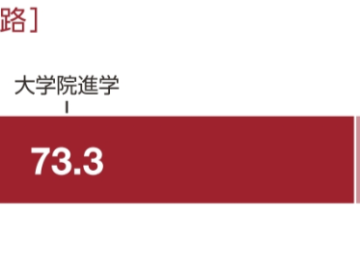
◆About the Graduate School of Creative Science and Engineering
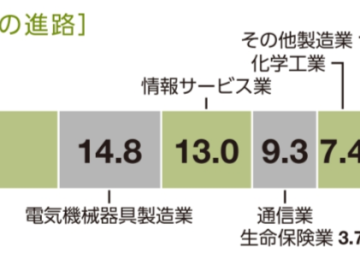
The Graduate School of Creative Science and Engineering is divided into four majors: Architecture, Mechanical Engineering, Management Systems Engineering, Management Design, Civil Engineering, and Earth and Environmental Resources Engineering. Each major offers distinct career paths; graduates of the Management Systems Engineering and Management Design master's programs tend to pursue careers in professional services, electrical machinery and equipment manufacturing, and information services. For detailed career paths by department and major, please see here.
The skills I acquired with my master's degree and during my graduate studies are my weapons in the real world.
Yuta Kamei, 2nd year master's student, Graduate School of Law
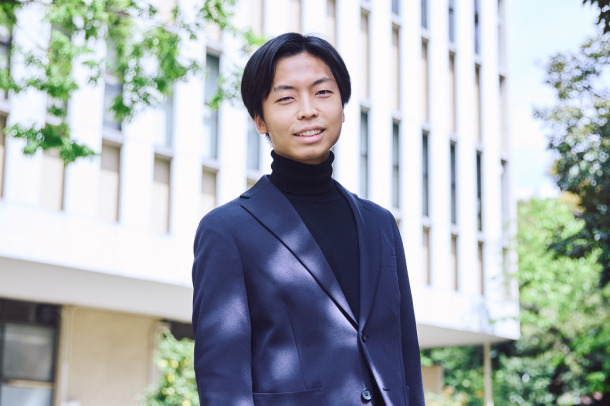
In front of Building 2 on Waseda Campus
--When did you start thinking about going to graduate school?
It was around my third year of undergraduate studies. My seminar professor advised me that "a master's degree would be a great asset if you want to be active on the world stage in the future," and that's when I started thinking about pursuing a graduate degree with an international career in mind. It was also around the time when job hunting was starting, so I was hesitant, but I decided to go ahead with my studies, thinking that even if it meant delaying my entry into the workforce by two years, the value I would gain would be much greater.
—What kind of preparation did you do for the graduate school entrance exam?
I applied through the general entrance examination, which includes not only the submission of a research plan but also a written exam and an interview, so I prepared for each of them. When creating my research plan, I changed my research subject from international law to Russian law, so I was conscious of the difference in the knowledge required. I met with the professor I wanted to be my supervisor, and while being asked questions such as "What will you do in research on Russian law?", I clarified my research concerns and incorporated the perspective of how this research will connect to society into my research plan.
I was advised that Russian language skills were particularly important for the written exam, so I prioritized language studies and dedicated more than six hours a day to studying. I honed my language skills by reading Russian literature and creating my own Japanese translation of the Russian Constitution. For the interview, I organized my thoughts based on my research plan, so that I could logically explain in my own words the background that led to my research interests and my specific research methods.
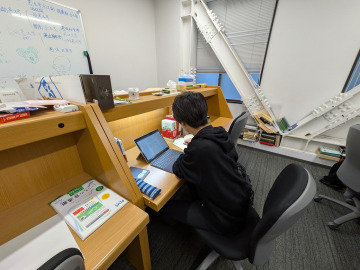
This photo shows a graduate student studying in a specialized study room located in Building 2 on Waseda Campus. One of the advantages of this room is the opportunity to interact with other graduate students working on different research topics, fostering intellectual exchange and casual conversation, such as being asked "What is Russian law?"
—Could you tell us about the research topic you are currently working on?
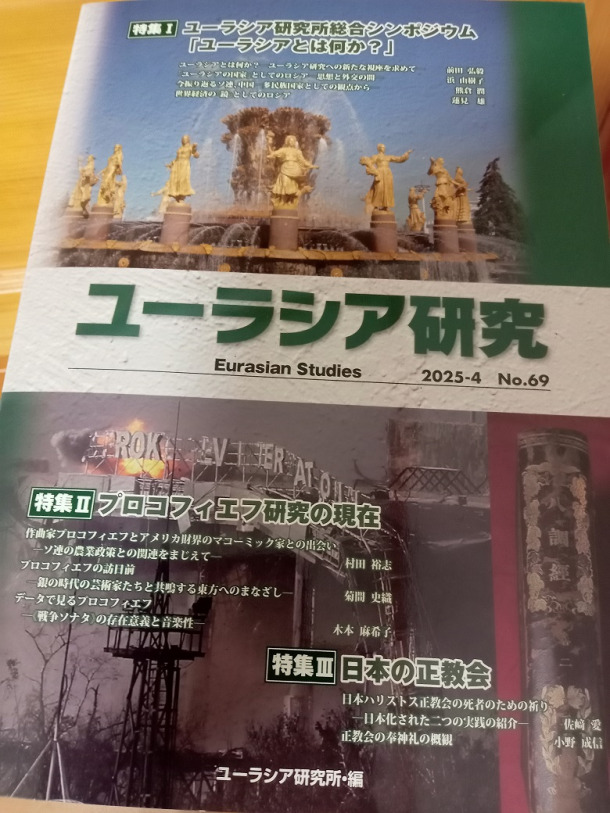
A scholarly journal given to me by Professor Shibuya. Apparently, they often have lively discussions about Russian and Ukrainian composers and pianists, stemming from their shared love of classical music.
I belong to Professor Kenjiro Shibuya 's research lab and am studying Russian law from the perspective of fundamental legal studies. When I was an undergraduate, I studied international law with the aim of becoming a diplomat, but as I deepened my studies, I began to feel that this might not be the path where I want to be active in the future. So, I chose to specialize in Russian law, drawing on my existing knowledge of Russian language, my long-standing interest in Russian culture, and the fact that their approach to law is significantly different from that of Western countries.
--What do you find attractive about graduate school?
One of the advantages is having a forum where I can converse with people who have mastered different fields. Even within the same field of law, discussing with experts in legal philosophy, legal sociology, and the Japanese Constitution allows me to gain perspectives I wouldn't have noticed on my own. For example, I was once asked a question comparing Japan's human rights protection system with that of Russia, which gave me hints to deepen my research.
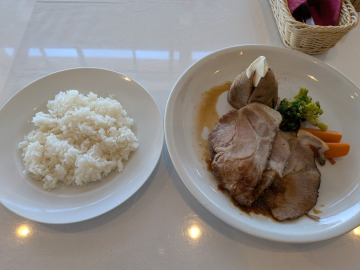
This photo was taken when I had lunch at "Mori no Kaze" (15th floor of Building 26, Waseda Campus), a place I visited for the first time with Professor Shibuya after becoming a graduate student.
—What are your plans for the future after graduation?
I am considering a career in the think tank industry, where I can utilize my research skills and expertise. In graduate school, I spend more time structuring my writing, and I need to be able to read a large amount of literature, interpret it in my own way, and logically reconstruct it. I want to leverage the thinking skills, writing abilities, and data comprehension skills I have cultivated in this way to become a professional who can work internationally in the future.
-- Do you have a message for undergraduate students?
Graduate school, where you construct your own logic and chart your own research path, is by no means an easy environment. However, it is also a place where you can grow tremendously. Furthermore, the master's degree you obtain will be a great asset when you look for a job. This is because, in February 2026, when I spent about a month studying abroad in the United States, a student who had obtained a master's degree said, "I learned specialized knowledge and methods, and at the same time, I gained the skill to apply them to real-world phenomena and compile them into a single document in a theoretical manner." That's when I truly realized the significance of studying in graduate school, and I gained a more concrete vision of how to utilize the knowledge and know-how gained in graduate school in the real world. Don't be intimidated by the image that it's difficult, but instead view it positively as an opportunity for self-growth, and if you're interested, please take that first step.
Graduate School of Law
Website: https://www.waseda.jp/folaw/glaw/
◆Career paths after completing a master's program Graduate School of Law
Graduates are active in a wide range of fields, including educational institutions, government agencies, research institutions, and private companies. Many also continue their research further by pursuing doctoral studies after completing their master's degree.
Main employers: Ministry of Internal Affairs and Communications, Ministry of Education, Culture, Sports, Science and Technology, local government employees (Ibaraki Prefecture employees, Kagawa Prefecture employees, etc.), University of Tokyo, NTT Docomo, Asahi Shimbun Company, Mitsubishi Corporation, Accenture Ltd., court clerk, etc.
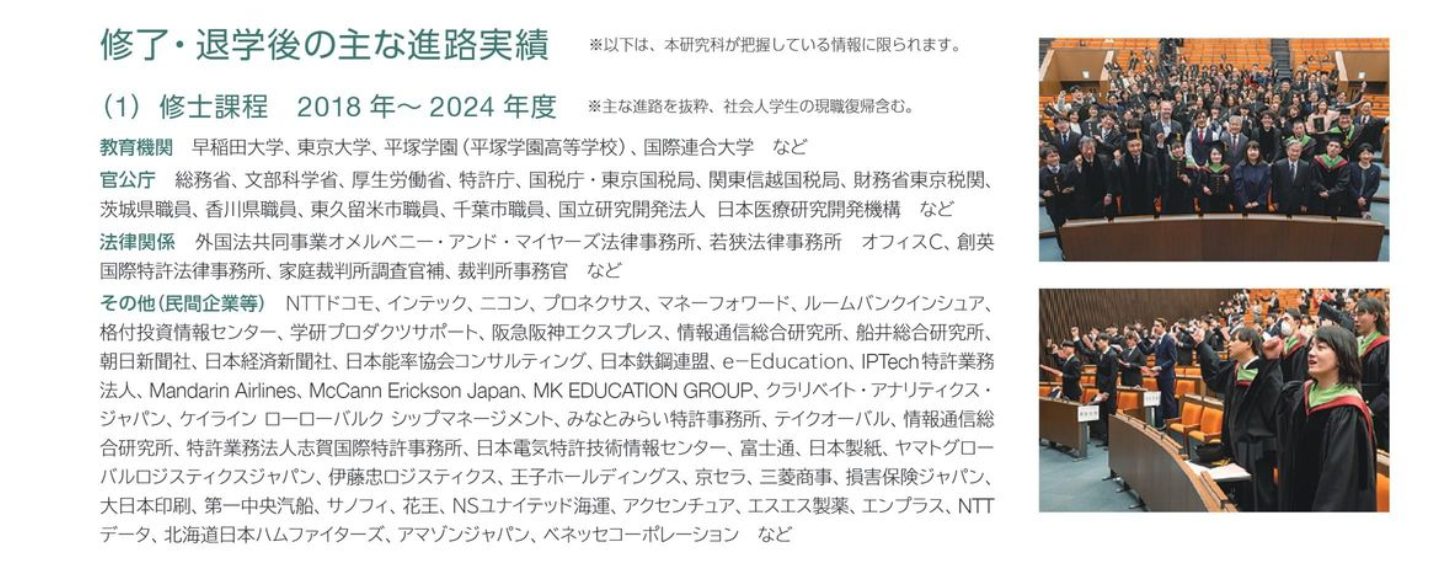
From the Waseda University Graduate School of Law brochure. Career placement results for 2018-2025 are scheduled to be released around late May. *Click to enlarge
An environment where daily life itself is connected to research, and learning can be put into practice in everyday life.
Chen Yu'er, 2nd year master's student, Graduate School of Social Sciences

In front of Building 14 on Waseda Campus
--When did you start thinking about going to graduate school?
It was during my fourth year of undergraduate studies. While participating in TAISI (an English-language degree program in the School of Social Sciences), I was exposed to diverse fields and realized that social problems require a multifaceted perspective. In addition, while the practical learning at TAISI was fulfilling, my desire to understand environmental issues, which I was interested in, in a more theoretical and systematic way grew stronger, and I began to consider going to graduate school.
My interest in environmental issues stems from my childhood experiences. Growing up in the urban area of Beijing, China, I didn't have many opportunities to interact with nature, but influenced by my gardening-loving grandfather, I came to appreciate nature's forbearance through my interactions with the soil. As I grew older, I became acutely aware of air pollution and climate change, which led me to consider how humans should confront the tolerance of nature. This prompted me to pursue further study in the Graduate School of Social Sciences, where I decided to delve deeper into environmental policies and systems, and I am currently studying under Professor Tetsushi Kurokawa, who specializes in environmental law.
--Did you have any worries or anxieties before entering graduate school?
My biggest concern was the language aspect. During my undergraduate studies, all my classes were taught in English, so I was worried about whether I would be able to understand and communicate my specialized knowledge in Japanese in graduate school. However, once I actually enrolled, I was relieved to find myself in an environment where students from diverse backgrounds could help each other. Although the language used differs from class to class, even if there are words I don't understand, there is an environment where we can teach each other in the language we are most proficient in, such as English, Japanese, or Chinese.
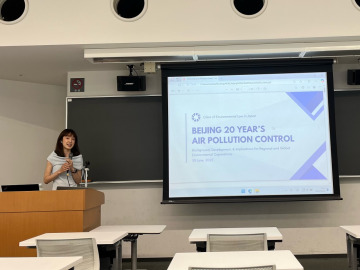
Giving a research presentation in a seminar.
—Could you tell us about the research topic you are currently working on?
I am researching mechanisms to reduce food waste while circulating food as a valuable resource within society. In particular, I am focusing on initiatives such as organic farming, urban food systems, and "farm-to-table" (*3), and considering how they can contribute to sustainable food practices. I am also interested in how these practices interact with policy and lead to a more circular and sustainable society.
*3 This refers to producers and consumers being connected at a close distance, and incorporating environmentally friendly, sustainable ingredients into one's diet.
--What do you find attractive about graduate school?
It's about how learning and daily life naturally connect. During my undergraduate years, my studies mainly revolved around following a set timetable, but in graduate school, I'm required to formulate my own questions and search for answers. As a result, I naturally spend more time reading papers and organizing my thoughts outside of class, and I feel that this accumulation of daily activities directly leads to my research.
Another appealing aspect is being able to put what you've learned into practice in your daily life. In my case, I visit organic farms outside of the curriculum and deepen my understanding of my research topic by experiencing firsthand how food grows while touching the soil.

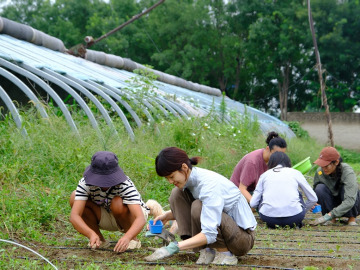
Photo on the left: Dishes made with ingredients from THE HASUNE FARM, an urban farm in Itabashi, Tokyo where Chen visits.
Photo on the right: When she returned to Beijing for summer vacation, she participated in volunteer work at an organic farm.
—What are your plans for the future after graduation?
I want to be involved in making the relationships between people, between people and nature, and the way society as a whole functions, gentler and more comfortable. I want to contribute to creating a society where we can cherish the everyday things, such as an environment where children can eat safely and places where they can freely spend time in nature. To that end, I want to confront real-world challenges and work to improve them while being attentive to the lives of each individual.
-- Do you have a message for undergraduate students?
It's natural to feel doubt and anxiety when you're at a crossroads in your life path. Even after choosing to go to graduate school, you might wonder, "Was this the right decision?" However, such emotional turmoil is normal, and there's no need to be overly fixated on finding the "right" answer. Trust your current feelings and choose your path, and you can always reconsider later. There's always room for change in any choice, so I hope you'll take that first step without being overly afraid.
Graduate School of Social Sciences
Website: https://www.waseda.jp/fsss/gsss/
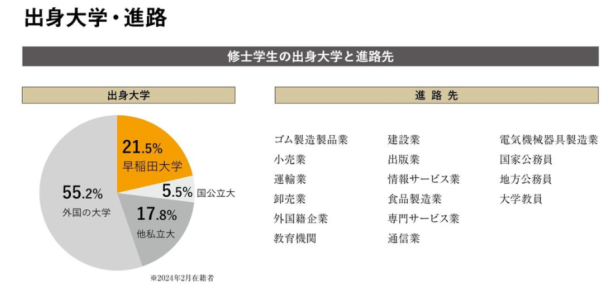
◆Universities attended and career paths of graduate students in the Graduate School of Social Sciences
The key word for learning in the Graduate School of Social Sciences is "interdisciplinary," and master's students belong to one of approximately 50 research guidance programs. Students with diverse backgrounds, including recent undergraduate graduates, working professionals with extensive experience, and international students, gather from various countries to tackle social issues from multiple perspectives. Furthermore, approximately 55% of master's students in the Graduate School of Social Sciences are graduates of universities abroad, making it a highly international graduate school. Career paths after graduation are diverse, ranging from private companies in retail, publishing, and information services to national and local government positions.
Text by: Kaori Nagare
Photography: Shiori Bansho
Frequently Asked Questions about Graduate School
Q. I'm curious about tuition fees and scholarships if I go to graduate school.
A. Comprehensive tuition fee information can be found on the Admissions Center website.
Waseda University offers a variety of scholarships for graduate students. The Scholarships and Financial Assistance Section's website provides a list of scholarships, a scholarship and acceptance schedule, and information for scholarship recipients (including recipient status), so please check it out. In addition, many individual graduate schools offer their own scholarship programs, some of which can be applied for before enrollment. Furthermore, there are also a substantial number of scholarships for doctoral students in all graduate schools.
Q. Two years seems like a long time to complete a master's degree.
A. Some graduate schools have a one-year master's program. In addition, some graduate schools have a five-year integrated undergraduate and master's program that allows students to take advanced courses while still an undergraduate and condense two years of learning into one year.
Q. I'm concerned about the employment situation.
A. Graduate students are expected to have even more problem-solving skills than undergraduate students when job hunting. If you can acquire problem-solving skills through research life (setting your own research plan for a problem, formulating a hypothesis, verifying and analyzing it, and summarizing the results in a paper or giving a presentation), your range of industries to choose from will be significantly wider.
Employment rates and employers for graduates of each graduate school are available on the Career Center website (information for the 2025 academic year will be released in late May) and on the websites of each graduate school.
Q. After graduating from undergraduate school, I am considering getting a job and then going back to graduate school.
A. Many people go back to study at a Waseda University graduate school after gaining work experience, and some graduate schools offer working adult entrance exams and AO entrance exams. Some graduate schools also offer night classes for students who want to study while working. Use the Admissions Center 's dedicated website to find a graduate school that suits your lifestyle.
Detailed information about graduate schools is available on the websites of each graduate school. The Admissions Center website also provides a wide range of information about graduate schools, including entrance examination information.
▼If you would like to know more about graduate students enrolled in other graduate schools, please check out back issues of the related articles below!
[Next Special Issue Preview] "Time Management Techniques" to be released on May 18th (Monday)

![[Save version] Map of the four main campuses](https://www.waseda.jp/inst/weekly/assets/uploads/2026/06/110d605cfac40346aad1d2df464a6586-940x705-1-1-610x457.jpg)