Event Report
On Friday, October 24, 2025, the Office for Promotion of Equality and Diversity held a seminar via Zoom Webinar on balancing work and family caregiving, featuring Yumi Yamanaka, Representative of the Aging Design Institute, as the guest speaker. More than 200 Waseda University faculty and staff members participated, including those who viewed the recorded seminar at a later date, demonstrating a high level of interest in caregiving.

▲ Yumi Yamanaka, Representative of the Aging Design Institute
At the beginning of the seminar, Hatsue Shinohara, Executive Vice President for the Promotion of Diversity, delivered opening remarks. She noted that Japan’s population aged 65 and older is expected to peak in 2043, and that the responsibility of supporting this growing population will inevitably affect individuals and families. Referring to people around her who have returned to their hometowns to care for family members, as well as cases in which parents and their children have differing views on moving into a care facility, she emphasized that caregiving is an issue that can affect anyone. She concluded by expressing her hope that the seminar would provide an opportunity to learn from an expert in the field.
During her 70-minute presentation, Yamanaka covered the following key topics. She also shared photographs illustrating how her family home had been renovated to accommodate caregiving needs.
◆ In the era of 100-year lifespans, caregiving is an issue that can affect anyone.
Even at age 65, average remaining life expectancy is more than 20 years. As people live longer, it is increasingly important to prepare for the possibility of needing long-term care.
◆ Medical and caregiving expenses are both major concerns in later life, but long-term care tends to involve more complicated costs and procedures.
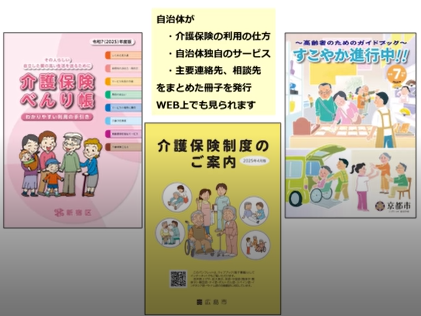
Certification is required to receive long-term care insurance services. Users generally pay 10 to 30% of the covered costs, and there are limits on the amount of services covered. As a result, substantial out-of-pocket expenses may still arise.
◆ Home care combines different services according to individual needs.
These may include home-visit care, day services, and short stays, with a care manager playing a central role in developing a care plan. Users pay their portion of the costs within the coverage limit, while expenses exceeding the limit must be paid in full. It is important to consider the family’s ability to provide care, financial resources, and locally available services. If home care becomes difficult, residential care should also be considered as an option.
◆ Workplace support for employees with caregiving responsibilities is becoming increasingly available.
Various arrangements, including family care leave, time off for caregiving, reduced working hours, and telework, may be available. Making effective use of workplace support systems can help employees balance work and caregiving without placing an excessive burden on themselves.
◆ There are many types of residential care facilities for older adults.
Options range from publicly operated special nursing homes for older adults to private fee-based nursing homes and serviced housing for older people. Costs, staffing arrangements, and the application of long-term care insurance differ depending on the facility, making it essential to gather information in advance. The average duration of caregiving is approximately five years, with total costs estimated at around 3.12 million yen for home care and 7.44 million yen for residential care.
◆ It is important to discuss future care while parents are still healthy.
Families should consider discussing the individual’s wishes and financial situation in advance, as well as options such as voluntary guardianship and family trusts. Rather than striving for “perfect” caregiving, Yamanaka encouraged participants to aim for what is “better” and sustainable. Connecting with professionals and Community General Support Centers and making effective use of available information can help families navigate caregiving successfully.
 The presentation was followed by a Q&A session, during which participants raised a wide range of questions, including how to choose a care facility, how to manage long-distance caregiving, and issues related to wills. Yamanaka responded carefully to each question.
The post-seminar survey showed an overall positive response. Many participants also shared positive perspectives on caregiving, indicating a high level of satisfaction with the seminar.
Feedback from Participants
Selected comments
◆ “I appreciated that the speaker shared her own experiences. Although her experience may not necessarily apply to everyone, the concrete examples helped me develop a clearer picture of caregiving.”
◆ “I would like to attend this seminar every year, even if the content is the same. I believe doing so would help deepen my knowledge.”
◆ “The seminar provided extremely practical information about both caring for my parents and planning for my own later years. It was very helpful.”
◆ “I was able to learn the basics of caregiving. As a first step, I would like to look into the services available in the municipality where my parents live and visit the local Community General Support Center. I found it very helpful that the seminar enabled me to think about specific actions I could take.”
◆ “The speaker’s concrete examples drawn from her own experiences were very engaging, and I felt energized by her enthusiasm. I identified several things I can do now and things I should prepare in advance, and I would like to start taking action right away.”
◆ “The speaker explained the realities of the long-term care system and how to navigate it in a very accessible way. I found myself wishing I had encountered a seminar like this earlier, as it might have helped me avoid struggling with these issues on my own.”
◆ “Although I have already begun caring for a family member, listening to the speaker helped me look at my own situation more objectively. It made me realize how overwhelmed I had been while in the midst of caregiving. Reminding myself that I could approach caregiving more calmly helped ease some of the emotional burden I felt while providing care over the weekend.”
◆ “Caregiving still does not feel like an immediate concern for me, but I found the presentation, including the speaker’s personal experiences, extremely informative.”