
 From you to Waseda, from Waseda to you
Waseda University has a 120-year-long tradition of research in the humanities rooted in research on Shakespeare by Dr. Tsubouchi Shoyo. This tradition has extended within the School of Humanities and Social Sciences which is deepening research in the human sciences and the School of Culture, Media and Society which is creating new fields and anticipating the future. The Graduate School, which furthers the special fields of both schools, provides full-scale specialty curriculum aimed at actively promoting the acquisition of the doctoral degree. As the Faculty of Letters, Arts and Sciences, in which the traditional and progressive spirit literally coexist, we provide a setting that brings new possibilities into being.
The Faculty of Letters, Arts and Sciences has produced an extraordinary variety of talented people. It has long adopted liberalism, non-affiliation, independence of scholarship, and a progressive spirit and respected a tradition of bringing together outstanding people from throughout Japan, allowing their individual characters to challenge one another as they apply themselves to study. As a result, a large number of highly talented people have launched into various fields of activity. In the open ethos of the Faculty of Letters, Arts and Sciences, we have stressed research on and respect of different cultures and the societies and traditions of heterogeneous peoples. Through personal interchange and efforts to promote mutual understanding with the countries of the West and Asia, we have established academic affiliations with overseas institutions. In the years to come, within the rapidly globalizing community, the young people who have studied enthusiastically at the Faculty of Letters, Arts and Sciences will undoubtedly play pivotal roles in the future of the world.
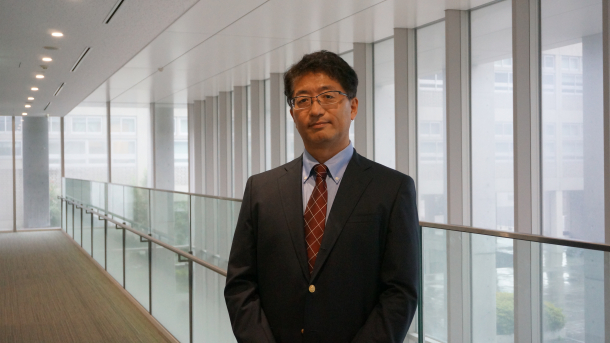
Faculty of Letters, Arts and Sciences
From the Senior Dean
OSHIO Atsushi
What is the purpose of a university?
In education up to high school, answers are usually already provided, and students are expected to understand the knowledge in textbooks and explain it correctly. However, academic learning at a university is the endeavor of facing questions to which nobody yet has the answers. History holds events still unresolved, and there are many phenomena in the human mind and society that remain cloaked in mystery, so researchers gather materials, examine evidence, form hypotheses, and conduct repeated verifications to share new knowledge with the world. If studying up to high school is about learning the answers, academic learning at a university begins with coming up with new questions.
Since its founding in 1882, Waseda University has upheld the principle of “Independence of Scholarship.” This is the philosophy that academic pursuit should be an endeavor of seeking truth with a free spirit, unswayed by power or the trends of the times. The Faculty of Letters, Arts and Sciences (FLAS) has inherited this spirit. The fact that Tsubouchi Shoyo laid the foundation for the research and practice of modern literature and theater, producing numerous literary figures, thinkers, historians, philosophers, and versatile talents, demonstrates that Waseda has consistently placed the task of understanding humanity as one of its core objectives.
FLAS is a collective name encompassing the School of Culture, Media and Society, the School of Humanities and Social Sciences, the Graduate School of Letters, Arts and Sciences, and the Research Institute for Letters, Arts and Sciences. Today, FLAS has evolved into one of Japan’s largest hubs for humanities research, boasting a diverse range of specialized fields. In this environment, researchers and students from different disciplines meet daily to debate and generate new questions by bringing together their respective perspectives. To deepen your own specialization, you need to surround yourself with diverse expertise—and the rich intellectual environment of FLAS that contains and nurtures such expertise is its greatest asset.
The Japanese name for FLAS, Bungaku Gakujutsuin, literally translates as “Academic Institute of Literature.” This name might lead you to believe that it is a place solely for studying literature—say, novels and poetry. However, our object of inquiry is humanity itself. Our research spans the entirety of human activity; from literature and philosophy to the cultures, religions, histories, arts, societies, languages, and minds of the world, as well as the various challenges facing contemporary society. Our research methodologies are equally diverse, including fieldwork, investigations of historical documents and ruins, interviews, participant observation, and statistical analysis of large-scale data. In recent years, we have also proactively integrated new technologies such as AI, natural language processing, and digital archiving. In the realm of academic pursuit, the distinction between the humanities and the sciences is not especially relevant. What matters more is choosing the method best suited to the question at hand and steadily pursuing the inquiry.
Waseda University is a university where a wide variety of academic fields coalesce into a single institution. For this very reason, dialogue that transcends individual disciplines naturally emerges. Since modern problems sometimes cannot be fully understood through only one specialization, new knowledge emerges when different disciplines intersect and influence one another. This is an essential step towards the further evolution of academia.
Researching literature, philosophy, history, and culture may not always yield immediately useful results. However, in an era of profound societal shifts, fundamental questions become more critical than ever: What does it mean to be human? What values should society cherish? How should we pass our culture on to future generations? Even if AI advances rapidly and processes vast amounts of data in an instant, it is humans who must decide the purpose of this technology and the kind of society to build. The humanities are the very discipline that continually confronts these foundational questions.
The graduate school is a place to further deepen the inquiry. Graduate students and researchers from inside and outside Japan carry out their research while sharpening their respective specializations, and transmit new knowledge to the world. FLAS has indeed inherited a long history and tradition, but more than that, we wish to continue being a research hub that opens up the future of academic learning.
To high school students planning to go on to university in the future, I would like to convey that equally important to the specialized knowledge you can acquire there are the ability to ask questions, to think based on evidence, to understand values different from your own, and to express your ideas logically. These abilities and skills will become a lifelong asset, illuminating whatever path you choose to pursue in society.
Beyond that, university is also a place where you expand your own horizons. The experience of touching upon eras and cultures different from your own, getting to know different values, and questioning things you have taken for granted until now will likely enrich your perspective even more than increasing your knowledge.
FLAS strives to be a place that never stops asking “Why?” Here, we provide an environment fully equipped to support anyone who is ready to tackle this question.
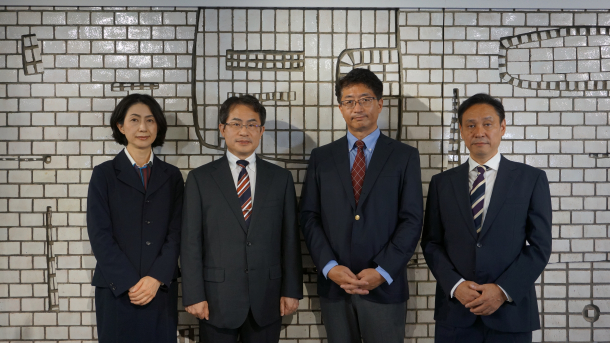
*From left side
YAMAMOTO Satomi :Dean of Graduate School of Letters, Arts and Sciences
OKAMOTO Tomochika :Dean of School of Humanities and Social Sciences
OSHIO Atsushi :Senior Dean of Faculty of Letters, Arts and Sciences & Dean of School of Culture, Media and Society
TANAKA Fumio :Director of Research Institute for Letters, Arts and Sciences


