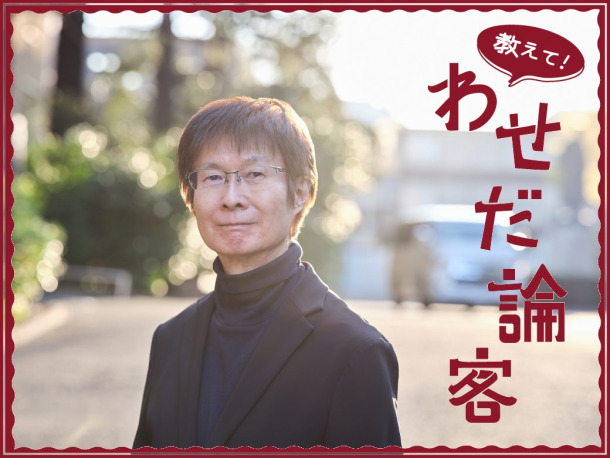
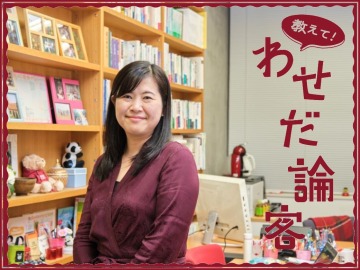
The theme for the 2026 "Lectures by Experts" is "Food." We will explore food from the perspectives of multiple experts. Our first guest is Professor Masayuki Kashiwagi (Faculty of Human Sciences), who teaches "Regional Resources Theory." We interviewed Professor Kashiwagi, who conducts interdisciplinary research on Japanese food, agriculture, and rural issues, about the structural problems facing Japanese agriculture.
What is the Japanese "food" landscape like from the perspective of an agricultural researcher?
Food is a vital lifeline that sustains our daily lives. The sustainability of agriculture, which produces the food that nourishes life, faces many challenges, and everyone needs to consider them seriously. We need agricultural principles and policy systems that take into account the balance between nature and human society.
INDEX
▼Thinking about the revitalization and sustainability of agriculture
▼A new entity is needed to support local agriculture.
▼Working in the fields of "food" and "agriculture" presents a great opportunity for young people.
Thinking about the revitalization and sustainability of agriculture
What kind of research field is "Regional Resources Theory," which is your area of expertise?
"Regional Resources Theory" is a field of study that allows us to approach the theme of "food," which is the focus of this discussion, from a variety of perspectives. In my case, I have researched global and Japanese food issues, agricultural issues that produce food, and rural issues that take place in agriculture, all as a single package.
The world has experienced rapid economic globalization since the late 1990s, and this trend has become increasingly unstable in recent years. Agriculture worldwide has also been shaken by these changes. Europe and Japan have repeatedly attempted agricultural policy reforms to ensure the survival of their agriculture, but problems remain numerous. Meanwhile, major agricultural nations such as North America and Oceania are also facing problems with the degradation, depletion, and exhaustion of vital agricultural resources: soil and water. In this context, I am considering the sustainability of agriculture from the perspective of forming new entities and developing support systems tailored to regional characteristics.
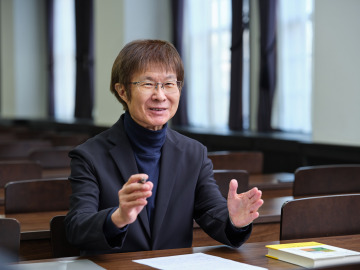
Could you please tell me more specifically about the "structural problems of Japanese agriculture" that you are focusing on?
According to the Ministry of Agriculture, Forestry and Fisheries, Japan's food self-sufficiency rate for fiscal year 2024 was 38% on a calorie basis. This is an extremely low level among developed countries, and major food import sources such as North America and Oceania show instability in their self-sufficiency rates. Furthermore, many food exporting countries impose restrictions, including export bans, when a food crisis occurs. Amidst these circumstances, Japan experienced the "Reiwa Rice Riot" in 2024, under the influence of the previous year's heatwave. The revitalization of land-intensive agriculture, including rice farming, in Japan is an urgent task. At the heart of this difficulty lies the problem of finding people to carry out regional farming and resource management. Let me introduce two points regarding this.
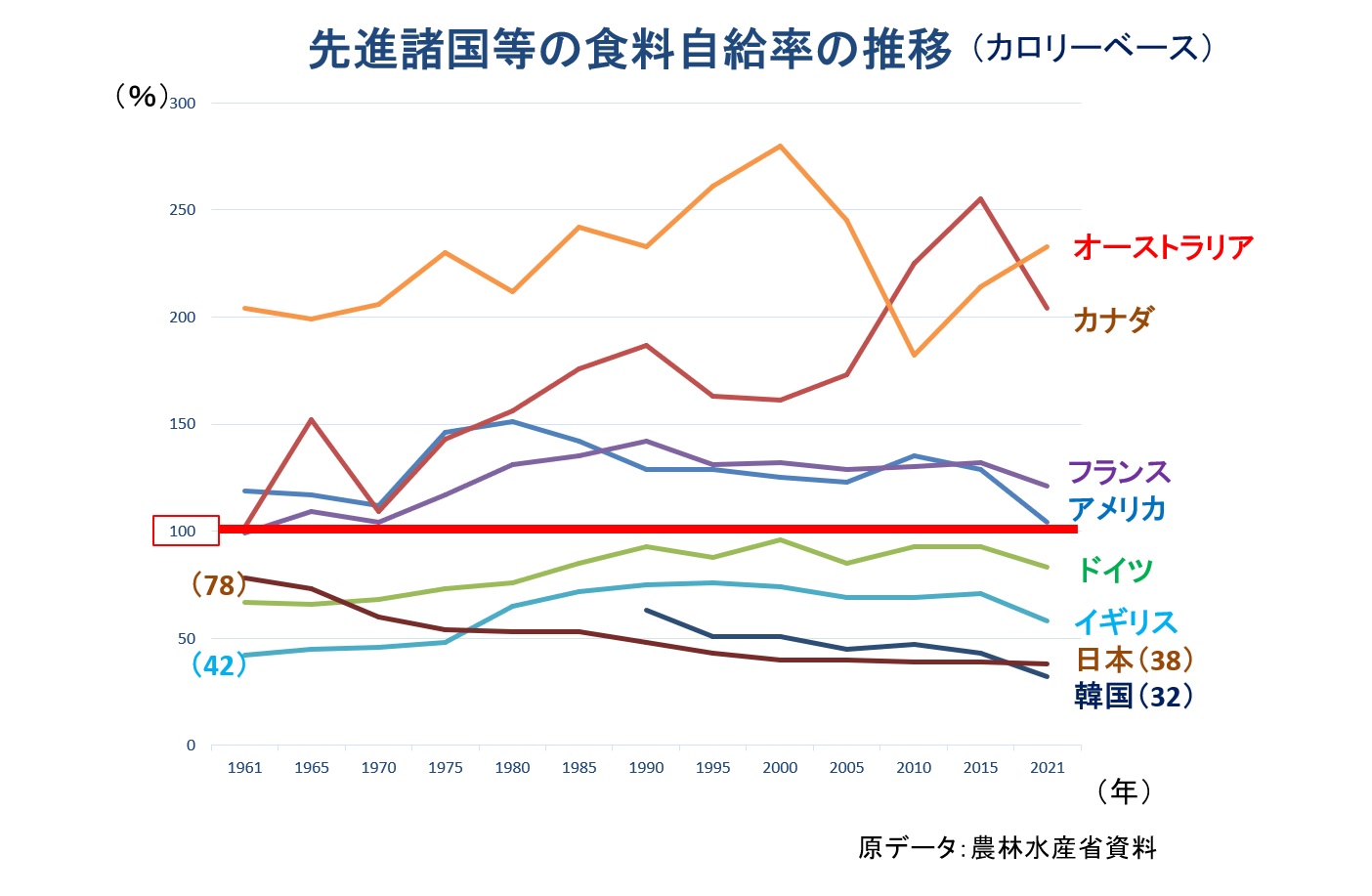
Since the implementation of the "selective expansion" provision of the Basic Agricultural Law enacted in 1961, Japan's food self-sufficiency rate has continued to decline despite various agricultural policy reforms. (Click to enlarge)
The first issue concerns the structure of land-intensive agriculture, such as rice cultivation. The biggest factor in the international competitiveness of agriculture is production cost. For agriculture to survive in developed countries with high wage levels, it is necessary to increase labor productivity and reduce costs through large-scale operations and advanced mechanization. Europe and Japan have been seriously working on such structural reforms since the 1960s, but progress has been slow in Japan except in Hokkaido.
Behind this lies a reality that could be described as "all-out part-time farming." In Japan, during the period of rapid economic growth, a variety of manufacturing industries expanded into small and medium-sized cities in rural areas, leading to a rise in part-time farming where members of farming households commuted to factories and companies while continuing their family farming business. As a result, many small-scale farmers did not give up their land, and the government's scenario of large-scale farming, which envisioned "economic growth leading to farmers leaving the industry and consolidating farmland for motivated farmers," fell apart. Even now, the situation continues in prefectures and metropolitan areas where there are many small-scale part-time farmers.
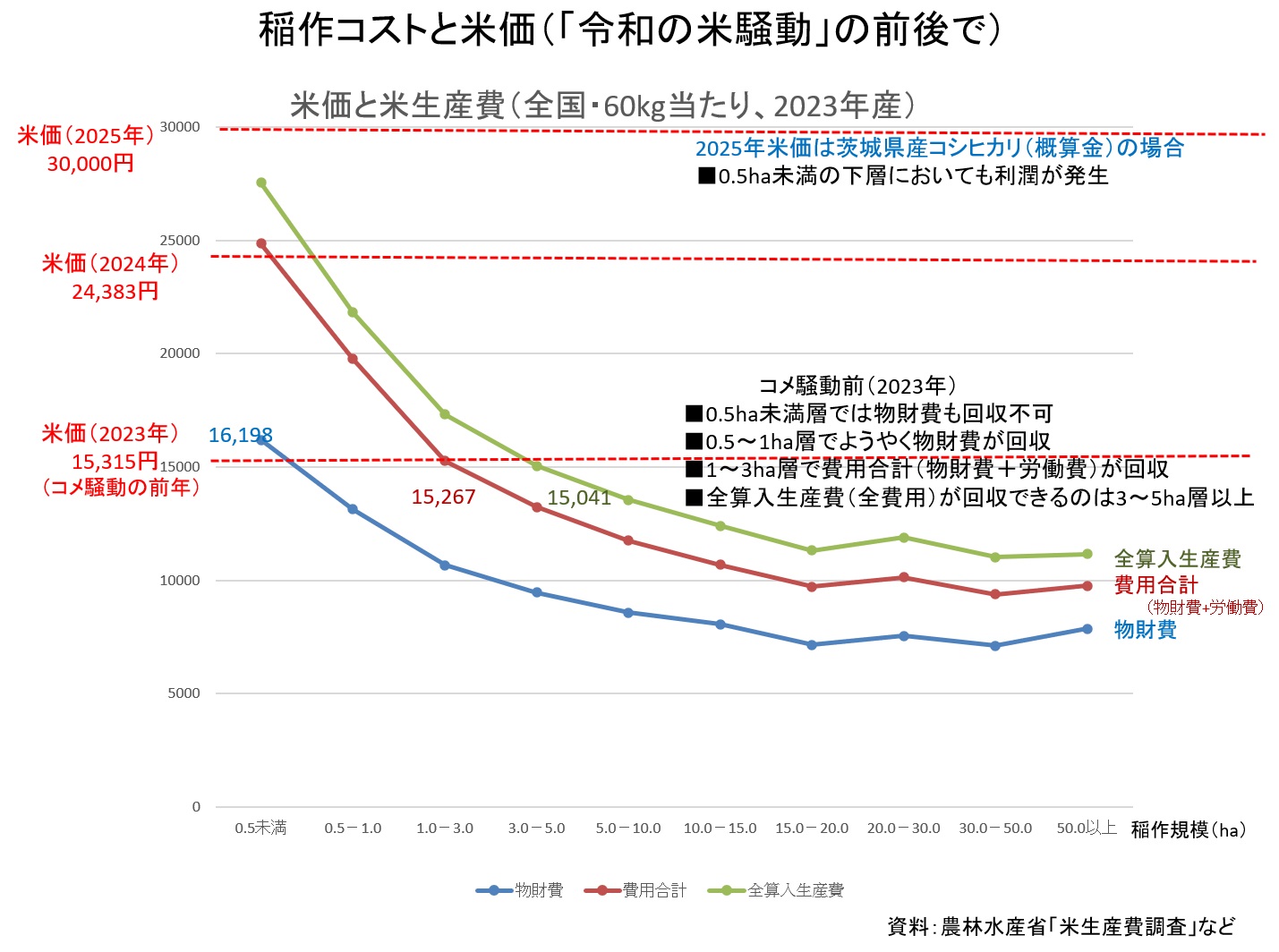
Looking at the situation before the "Reiwa Rice Riot," it's clear that while the average rice farming area in prefectures outside of Tokyo was around 0.8 hectares, only those with 3-5 hectares or more were able to recoup their full costs (click to enlarge).
The second issue stems from the characteristics of Japan as a mountainous country. Many rural areas in Japan are mountainous regions known as "mountainous and hilly areas," and agriculture in these areas accounts for approximately 40% of Japanese agriculture as a whole, as seen in key indicators such as farmland area and gross agricultural production value. These areas have many terraced rice paddies and other sloping fields with small plots, making large-scale mechanized agriculture unsuitable. However, for Japan, which has a remarkably low food self-sufficiency rate among developed countries, abandoning agriculture in mountainous and hilly areas is not something that should be done from a food security standpoint.
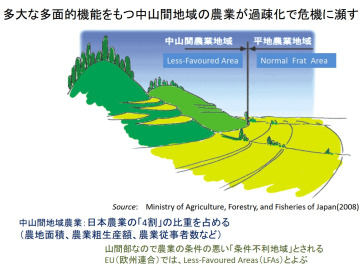
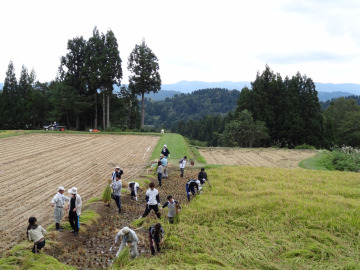
Left: Conceptual diagram of mountainous and hilly agricultural areas and flatland agricultural areas.
Right: Scenes from agriculture in mountainous and hilly areas. A course offered by the Global Education Center. Rural and mountain village experience training "
What is the significance of protecting agriculture in mountainous and hilly areas?
There are two main reasons. First, as mentioned earlier, it accounts for about 40% of Japanese agriculture. Its decline would lead to a further decrease in food self-sufficiency. Second, agriculture in mountainous and hilly areas has valuable and significant "multifaceted functions." Unlike Europe, where this concept originated, in Japan, where there is a lot of rain and paddy field agriculture is central, land conservation functions such as flood prevention, river flow stabilization (*1), and landslide prevention become particularly important.
For example, let's consider the water storage function of rice paddies for flood prevention. Professor Hiroyasu Shimura of the Department of Agricultural Hygiene at the University of Tokyo estimated the total water storage capacity and flood control capacity of all rice paddies in Japan. Based on this, Professor Emeritus Minehiro Nakashima of Waseda university showed that the water storage capacity of 221,000 hectares of terraced rice paddies in Japan is 660 million cubic meters, and the flood control capacity is 590 million cubic meters. The latter is equivalent to 2.7 times the total flood control capacity of 220 million cubic meters, which is the sum of 11 dams in the Tone River system, including the Kawaji Dam and the Yagisawa Dam (*2). The disappearance of agriculture in mountainous and hilly areas means the disappearance of these multifaceted functions.
*1 Flow rate. This refers to the characteristics of river flow throughout the year. When river flow becomes smoother, it becomes more stable.
*2 Hiroyasu Shimura, "Evaluation of Flood Control Functions of Paddy Fields and Upland Fields," *Journal of the Japanese Society of Agricultural Engineering*, Vol. 50, pp. 25-29, 1982. Minehiro Nakashima, "Multifaceted Functions of Terraced Rice Fields and Conservation Efforts," *Water Resources and Environment Research*, Vol. 13 (Dec. 2000), pp. 35-44.
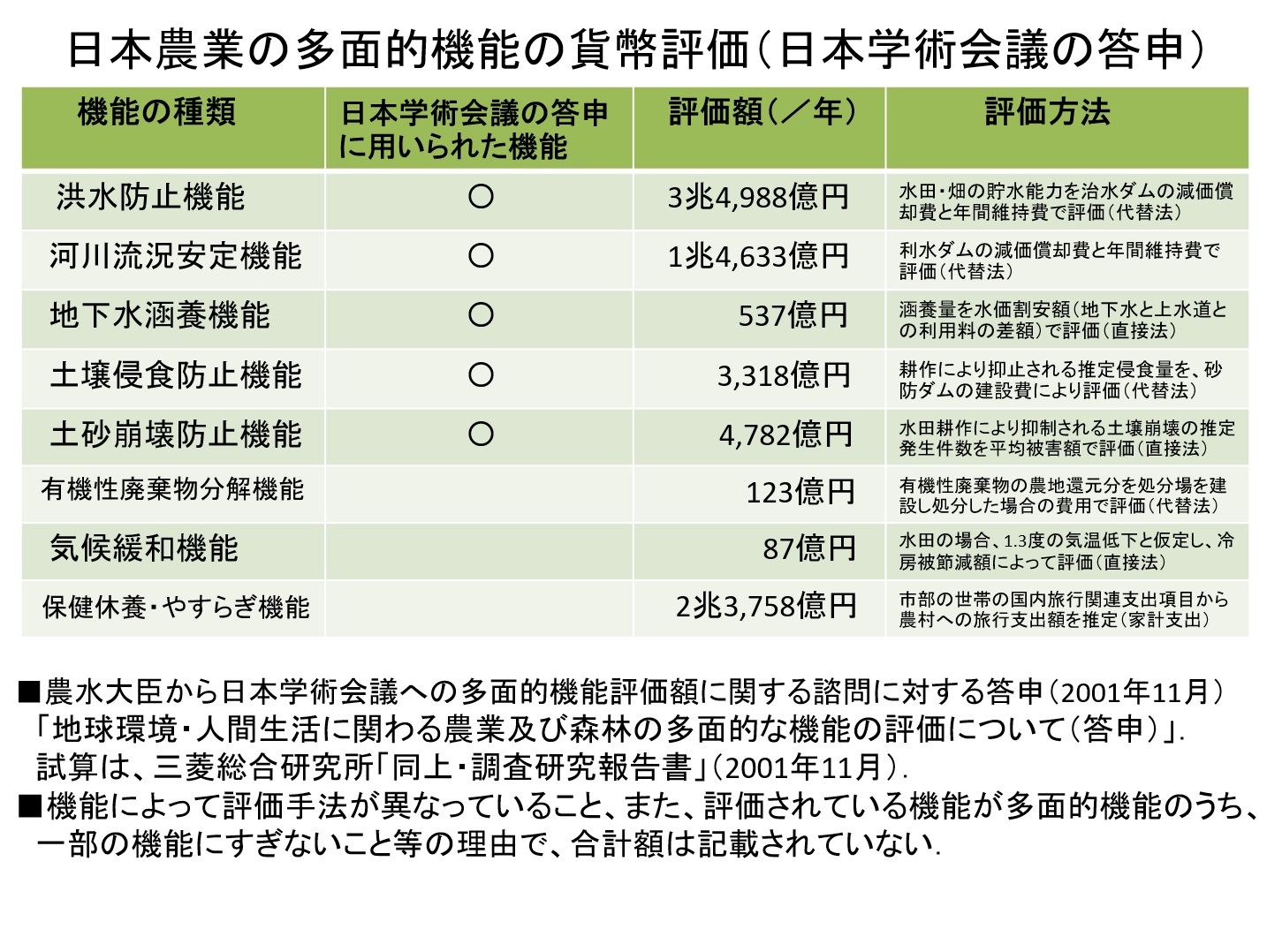
The multifaceted functions of Japanese agriculture amount to a considerable sum when converted into monetary terms. (Click to enlarge)
A new entity is needed to support local agriculture.
Regarding Japanese agriculture, which faces various challenges such as economic viability and labor shortages, could you please tell us specifically what solutions you think are possible?
There are several points to consider, but I will highlight the restructuring of rice paddy farming. First, there are two types of farmers: "individual management" on an individual basis, and "community farming" based on cooperation within each village. Based on this, it is necessary to consider future visions separately for agriculture in flat areas and agriculture in mountainous and hilly areas.
In flat areas, the development of large-scale individual farms or community-based farming corporations will continue to be necessary. Challenges will include exploring a farming system where community-based farms incorporate large-scale individual farms as their core component, creating a win-win relationship through collaboration between the two, as well as the broad-area mergers of community-based farms aimed at pursuing economies of scale.
On the other hand, the restructuring of farming operations is not easy in mountainous and hilly areas. Maintaining paddy field agriculture is a fundamental condition for people to settle down and for the survival of community societies, but depopulation and aging are progressing rapidly in these areas. Therefore, it is not always realistic to form community-based farming operations in all settlements to protect agriculture, and it is also important to create farming entities and systems that maintain cultivation at a certain broader level.
These large-scale operators are called "large-scale agricultural management corporations." Many of them have been established with investment or strong involvement from local governments, JA (agricultural cooperatives), or large-scale local self-governing organizations. We have been considering how to cooperate with the government, positioning these large-scale agricultural management corporations as social enterprises of the Japanese rural area type, based on their mission to "protect farmland within their jurisdiction in principle" and the need to balance this with business sustainability.
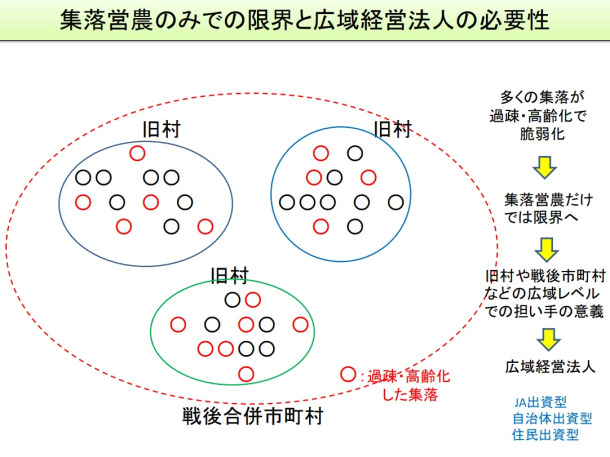
From materials created by Professor Kashiwagi. "Wide area" refers to pre-war municipalities such as former villages and post-war merged municipalities. (Click to enlarge)
Jobs related to "food" and "agriculture" offer great opportunities for young people.
What is your view on Japanese "food"?
This may sound like a general statement, but food is a vital lifeline that sustains our daily lives. I urge you all to seriously consider the sustainability of agriculture, which produces the food that nourishes and sustains life, and the rural communities where it takes place.
Agriculture was once the only energy-producing industry on Earth that utilized photosynthesis. However, modern agriculture, both in developed and developing countries, has transformed into an energy-intensive system in the 20th century as it has been pressured to increase productivity. Furthermore, there are concerns about the degradation and depletion of soil and water, which are fundamental resources for agriculture. Now more than ever, the harmony between agriculture as a human economic system and the natural and environmental systems that form its irreplaceable foundation is being questioned.
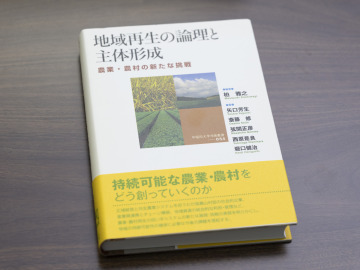
Professor Kashiwagi's book, "Regional Revitalization and Self-Reliance Formation: New Challenges in Agriculture and Rural Areas" (Academic Series 054, Waseda University Press)
Finally, please give a message to Waseda students.
When thinking about the future of Japan, not just in terms of "food" or "agriculture," please don't confine yourself to your own field of expertise, but instead expose yourself to a wide range of learning. Even if it's just eclectic reading, I want you to read a lot.
Your area of expertise could potentially change the future of "food" and "agriculture." The field of collaboration between agriculture, commerce (business), and industry (engineering), or expansion into each other's domains, to develop new products and services has been gaining attention. This is sometimes called "the transformation of the food system." Since the 2000s, this trend has been referred to in policy terms as "sixth-sector industrialization" (*3) or "agricultural-commercial-industrial collaboration." While there are many challenges, working with "food" and "agriculture," which support life and daily life, could also be a great opportunity for young people.
*3 An initiative in which farmers, foresters, and fishermen (primary) themselves process (secondary) and handle distribution and sales (tertiary) to create new added value for agricultural products (primary x secondary x tertiary = 6th generation).
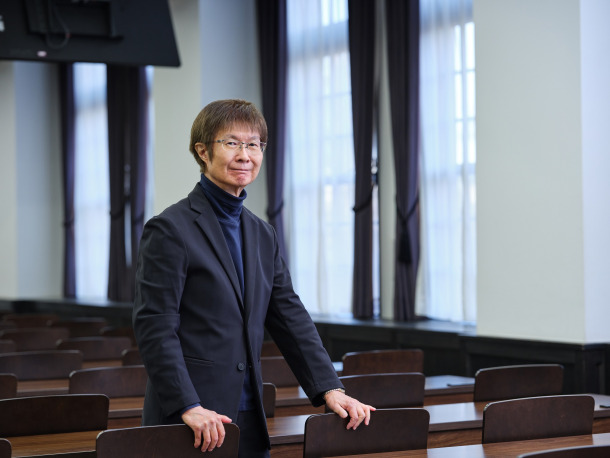
Masayuki Kashiwagi
Professor Faculty of Human Sciences. He holds a PhD in Agriculture from the Graduate School of Agricultural Sciences, University of Tokyo. He has previously served as a visiting researcher at the University of Birmingham and Imperial College London, Professor at Ibaraki University, Professor at the United Graduate School of Agricultural Science, Tokyo University of Agriculture and Technology, and a sub-leader of the Tokyo University of Agriculture and Technology 21st Century COE Program "New Energy, Material Metabolism, and the Construction of 'Survival Science'" (Leader: Masayuki Horio), before assuming his current position in 2007. His specialties include environmental economics, food, agriculture, and rural issues, and endogenous regional development theory. He conducts research on sustainable and circular regional development in Japan and around the world, and policy systems related to agriculture and the environment. He is also the president of the Japan Society for Coexistence Society Systems.
Courses taught: "Regional Resources Theory," "Environmental Economics," "Cooperatives Theory," etc.
Interview and text: Kenichi Marumo
Photography: Seiji Ishigaki

![[Save version] Map of the four main campuses](https://www.waseda.jp/inst/weekly/assets/uploads/2026/06/110d605cfac40346aad1d2df464a6586-940x705-1-1-610x457.jpg)