Waseda WeeklyWaseda Weekly

News

News

Delivering to high school students! A workshop in my hometown of Fukui, realised with my classmates

"I don't want people to give up on international exchange just because they live in a rural area."

Mana Nakagaichi, 4th year student School of Social Sciences

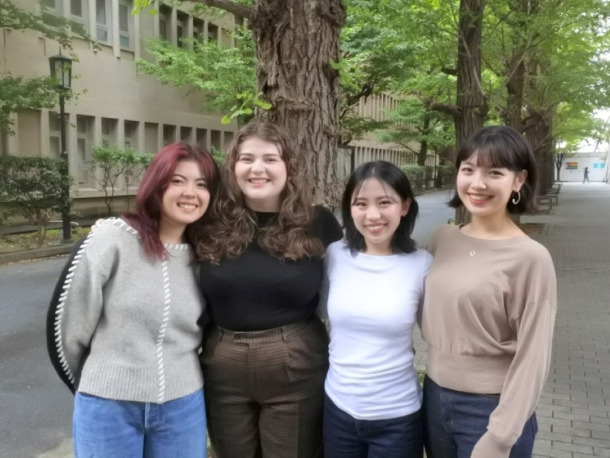
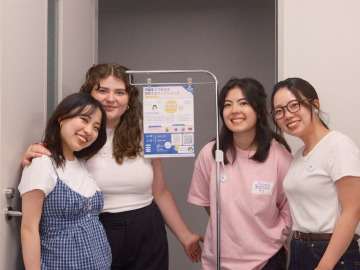
With fellow fourth-year students in the TAISI program at the School of Social Sciences who organized the workshop together (from left: Culos Nari, Vera Ahnlund Berg, Nakagauchi, and Anais Sakurai) on the tree-lined street in front of Building No. 14 Waseda Campus

In her hometown of Fukui Prefecture, Nakagaiuchi held the "High School Student x Waseda Student International Exchange Workshop - Thinking about Social Uncertainty," which aimed to encourage high school students to consider gender from a variety of perspectives. From her perspective as a person from a rural area and a returnee, she focused on the issue of "inequality in learning opportunities." We spoke to Nakagaichi about the process that led to the in-person workshop in Fukui Prefecture, and her studies at the School of Social Sciences English Language and Linguistics (TAISI).

-Please give us an overview of the workshop.

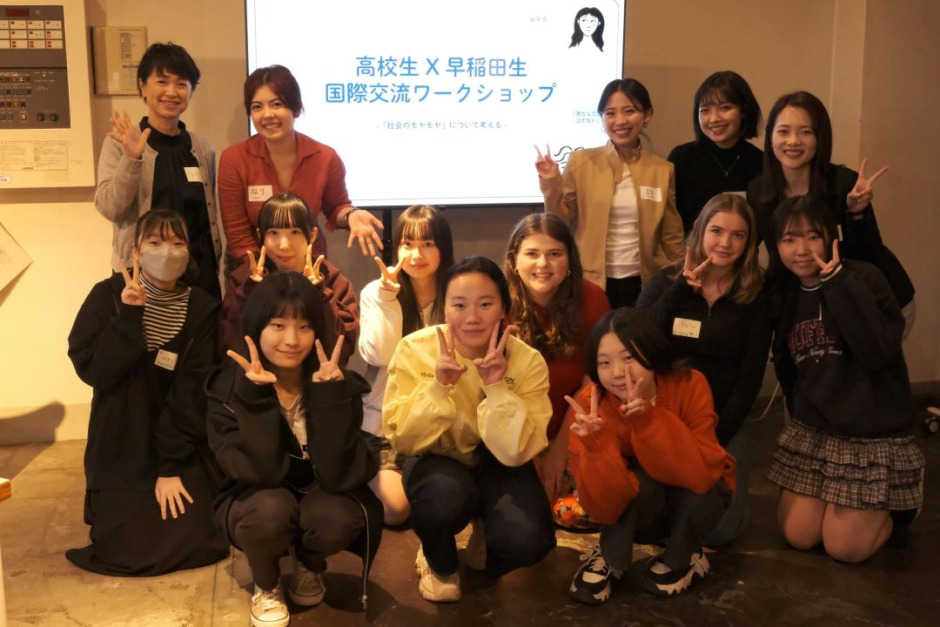
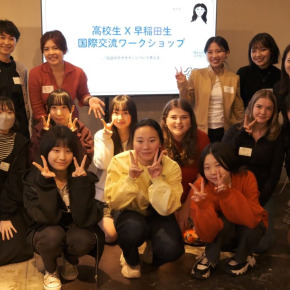
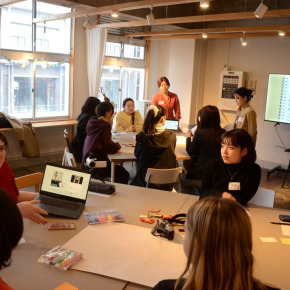
I organized this event with the help of some international friends I met at TAISI, with the aim of getting high school students in my hometown of Fukui Prefecture to think about the vague feelings they have about gender from an academic perspective. We aimed to create an opportunity for international exchange for high school students, and to encourage them to use English not just as a "subject to learn," but as a tool to express their opinions. On the day, I was joined by a member of the seminar I belong to. Saori Kamano The three-hour program included a mini introductory lecture on gender by Professor and a discussion among high school students. A total of 20 high school students from Fukui Prefecture participated over two days, June 28th and 29th, 2025.

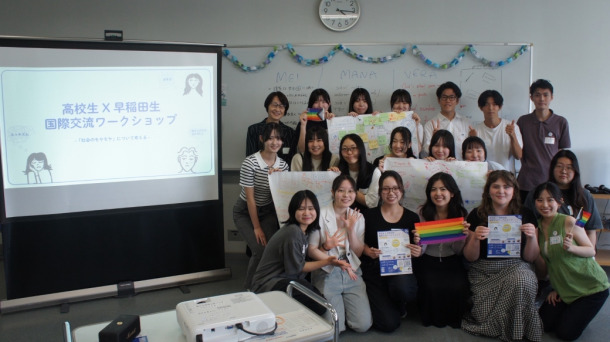
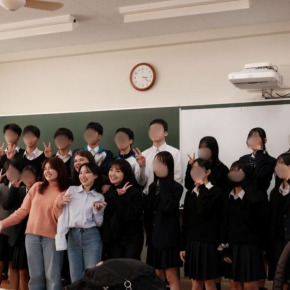
A commemorative photo with the high school students who participated in the workshop. In a survey after the event, participants said they felt a sense of accomplishment, with some saying things like, "I realized that maybe sociology is what I want to study," and "I discovered a way of thinking that was unconsciously within me."

-Why did you decide to hold this event?

The background to this is that I have spent my student life in completely different environments: rural Japan, urban Japan, and overseas. I was born and raised in Fukui City, and when I was in sixth grade, my father was transferred to the United States. I attended junior high and high school there, then returned to Japan and went on to Waseda University. What I realized from that experience is that there are differences in opportunities to learn outside of school depending on where you live.

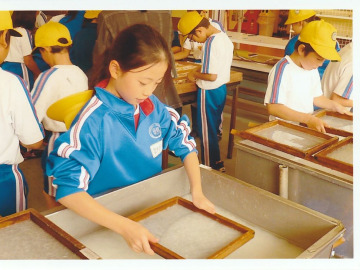
Left: Nakagaichi, a fourth-grader living in Fukui City. This photo shows her making Echizen washi paper, a traditional Fukui craft.
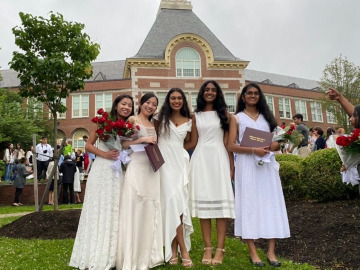
Photo on the right: At Convocation held at a high school in the United States. Nakagaichi is second from the left. She says she had always dreamed of living the "JK life" in Japan.

The deciding factor was when a childhood friend from elementary school who lives in Fukui told me, "I'm interested in international exchange, but I've given up on in-person events because of the transportation costs to get to Nagoya or Kyoto." You can't experience the atmosphere of interaction online. But in-person events are only held in urban areas. Hearing this from my friend, I felt that there must be something I could do as someone who knows both rural and international communities, so I planned this workshop. I wanted the high school students to experience learning in English, so the proceedings and lectures were conducted in Japanese, but the group work involved exchanging opinions in English.

-Did you encounter any difficulties in hosting the event?

The most difficult part was the barrier I faced during the preparation period leading up to the event: being an outsider. I asked educational institutions for their cooperation, but even though I'm from Fukui, I only attended elementary school in the local area. They didn't trust me when I suddenly said, "I want to hold a workshop for high school students in Fukui!" The PR work to gather participants was particularly difficult. I had to call every high school in the city and mail posters from Tokyo, so I was feeling my way around. I was often told, "That's difficult," and even when I had the opportunity to speak with school officials, they would sometimes refuse to look me in the eye, saying, "Gender is something only girls are interested in, right?" I chose gender as the theme because it's an international topic and familiar to high school students, but there were still many instances where I felt distanced from them, and I felt like I was witnessing the root of the problem.

Still, in order to reach high school students who needed this type of opportunity, they asked two local high school students they met through another online education program to join their team, and they started doing what they could, one step at a time, such as asking them to introduce them to their teachers and friends. They set up an Instagram account and, with the help of their parents' local connections, they steadily gathered participants, one by one.

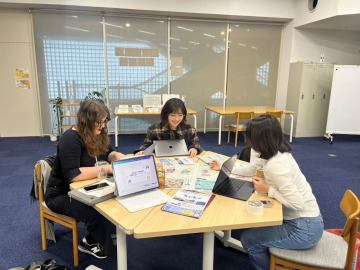
Left: A meeting with the management team in the Learning Commons in Building No. 14. A friend of Nakagaichi's from TAISI shared Nakagaichi's passion for "delivering learning opportunities that connect local high school students to the world," and decided to join forces to run the facility.
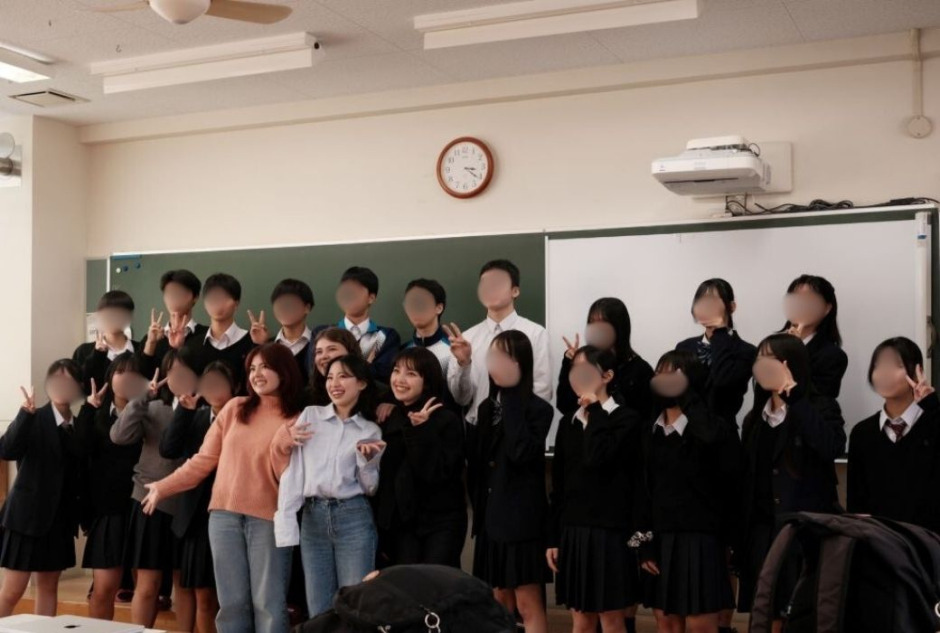
Photo on the right: A photo with members of the first workshop. A childhood friend from elementary school (far right), who had almost given up on international exchange due to geographical constraints, also participated as a member of the organizing committee.

--Please tell us what you paid particular attention to.

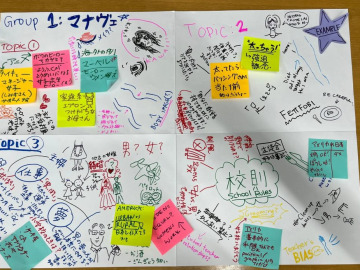
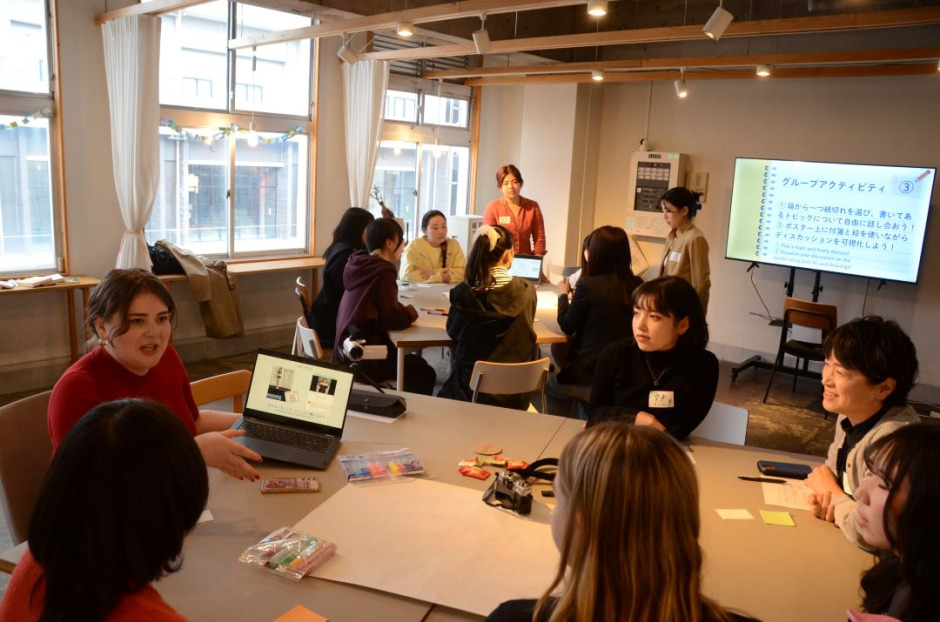
As an "off-campus learning" event planned by university students, we wanted to differentiate it from high school classes. So, instead of each student writing their thoughts in a notebook, we decided to visualize their opinions by having them write them in groups on large pieces of paper. By drawing pictures and arrows on the paper and expanding the discussion, participants naturally relax and can see the flow of the conversation. It's easy to see at a glance things like "This was the most exciting part" or "This idea came from this opinion," making it easier to share the enthusiasm of the group. We also provided stickers and colored pens to create an atmosphere where the high school students could express themselves freely.

Left: Construction paper created during group work. Ideas are vividly written on it using colored pens and sticky notes.
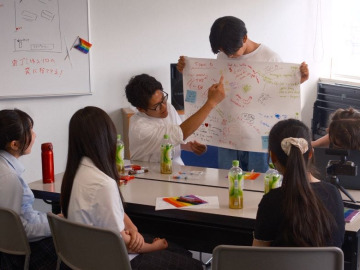
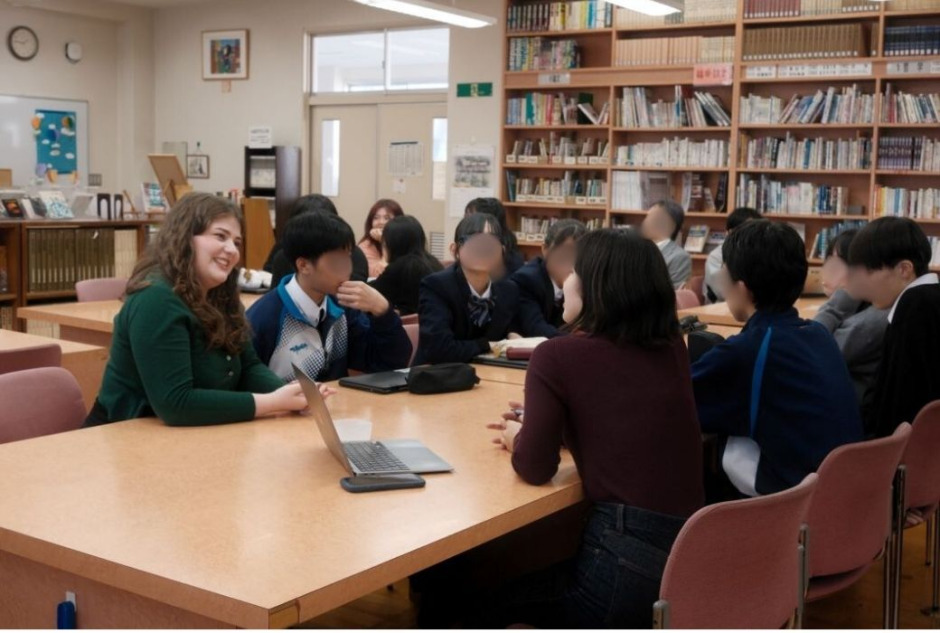
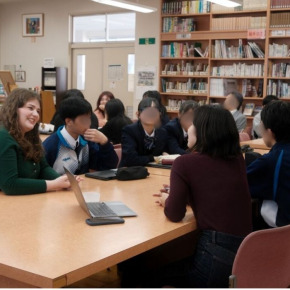
Photo on the right: High school students exchange opinions while pointing at the construction paper. They split into three groups based on how much English they wanted to use, and each group communicated their thoughts in their own words.

-How does what you learned at TAISI affect your current activities?

TAISI emphasizes practical education, so there are many opportunities to get physically active, such as going out into the city to conduct research and give presentations. It's a different style from lecture-style classes, and I think it suits me. Also, learning in English is the origin of holding workshops, and the program is packed with diverse perspectives, which is what makes it so appealing.

There are many students around me who regularly exchange opinions on social issues such as gender and politics, and at first I was surprised that they could talk so casually. The diversity of their origins and countries allows me to learn about the perspectives of each person, making it a truly stimulating environment. That's why I wanted to preserve this atmosphere of dialogue and share it with high school students in Fukui.

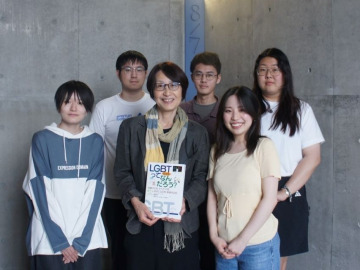
Left: A group photo of the Kamano seminar to which Nakagaichi belongs. When Nakagaichi discussed the workshop, Professor Kamano encouraged Nakagaichi's ideas and actions, saying, "This is a meaningful initiative." She also provided full support for applying for activity expenses and contacting relevant parties.
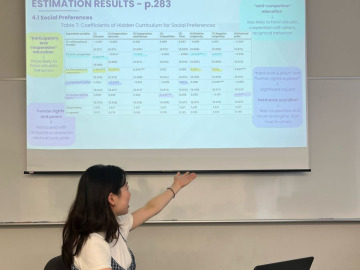
Photo on the right: A scene from a seminar presentation. Her favorite class is Professor Kamano's "Sociology of Gender" Analyzing the history and current situation of gender and LGBTQ+ issues in Japanese society using various sources, including statistical data.

--Please tell us your future prospects and a message for Waseda students.

Thankfully, we received support from organizations within the Fukui Prefectural Government and a local newspaper who wanted us to hold the event again, and we held the second workshop in Fukui City on November 8th and 9th. We hope to hold a third workshop around February or March before I graduate. We would like to expand the opportunities for more high school students to participate while cherishing our ties with Fukui Prefecture.

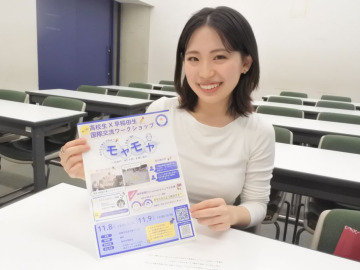
Nakagaichi-san during an interview, holding a flyer for the second workshop.

If you have an idea, please don't hesitate to talk to the people around you! When I said out loud that I wanted to do something like this, my friends and teachers connected me with people and offered to help me in unexpected ways. Until I came up with this project in the second half of my third year, I was constantly anxious about my future career path and didn't know what I really wanted to do. But I believe that the time spent worrying like that is never wasted. Even if you don't rush, you're sure to come across a moment when it clicks. I want to tell anyone who is struggling in the same way that it's okay.

913th

Interview, text and photography: Waseda Weekly Reporter (SJC student staff)
Nagisa Nishimura, 3rd year, School of Culture, Media and Society

【Profile】

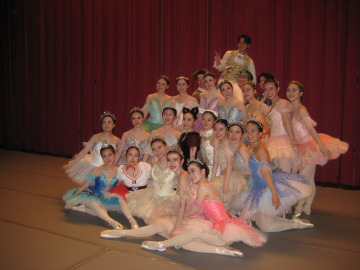
Originally from Fukui Prefecture, she has lived in New Jersey, USA since she was 11 years old. She graduated from Ridgewood High School. She studied ballet from a young age and was a member of the Waseda University ballet student club Ciel (an official student club). Because the Fukui dialect was spoken in her hometown both at home and at school, she learned both English and standard Japanese in the US, where she met many Japanese people from urban areas. When she returned to her hometown for a workshop, she was so drawn to the Fukui dialect of the participating high school students that she reverted to her old intonation. Her favorite Waseda meal is the deep-fried tofu set meal at Toden Table.

Waseda Weekly is the official web magazine for Waseda Student Affairs Division. It is updated every weekday during the school term! It introduces active Waseda students and graduates, student club, Waseda meal information, and more.

Page Top
WASEDA University

早稲田大学オフィシャルサイト(https://www.waseda.jp/inst/weekly/)は、以下のWebブラウザでご覧いただくことを推奨いたします。

推奨環境以外でのご利用や、推奨環境であっても設定によっては、ご利用できない場合や正しく表示されない場合がございます。より快適にご利用いただくため、お使いのブラウザを最新版に更新してご覧ください。

このままご覧いただく方は、「このまま進む」ボタンをクリックし、次ページに進んでください。

Continue

対応ブラウザについて

close