"I want to become someone who can turn the clock forward in space development."
Abe Maya, 4th year student School of Fundamental Science and Engineering
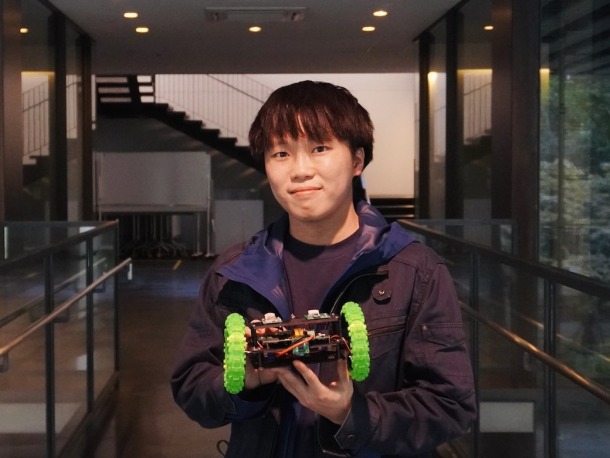
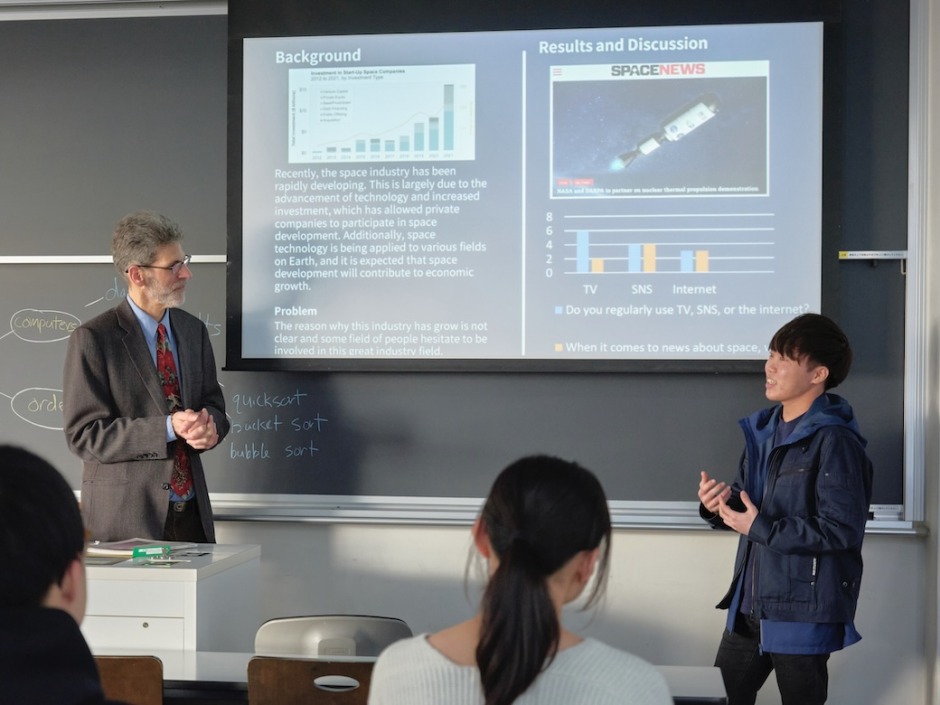
At Building 63, Nishi-Waseda Campus
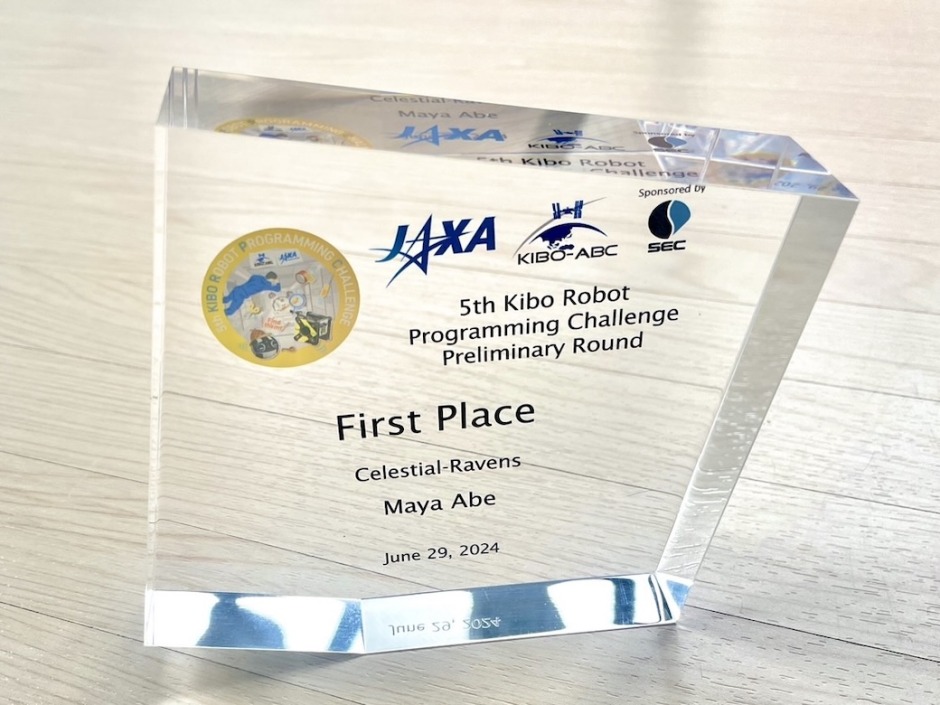
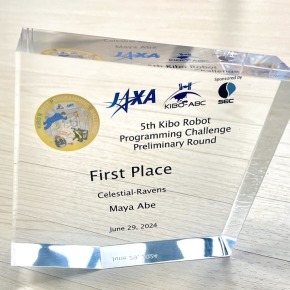
Abe Maya has had an interest in space and manufacturing since childhood, and is currently working on his graduation research on the trajectory design of space probes in the Department of Mechanical Science and Aerospace Engineering, Faculty of School of Fundamental Science and Engineering. In June 2024, he he qualified for the national 5th Kibo Robot Programming Competition (Kibo-RPC), and in November of the same year, he represented Japan in the world championships (on-orbit finals) held on the International Space Station (ISS). Abe, who dreams of "realizing a future where everyone can go into space," and aspires to have a career in space development, shared his Kibo-RPC challenge and future prospects.
-What kind of competition is Kibo-RPC?
First of all, "Kibo" is the name of the Japanese laboratory module on the ISS. Kibo-RPC is a space robot programming competition set in "Kibo," where students at graduate school level and below program robots and drones to help astronauts with their work, and compete for rankings based on accuracy and speed.
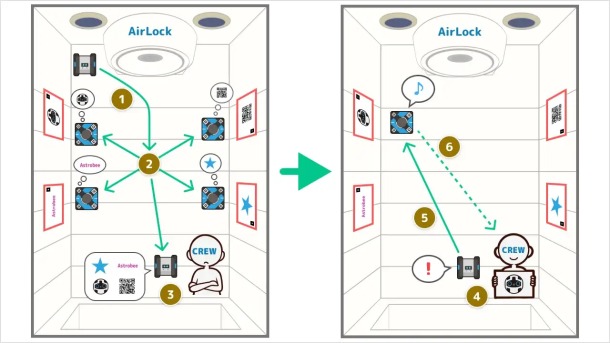
Each team was given a fictional game story in which they had to use the Astrobee drone that works on the Kibo to find lost items on board, and they tried their hand at programming.
I teamed up with two students from Tokyo University of Science, and a total of 19 teams, ranging from elementary school students to graduate students, participated in this year's Japan qualifying round, making it a meaningful competition that gave us the opportunity to interact with people of a wide range of ages who are interested in space.
--What prompted you to try Kibo-RPC?
From my first or second year at university, I built small space probes and artificial satellites with friends from high school and participated in domestic and international competitions. During that time, I had the opportunity to interact with an off-campus student club that built rockets using their own technology, and two students from that student club asked me if I would like to participate in Kibo-RPC. I thought it was very interesting that instead of building robots, you compete with the "programs" that you install on them, so I decided to participate.
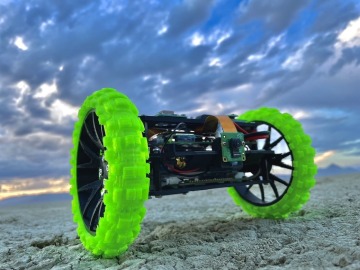
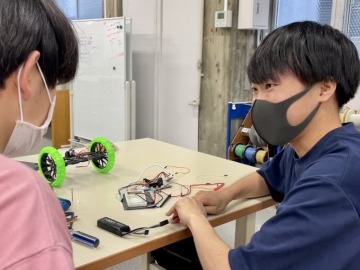
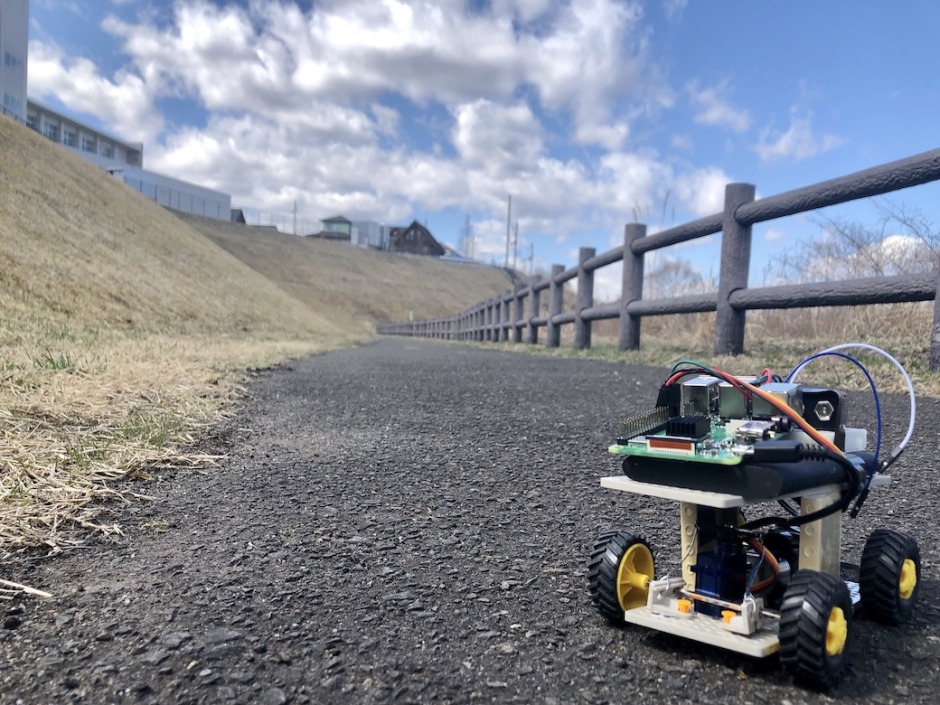
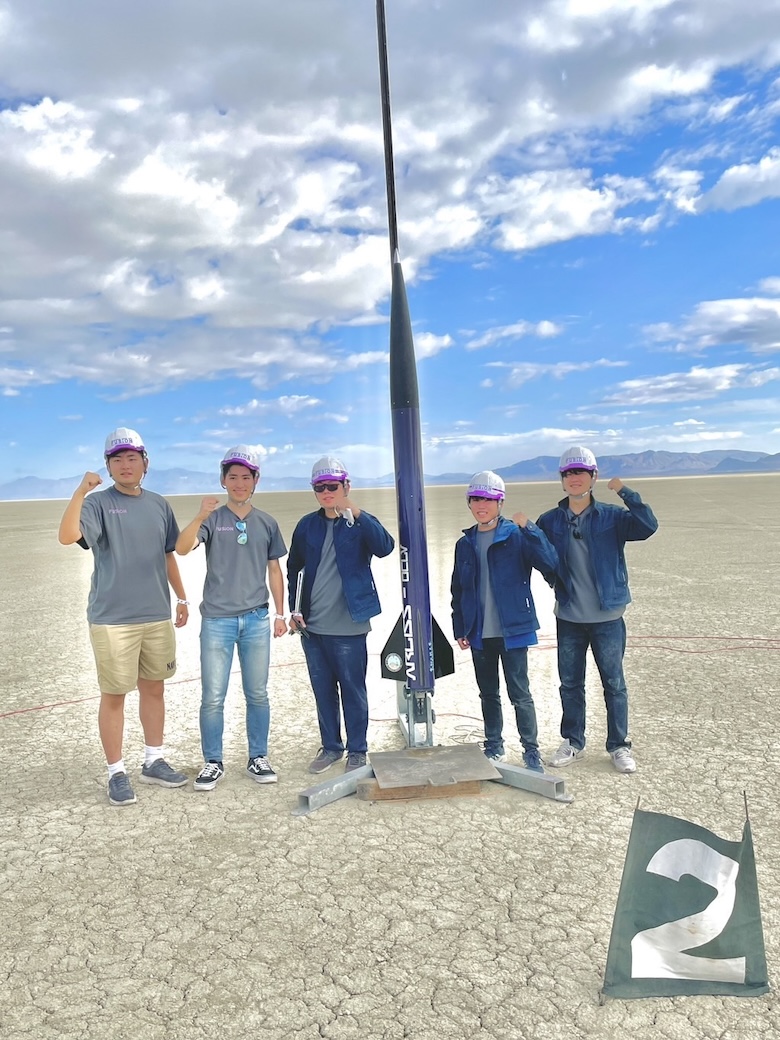
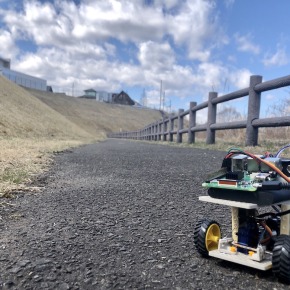
Photo on the left: A CanSat (a mock artificial satellite the size of a can) that Abe and a team of friends built when he was a second-year university student. ARLISS2022) won third place in
Photo on the right: The CanSat was made at Nishi-Waseda Campus" Waseda Manufacturing Workshop" was also utilized.
--You won the Japanese qualifying tournament and earned a ticket to the world tournament (orbital finals) in November 2024. What are your thoughts on this?
I'm glad that we were able to achieve such a high score thanks to the division of roles that made the most of areas of expertise. Two members that specialize in electrical engineering were in charge of programming, while I, who specialize in aerospace engineering, was in charge of tactics such as analyzing the competition rules and proposing ideas. We came up with an "acrobatic photography" technique in which the drone's body is twisted to take and process two photos at the same time, and I think the other members adopted this technique, which helped us increase our speed and led to our victory. It was a lot of fun coming up with tactics using various knowledge about space, such as the research we're doing at university on the orbital design of space probes and the papers and materials we read on a daily basis about artificial satellites.
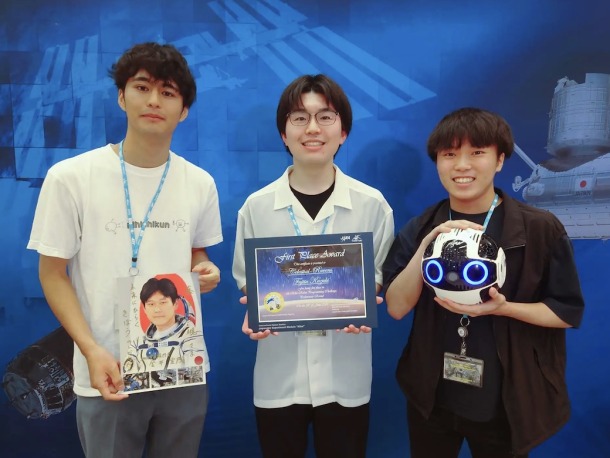
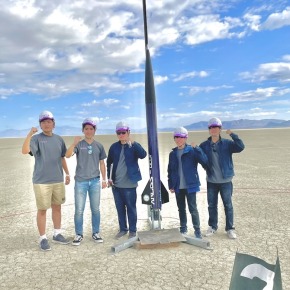
A photo commemorating the victory in the national qualifying round. Abe with his teammates from the team "Celestial-Ravens," of which he was vice-leader. From the left: Masuoka Shunpei, Fujita Kazuki (both from Tokyo University of Science), and Abe.
--What first got you interested in space?
Since I was a child, I liked anything related to space, such as going to see the asteroid probe "Hayabusa" and rocket engine exhibitions, but at the time I was interested in manufacturing and technology in general. As I grew up, I was attracted to space development, where people from all over the world with various specialties, both in the humanities and sciences, work together to take on the challenge, not just in physics and mechanics. When I learned that aiming for space means getting involved with a variety of people and joining forces, I wanted to lead space development together with them.
Also, Tohoku University, which was close to me in my hometown of Miyagi Prefecture, was the only university in Japan that was responsible for sending lunar rovers into space, which was a major factor in sparking my interest in space engineering.
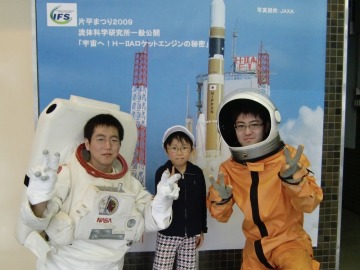
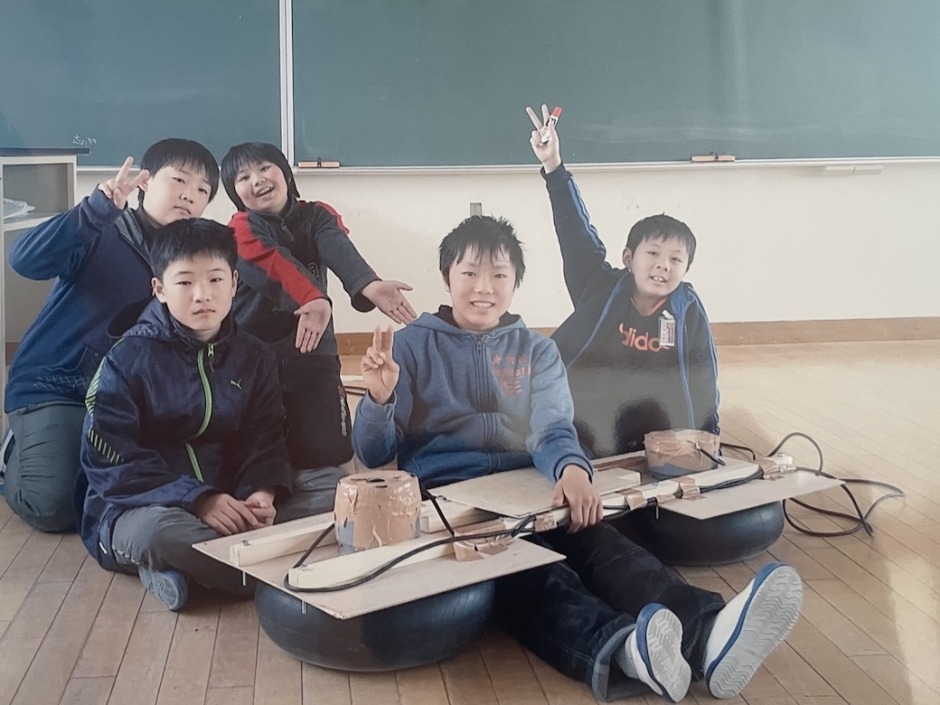
Left: When he was in the first grade of elementary school, he attended an information session on the "H-IIA rocket engine" at Tohoku University.
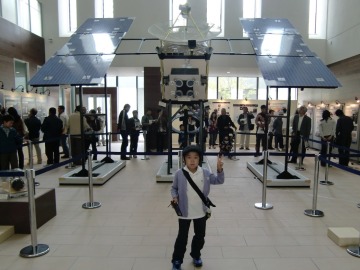
Right: When he was in second grade, he visited the university to see a full-scale model of the Hayabusa.
-So, please tell us why you decided to go to Waseda University.
I considered continuing my studies in my hometown, but I thought it would be meaningful to move to Tokyo. When I was a high school student and wondering what my future path would be, the activities of private venture companies related to space development were becoming more and more active, and Tokyo was the center of this. The lunar rover team I mentioned earlier is now a startup company with its headquarters in Tokyo.
I felt that the field of space development requires not only the efforts of the government and universities, but also the efforts of private companies, and I wanted to study space engineering in Tokyo, the center of the field. Among them, Waseda University has a laboratory that collaborates with JAXA and has a track record of building satellites, so I thought it was a very good environment. I am currently working on my graduation research in the laboratory of Professor Yoshimura Hiroaki (Faculty of Science and Engineering).
-- On November 9th, the results of the world championships were announced live from the ISS, with the Japanese team coming in 7th. What do you think of Kibo-RPC?
We thought that the image processing algorithms had been improved to match the operation of the actual device, not to mention that it would work reliably in the simulation, but it did not work well inside the space station, which was a disappointing result. Just like in real space development, we were made painfully aware of the difficulty of making a mission successful in an environment where it is difficult to test in advance.
On the other hand, we received high marks for our robot control and operation. We were able to have a valuable opportunity to actually run our program in space, and we are very grateful to our teammates and everyone who was involved.
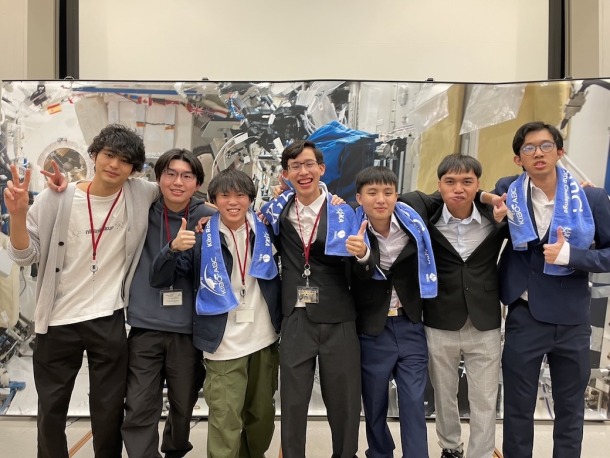
A photo with the Thai national team, which won the world championship. Abe says, "I hope to meet again in the future in space development work with the students from all over the world who I interacted with at Kibo-RPC." Abe is third from the left
--Please tell us about your future prospects.
After graduation, I would like to continue my studies at graduate school while also taking on the challenge of space development through internships at companies. Research is about "increasing" humanity's knowledge and actions regarding space, while development is about thinking about how to "utilize" those cards, and I believe that both are important axes. In the future, I would like to connect people active in various fields, including research, development, and business, and contribute to maximizing the potential of space development.
Space development, where people from various fields work hard toward a common goal, is attractive because it is so difficult and the excitement that can be shared is so great. My dream of sharing experiences in space with everyone and realizing a future where we can all go into space is what drives me every day. I want to continue to work hard so that I can move the hands of the space development clock forward even just a little.
No. 887
Interview, text and photography: Waseda Weekly Reporter (SJC student staff)
Shiori Kato , 4th year, School of Humanities and Social Sciences
【Profile】
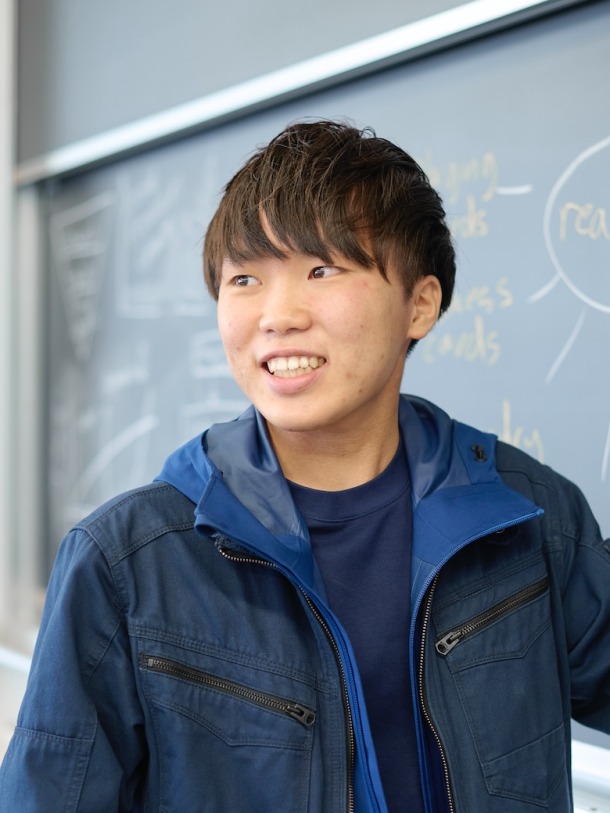
Originally from Miyagi Prefecture. Graduated from Sendai Dai-ni High School. The theme of his graduation research was "Trajectory design using stochastic optimization for a space probe traveling from the Earth to the Moon." As the representative of "ASE-Lab.", a study community for space-loving students, he is also working to create an environment where students can meet others to study space together. In high school, he was a member of the volleyball club, playing as a setter, and continues to play as a hobby to this day. His favorite manga are "Haikyu!!" (Shueisha) and "Planetes" (Kodansha).

![[Save version] Map of the four main campuses](https://www.waseda.jp/inst/weekly/assets/uploads/2026/06/110d605cfac40346aad1d2df464a6586-940x705-1-1-610x457.jpg)