"We came up with a business model that is friendly to both the caregiver and the care recipient."
Keigo Fujiwara, 4th year, School of Commerce
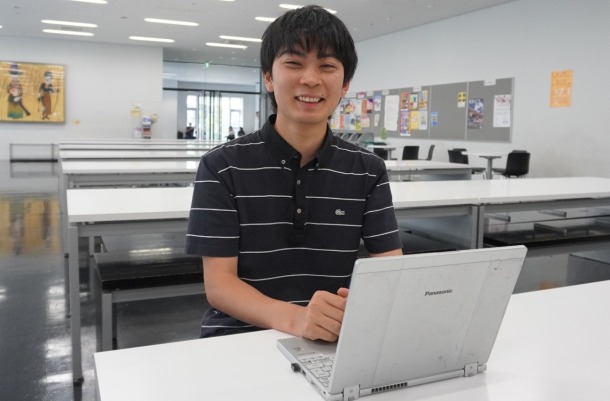
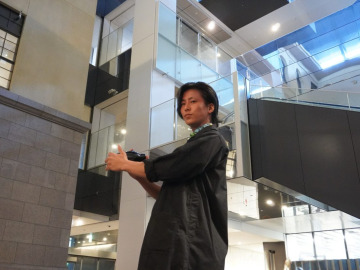
At the lounge of Building 11 Waseda Campus
Keigo Fujiwara won the 27th Waseda University Business Plan Contest held in July 2024. It was the culmination of four years of learning through classes and activities in the Waseda University Marketing Research Club (an official student club). The business model he came up with this time is intended to solve the issues in the nursing care industry that he felt from his own experience. We asked him about how he came up with his business model, how he has grown through participating in the contest, and his outlook for the future.
--Please tell us how you came to participate in the Waseda University Business Plan Contest.
After entering university, I joined student club called the Waseda University Marketing Research Club, student club not only hosts business plan contests, but also allows student club members to participate in them, so I have had the opportunity to participate in many contests. In my second year at university, I won the Audience Award at the MONJU Business Contest sponsored by the Waseda-Keio Business Federation, and I believe this is also thanks to student club 's ability to teach me the basics of how to create a business plan.
I wanted to have an opportunity to put my marketing knowledge to use at the end of my four years, so I took a class called "Entrepreneurship Training Course I" (a course offered by School of Commerce) in the spring semester of 2024. There, I was able to hear the real voices of entrepreneurs, which was very stimulating. In the class, each group created a business plan, which was evaluated and qualified me to participate in the Waseda University Business Plan Contest, which was linked to the course.
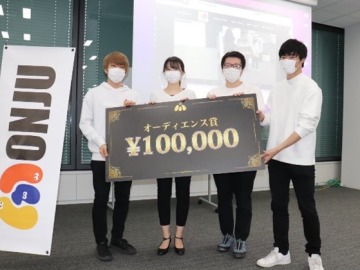
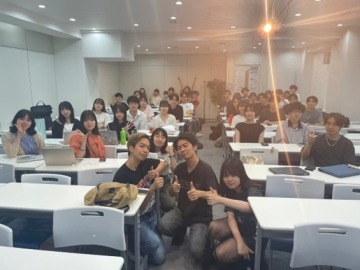
Photo on the left: Photo taken when he won the Audience Award at the MONJU Business Contest in February 2022. Fujiwara is on the far left.
Photo on the right: In July 2023, the Waseda University Marketing Research Club held a "Branding Study Group." It became a place for student club members to share knowledge with each other.
-What kind of business model have you come up with?
We have come up with a nursing care platform called "Rakumane." This is intended to solve two problems that the nursing care industry faces. The first is the inconvenience that it is difficult for caregivers and those in need of care to find a care manager who is responsible for creating a care plan (※). Currently, caregivers must generally go to a public institution such as a government office, receive a list of home nursing care providers or care managers, and then go through each one in order. Furthermore, the list only contains contact information, and does not provide any information about the experience or characteristics of the care managers.
(*) Nursing care service plan. A document required when using nursing care insurance services, which summarizes the support policy, goals, and specific details based on the situation of the user and their family.
The second reason is dissatisfaction with the low wages of care managers, despite the fact that the job requires specialized knowledge. Usually, the price of goods and services is determined by the balance of supply and demand, but this market principle does not work in the nursing care labor market.
So I created a database containing information such as the experience and personality of care managers, and came up with a service called "Rakumane," which uses chat and video calls to match people requiring support or care with those based on their care situation and preferences.
After matching, the system pays the care manager money earned from the public nursing care insurance based on the user's evaluation. This not only solves the two problems mentioned above, but is also expected to alleviate the labor shortage in the nursing care industry by creating a fair market. At present, no public nursing care insurance compensation is given for such matching services, but as the government is actively promoting nursing care digital transformation, I believe there is a good chance that this will become a reality in the future.
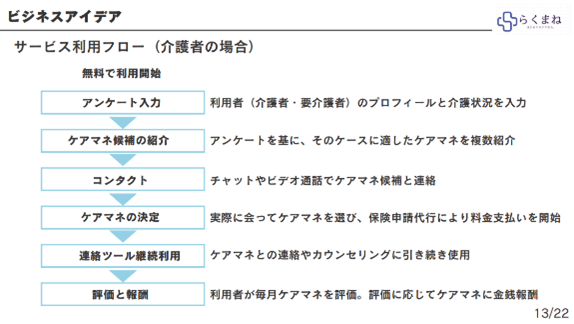
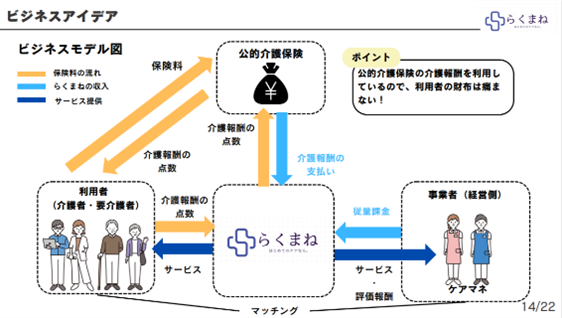
"Rakumane" service usage flow (left) and business model (right). From the presentation materials for the Waseda University Business Plan Contest (click to enlarge)
-Why did you focus on the nursing care industry?
This is from my own experience. When I was in my second year of university, my grandmother suffered a cerebral infarction and was temporarily left with hemiplegia. My mother was tasked with caring for her. She is usually very positive, but she became increasingly exhausted day by day. I felt that the stress of caring for someone must be extremely high, and I had been thinking about what I could do. Then, in this class, we were asked to create a business model, and I wanted to approach the issues facing the nursing care industry, which I had long felt were problematic.
When creating the business model, I interviewed my mother about her own experiences. I also discussed the current state of the nursing care system with my older sister, who is a medical student, and members of the Waseda University Marketing Research Association. I believe that this business model was only possible with the cooperation of so many people.
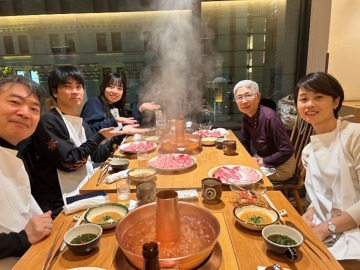
A photo of the family taken at my grandmother's birthday party. Fujiwara is in the center on the left.
--How do you feel about winning the Waseda University Business Plan Contest? Also, what were some of the challenges you faced?
Because I felt the problems facing the nursing care industry firsthand, I was convinced from the beginning that there would be a certain demand for an approach to address them. Also, I felt that we were creating something valuable in the process of actually developing the plan, so I was honestly happy to win. However, at the same time, because at this stage I have only created a business model, I also feel the need to implement it in society.
In the business competitions I have participated in up until now, clear issues were presented from the beginning and I was required to find a method to solve them, but this time I had to set the issue myself, which was difficult. It was also difficult to understand the information provided by the Ministry of Health, Labor and Welfare, as well as the content of various systems related to the nursing care industry, policy trends, and their actual situations.
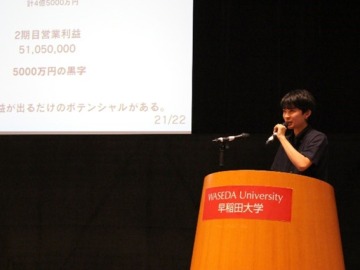
Presentation at the Waseda University Business Plan Contest, held at Masaru Ibuka Auditorium on Waseda Campus.
What exactly do you study in School of Commerce?
In my first and second years, I learned the basic framework of marketing and acquired skills such as logical thinking. I was particularly interested in brand marketing, so I read a lot of books on the subject. I think I was able to make it my own by regularly participating in business competitions and outputting the results.
In my third year, I wanted a new perspective different from marketing, so I joined Professor Hiroshi Shimizu's (Faculty of Commerce) seminar "Innovation Research." Here, we study the environment in which innovation occurs from a wide range of perspectives, from macro to micro.
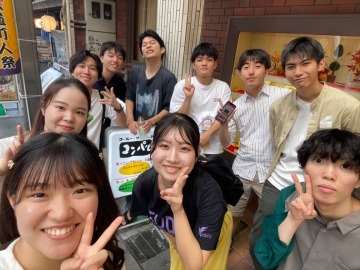
This photo was taken during a seminar training camp in Nagoya. Fujiwara is the fourth person from the right in the back row.
--Please tell us about your future prospects.
I want to work on making the appropriate market principles work in the nursing care industry, without being fixated on the business model I proposed this time. To that end, I would like to be involved in actual nursing care sites in the six months until graduation and understand the real situation. After graduation, I plan to get a job at a venture capital firm, so I would like to do my best to help people who have the same ideas as me and are starting their own businesses.
No.884
Interview, text and photography: Waseda Weekly Reporter (SJC student staff)
Ukiya Hinari, 3rd year School of Culture, Media and Society
【Profile】
Born in Tokyo. Graduated from Tokyo University of Agriculture and Technology High School. His hobby is reading manga, and he has about 800 of them on his bookshelf in his room.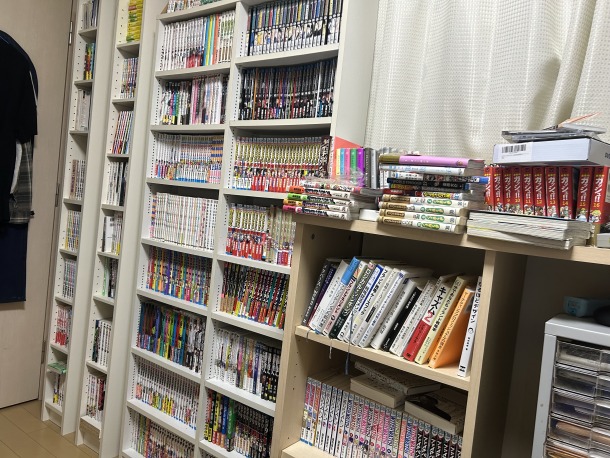 He is currently hooked on "Reborn Shogi Player" (by Nabekurao, published by Shogakukan). He has also been reading ghost stories since he was in middle school, and is particularly fond of the series "Scary Stories That Aren't a Joke (Sharekowa)."
Waseda University Marketing Research Association Official Twitter: @wasedamarketing
Waseda University Marketing Research Association Official Instagram: @wasedamarketing
![[Save version] Map of the four main campuses](https://www.waseda.jp/inst/weekly/assets/uploads/2026/06/110d605cfac40346aad1d2df464a6586-940x705-1-1-610x457.jpg)