Many Waseda University students may think that social issues are somewhat difficult to approach. In the new corner, "Lectures by Experts'', we will focus on specific problems facing society and ask four Faculty to give us hints on how to solve them.
The theme for 2023 is "How to Keep the Peace?". As the world situation becomes unstable due to Russia's invasion of Ukraine and other issues, we will consider what peace means once again. the first guest is Chikako Ueki Professor (Faculty of International Research and Education Graduate School of Asia-Pacific Studies), a researcher on "Causes and Prevention of War". In the first part, Ueki talked about Ueki's answers to the theme and the recent world situation.
Prof. Ueki, how can we protect peace?
It is important to create a situation in which war is not worth it, to have a discussion among the whole nation, and for students to express their opinions on the international situation and their country's security policy.
There are things that both society as a whole and students can do for peace.
There are many students who feel that the world situation is becoming unstable. Professor Ueki, how would you answer the question, "How do we protect peace?"
It is important to create a situation where war is not worth it. In other words, if the costs of war exceed the benefits of war, war will not occur. The costs of war are spread across many areas, including military costs, human costs, and economic costs. Strengthening military power attempts to deter war by increasing the military cost (damage) of the attacking side, but this alone is not sufficient to deter war. By explicitly showing that they will lose the benefits they would otherwise enjoy if they do not go to war, the perception that war is not worth it is created.
There is no doubt that war will disrupt future trade and people-to-people exchanges. Waseda University also accepts international students from many countries and regions, including the United States, China, Taiwan, and Australia, but there is a possibility that these exchanges will be lost. By increasing the benefits of peace, incentives for war can be reduced.
Many wars have been caused by ``misperception''. Japan has more military power than we can imagine, and the Japan-US alliance. If the other side is unnecessarily cautious about this, there is a risk that they will misunderstand Japan's intentions. Transparency of intent is important. It is important to make Japan's security and defense policies transparent and to prevent wars based on misunderstandings.
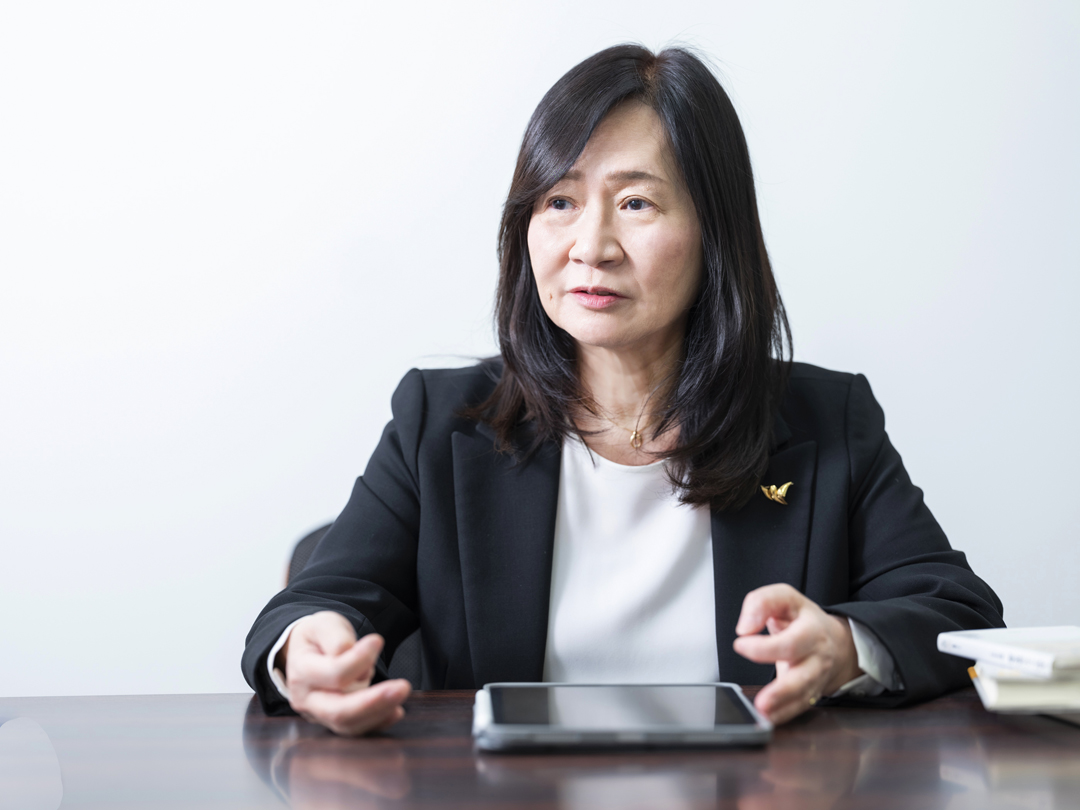
In other words, is the role of government important in maintaining peace? Is there anything students can do?
It is important not only to encourage the government but also to have thorough discussions within the country. If a "Taiwan emergency" were to occur, what would Japan do? What kind of damage would it inflict? What would happen to the U.S. military base in Okinawa? Do they want the U.S. military to protect Taiwan or not? I think the younger generation needs to have these discussions as well. This increases transparency and reduces the possibility of "misunderstandings."
There are many things that students can do as well. Please get in the habit of looking at current U.S.-China relations not only in Japanese newspapers, but also in the U.S. and Chinese media, and look at them from multiple angles with your antennae up. It is also important to use blogs and SNS to communicate to the world any questions you have about Japan's security, or things that don't make sense to you about the policies and actions of other countries. This is because by disseminating information that war is not worth it, there is a possibility of reducing the invitation for war. Being interested in international affairs is the first step to preserving peace!

Professor Ueki analyzes “Ukraine invasion” and “Taiwan situation”
Professor Ueki, who specializes in the causes and prevention of war, how do you view the current world situation?
Unfortunately, I believe that the world today is less cooperative and more tense than ever before. When considering this situation, the invasion of Ukraine and the conflict between the United States and China each have great significance.
First, the invasion of Ukraine broke the conventional wisdom of the international community. It was simply unthinkable that a power as powerful as Russia would invade a neighboring country. The attack was motivated by Russia's perceived threat to its national security, but it was not believed that Russia, a nuclear-armed state and Permanent members of the United Nations Security Council , was concerned about its own security.
However, I think there was a misunderstanding here by Western countries, including Japan. Russia did not consider the eastward expansion of the North Atlantic Treaty Organization (NATO) to be a threat. However, Russia was wary enough to go to war.
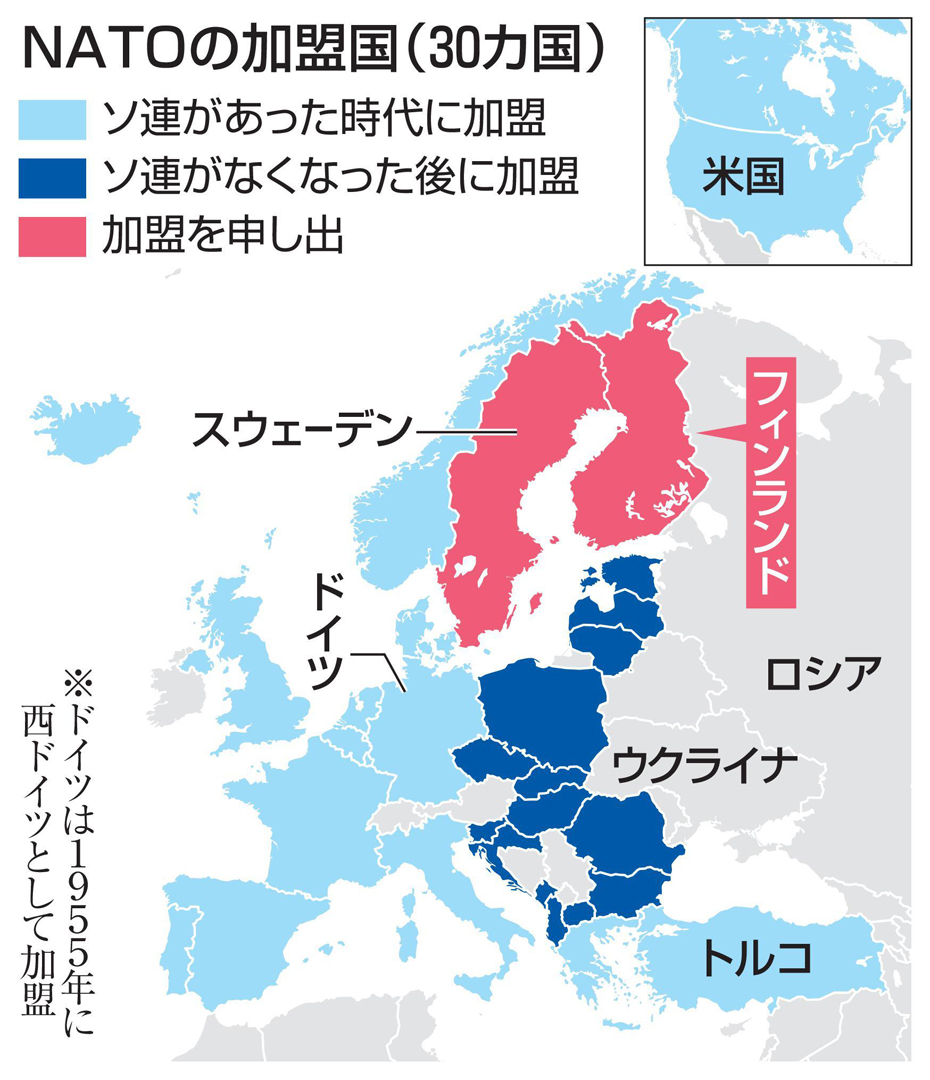
Map of NATO member countries (Image provided by Kyodo News)
Once a war starts, it is difficult to end it. More than a year has passed since the invasion of Ukraine, but unfortunately we still cannot predict what form a ceasefire and end to the war will take.
The situation on the eve of war is sometimes described in technical terms as a "window of opportunity." In February 2022, before the invasion of Ukraine, U.S. President Biden made a statement to the effect that ``The United States will not send troops to Ukraine.We will not accept Ukraine's membership in NATO.However, we do not know about future membership.''
When the "window of opportunity" is open, wars are less likely to break out. However, the risk of war increases when the "window of opportunity" risks closing. In this case, President Biden's statement, "If we don't attack now, Ukraine may join NATO someday. We can win now," may have been an invitation for Russia to attack. Wars are often caused by such misunderstandings.
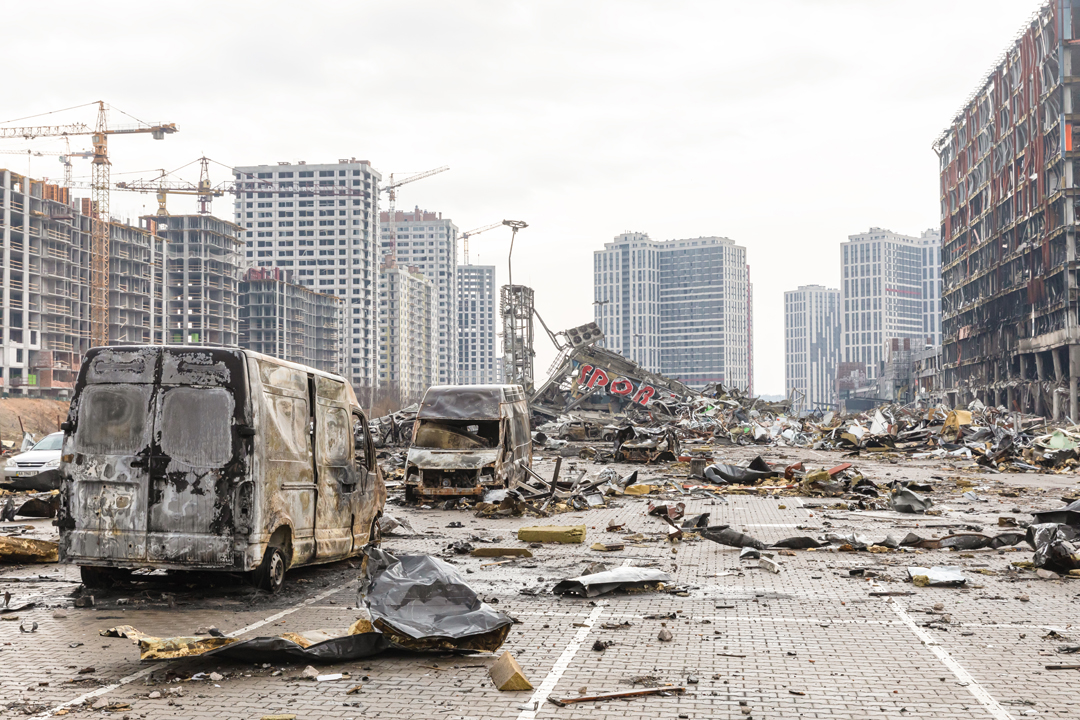
Kyiv, the capital of Ukraine, attacked by Russian forces
What are your thoughts on the US-China conflict?
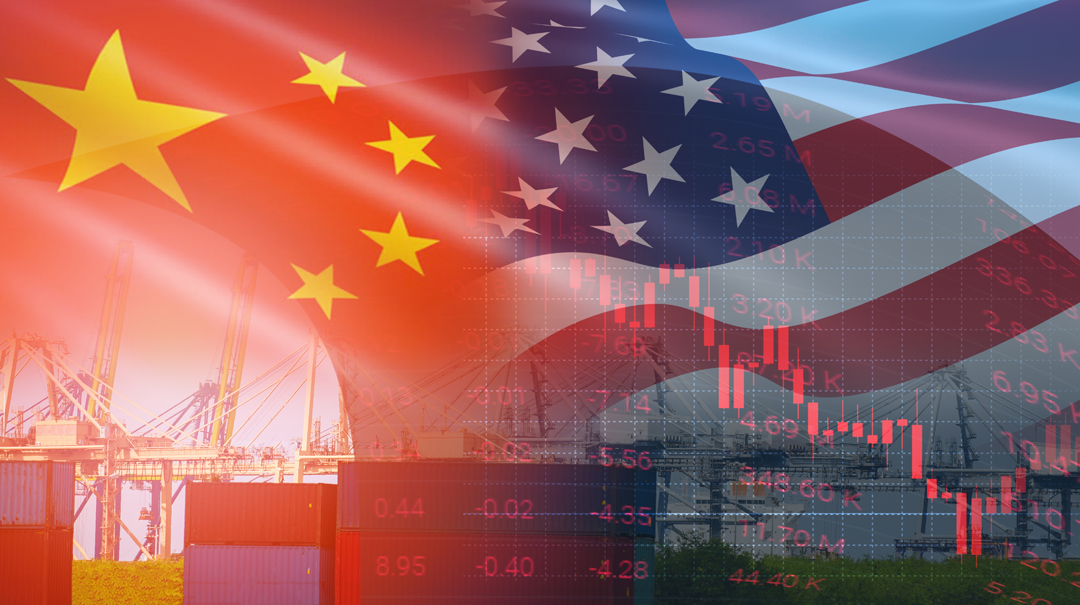
Until now, the United States and China have maintained stability, supported by economic relations and economic interdependence. The United States has tolerated China's increasing economic and military power. However, the perception that China was hurting its economic interests spread within the United States, leading to trade tensions. The opinion that actions that disrupt international order cannot be tolerated suddenly grew.
This new coronavirus infection is also having an impact. As a result of the coronavirus pandemic, which has restricted people's global exchange and circulation, the idea that economic interdependence is fragile has arisen, and ``economic security'' has been actively debated. This is an argument for ensuring a stable supply of goods within the United States and its allies, rather than relying on China, which faces a variety of issues, including dependence on high-tech components such as semiconductors, leaks of technical information, and concerns about communications interception. Until now, politics and economics have often been separated, but now economic policy is also becoming a security card.
Tensions over Taiwan are also rising. If China's invasion of Taiwan were to actually occur, Japan would also be geographically involved. I believe that it is unlikely that China will launch a planned attack on Taiwan any time soon. However, in the event of an accidental war, the mechanisms to prevent it from escalating have weakened due to the US-China conflict. While both the United States and China are speeding up their military preparations, there is an urgent need to establish a communication mechanism in times of crisis.
In the second part of the interview (released on June 14th), we will introduce you to Ueki's specialty, current resSarch content, and message to Waseda University students. Stay tuned!
Ueki (Kawakatsu) Chikako
Professor, Graduate School of Asia-Pacific Studies Faculty of International Research and Education. Ph.D. (Political Science, Massachusetts Institute of Technology). Her areas of expertise are international relations and security theory. In addition to conducting research on a wide range of topics, including international relations and security in East Asia, the causes and prevention of war, the relationship between rising and status quo states, and the process of forming threat perceptions, she also makes policy recommendations regarding security.
Official website: http://www.waseda.jp/sem-ueki/
Interview and text: Kenichi Marumo
Photography: Kota Nunokawa
Image design: Ryo Uchida

![[Save version] Map of the four main campuses](https://www.waseda.jp/inst/weekly/assets/uploads/2026/06/110d605cfac40346aad1d2df464a6586-940x705-1-1-610x457.jpg)