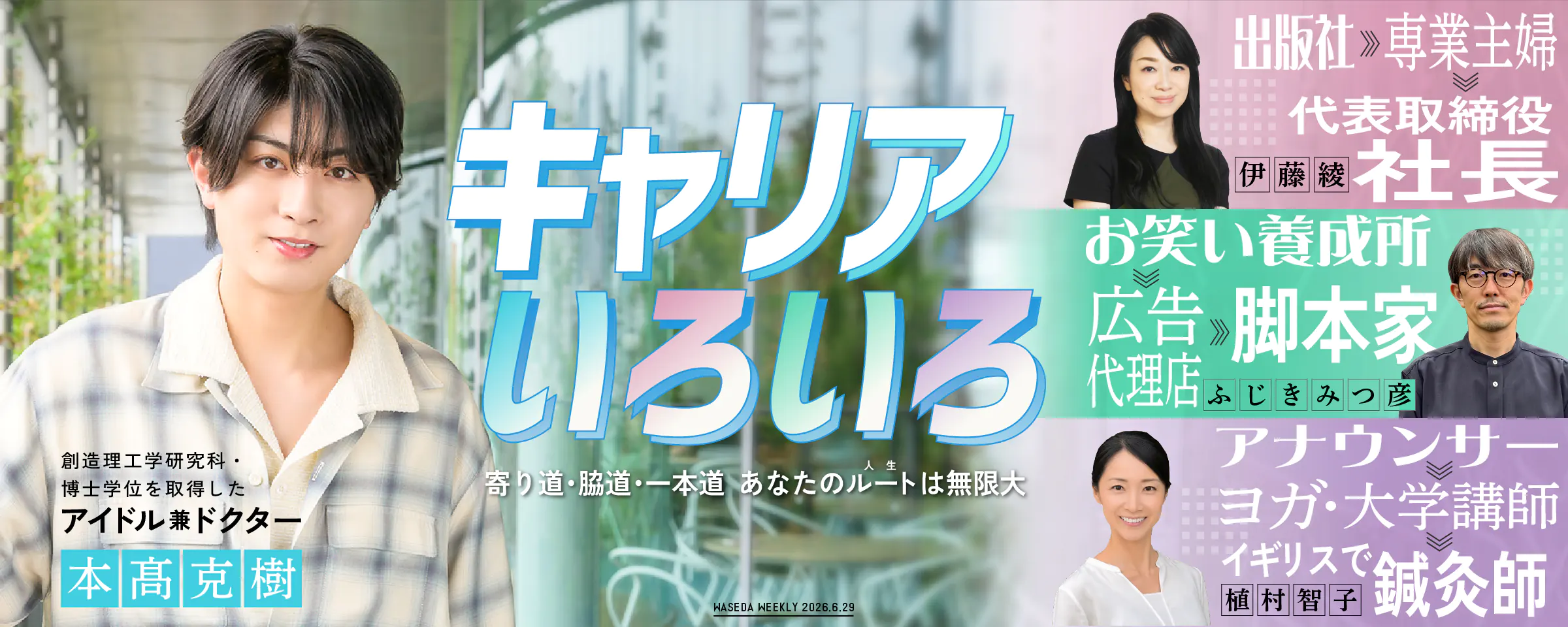
CASE 1
Because there are no role models,
it's exciting.
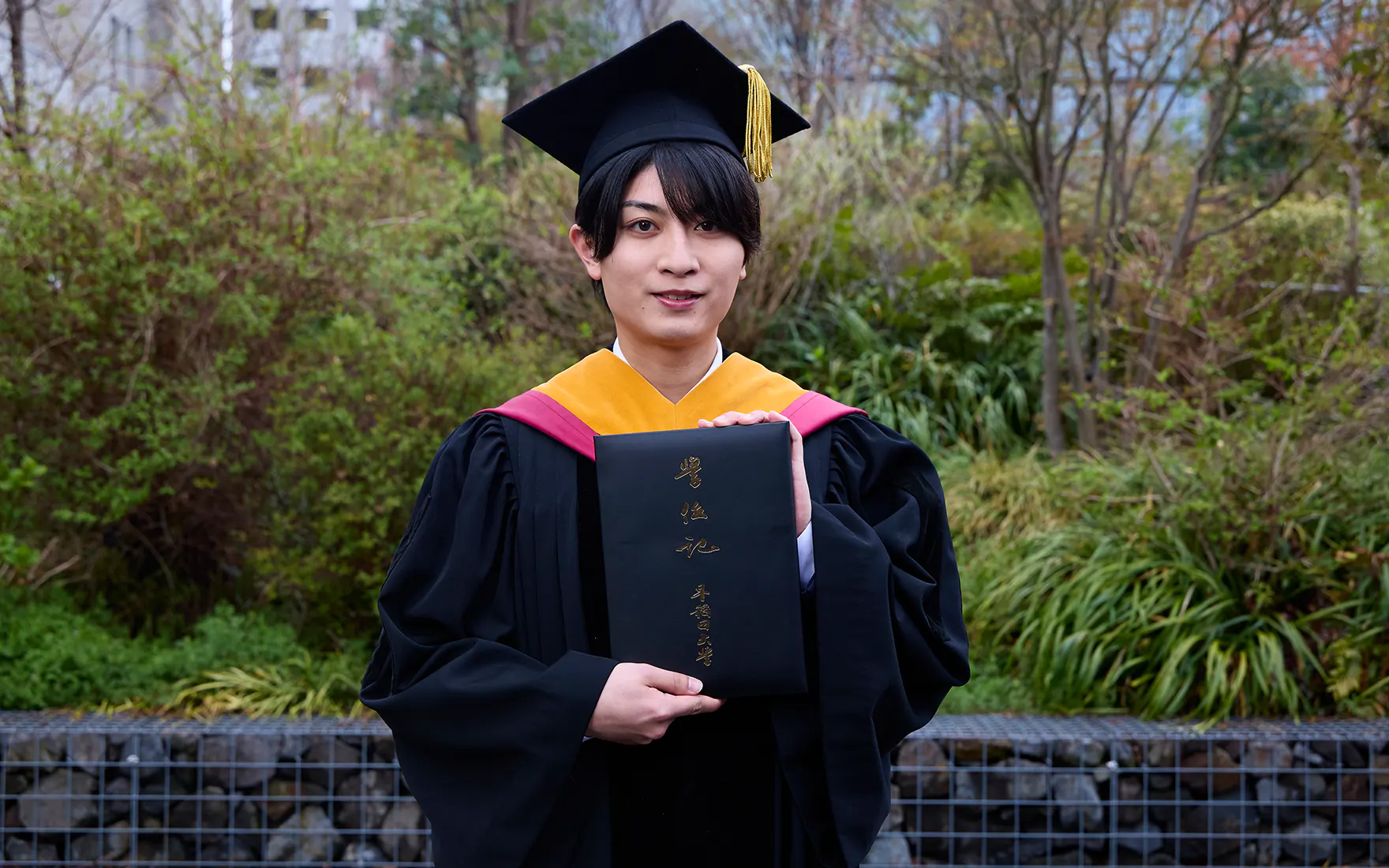
What motivated you to pursue a doctoral degree?
- Motodaka
-
The main reason is that "there wasn't much reason to stop learning." I had managed to balance academics and entertainment activities up until then, and since the doctoral program mainly involves research guidance from faculty members and isn't bound by a fixed class schedule, I decided to go ahead with it with the mindset of "let's just try it and see." There were times when I wondered, "Can I really do this?", but I continued with encouragement from my parents, Professor, and Abe-kun from Snow Man, a senior member of my agency, and when I started to see results, that's when my motivation really took off.
What kind of research did you do in graduate school?
- Motodaka
-
It's a field called "operations research" (*1), which can also be used to solve problems in the entertainment industry. My doctoral dissertation topic, "A Social Simulation Study on Ticket Sales Strategies under Excess Demand in the Live Entertainment Market," is one example of this.
*1 A field of science that uses mathematical models, statistics, and algorithms. It analyzes and helps solve decision-making problems in business and organizations.At the time, I was studying in Professor Takashi Hasuike 's laboratory, and I don't think I would be where I am today without him. He uses his own mascot character in his teaching materials and places great importance on "delivering education in an engaging way." Having worked in both the entertainment and education fields myself, I felt that the fusion of the two was crucial, so I strongly resonated with his approach.
The fusion of education and entertainment, you say?
- Motodaka
-
Yes, I think education and entertainment are fundamentally similar. In fact, I often plan the staging and setlist for my live performances myself, and I think a lot about "how to make it resonate with people" from the audience's perspective. I also took teacher training courses, so when I put together lesson plans and stood at the front of the classroom during my teaching practice, I felt, "This is exactly the same as a live performance."
This is a "multiplication of strengths" that only you, with your university research and experience in the entertainment industry, could achieve.
- Motodaka
-
I've always wanted to do something useful for society, so I hope that because I understand both sides of that, I can act as a bridge between them and contribute in some way.
Were there any difficult times during your doctoral studies?
- Motodaka
-
The final paper, which also became my doctoral dissertation, was accepted for publication only in my third year of doctoral studies, so it was really at the very last minute. In the beginning, I wasn't getting anywhere at all, so there were some tough times. However, Professor Hasuike said, "I didn't get a single paper accepted for the first year and a half either," so I thought, "If even Professor Hasuike couldn't do it, then of course I can't!" Thanks to that, I didn't get too discouraged (laughs).
However, an "idol who is also a doctor" is quite unique. Weren't you afraid of going down that path?
- Motodaka
-
I was anxious about not having a role model, but the excitement of "it would be amazing if I could get (a doctoral degree)" outweighed that anxiety. It's interesting precisely because no one else is doing it, and I was excited to see what awaited me at the end of the road. For me, the challenge and excitement of completing a doctoral program outweighed the anxiety of not having a role model.
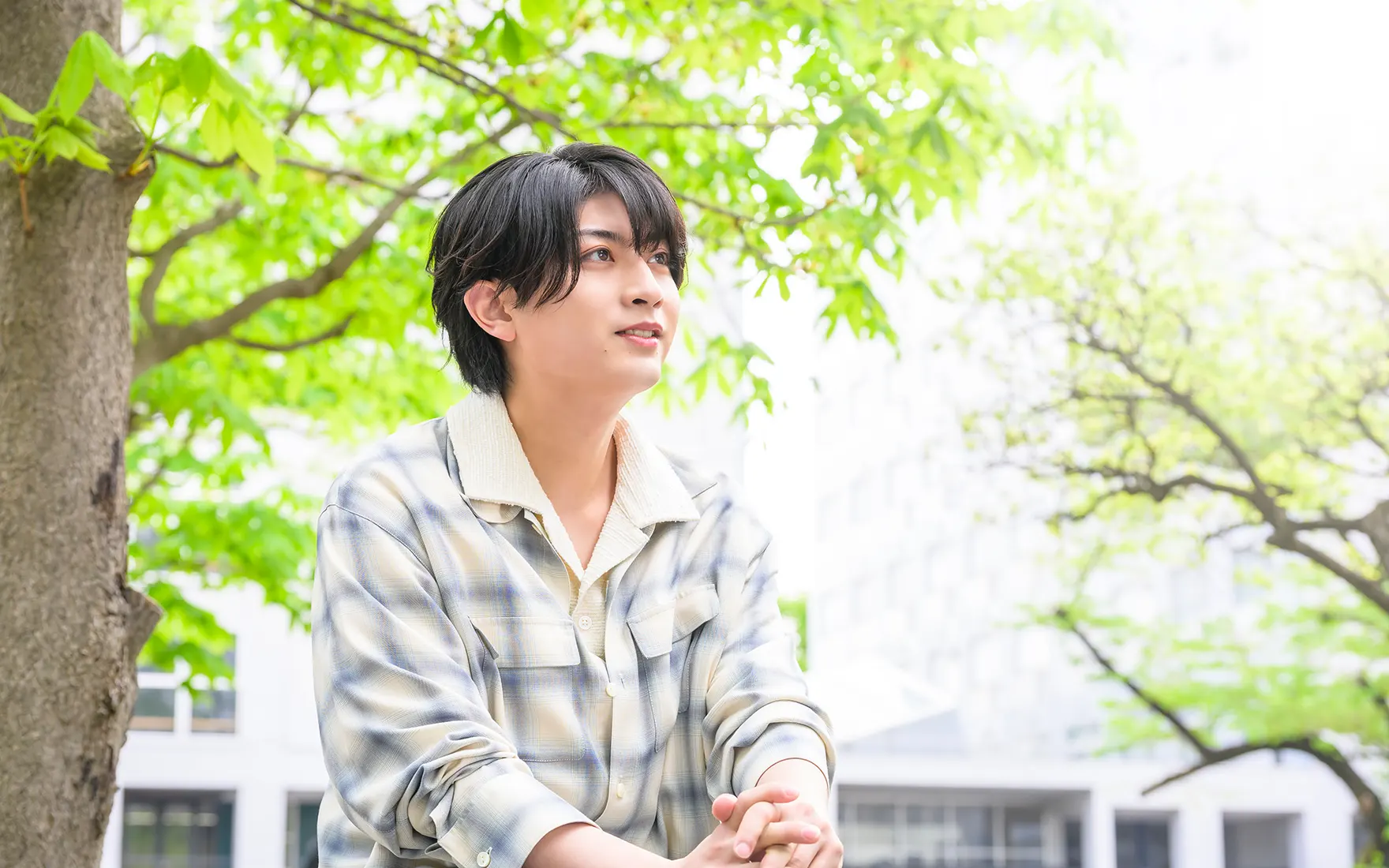
If you can find one thing you're good at,
that will be the core.
You've been very serious about both being an idol and your studies, but have you ever struggled with your own identity?
- Motodaka
-
When I took a break from my entertainment activities to focus on my studies in my second year of junior high school, and when I was a first-year university student with many required subjects and couldn't do much work, I definitely had my own struggles. I think I'm fortunate in a way to be able to continue my studies while also being able to pursue entertainment activities. Even when people around me told me to "focus on entertainment activities rather than academics," I had always kept "academics" as my main focus, and I had no regrets or dissatisfaction with balancing the two. On the contrary, my identity had always been tied to "academics," so I felt a fear of letting go of that at various turning points.
What kind of fear was it?
- Motodaka
-
I was worried that I would be seen as just an idol with a good academic background... But I didn't want that to happen. I wanted to emphasize that I was genuinely dedicated to my studies and that I had substance to back it up. Looking back, I've chosen this way of life ever since I started focusing on my studies in my second year of junior high school, and going on to graduate school was also about making my past self consistent with my present self.
It was clear that you have approached your studies with sincerity. Was there a starting point for that?
- Motodaka
-
It's definitely true. I didn't study hard enough for the junior high school entrance exam, so I failed to get into my desired school. My mother told me, "You failed because you didn't study," and I was so upset that I ran away from home for the first time (laughs). At the same time, I realized for the first time how important academics are in life. Perhaps because of that frustration, a rebellious spirit of wanting to prove them wrong was born in me from junior high school onward. I guess I'm just very competitive (laughs).
But there are many people who can't persevere at that point, right? If you encountered a student who was struggling with their identity, what advice would you give them?
- Motodaka
-
I hope you can find at least one thing you're good at. If you have one thing you're good at, it doesn't bother you too much even if you're not so good at other things. It becomes your core, so to speak. For me, that was mathematics.
And if you use your strongest point as a benchmark and work hard at other things as well, your goals will become clearer. I think studying is also a way to find out "what you're good at and what you're not good at," so in order to get to know yourself more deeply, I think it's good to try doing things at your own pace without comparing yourself to others for a while.
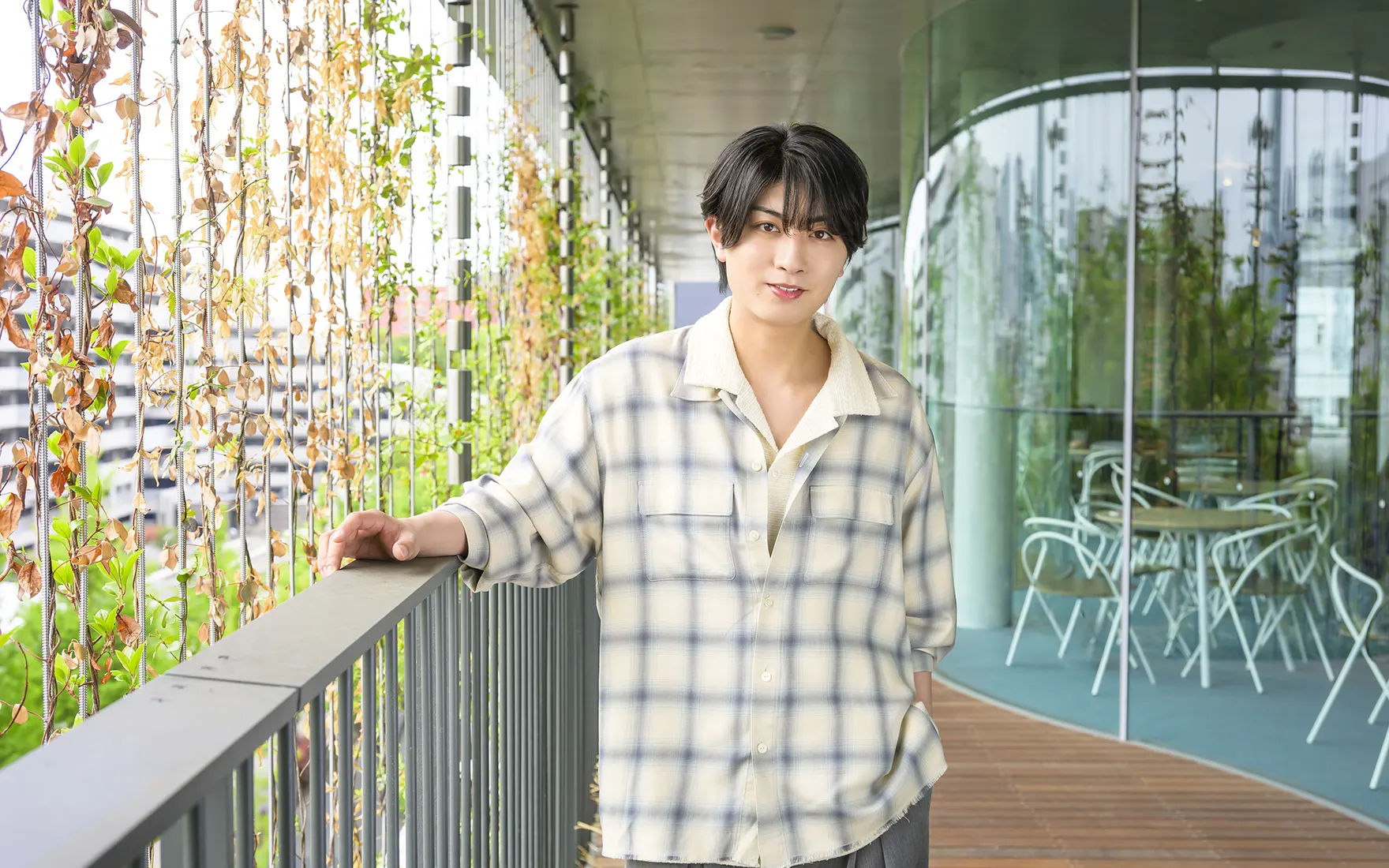
Make the most of Waseda University,
find the elements of multiplication
What did Waseda University mean to you, Motodaka?
- Motodaka
-
It's a place that broadened my future options. That's because, in addition to the required courses in my faculty, there were so many interesting classes, and I loved taking them. In particular, Professor Asahi Toru's entrepreneurship class, which I took in my first and second years of university, was fascinating. In that class, Susumu Fujita, the CEO (now Chairman) of CyberAgent, gave a lecture to a classroom of 40 to 50 people, which is unthinkable now (laughs). Also, the curriculum of the GEC (Global Education Center), which is implemented university-wide and transcends faculties, is incredibly comprehensive.
If you only consider the profession of being an idol, there are very few role models. Nevertheless, being at Waseda University increased my contact with society through classes, and I felt that my own options were constantly expanding.
So, you were taking extra classes while also pursuing your entertainment career?
- Motodaka
-
To be honest, during my first year of university, I was in a period of uncertainty about whether I should continue my entertainment career, so I was taking classes quite aggressively. There were a lot of required courses, but I still took them regardless of whether they were required or not because I enjoyed them. I recommend taking as many classes that interest you as possible while you're an undergraduate so you don't have any regrets.
Finally, do you have a message for the students?
- Motodaka
-
University life is one of the few precious periods in life when you can secure time to pursue what you love. Spending that time at Waseda University truly gives you a wide range of options. This is true for the quality of the classes and student club activities. Moreover, once you enter the workforce, there are many seniors who are Waseda graduates, and those connections will naturally form.
I think it's a huge waste to confine yourself to the world you already know, especially in such a privileged environment. If you extend your antennae a little further than usual and broaden your horizons, you're sure to find interesting things and things you love, even in areas you thought you weren't interested in. I think that's where your own unique combination of perspectives really comes from.
CASE 2
"Consciously uncover" your strengths.
What's important is to keep thinking and acting.
What were your thoughts about your future during your university years?
- Ito
-
"I dreamed of becoming a media editor after graduation. In particular, I aspired to be a cookbook editor. I loved baking since I was little, and several cookbooks were my teachers. I used them until the pages were stained with butter and syrup and fell apart, hoping that one day I would be on the publishing side. But other than that, I didn't think deeply about my career. It was a tough time to get a job, so to be honest, I just felt like I had to find work somewhere."
Looking back, could you tell us about a moment you felt was a turning point in your career?
- Ito
-
I transitioned from being an editor at Zexy, a media outlet focused on marriage, to working in the medical field. While at Zexy, I witnessed firsthand how couples' values, views on marriage, and family changed with the times. From "marriage between families" to "marriage as a choice between individuals," and from around the 2010s, I began to feel a growing desire to "value connections not only with individuals and families, but also with those around them." In this era of high uncertainty, I created the media outlet while considering what it means for us to "live together."
Eventually, I began to think about engaging with this theme from a perspective that wasn't limited to the life event of marriage. In healthcare, especially in home healthcare, which I'm involved in, the doors to patients' homes are opened, creating strong connections with the community, and many people, including healthcare professionals, support their lives. And we dedicate ourselves to respecting the patient's way of life and self-determination. Healthcare is probably an experience that almost everyone will one day become involved in. My turning point was "crossing industry boundaries" after wanting to pursue a single theme further.
So, your core desires and what you wanted to do gradually became clearer, right?
- Ito
-
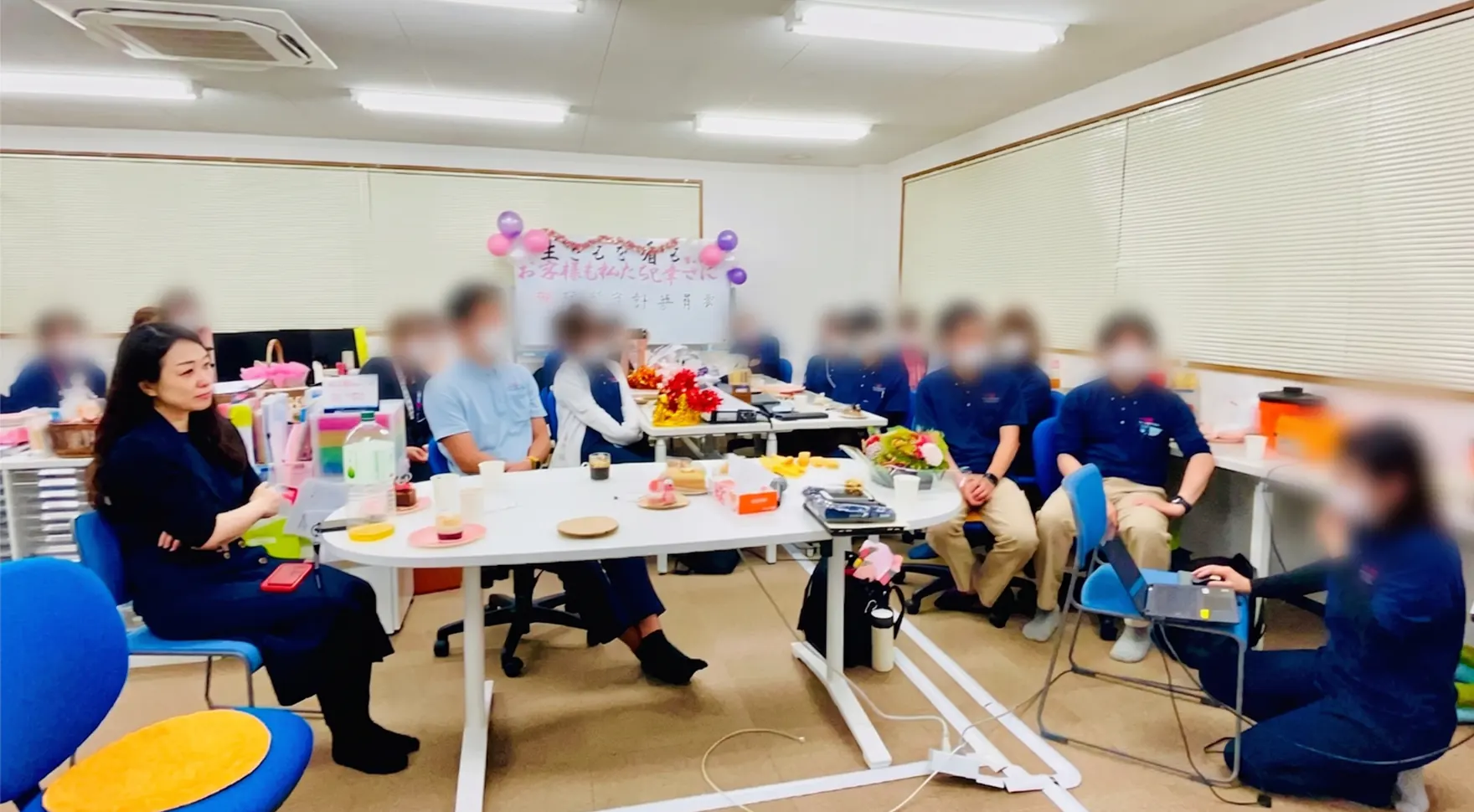
My student self would be puzzled if she saw me now. She wanted to be an editor so badly, so why healthcare? And why management? The photo below was taken when I visited a home-visit nursing station in Gifu Prefecture, and I'm listening to them talk about their year-long efforts. I was moved to tears by their passion for taking on the responsibility of community healthcare... As I continued working, I gradually began to think less about "what I want to become" and more about who I want to use my life for, what I want to use it for, and what contribution I can make to the next generation. I'm doing a different job than I imagined as a student, but for me, my career is about finding my own path by continuously answering those questions and taking action. Of course, I'm still learning and experimenting every day.
Can you offer some advice for Waseda University students.
- Ito
-
Even if your plan isn't perfect, even if you have doubts, even if you haven't found what you want to do, I believe that through challenges and struggles, you can gradually "consciously unearth" your strengths that have unconsciously developed over time, and move forward by approaching your work in your own way. It is through this accumulation of struggles that your own intrinsic motivation is born.
CASE 3
It's okay to fail a lot.
Ahead lies your own unique path.
What were your thoughts and feelings during your time at university?
- Fujiki
-
I don't know about now, but back then at Waseda University, there was a saying, "dropping out is first class, repeating a year is second class, graduating is third class," meaning that people who achieved something didn't attend university properly. I, too, desperately wanted to become someone important, so I was determined to "try my best to drop out!" or "at the very least, repeat a year!" However, my enthusiasm was ahead of my abilities, and I had absolutely no concrete vision of what path I wanted to take or what I wanted to become. Rather than being anxious about the future, I was anxious and frustrated because I couldn't find what I wanted to do, and my student life was a meandering one.
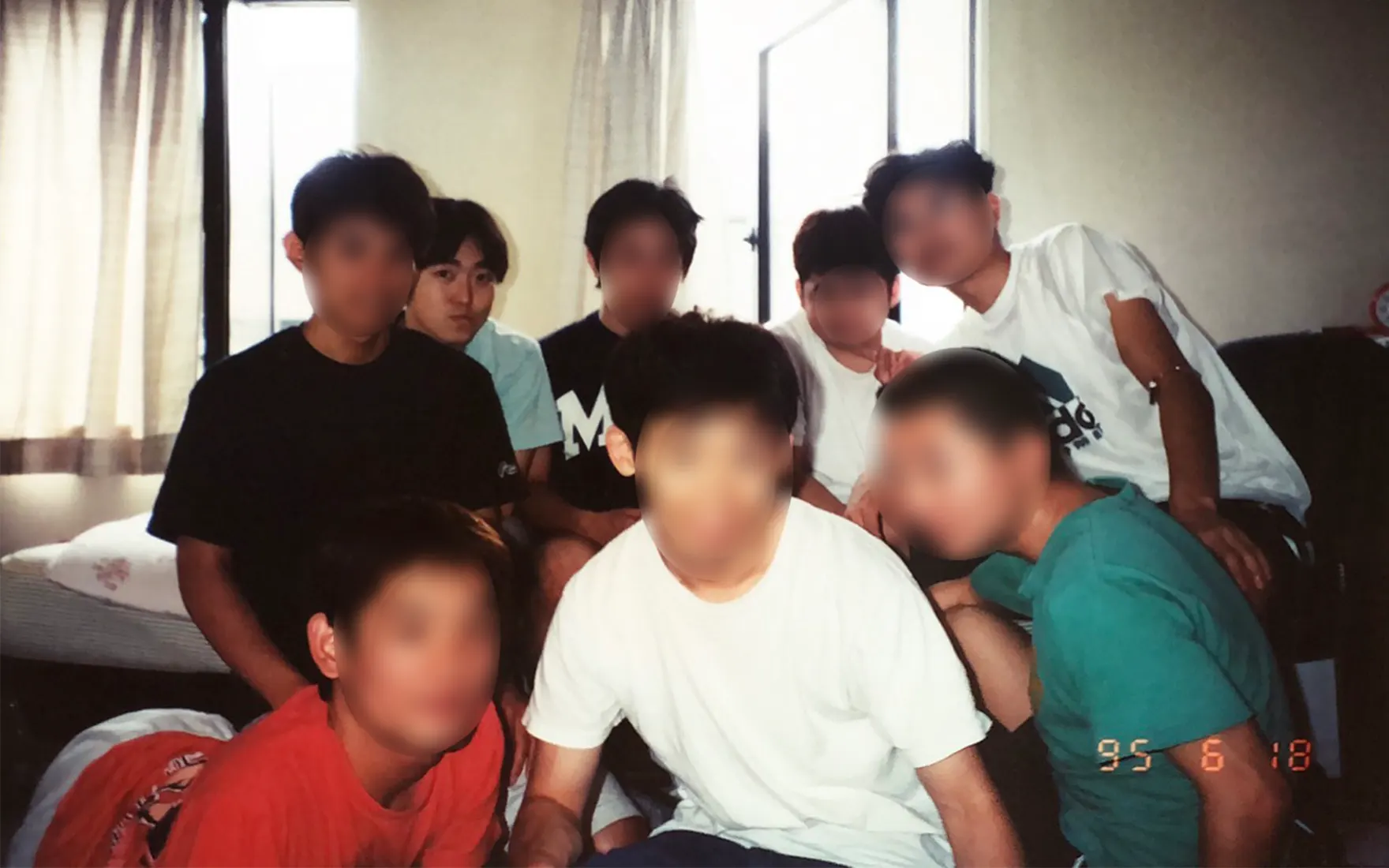
There was a time when I enrolled in a comedy training school and aimed to become a sketch comedian, but in the end, after repeating a year of school, I went through the job hunting process and joined an advertising agency. At that point, I never dreamed that I would become a screenwriter in the future.
Could you tell me what inspired you to pursue a career as a writer?
- Fujiki
-
I love laughter, and I joined an advertising agency because I wanted to create commercials with humor, but the company I worked for only made serious commercials... Around that time, I started to get into theater, and I wanted to enter that world. I was particularly struck by the comedy stage performances of City Boys (*2), and I wanted to become a writer who could write plays for them. Even though I had never written a play script before and didn't know a single person in the theater industry, I quit my job when I was 29. It was reckless no matter how you look at it, but I felt incredibly lighthearted because I had finally found something I wanted to do. For nearly four years after that, I barely made ends meet with the savings I had from my time as a company employee, but I think this was the most positive period of my life.
*2 A comedy unit consisting of three members: Makoto Otake, Kitaro, and Shigeru Saiki (graduate of the School of Education).
Looking back, what do you think is the reason you've been able to become who you are today?
- Fujiki
-
I owe it all to the supportive people around me. However, if I had given up before meeting people who would support and acknowledge me, I obviously wouldn't have received such support. So, I think it was good that I continued to believe in my own path, even when others opposed me or ridiculed me. As someone over 30 with no job and living only on dreams, the world looked upon me quite harshly, but I didn't give up!
Can you offer some advice for Waseda University students.
- Fujiki
-
I think it's good to keep failing. In my case, I initially tried to become a comedian and failed, then I tried to become a commercial planner, which also failed. After I started writing skits for the stage, I was called a playwright, but none of those ventures were successful until I was invited to appear on television and started writing dramas. I only started to be called a screenwriter after I turned 40. When I was a student, I never imagined that after all those failures, I would be writing a morning drama at the age of 50. That's pretty much how it goes; things don't always go as planned, for better or for worse.
Life isn't always a straight path, and early success doesn't necessarily equate to happiness. In this age of social media, you'll often feel frustrated and anxious seeing the successes and achievements of those around you and your peers that you don't want to see, but just ignore them and go your own way.
CASE 4
"Don't get caught up in your thoughts; trust your intuition."
Choose the option that excites you the most.
What kind of future did you envision while you were in university, and what did you study?
- Uemura
-
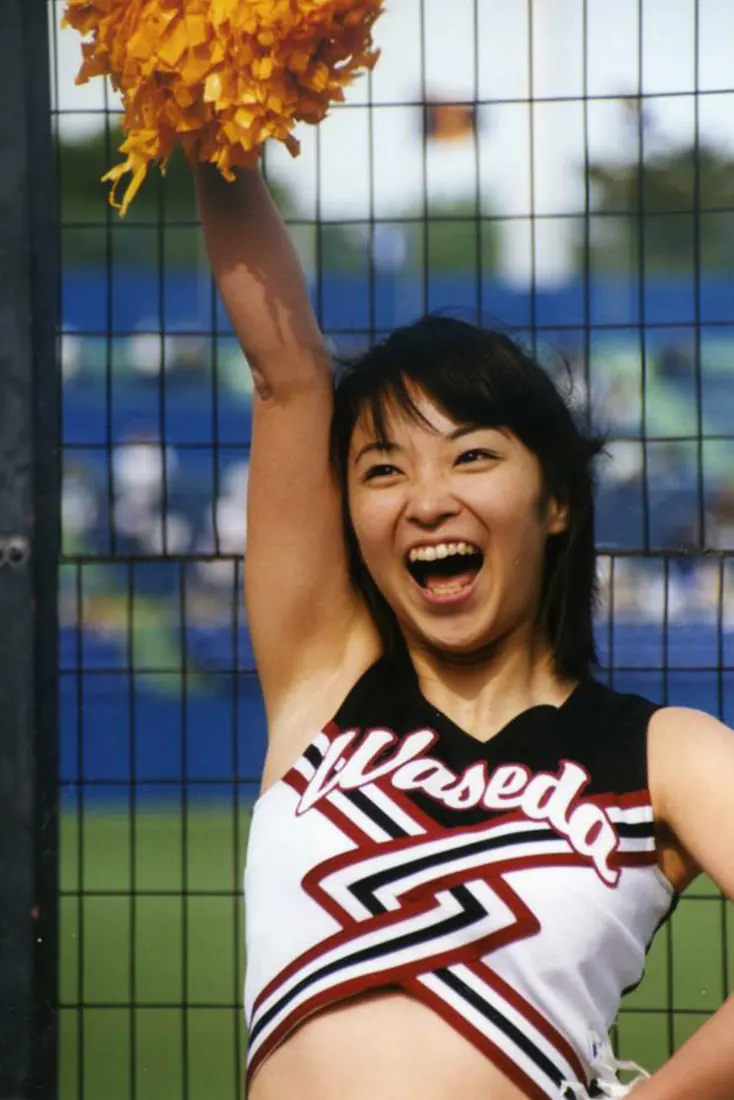
To be honest, I didn't have a clear vision for my future during my student days. I had studied abroad in Canada for a year during high school, so I had a vague feeling in the back of my mind that "I'd like to use English in the future." I had a vague admiration for the job of an announcer, but while I was in university, I belonged to the Waseda University Cheerleading Club, so I attended announcing school and English conversation school in between club activities. I currently live in London, and as a result, the fact that I continued to study English during my university years has been useful.
What would you say was a major turning point in your career?
- Uemura
-
Around 2013, someone who participated in a yoga class I was running as a hobby told me, "Yoga makes me feel happy." Those words resonated with me. After that, my interest expanded from yoga to Ayurveda (traditional Indian medicine), and then to acupuncture, and I now work as an acupuncturist.
My doubts arose when people around me told me, "It would be a waste to quit being an announcer." So, I continued my work as an announcer while also pursuing yoga and acupuncture, creating a gradual career transition period. What I've realized now is that communication is extremely important in both teaching yoga and acupuncture treatment, and even in the world of the "body," the communication skills I cultivated in the world of "words" as an announcer are proving invaluable.
When deciding on the path you want to take, what has been important to you, Uemura?
- Uemura
-
The most important thing to me is whether or not it excites me. During my job search while still in school, I considered applying for other positions besides announcer, but I narrowed it down to just one: announcer, which excited me the most. I used to think that freelance work, which doesn't offer a stable income, wasn't for me, but my desire to change my environment grew stronger, and when I weighed the excitement levels of being an employee versus a freelancer, freelance won out.
When I transitioned from being an announcer to a yoga instructor and then to an acupuncturist, I just went with the flow. I was grateful for the opportunity to teach yoga as a part-time lecturer at Waseda University. I felt very comfortable teaching, and it made me realize, "This is the right path for me." Currently, I've moved to London after getting married and am working as an acupuncturist, but I didn't consciously choose this career path; I've just been fortunate to have these opportunities.
Please give some advice to younger students who are struggling to decide on their future paths.
- Uemura
-
I feel that my body knows me best. Tony Robbins, a mentor to many of the world's top leaders, said, "When you get in your head, you're dead," and I understand this to mean, "Don't get caught up in your thoughts, trust your intuition." When you only think with your head, you are easily swayed by the opinions of others. When you don't know what you want to do, it's good to be exposed to various kinds of information, but I also recommend practicing Vipassana (*3), which involves observing your bodily sensations. It helps stagnant things to flow smoothly, and makes the flow of your life smoother, so please give it a try.
*3 A meditation technique that aims to liberate the mind and body by observing things as they are.
Since there's no single right answer, I treat each one as a prototype, acting on what feels right and making adjustments if it doesn't. I think the most important thing is that I myself am happy.