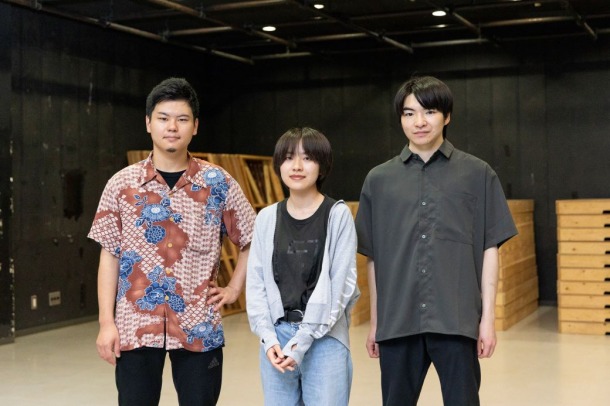
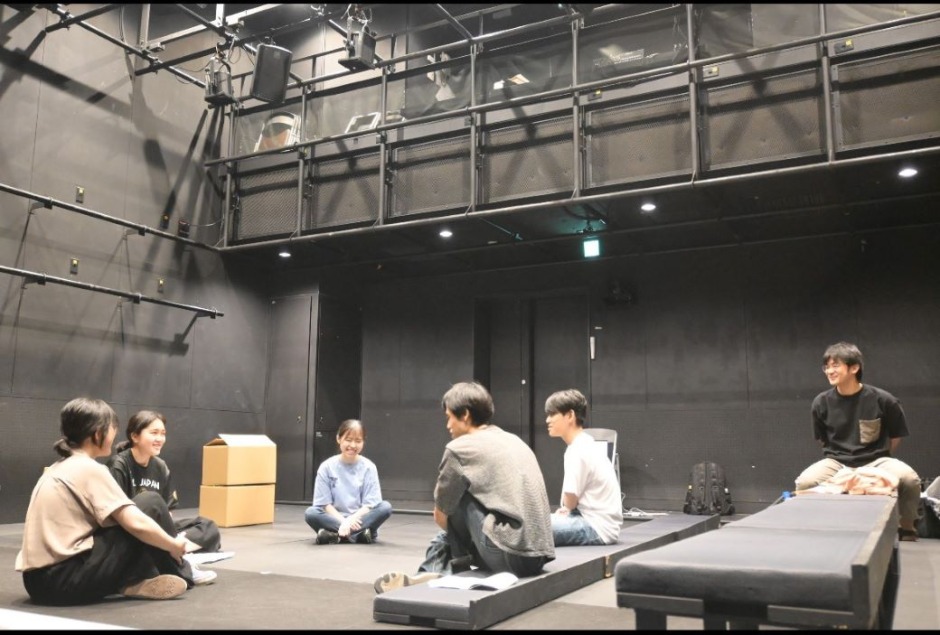
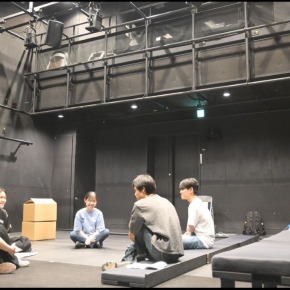
In the B202 drama practice room at the Toyama Campus Waseda University Student Center. From left: Takahashi, Hiramatsu, and Oshima
Have you ever seen a play at Waseda? Theater is a part of the traditional Waseda culture, and has produced many playwrights, scriptwriters, and actors. Currently, there are more than 20 officially recognized theater student clubs, and about 80 performances are held on campus every year.
This time, we are focusing on Waseda students who are actively involved in theater in order to convey the appeal of Waseda theater. We asked them what kind of activities they are doing to promote Waseda theater as actors, backstage workers, and theater staff. They will also introduce theater-related projects and events other than performances that any Waseda student can enjoy. It would be a waste not to go see a performance when you are at Waseda, where theater is thriving! Be sure to go see a performance at least once.
Being able to experience a wide variety of unique theatrical performances is a privilege for Waseda students.
Rinka Hiramatsu, 3rd year student, School of Humanities and Social Sciences, a student staff member of the Drama-kan Production Department and a member of the Kurumeru Theater Company.
Yu Takahashi, 4th year student, School of Political Science and Economics, member of the Drama Study Group and Drama Club
Tatsuki Oshima, 4th year student, School of Education, member of the Stage Design Study Group
The immersive feeling that only Waseda Theater can provide
First of all, please tell us briefly about what kind of activities you do.
Hiramatsu: I work as an actor (stage name: Kawasaki Natsu) and backstage staff member in the Kurumeru Theater Company (an official student club, hereafter referred to as Kurumeru), and I also work as a student staff member in the Drama-kan production department. My main duties at Drama-kan are wide-ranging, from planning and production to implementation and PR, in order to get many people interested in Waseda's theater.
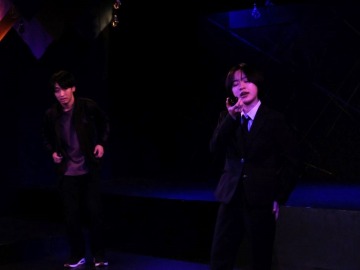
Left: Hiramatsu, who appeared in "Yoimachi Night Parade" (Kurumeru) performed in February 2025 (Photo: Sora Kurata [ACTpath])
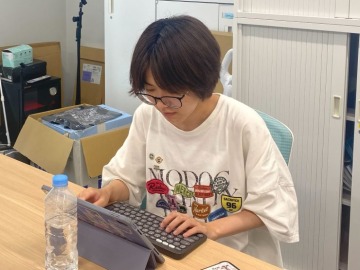
Right: Hiramatsu, who works at Drama-kan, updating information about Waseda University theater performances on the Drama-kan website.
Takahashi: I belong to two drama student clubs, the Drama Study Group (an official student club, hereafter referred to as Gekken) and the Drama Club (official student club, hereafter referred to as Enkura), and I work as an actor (stage name: Saegusa Yu). Recently, I have also been active as a scriptwriter and director, capable of creating plays in a wide range of areas.
Oshima: I'm in charge of lighting for the Stage Design Study Group (an official student club, hereafter referred to as Butabi). Butabi is a group of backstage specialists who take on the set and lighting for various plays, so out of all the theatre student clubs, we have the most interaction with other groups.
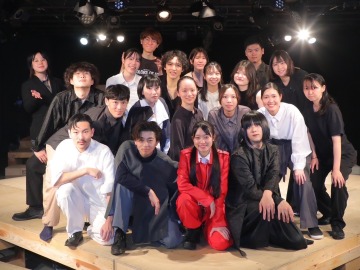
Left: A group photo of the cast and staff of "Fake: Crime and Punishment" (Enkura), which was performed in June 2025. Takahashi (far right in the back row) is in charge of a wide range of roles, including assistant director, assistant director, and sound (photo by Doi Minoru)
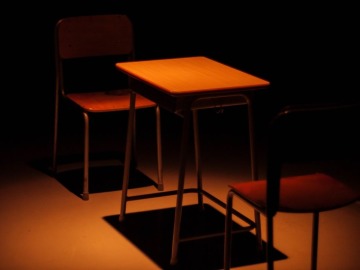
Right: A photo of the stage for which Oshima was in charge of lighting for "My Wizard" (Togekyo ikitai x Theater Company Shin [Official student club]), which was performed in October 2024. The simple stage with a desk and chairs was transformed into various scenes with lighting and sound (photographed by Nishimura [Theater Company Shin])
What do you find attractive about Waseda's theater programs?
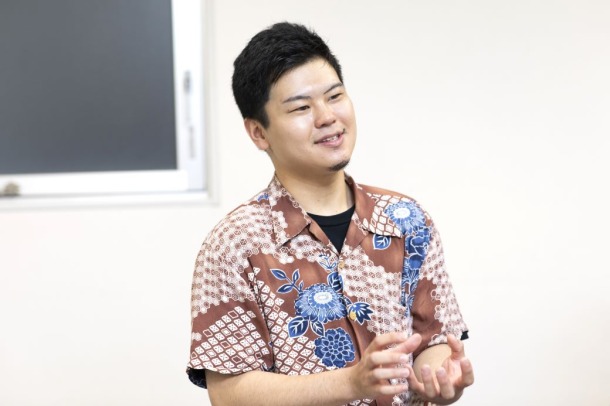
"Waseda's theater surpasses the quality of student theater!" says Takahashi.
Takahashi: I think the presence of theaters such as Waseda Shogekijo Drama-kan Theater is a big factor. At other universities, performances may be held in a corner of a classroom or in an outdoor tent, but at Waseda, in addition to the Drama-kan, there are also performances in places that you don't usually go to, such as the drama practice room on the second basement floor of Waseda University Student Center and Kumaura (※), which I think helps you enter the world of theater. I feel that these on-campus performance spots have a special feeling and a sense of immersion that is just as good as a large theater.
*This studio is located behind the Okuma Memorial Hall. It is used by Butabi, Gekken, and Theater Company Kodama (official student club) for rehearsals, stage productions, and performances.
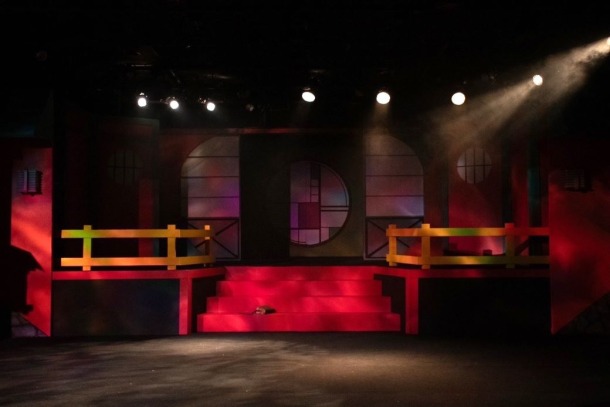
Momotaro was performed at B203, Waseda University Student Center in Fall. The stage art for the performance was created by Oshima's seniors, who retired from Butabi in the same year. (Photo: Touka Kodama [Theater Company Shin〕)
Oshima: I think we are very blessed to have an environment where we can just drop in and see a play in a theater like that if we want to. In a play, the audience is free to choose their viewpoint, and they can focus on anything during the performance, such as the actors or the set design, and they can also see it in relation to their own past experiences, so the impressions after seeing the play are really different for each person. So, I think it's a very enriching experience to go see a play with friends after class and then discuss your impressions over dinner on the way home.

Hiramatsu says, "I want to use Drama-kan to bring Waseda's theater, which is widely open, to as many students as possible."
Hiramatsu: The number of theater groups at Waseda is growing rapidly, and it's no exaggeration to say that there's always something being performed somewhere on campus. I think it's a good ecosystem for Waseda's theater, with each group influencing the others and allowing them to work together.
Takahashi: I think so too. Previously, the groups didn't seem to have any interaction, but since the COVID-19 pandemic, actors from the Gekiken group have been performing in other student clubs' productions, and people from various theater student clubs have come together to form theater units, and so on. Such activities have become more active.
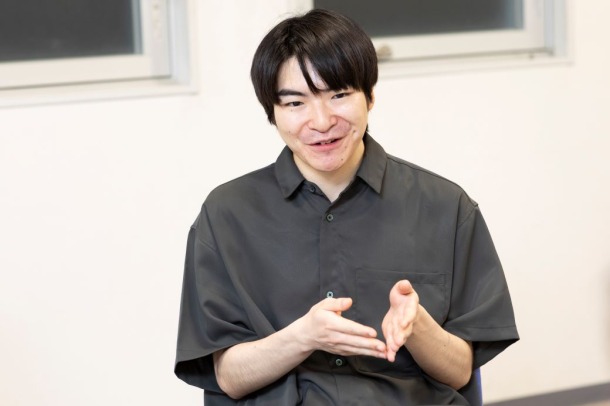
"I hope people will take advantage of Waseda's convenient location and easy access to theater," says Oshima.
Oshima: That's right. Nowadays, it's common to offer roles to people from other student clubs as actors or staff. So, when writing or directing a play, I get the impression that more people are thinking about who to offer roles to for the stage production they want to create, not just from their own student clubs, but from the Waseda Theater as a whole. Also, I think that by helping other student club, the staff work at Waseda Theater is improving. The number of performances increases, so they can gain experience. With the level of Waseda Theater rising like this, I think now is the perfect time to go see a play.
There are also casual theater events. Why not give it a try?
For students who are not familiar with theater, it may be difficult to go see a play. Are there any opportunities to experience theater other than performances?
Hiramatsu: Drama-kan holds a welcome event every April. We call it the "Waseda Theater Tour" and guide people to theater-related places such as the basement of the Waseda University Student Center and Kumaura, and hold screenings of past Waseda theater productions. The event is designed to encourage people who are interested in theater to take the first step.
In addition to the welcome events, we also hold workshops in which we invite alumni of the drama student clubs and people active in the theater world to be lecturers. There are a variety of events, such as a lighting technique seminar and an experience of stage production for an outdoor play at Toyama Park. In addition, the Drama Hall club room (Waseda University Student Center E329) runs a "Drama Hall Counseling Room" where we hold events where you can easily participate, such as reading lines from a play, so we would be happy if people other than drama student clubs could come.
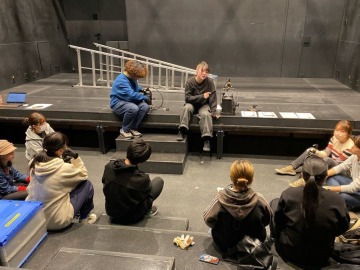
Left: Drama-kan Lighting Technology Seminar There are two courses, a basic course and an advanced course, and anyone interested in stage lighting can participate.
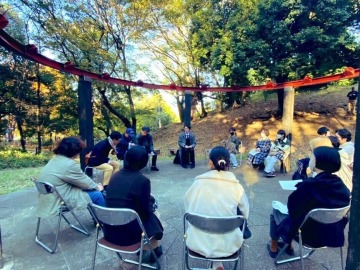
Right: September 2024 "Toyama Park Outdoor Theater Festival" Joint Tour We invited a theater troupe actor as a guest and explored together how to stage a play at Toyama Park.
Oshima: Butabi created and unveiled a haunted house stage set at the 2024 summer workshop. It was an event where we created it to look like a haunted house at a theme park and actually surprised the visitors, and it was well received by many people. I was a lecturer at the lighting technology seminar hosted by Drama-kan mentioned earlier, for people who were handling lighting equipment for the first time.
Takahashi: Every year, Enkura holds workshops in addition to performances during the new student welcome period until around mid-June. I recently held a workshop for beginners on writing a script, and the number of participants was almost at capacity. I think everyone enjoyed it quite a bit.
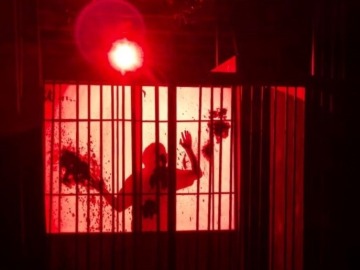
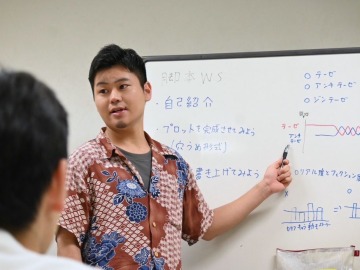
Left: The set of the Butabi haunted house, which was shown in the B203 drama practice room in the Waseda University Student Center. It was created with the cooperation of the art and lighting staff.
Right: Takahashi, who was the instructor at the Enkura-sponsored screenwriting workshop for beginners. Photo: Akiko Yamaguchi (Enkura)
Hiramatsu: In the summer of 2024, we held a large theater project called "Engeki no E" at Drama-kan. Participants were divided into three groups, and they practiced for four days with the same script to create their own plays, and on the final day they performed a presentation with an audience. I think that this discovery that "even with the same script, the plays can become so different depending on the participants" conveyed the appeal of theater to the audience.
Waseda Theater is entertainment that all Waseda students can enjoy!
Finally, please give a message to students who have not yet had any experience with theater.
Takahashi: You may have a dull image of theater, but Waseda theater is more passionate and flashy than you might think, and you can feel the vitality. If you are a Waseda student, I think you will be able to immerse yourself in the stage with that Waseda-like power. I hope you will come and see it to feel the Waseda-ness.
Hiramatsu: There are many flyers of various designs from theater student clubs posted in the Waseda University Student Center. If you are even slightly interested in the visuals of the flyers, I'm sure you will be attracted to the content of the play, so it won't be a loss for you to come and see it. So, I would be very happy if you could pay even a little attention to the flyers.


Left: Flyer for "Buji, Kore wo Meiba to Iu" (Systema Angelica x Kurumeru), performed in June 2025 (click to enlarge)
Right: Flyer for "Fake: Crime and Punishment" (Enkura) performed in June 2025 (Click to enlarge)
Oshima: I want Waseda Theater to be a form of popular entertainment that all Waseda students can enjoy. I think that if you go to a performance by one of the student clubs, you will definitely have an emotionally stirring experience. The admission fee is a free donation system that you can choose for yourself, and it's better value for money than a movie, so please come and see it once!
Interview and text: Kyoko Suemitsu (Graduated from School of Science and Engineering in 1998)
Photo: Chihiro Hashimoto
Performance spots on campus
Each student club 's performances are held mainly in three locations. For performance information, please check each student club 's website, social media, or the Drama-kan website.
[Waseda Shogekijo Drama-kan Theater]
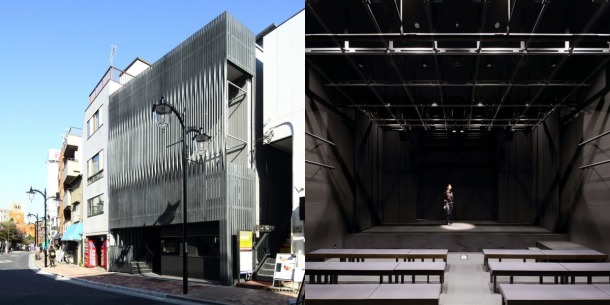
Address: 1-101-3 Totsukacho, Shinjuku-ku, Tokyo 169-0071
5 minute walk from Waseda Station on the Tokyo Metro Tozai Line
8 minute walk from Waseda Station on the Toden Arakawa Line
Website: https://www.waseda.jp/culture/dramakan/
[Waseda University Student Center B202/B203]
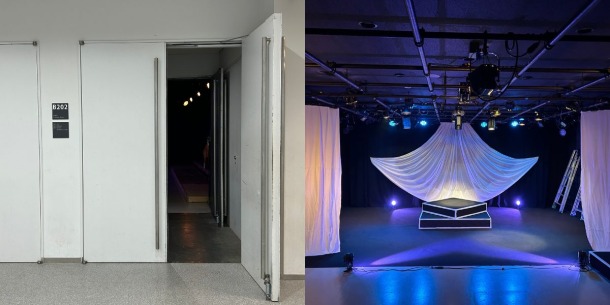
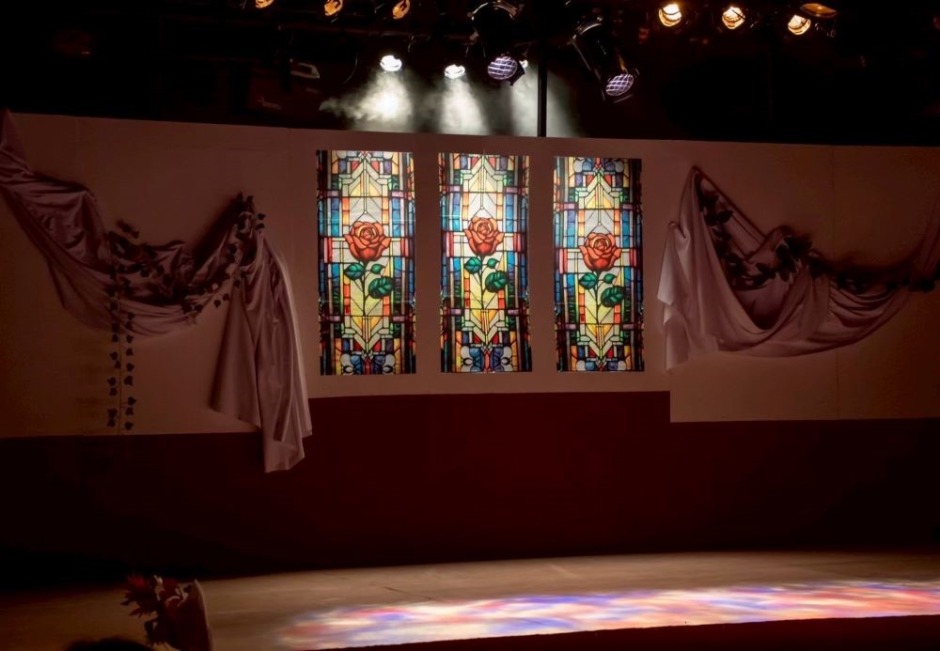
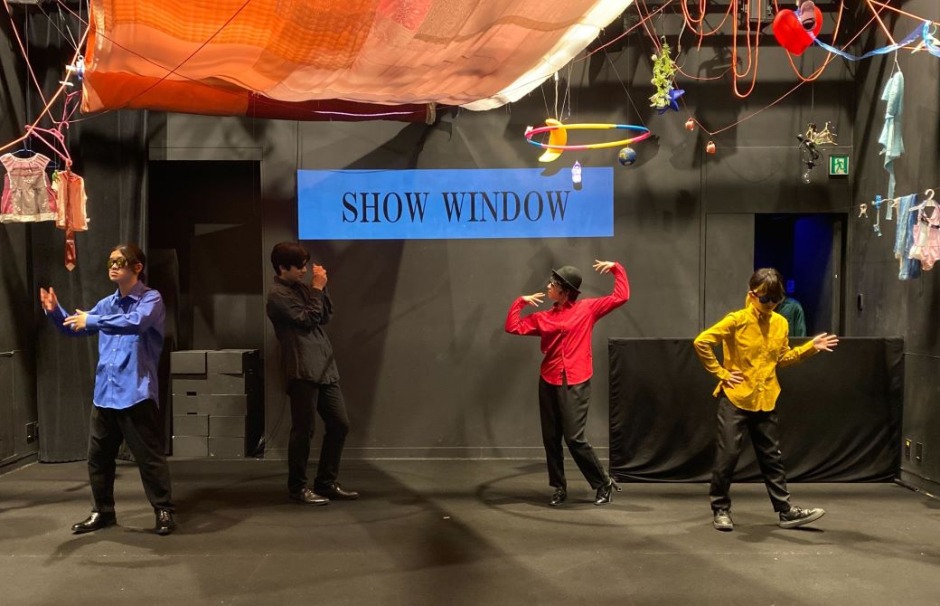
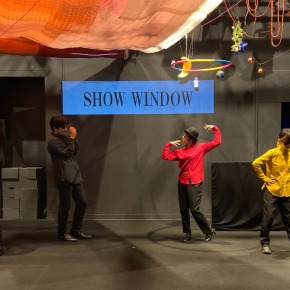
The two photos are B202. The stage on the right is from "Sad Mask Music Corps" by Kissui Kobo (official student club) x Theater Company Shin.
Address: 1-24-1 Toyama, Shinjuku-ku, Tokyo 162-8644 (Toyama Campus)
8 minute walk from Waseda Station on the Tokyo Metro Tozai Line
12 minute walk from Nishi-Waseda Station on the Tokyo Metro Fukutoshin Line
[Okuma Auditorium Back Studio (Kumaura)]
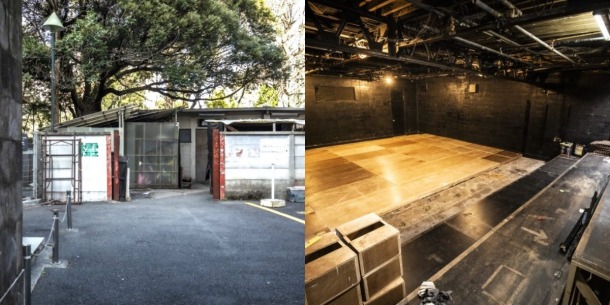
Address: 538-12 Waseda Tsurumakicho, Shinjuku-ku, Tokyo 162-0041
7 minute walk from Waseda Station on the Tokyo Metro Tozai Line
Approximately 6 minute walk from Waseda Station on the Toden Arakawa Line
About the drama student clubs
Waseda University has a variety of officially recognized drama student clubs. Hiramatsu, Takahashi, and Oshima, who we interviewed, belong to are as follows:
[Kurume Theater Company]
Website: https://kurumeru05.wixsite.com/kurumerutheater
X: @kurumeru_11
[Theater Study Group]
Website: https://sodaigekiken.com/
X: @sodaigekiken
Instagram: @sodaigekiken
[Theater Club]
Website: https://enkurasite2020.wixsite.com/enkura
X: @waseda_enkura
[Stage Art Research Group]
Website: https://butabi.daa.jp/
X: @butabi_w
Instagram: @waseda_bbk
For other theater student clubs, please see here (Waseda University Official Student Club Guide).
[Next Focus Preview] "Special Feature on People Working at Waseda" to be released on Monday, July 14th

![[Save version] Map of the four main campuses](https://www.waseda.jp/inst/weekly/assets/uploads/2026/06/110d605cfac40346aad1d2df464a6586-940x705-1-1-610x457.jpg)