Waseda WeeklyWaseda Weekly

Features

Considering reasonable accommodations at Waseda so that everyone has equal opportunities to learn

Have you ever heard of the term "reasonable accommodation"? The revised Act on the Elimination of Discrimination against Persons with Disabilities, which came into effect on April 1, 2024, requires businesses to prohibit unfair discriminatory treatment of people with disabilities and to provide reasonable accommodation. Universities are also obligated to remove barriers and create an environment in which students who are experiencing difficulties in various situations, such as classes, due to their disabilities can have the same opportunities to learn as other students, without changing the university's policies or the nature of the classes, if they receive a request from the university.

At Waseda University"Waseda University Basic Policy on Support for Students with Disabilities"ToBased on this, we provide reasonable accommodations. Provide the necessary coordination and resources to facilitate the smooth implementation of reasonable accommodations in academic matters"Waseda University Accessibility Resource Center What kind of activities does ARC (hereafter referred to as ARC) do? This time, we interviewed ARC's support volunteer students and the students who are receiving support. (hereinafter referred to as "student") Through these voices, you can learn about Waseda University's efforts to provide reasonable accommodation, and think together about what you can do.

What does ARC do? We asked ARC support volunteer students and student users!

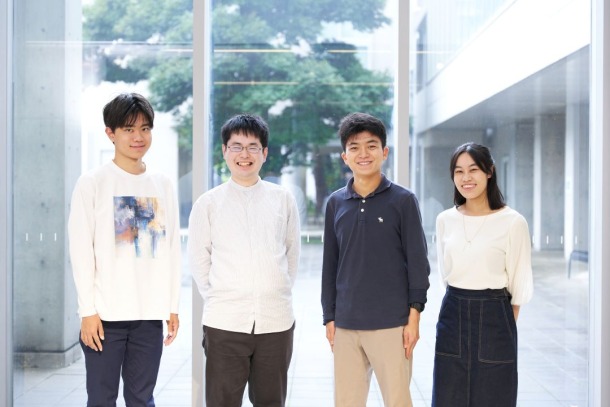
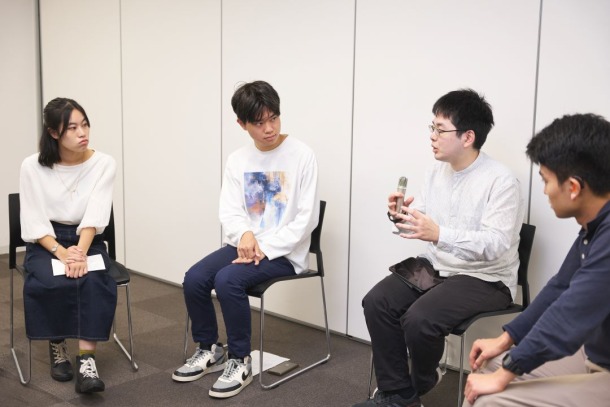
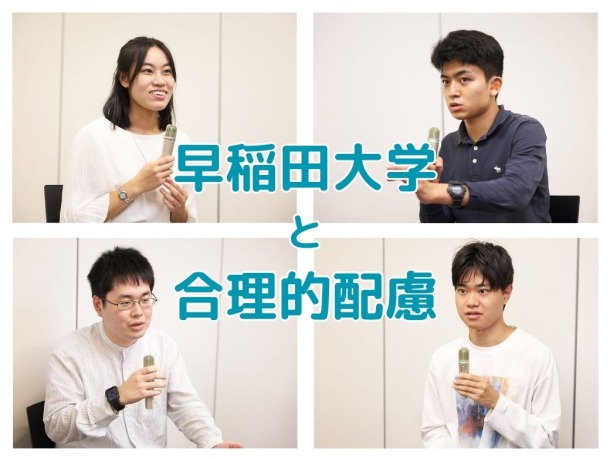
(From left) Matsumoto, Kusama, Kawaguchi, and Narita. At Building 33, Toyama Campus.

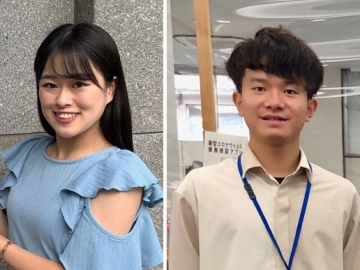
Shintaro Matsumoto, 3rd year student School of Culture, Media and Society Media and Society
Akira Kusama, 4th year student School of Fundamental Science and Engineering
Maiki Kawaguchi, 4th year student School of Fundamental Science and Engineering
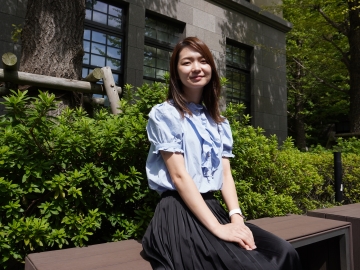
Yukari Narita, 4th year School of Culture, Media and Society
--Please tell us how each of you is involved with ARC.

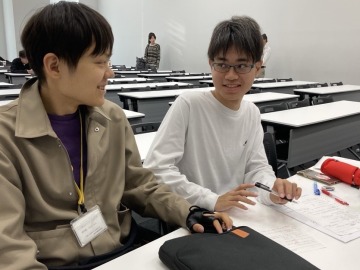
Narita: I learned about ARC in a class that introduced on-campus organizations in my first year of university, and I was interested in being able to support students in need of support in class, so I applied to be a support volunteer student. Currently, I work as a PC interpreter, typing up and writing down what the teacher said in class for students with hearing impairments, providing mobility support such as opening and closing doors for students in wheelchairs, and taking notes for students who have difficulty copying what is written on the board.

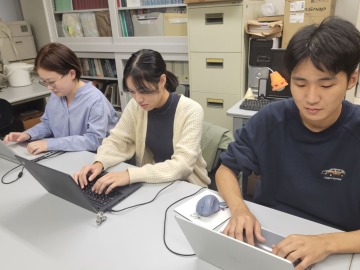
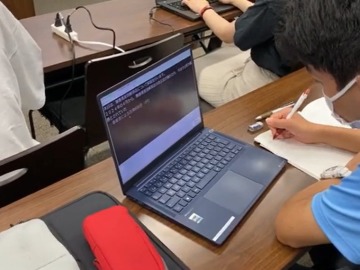
On the right in the photo is Narita (center), who uses a PC to interpret in a graduate seminar. By typing out the speech and audio information heard in class in real time and turning it into subtitles, students can receive information. Usually, a team of three or four people work together to create the subtitles, and students can check them on a separate tablet.

Matsumoto: I have a developmental disability called ASD (Autism Spectrum Disorder). I have difficulty copying notes from the board during class, so the ARC reviews the content and asks the teachers of each class to help me review it so that I can review the content. In addition to receiving support, I also want to do something for people with disabilities, so I sometimes volunteer as a support student and help students who use wheelchairs move between classes.

Kusama: Like Matsumoto, I also have ASD, and in addition to having difficulty communicating with others, I also have ADHD (attention deficit hyperactivity disorder), which means I have difficulty concentrating on activities and make more mistakes than the people around me. I consulted ARC when I was a second-year university student when I was diagnosed with a developmental disability, and they have been making special considerations for each of my classes.

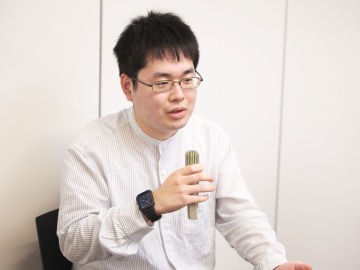
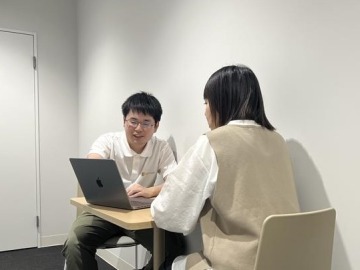
On the right in the photo is Ms. Kusama having an interview with ARC staff. ARC has a "physical disability department" and a "mental and developmental disability department," and specialized staff members regularly interview students with disabilities.

Kawaguchi: I have hearing impairments and developmental disabilities, so I receive support through ARC. Regarding my hearing, I cannot hear voices and cannot have a conversation unless I wear hearing aids in both ears, and even with hearing aids, it becomes even harder to hear in places where sounds echo, such as in crowds or gymnasiums. For this reason, I ask for PC interpretation for classes and subtitles for video materials. Also, in group work, I ask the students who participate with me to speak using a device called a pass-around microphone, which connects their voice to the hearing aid, and I borrow that microphone from ARC.

--What do you think about the efforts being made on campus to provide reasonable accommodation?

Kawaguchi: I think it's very helpful to have ARC between students who need support and teachers in order to provide reasonable accommodations on campus. Even if we, students with disabilities, directly ask teachers for "this kind of accommodation," it can be difficult to judge how much of the support is "reasonable" or fair to all students. In such cases, ARC can objectively explain the need for support, which I think allows students to have an environment where they can study at university without any inconvenience.

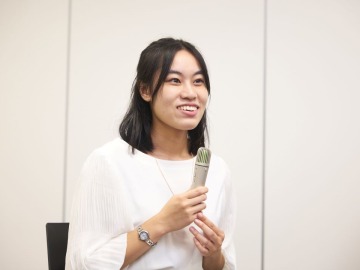
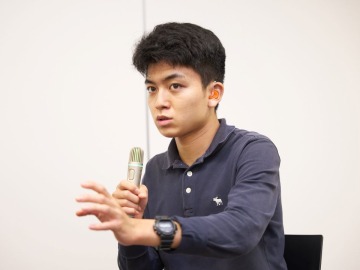
Kawaguchi is holding a pass-around microphone. The person speaking held this microphone so that Kawaguchi could easily hear him during the interview. On the right, Kawaguchi is using a PC interpreter to take a class while looking at the text information reflected on his own PC.

Kusama: It's quite difficult for us to directly ask for support. But I don't think it's good to have difficulties and keep them to yourself without telling anyone. There was a time when I got sick because of it... It's important to face your own disability and ask those around you, "I have this disability, so can you help me in this way?" I 'm sure there are still many more voices like that, so I feel there are areas where we can improve reasonable accommodations on campus.

Matsumoto: Starting in 2024, businesses will be required by law to provide reasonable accommodation, so I hope that in the future we will be able to provide accommodation for people with disabilities in a wider variety of situations. For example, I think we will have to give more thought to what kind of accommodation can be made for visitors with disabilities at events that are also open to people from outside the university.

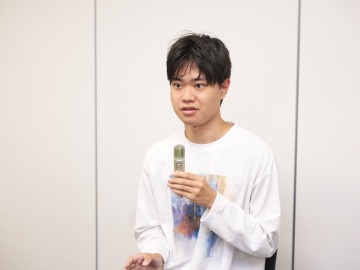
Matsumoto is a student who uses ARC and also works as a support volunteer. On the right, he helps students who have difficulty writing by taking notes.

Narita: Speaking of initiatives for people other than Waseda students, at the open campus in August 2024, we actually provided the support that ARC normally provides to visitors with disabilities who participated in a mock class. I think it was a great opportunity for people who are planning to study at university in the future to experience that they can study safely at Waseda even if they have a disability.

--What do you want Waseda students to keep in mind?

Narita: For example, I think it's good that by seeing students receiving support on campus or by viewing content about disabilities on social media, you can gain more perspectives on how to interact with people with disabilities. However, I also think it's not good to think that you understand people with disabilities just by doing that. Rather than just thinking about what support is, if you see someone in need close to you, it might be a good idea to ask them directly what they need. I think there are some things you can only understand​ ​by talking to them.

Matsumoto: Regardless of whether or not you have a disability, everyone has things they can't do or aren't good at. I hope that by sharing the difficulties we face with those around us, we students can proactively build an environment where we are considerate of each other.

Kusama: From my own experience, I can say that it is best for people with disabilities to have someone listen to them, no matter who it is. There should be no one at university who dislikes students who are trying their best to learn, so if you are having trouble with classes or student life, please talk to a friend or someone you can trust. Also, if there is someone around you who is suffering because of a disability, I hope you will be there for them, as they will be happy just to have someone there for them.

Kawaguchi: As Kusama says, it's really important to talk to someone about things that are troubling you, and I want to keep that in mind. I also want students to feel that support for people with disabilities or special characteristics is something more familiar to them. Just as people who are hard of seeing wear glasses, people who are hard of hearing like me wear hearing aids. I want them to know that it's as natural as that, that there are people with all kinds of special characteristics all around us.

Narita: Perhaps when you hear the words "disability," "characteristics," and "support," you might get the impression that the supporter and the supportee are clearly separated. At the exchange meetings held at ARC between support volunteer students and user students, we play quizzes and other games that anyone can participate in, and everyone becomes so close that they forget whether they have a disability or not (laughs). With this kind of community expanding, I would be happy if you become interested in participating in support activities.

Kawaguchi: I agree that ARC is a fun place, in addition to supporting student life. At the disability services counter in Building 3 on Waseda Campus, you can chat with staff and students while enjoying some snacks (laughs). It's a comfortable place, so if you need support or are interested in volunteering, please come visit ARC sometime.


Interview and text: Kei Yoshida
Photo by Nanako Ono

For more information regarding reasonable accommodation applications, please see below.
[Accessibility Resource Center website] https://www.waseda.jp/inst/dsso/

[Next Focus Preview] "Rugby Special" to be released on Monday, November 18th

Waseda Weekly is the official web magazine for Waseda University Student Affairs Division. It is updated daily on weekdays during the academic term! It features introductions to active Waseda students and alumni, as well as information student club Waseda cuisine, and more.

Page Top
WASEDA University

早稲田大学オフィシャルサイト(https://www.waseda.jp/inst/weekly/)は、以下のWebブラウザでご覧いただくことを推奨いたします。

推奨環境以外でのご利用や、推奨環境であっても設定によっては、ご利用できない場合や正しく表示されない場合がございます。より快適にご利用いただくため、お使いのブラウザを最新版に更新してご覧ください。

このままご覧いただく方は、「このまま進む」ボタンをクリックし、次ページに進んでください。

Continue

対応ブラウザについて

close