Waseda WeeklyWaseda Weekly

Features

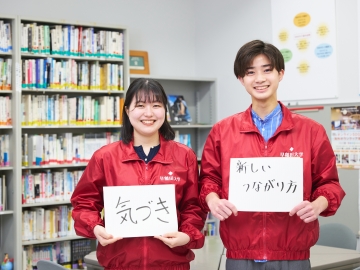
What kind of volunteer work can you do at Waseda? Here are some Waseda students' comments using WAVOC!

Have you ever volunteered? There are probably many people who are hesitant to volunteer, thinking things like, "I'm interested in volunteering, but I don't know how to get started," or, "If an inexperienced person goes to volunteer at a disaster site, won't they end up being a hindrance?"

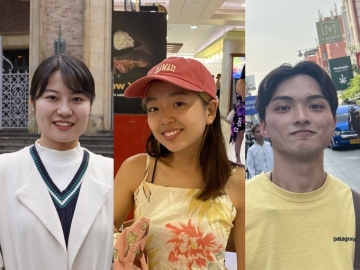
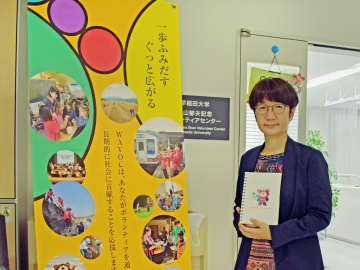
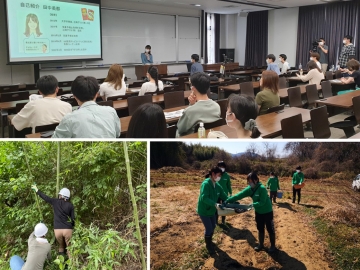
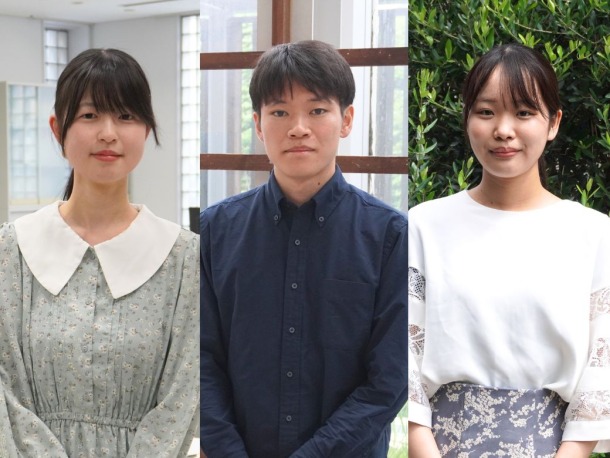
Waseda University has The Hirayama Ikuo Volunteer Center (WAVOC) (WAVOC), which supports Waseda students in volunteering. WAVOC was established with the aim of inheriting the spirit of international social contribution of Hirayama Ikuo, an honorary doctor of the university, and contributing to local and international society through volunteer activities. WAVOC is constantly calling for participation in volunteer activities in a variety of fields, including environmental conservation, educational support, and disaster recovery support. This time, we spoke to three students who have participated in WAVOC volunteer activities about the activities and how they approach volunteering.

INDEX
▼Takao Forest Creation Study Tour
"My first attempt at volunteering to protect the nature I love"

Play sports with children with disabilities
"Focus on volunteering as an educational support worker to become Faculty who supports children's development"

▼Volunteer support for the Noto Peninsula earthquake disaster
"I will actually visit the affected areas and continue to face the disaster head on."

Takao Forest Creation Study Tour
"My first attempt at volunteering to protect the nature I love"

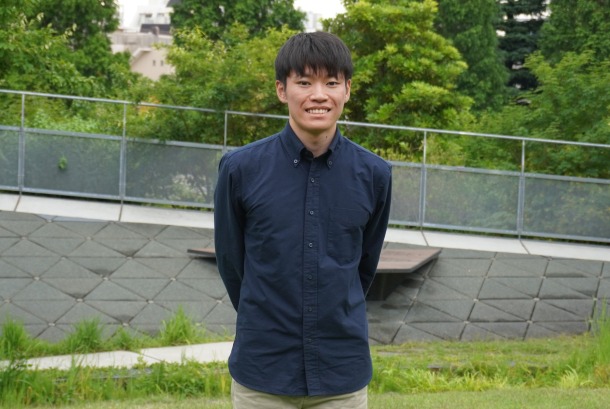
Suzuki Ronpei, 2nd year, School of Commerce

At Toyama Campus Toyama Hill 

-What made you decide to participate in the Takao Forest Creation Study Tour?

I was originally interested in volunteering, so when I was a freshman, I participated in a garbage collection event in Nakano Ward run by an NPO. After a while, I started to want to contribute to society in various ways in addition to garbage collection, and I noticed WAVOC's volunteer activities. Compared to looking for opportunities outside of the university, the barrier to participation was low, making it easier for students to participate, and there was the peace of mind that other Waseda students were also participating.

The reason I participated in the Takao Forest Creation Study Tour was because I grew up in a naturally rich area with a large forest park nearby and many different creatures living in the riverbed, and I wanted to volunteer to experience nature. This study tour is held several times a year, and I participated in April 2024.

-Please tell us what kind of activities you engage in.

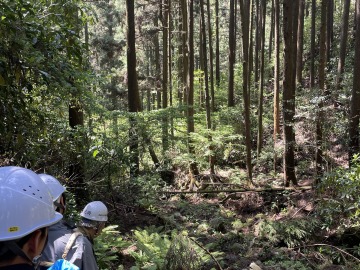
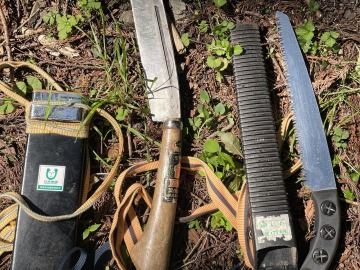
In the Kogesawa Forest in Takao, Tokyo, we cut off some trees to help the forest grow, thinning the trees so that they can get the right amount of sunlight. All the necessary tools, such as saws, axes, and helmets, were provided, so all we had to do was wear clothes suitable for working in the mountains and wear hiking shoes. In addition, an instructor gave us instructions on how to cut down trees, so even though it was my first time holding an axe, I was able to work with confidence. The branches of the trees that were felled were removed and turned into logs, which will be used to maintain hiking routes. Until now, I had thought that nature could be preserved without any special human intervention, but I was able to experience firsthand that forests are actually protected by the management of many people.

Photo on the left: Thinning took place in a steep area deep in the Kogesawa forest.
Photo on the right: Tools used for thinning, such as the "yoki" (axe) and "noko" (saw)

I was surprised to learn that one of the instructors, an alumni, had participated in WAVOC's Takao Forest Creation Study Tour when he was a student, and continued to be involved as an instructor after entering the workforce. Hearing this story, I began to wonder if I could be involved in a similar volunteer activity in the future.

I believe that these kinds of encounters and realizations are rare in everyday student life and are valuable experiences that can only be had through volunteering.

How would you like to be involved in volunteer work in the future?

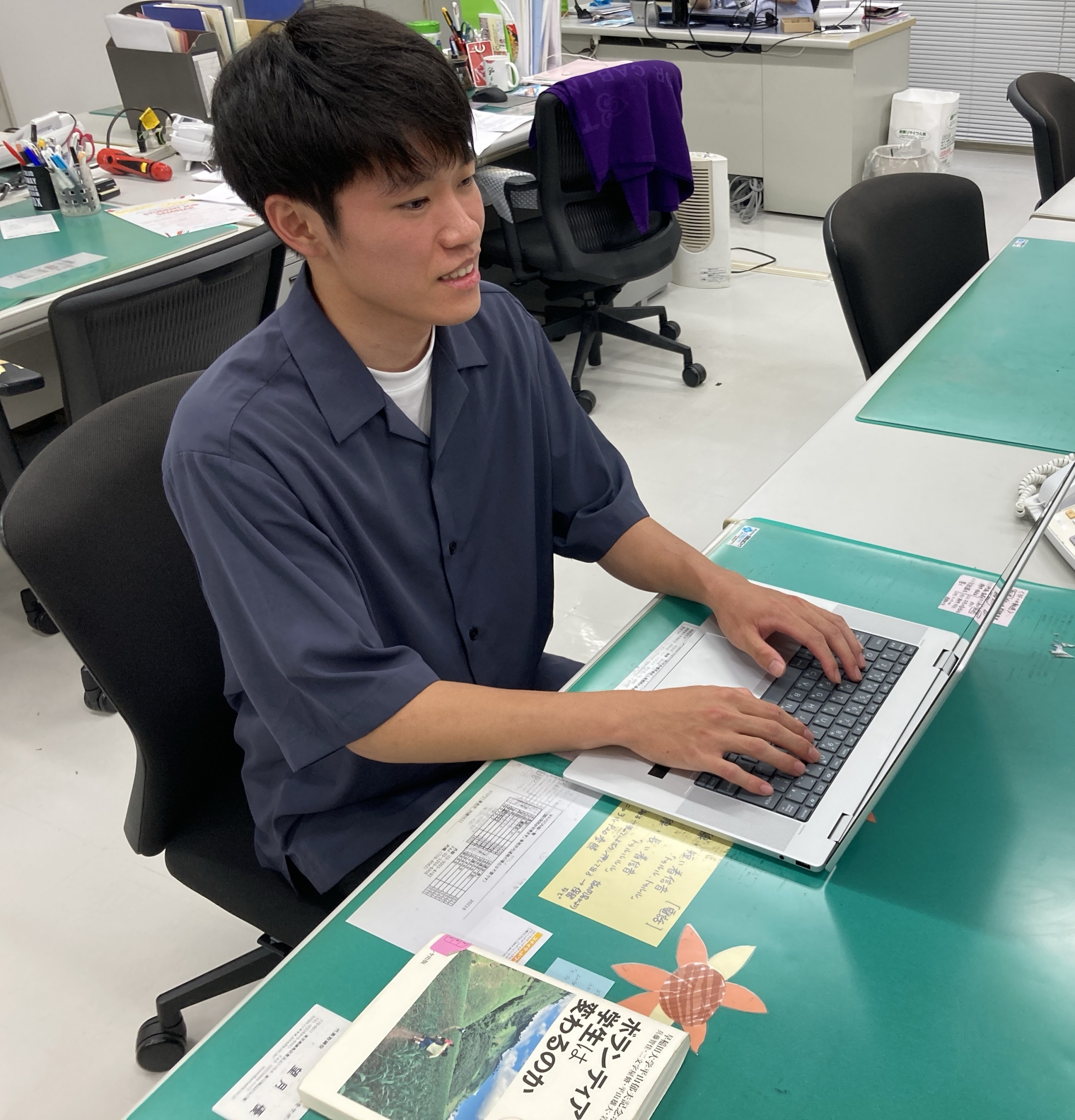
Suzuki, a WAVOC student staff member, planning volunteer activities.

Wanting to continue volunteering, I applied to be a WAVOC student leader and have been in the position since June 2024. A major part of the student leader's job is planning WAVOC volunteer activities. I am currently focusing on planning volunteer activities to protect nature, and am currently studying while having WAVOC staff check my proposals. In addition to my work as a student leader, I would also like to participate in disaster relief volunteer work in the future.

Like the instructors for the Takao Forest Creation Study Tour, volunteering is a way to contribute to society apart from your main job, so I would like to find a volunteer role that I can combine with work after graduation and get actively involved.

Play sports with children with disabilities
"Focus on volunteering as an educational support worker to become Faculty who supports children's development"

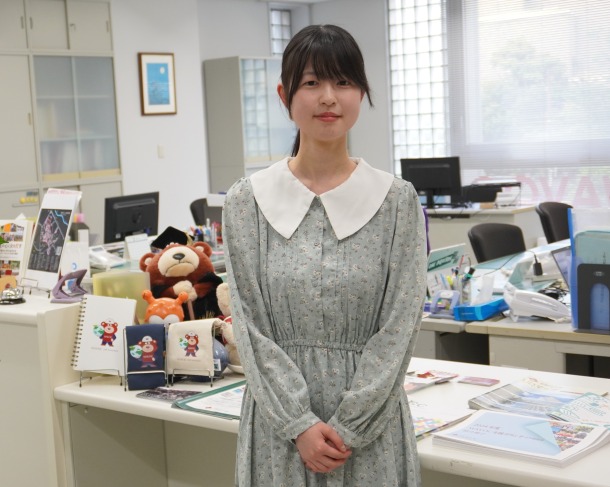
Haruka Tamegai, 2nd year student School of Education

At the WAVOC office on the 2nd floor Building No. 99, Waseda Campus

-What made you decide to participate in the "Play Sports with Children with Disabilities" event?

I want to be involved in supporting children's education in the future, and it all started when I met my homeroom teacher in the fifth and sixth grades of elementary school. I was very impressed by how close he always was to us students, and I wanted to become a teacher who could support children's growth, so I volunteered at an after-school program when I was in high school.

I wanted to continue volunteering even after I became a university student, so I subscribed to the WAVOC email newsletter, which sends me information about volunteering at Waseda University. I wanted to have the opportunity to actually interact with children outside of the special needs education-related lectures I was taking at university, so in March 2024, I participated in "Play Sports with Children with Disabilities."

-Please tell us what kind of activities you engage in.

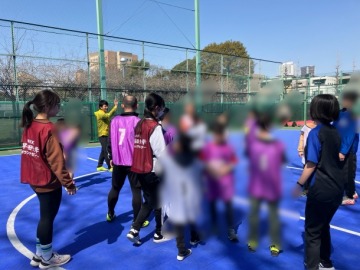
Before the match at the soccer school. Tamegai is in the center.

The purpose of the activity is to accompany the children to practice and support the operation of the soccer school. First, we paired up with the children and the Waseda students to warm up with the ball, and then we split into groups to play a match. It was a very enjoyable activity that allowed us to deepen our friendship with the children through sports.

I created an environment where the children could enjoy playing soccer by using gestures and other physical actions rather than communicating with words. Through communication that fully utilized the body, I realized how difficult it is to convey something in a way that is easy for others to understand.

How are you currently involved in volunteering?

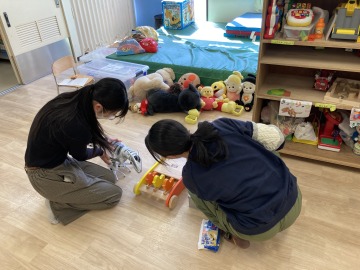
I have been a WAVOC student leader since my first year, and have planned and carried out five volunteer activities so far. For example, the "Toy Library Volunteer" project was carried out with the cooperation of the Kobato Toy Library in Chuo Ward, where we played with toys with children. In previous volunteer activities, I often interacted with elementary school children, but here, I focused on younger children, and placed more importance on having them play together happily using toys rather than communicating with words.

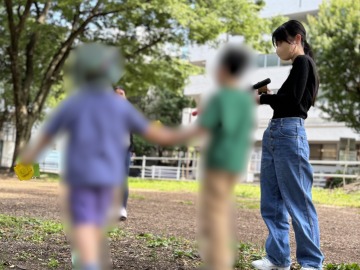
I also serves as the secretary-general of "Shinjuku Children's Club KIDS" (an official student club). The purpose of the activities is to interact with children who attend special needs classes, and every Saturday, we rent a meeting room near Toyama Park and play outside together and do crafts. We think of games and crafts that the children will enjoy in advance, and after the activities we hold a review meeting to share how the children are doing.

Left: A toy library volunteer disinfecting toys that children touch before the library opens. On the left is  Tamegai.
Right: A scavenger hunt with children at the Shinjuku Children's Club KIDS activity

In response to requests for volunteer work using English, we held an international exchange event where participants picked up trash while conversing in English with international students, as well as an event where participants interacted with people with disabilities while shopping and cooking.

How would you like to be involved in volunteer work in the future?

As a WAVOC student leader, I am in a position to plan volunteer activities, so I would like to provide volunteer work in a variety of fields that will appeal to many people, not just educational support.

I am studying to get Faculty license at a special needs school at university, but through volunteering with WAVOC, I was able to deepen my understanding through hands-on experience, such as how to talk to and interact with children. As educational support volunteering gives me many insights that will be useful in the future, I would like to continue gaining more experience.

Volunteer support for the Noto Peninsula earthquake disaster
"I will actually visit the affected areas and continue to face the disaster head on."

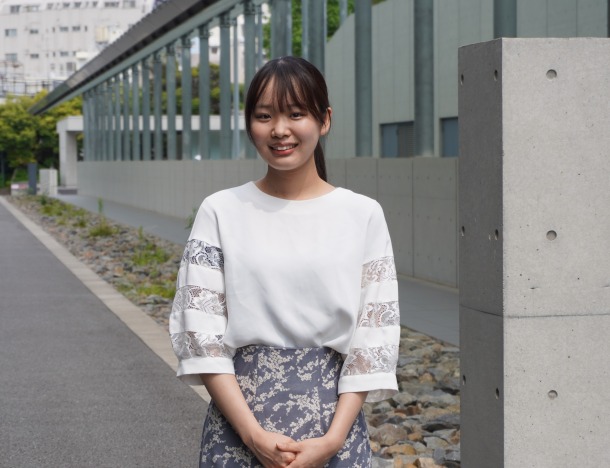
Misato Saito, 3rd year student School of Law

At Toyama Campus

-What made you decide to participate in the Noto Peninsula Earthquake Disaster Recovery Volunteer Program?

When I returned to my maternal hometown of Akita City in August 2023, I was shocked to see the shopping district losing its vitality after being forced to close due to the heavy rain disaster in July of the same year. This prompted me to want to help my beloved Akita, and when I participated in WAVOC's "Akita City Disaster Recovery Support Volunteer" in September of the same year, I realized that there was something I could do. After that, I also participated in the "Iwaki City Disaster Recovery Support Volunteer" in October of the same year, and I began to think that if I could help people in need due to the disaster, I would like to participate as much as possible, and I have been actively involved in the "Noto Peninsula Earthquake Disaster Recovery Support Volunteer" that has been held since March 2024.

I had no experience as a disaster relief volunteer, but WAVOC provides subsidies for travel expenses and lends out equipment for the work, so I thought it would be easier to participate even on my own compared to volunteering outside of campus, and so I decided to take the plunge.

-Please tell us what kind of activities you engage in.

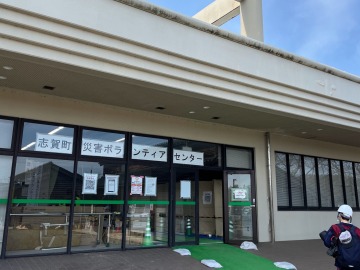
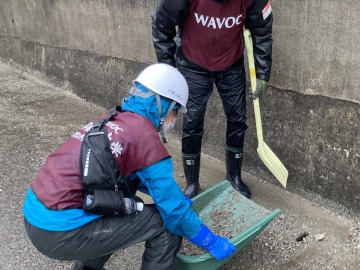
Volunteers to support the Noto Peninsula earthquake disaster recovery efforts have been recruited several times, and I participated in activities in Shika Town, Ishikawa Prefecture, in March 2024, and in Suzu City in May and June. In Shika Town, the main task was removing debris such as collapsed block walls around houses.

Left: After listening to an explanation of the work at the Shika Town Disaster Volunteer Center, they formed teams with other volunteers and headed to the disaster site.
Right: Removing debris in Shika Town. Saito is in the foreground.

In Suzu City, we helped carry out so-called disaster waste, including furniture, bedding, and other household goods that had to be thrown away due to the disaster. Experienced volunteers from all over the country provided guidance on how to work and how to determine dangerous areas, so I think I was able to work with confidence, even though it was my first time.

Whether or not to dispose of household goods as disaster waste is basically up to the decision of the affected client, but for example, it was heartbreaking to have to dispose of things like a futon that had been prepared in anticipation of relatives' children coming to play, and a sliding door with a picture painted by the client's grandchild as disaster waste. Nevertheless, the warm words of gratitude we received from the client became the driving force that led to our next activities.

Before participating in this activity, I would see the damage on the news and feel sad about it, but I would just accept it. However, when I actually went to the disaster area and saw the cityscape destroyed by the earthquake and the volunteers working desperately towards reconstruction, my attitude towards disasters changed dramatically.

How are you currently involved in volunteer work?

I do not belong to any volunteer student club or external volunteer activities, but participating in WAVOC disaster relief volunteering has given me the opportunity to think about using the time I used to spend on myself to help others. Currently (late June 2024), I am applying for the 8th Noto Peninsula Earthquake Disaster Reconstruction Support Volunteer Group, and I would like to continue to participate actively as long as there are recruitments in the future.

How would you like to be involved in volunteer work in the future?

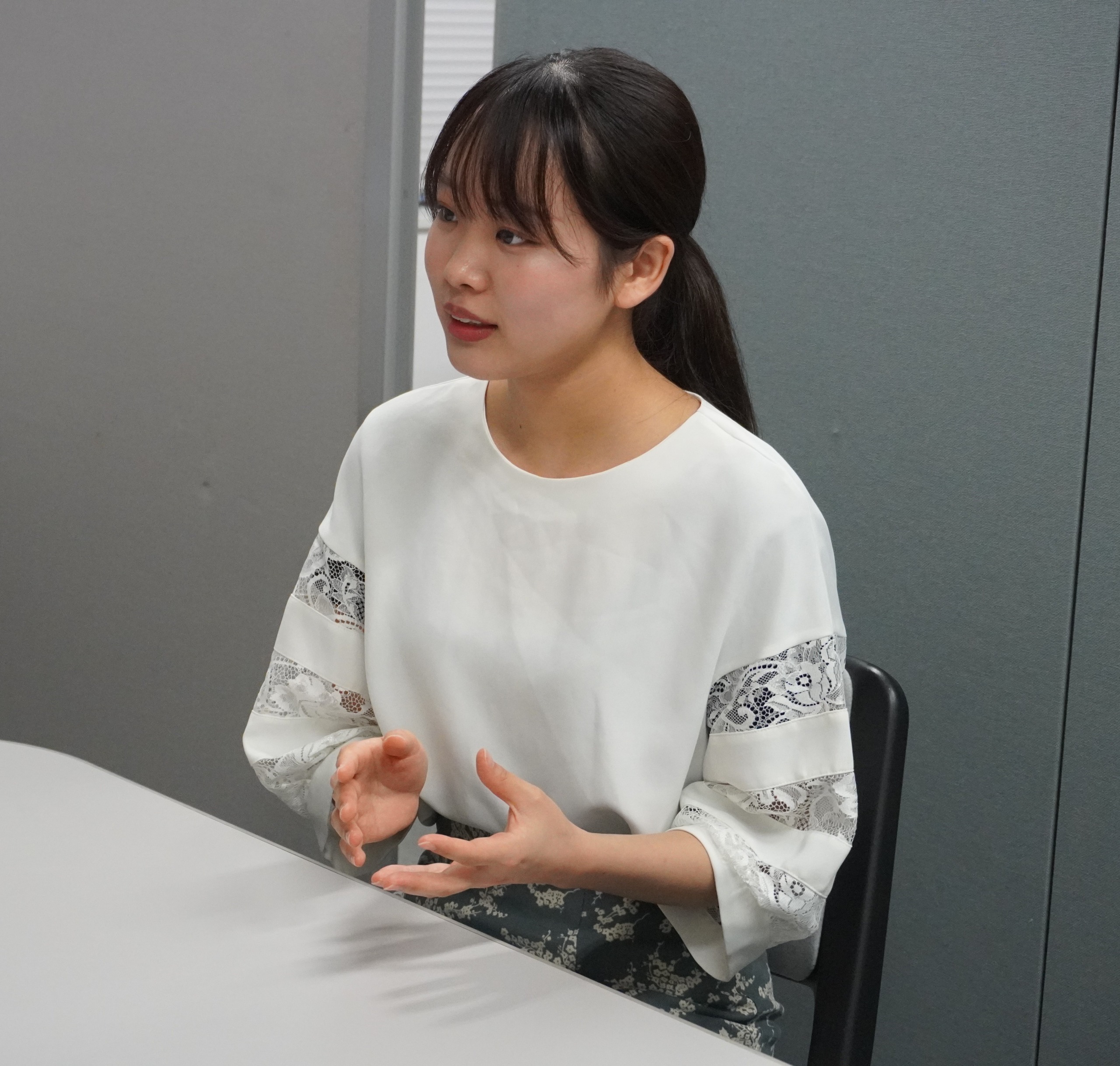
Saito spoke enthusiastically about her disaster relief efforts. Outside of school, she also applied to be a disaster volunteer for the Noto Peninsula earthquake, organized by an NPO in Yokohama.

One of the challenges I face when participating in disaster relief volunteer work is how to interact with disaster victims. During the Noto Peninsula Earthquake Disaster Relief Volunteer Program, I happened to be present when a volunteer from Noto was talking to a disaster victim about Noto's specialty products. I was deeply impressed that the disaster victim smiled for the first time when we talked about the things that the local area is proud of. I remember regretting that I should have known more about Noto.

I also consider it a future challenge to think about what the disaster victims want and whether our methods are taking away from what they want to do. In the course of my work up until now, there have been times when I felt that what I thought would be helpful may have made people feel bad, so I would like to keep in mind how to understand their feelings when I carry out my activities in the future.

I would like to continue volunteering in disaster relief efforts even after I graduate from university. I've heard that there are companies that offer systems that allow you to take time off to volunteer, so I'm looking into it, and if I have even a little bit of time, I would like to participate in as many activities as possible.

From WAVOC staff to Waseda students

WAVOC, as a promoter of Waseda University's social contribution activities, is involved in a variety of volunteer activities, including environmental conservation, support for people with disabilities, sports, local revitalization, agriculture, and disaster prevention. Student leaders and faculty and staff will supervise the activities, so even if you have no experience volunteering, there is no need to worry. In addition, we offer a variety of formats, including one-off activities, mid- to long-term projects, and study tours with accommodation, so you can participate according to your schedule. We are also actively involved in volunteer work to support reconstruction efforts in areas affected by natural disasters, so we welcome Waseda students to lend us their support!


The Hirayama Ikuo Volunteer Center (WAVOC) (WAVOC)

[Location] Waseda Campus Building No. 99, 2nd and 3rd floors
[Office hours] Weekdays 9:00-17:00 *Closed on Saturdays, Sundays and public holidays
[Telephone] 03-3203-4192 (Weekdays 9:00-17:00)
[Email] [email protected]
[Currently recruiting for activities] https://www.waseda.jp/inst/wavoc/news/?tag=participate
[List of WAVOC Support student club] https://www.waseda.jp/inst/wavoc/project/circle/

[Next Focus Preview] "Paris Olympics" to be released on Monday, July 15th

Waseda Weekly is the official web magazine for Waseda Student Affairs Division. It is updated every weekday during the school term! It introduces active Waseda students and graduates, student club, Waseda meal information, and more.

Page Top
WASEDA University

早稲田大学オフィシャルサイト(https://www.waseda.jp/inst/weekly/)は、以下のWebブラウザでご覧いただくことを推奨いたします。

推奨環境以外でのご利用や、推奨環境であっても設定によっては、ご利用できない場合や正しく表示されない場合がございます。より快適にご利用いただくため、お使いのブラウザを最新版に更新してご覧ください。

このままご覧いただく方は、「このまま進む」ボタンをクリックし、次ページに進んでください。

Continue

対応ブラウザについて

close