Event Outline
- Time and Date: January 23rd (Sat.) 2027, 16:30 – 18:30 (JST)
- Format: Online meeting (Zoom)
- Presenter: 1. Inori HAYASHI (Elisabeth University of Music)
2. Chikako KITAGAWA (Keio University)
- Moderator: Masahiro TSUJI, Reina NARUTA
- Language: Japanese
- Organized by: Waseda Institute of Research in Opera and Music Theatre (WIROM), Comprehensive Research Organization, Waseda University
Part 1: Title
Rests and Silence in Verdi’s Operas: Compositional Techniques and Dramaturgical Functions: Inori HAYASHI
Abstract
In opera, rests and silence can serve not only to articulate musical structure but also as means of dramatically shaping characters’ speech and actions. The aesthetic functions of silence in music have been discussed by scholars such as Lissa (1964), however, relatively little attention has been paid to operatic composers’ techniques for creating rests and silence in relation to dramaturgy.
This paper examines several of Verdi’s operas, focusing on three compositional techniques: (1) rests marked with fermatas; (2) verbal indications such as “pausa lunga” and “silenzio”; and (3) interruptions of vocal lines while the orchestra continues to play. It investigates the musical and dramatic functions of these techniques. The analysis reveals that rests serve both to mark structural boundaries and to create dramatic pauses. It also identifies an increasing tendency in Verdi’s later operas to use verbal indications of pauses in passages involving characters’ speech. Furthermore, an examination of different versions of “Don Carlos” demonstrates that changes in the placement of rests and silence during revision affect not only the musical structure but also the interpretation of characters’ speech and acting.
Profile of Presenter
 Inori Hayashi is a Lecturer at Elisabeth University of Music, Japan. She holds a BA in Vocal Music from Tokyo University of the Arts and a PhD in Humanities from Ochanomizu University. She previously held research fellowships at the Japan Society for the Promotion of Science (JSPS) and the Institute for Global Leadership at Ochanomizu University. Her research focuses on the dramaturgy and reception of nineteenth-century Italian opera, particularly the works of Giuseppe Verdi. Her recent publications include a study of the relationship between revisions to the libretto’s verse structure and vocal melodies in Verdi’s Simon Boccanegra, published in Ongakugaku (Journal of the Musicological Society of Japan), vol. 69, no. 2.
Part 2: Title
The Telephone as an “In-Between”: Poulenc’s “La Voix humaine” and Menotti’s “The Telephone”: Chikako KITAGAWA
Abstract
The telephone connects people who are far apart, yet it can also separate those in the same room. In Poulenc’s “La Voix humaine” (1959), based on Cocteau’s 1930 play, a woman abandoned by her lover speaks to him on the telephone for the last time. The audience never hears his voice, and their conversation is repeatedly disrupted by connection problems. In Menotti’s “The Telephone” (1947), a couple’s attempts to talk are constantly interrupted by telephone calls, and the man succeeds in proposing only after leaving the apartment and calling her. In the former work, the woman waits for a broken connection to be restored; in the latter, the man waits for an opportunity to speak to the woman beside him.
Drawing on Michel Chion’s discussion of the separation of voice and body, this paper examines how the telephone affects the distance between characters and the passage of dramatic time. It also considers the nature of the telephone as a modern medium in the period between 1930 and 1959, when Cocteau’s play and the two operas were created. Through an analysis of the scores and filmed performances, the paper explores the musical treatment of the unheard speech at the other end of the line, the effects of interruptions and reconnections on the dramatic action, and the vocal and instrumental writing that gives form to periods of waiting. By comparing a “tragédie Lyrique” and an “opera buffa”, the paper considers how the telephone both obstructs and enables communication, as well as how the resulting intervals of waiting become integral to each work’s dramaturgy.
Profile of Presenter
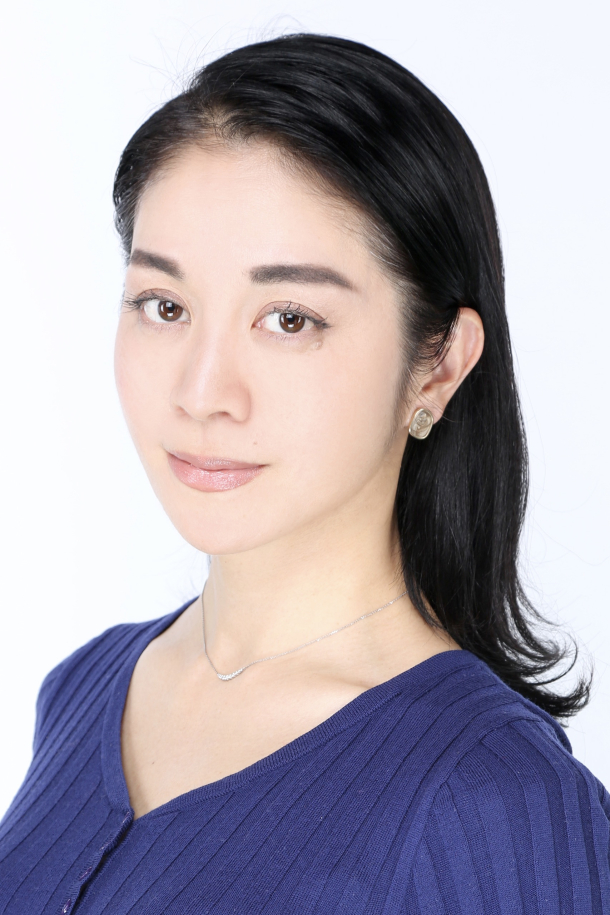 Chikako Kitagawa is Professor at Keio University. She studied German literature, theatre studies and musicology at Hiroshima University, the University of Tübingen and the University of Vienna. From 2009 to 2013, she was a DAAD scholarship recipient at Freie Universität Berlin, where she earned her PhD. During this period, she also worked as a dramaturg and assistant director at opera houses in Amsterdam and Leipzig. Her research focuses on theatre studies and the aesthetics of stage direction, particularly opera and music theatre from Wagner onwards. Her publications include the monograph “Versuch über Kundry – Facetten einer Figur” (Peter Lang, 2015), which received the Japanese Society for German Studies Prize, and a co-translation into Japanese of Günther Heeg’s “Das transkulturelle Theater” (Sangensha, 2024).
Registration
Registration is required by January 22nd (Fri.) for online participants. Please complete your registration via the provided URL.https://list-waseda-jp.zoom.us/meeting/register/0VF2JTCwSu-S07JAaC0GmA
*Please show your full name on the display, mute yourself, and turn off the video, except when talking; refrain from taking screenshots, recordings, etc., and follow the moderator’s instructions.
Contact
Waseda Institute of Research in Opera and Music Theatre (WIROM), Comprehensive Research Organization, Waseda University: https://prj-opera-mt.w.waseda.jp/
e-mail address: operaken-uketsuke[at]list.waseda.jp ([at] = @)
You can also find this information on Facebook and X(Twitter).