Science × Engineering to Expand Human Physical Ability and Wellness
What does it take to unlock the full athletic potential hidden within the human body and achieve peak performance? A group of researchers that brings together experts from sports science, engineering, medicine, dentistry, and other fields is advancing collaboration under the banner “Winning Medals with Science,” while expanding its scope toward physical development and health promotion for children and the elderly. We spoke with Director Yasuo Kawakami, who champions research that contributes to society.
◆Bringing Together the Wisdom of Science and Engineering to Understand “Physical Ability”
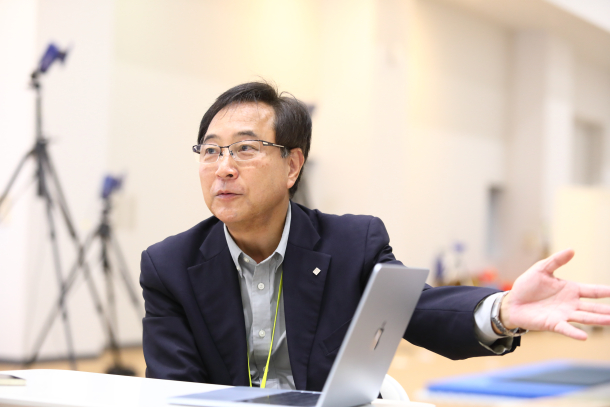
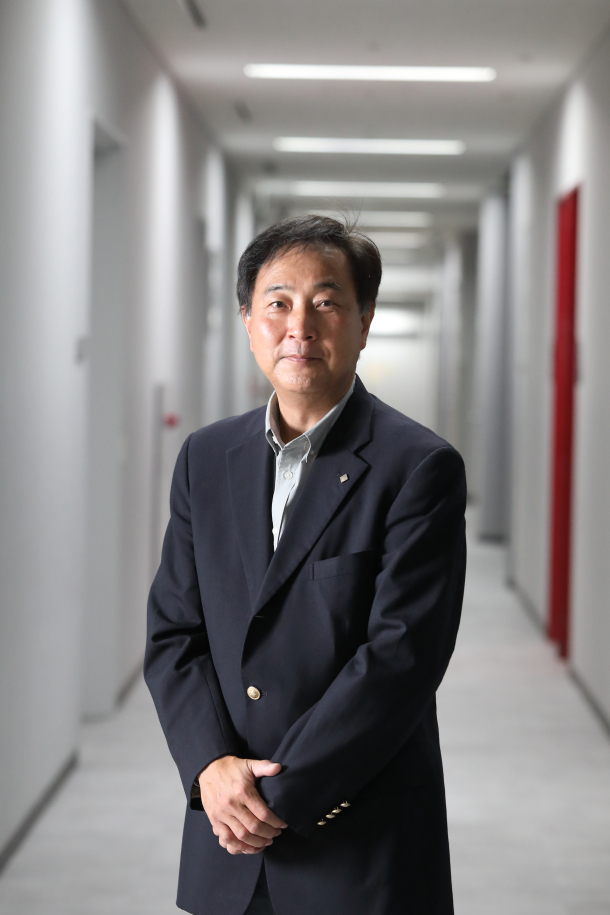
KAWAKAMI, Yasuo (Director / Professor, Faculty of Sport Sciences)
──There are many researchers at the Human Performance Laboratory, and their fields are diverse.
The lab includes experts from sports science and engineering, medicine and dentistry, materials and equipment development, along with collaborators from other universities, research institutions, and private companies. In total, there are about 40 researchers. From within Waseda University, specialists from the Faculty of Sport Sciences are involved in areas such as physiological measurement, biochemical analysis, nutrition, physical education pedagogy, and safety management. Members from the Faculty of Science and Engineering contribute to areas such as humanoid robotics development, multimodal interface development, sensor technologies, image analysis, and bioinformatics.
With respect to partner institutions outside the university, researchers from Shibaura Institute of Technology, Institute of Science Tokyo, University of Tokyo, Aichi Medical University, and Meikai University are among those participating. Some of these collaborators specialize in unique fields such as sports dentistry, support for female athletes, and research on children’s exercise. Additionally, members from the National Institute of Advanced Industrial Science and Technology and several private companies contribute to measurement and analysis, forming a kind of consortium.
──Does that wide diversity mean a broad range of research themes?
The core theme is clear: the scientific exploration of how to develop and express humans’ latent physical abilities. Members from various disciplines are uniting cutting-edge scientific and engineering knowledge and technologies toward that shared goal. Behind this work is the aim to contribute not only to improving athletic performance, but also to promoting healthy development in children and enhancing health in middle-aged and the elderly — and ultimately, to make the findings from these research activities useful to society at large.
──What kind of research are you doing specifically?
The core research themes are the following four:
(1) Experiencing and practicing ideal movements
(2) Comprehensive analysis of physical abilities and talent identification
(3) Optimization of conditioning methods
(4) Development of tools and technologies to enhance performance
To explain what this means: Theme (1) is research to clarify the mechanisms of basic human movements such as running, jumping, and rowing, using various sensors and tools while experiencing ideal body movement firsthand. Since human movement involves psychological aspects, skill level, and physiological characteristics, Theme (2) also includes research into physical ability in relation to those traits — for example, examining an athlete’s motor ability, reproducing it with robots, and searching for secrets behind competitive performance. Theme (3) pursues conditioning methods that incorporate stretching and mental training, and Theme (4) focuses on developing devices and instructional methods to enhance movement performance.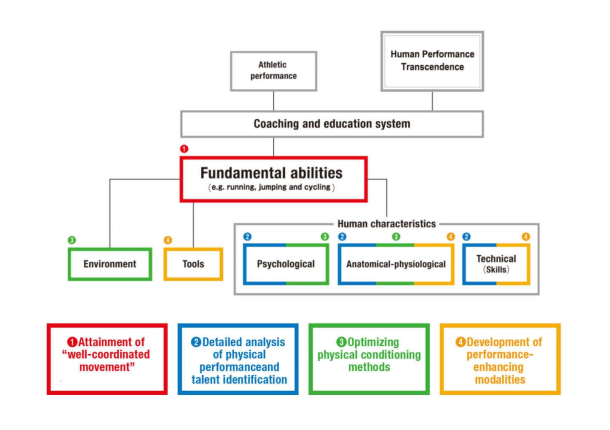
◆From Athletic Performance Enhancement to Child Development Support and Health Promotion for the Elderly
──Do your research outcomes include things like power-assist suits to reduce physical burden?
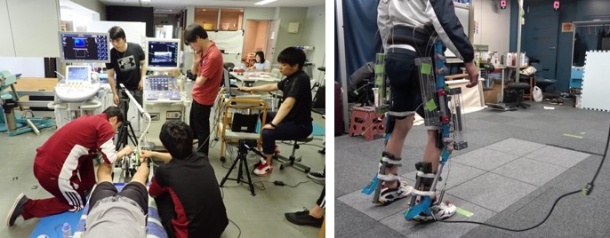
It is not unrelated, but our direction is somewhat different. Our goal is not to develop technology that merely assists the body physically, but to draw out the intrinsic potential of the human body so that higher levels of ability can be manifested. In essence, our research focuses on science and engineering to expand human physical ability. For example, the lab may investigate how children can run faster by studying the mechanisms of running and then creating devices that embody those findings. Through repeated use of such devices, individuals can learn how to use their bodies more effectively, enhancing their sense of movement so that they can perform better even without the device.
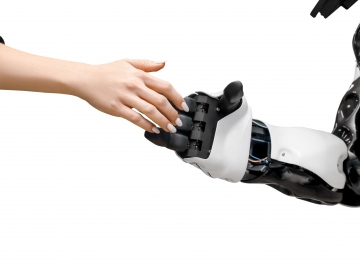
The same can be said for the development of humanoid robots. Creating a robot that looks exactly like a human is not the goal in itself. We aim to replicate human physical characteristics and motor control mechanisms in robots and then apply the results of this research to humans and their applications. Recently, the development of humanoid robots has been progressing both in Japan and overseas, but what often happens is that even if they appear to move in a human-like manner, the mechanisms of their movement are actually completely different, and they are simply anthropomorphized using motors and other such devices. Our research is different. We take an approach where we create something that replicates the mechanisms of human movement and investigate how movement changes by improving the functionality of parts related to running, for example, and apply this to human muscle movements and training.
──So that means that this technology can be applied not only to improving the performance of athletes, but also to promoting the health of the elderly and supporting child development.
Indeed, such research is not limited to elite athletes. The lab’s work can be applied to supporting child development and promoting the health of older adults. When the lab’s predecessor was established in 2017, the then-imminent Tokyo Olympic and Paralympic Games made improving athletes’ performance a major priority. “Winning Medals with Science” was the slogan, and foundational research began with efforts to establish systems for quantifying and improving sports performance. That objective remains, but the lab has since expanded its scope beyond elite competition to include broader outreach to general populations including children and the elderly.
One example of community application is a collaborative project with Nishitokyo City to promote health in middle-aged and older adults. The lab designs effective exercise programs and first implements them with city staff and selected residents. Local leaders are trained to become community champions who lead others, enabling the program to spread gradually throughout the entire city. With sustained activity over time, the hope is that overall health levels in the community will improve and even help reduce medical costs.
◆Outreach Activities to Widely Share Research Results
──This laboratory is also known for its emphasis on “science communication activities.” What kind of initiatives are you involved in?
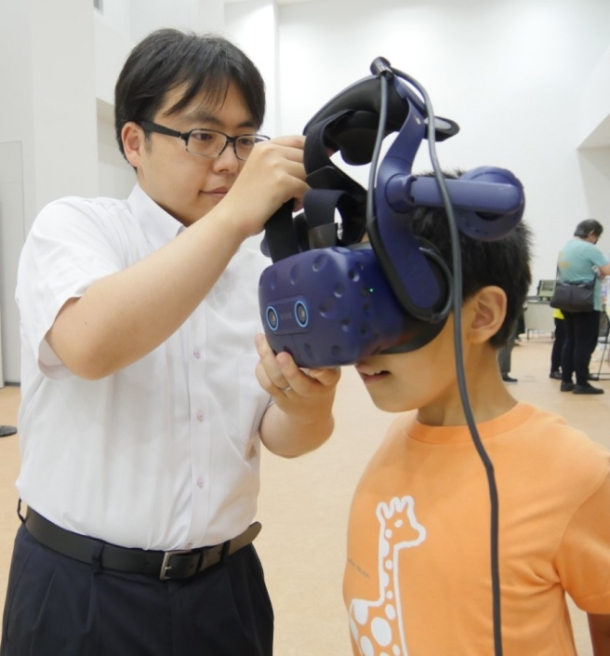
Rather than confining our research activities and their results within the lab, we seek to disseminate them to society at large. For example, in the “Athletic Ability Development and Expansion” project, which we are conducting in collaboration with the National Museum of Emerging Science and Innovation (Miraikan), we hold occasional experiential events related to physical abilities, inviting the general public, including children, to participate. We have put a lot of effort into planning these events, including physical ability measurement experiences, experimental demonstrations, and talk shows. We have also invited former figure skater Tatsuki Machida to learn professional techniques for bringing out the “tricks” of physical ability, and held seminars on the theme of “Why does the body move well and why does it not move well?” Our activities with Miraikan, which have been ongoing for four years, came to an end in 2025, but we hope to expand our scope of activities in the future.
These activities not only provide a forum for researchers to interact with each other and present their results but also demonstrate our desire to get children interested in research and help them grow into the people who will lead the future of science. Students from my lab also participate as staff, and it seems they also learn a lot while they teach, and this contributes to their own growth. After all, research activities must be connected to society in some way and be useful to society. We believe that outreach activities to achieve this are also an important role of the Project Research Institutes.
──You often hold symposia with domestic and international researchers as well. What is the significance of advancing these activities with Waseda as a hub?”
This is true for all the Project Research Institutes, but the cross-sectional interaction between faculty members, researchers, and students with different specialties and activities in different fields inspires new discoveries and developments. I believe this is the essence of our activities. Rather than becoming sequestered in a single field, we are able to broaden our horizons and expand our activities. Waseda University has always been a place where people with such aspirations gather, and the University has also worked hard to create an environment that is conducive to this. I hope that this lab will continue to be one of the places that embodies this.
──What are your goals moving forward?
Promoting the social implementation of research results. I have a number of themes I’m currently considering, but one example is the development of a health smartphone app for middle-aged and elderly people. Nearly 10 years ago, I developed an app called “MetaboWatch,” which allows users to input their physical measurements and lifestyle information to manage their health. Now, I’m thinking of creating an app that provides advice and feedback based on exercise patterns, such as effective walking techniques, to help improve physical ability, while helping people to naturally improve their health. This is an evolution from an app that helps you “know” yourself to one that can also “change” yourself. Once it’s completed, I’d love to use it myself.