Many Waseda University students may think that social issues are somewhat difficult to approach. In the new corner, "Lectures by Experts'', we will focus on specific problems facing society and ask four Faculty to give us hints on how to solve them.
The theme for 2023 is "How to Keep the Peace?" The third guest will be from medieval Russian literature. The third guest is Kiyoharu Miura Professor (Faculty of Letters, Arts and Sciences), who studies medieval Russian literature and medieval Russian history. Following the first part, in which we read about the invasion of Ukraine from Russian history, in the second part we asked him about Russian religious views and his message to Waseda University students.
How can students contribute to peace through their studies at university?
Learning through literature and history leads to knowing and understanding others. There is no need to rush to know things, and there is no need to be ashamed of what you don't know, so take your time and build up your intelligence.
What is the “religious ruler” that underpins President Putin’s authority?
Russia's invasion of Ukraine is sometimes referred to as "Putin's war." From the perspective of Professor Miura, why did President Putin decide to invade?
One of the reasons for the invasion of Ukraine was the historical perspective that saw unity between Russians and Ukrainians, as I talked about in the first part. I also feel that an "overconfidence in power" is behind this, as it has become uncontrollable.
Humans are not perfect creatures, so it is no wonder that when they are burdened with great power, they develop a sense of omnipotence, thinking that they can do anything. I believe that the success of the annexation of Crimea in 2014 may have spurred President Putin's overconfidence in power.
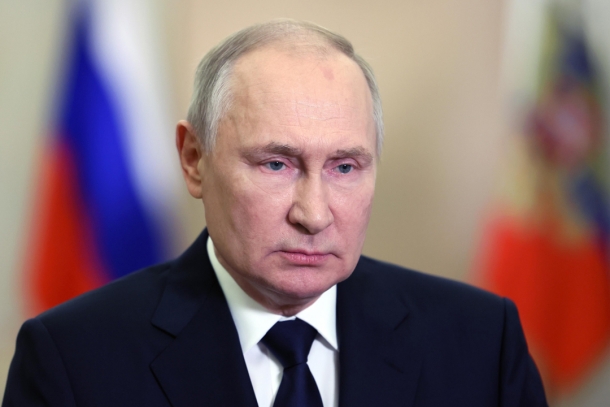
(Photo provided by Kyodo News Images)
How do Russians view President Putin's invasion of Ukraine?
Even after the invasion of Ukraine, citizens in large cities and their suburbs have lived a peaceful life, but on the other hand, it is also true that a war is occurring that is shaking the world situation. That's why I think Russians have complicated feelings.
There is a discrepancy between the image of President Putin seen from within Russia and the image of President Putin seen externally by countries around the world. From the perspective of Western countries, current President Putin is seen as a ruthless aggressor, but I feel that Russians do not see him that way. In fact, although a movement against the war broke out in the country at the beginning of the invasion, opinion polls show that President Putin's domestic approval rating remains high.
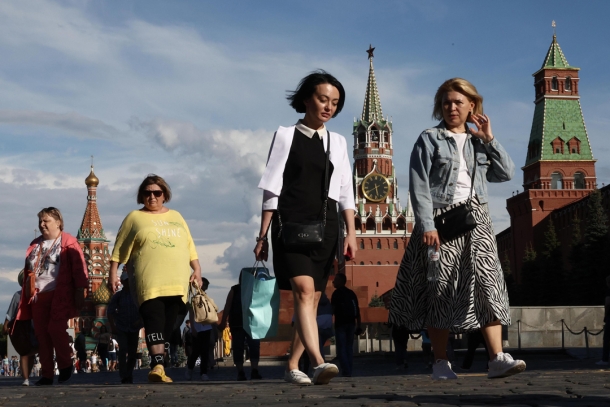
Citizens walking on Red Square in Moscow in 2022 (Photo provided by Kyodo News Images)
Before this invasion, I visited Russia many times and spoke with the local people. What I felt there was the "inseparable feeling'' that Russians have toward the influx of Western culture. This is because, for Russia, globalization largely overlapped with the Americanization of Russia by neglecting its "spirit." While Russian citizens were happy that their lives had become more stable and prosperous due to the influx of Western culture, they also seemed to have a sense of incompatibility.
This indivisibility, coupled with the perspective that Russia has recovered from the collapse of the Soviet Union in 1991 and built a strong country that can compete on an equal footing with Western countries, seems to have led to President Putin's support.
Is there a Russia's religious background behind the support of President Putin, who has built a powerful country?
That's exactly right. The Russian Orthodox Church, which is the mainstream in the country, has its roots in the Greek Orthodox Church rather than the Roman Catholic Church, and two distinctive ways of thinking are involved.
The first is "Autokrator,'' which holds that the ruler is the earthly representative of the heavenly god Pantokrator. In the Roman Catholic world, the religious authority of the Pope was separated from the secular power of kings and emperors. In contrast, the Greek Orthodox Church viewed the ruler at the top of the country as an "agent of God.''
The second is the idea of "Theosis,'' which holds that since Christ, who is God, became human, humans should also spare no effort to imitate Christ and become God. Christ was both fully human and fully God. That's why I think humans are like that too.
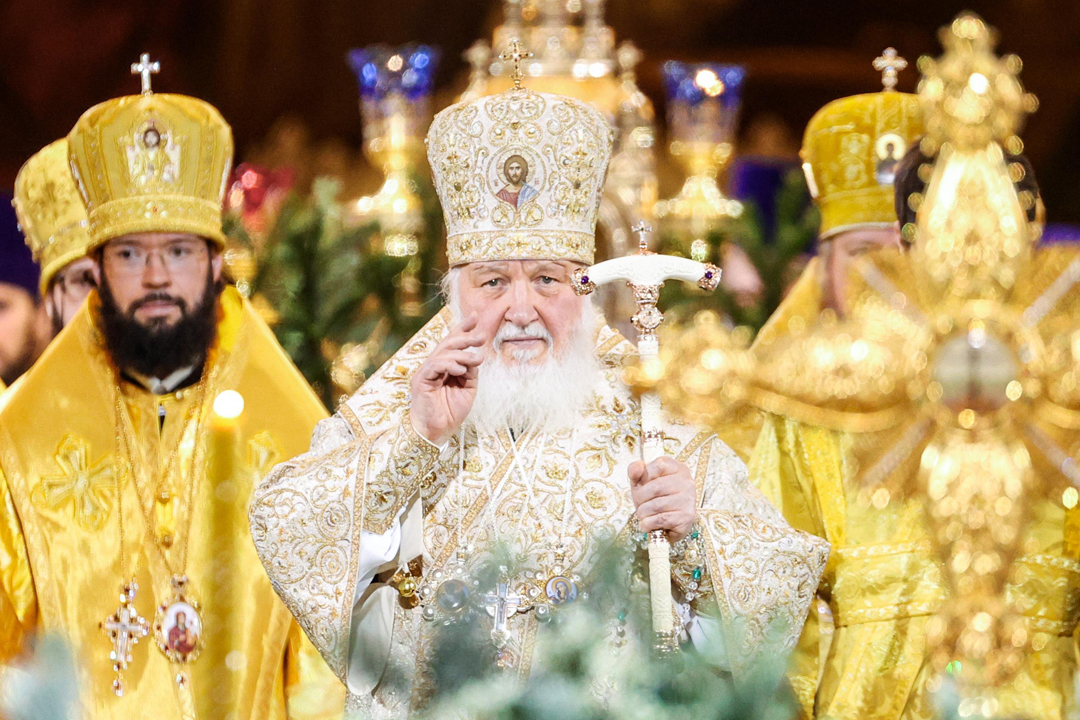
Patriarch Kirill of the Russian Orthodox Church conducting a Christmas service (Photo provided by Kyodo News Images)
These ideas have a major influence on political situations as well. The traditional Russian desire for an absolute ruler is one example.
A ruler may also face politics with a sense of duty as God's representative, and with a sense of fulfillment as if he or she is one with God as the Holy Spirit. I believe that President Putin's invasion of Ukraine had this kind of feeling in it.
However, the ideas of "autocrator'' and "theosis'' are not in themselves evil. For example, there were times in the past when rulers exercised their absolute power in a restrained manner, rather than wielding it excessively. Emperor Alexei, introduced in the first part, is one of them.
Furthermore, the way of sensibility based on "theosis'' is a strong inspiration for Russian people. I feel that the feelings of "Let's work hard to get closer to Christ'' and "Let's share our sufferings with Christ and accomplish great things'' are behind the success of Russians in many fields such as literature, music, and sports. doing.
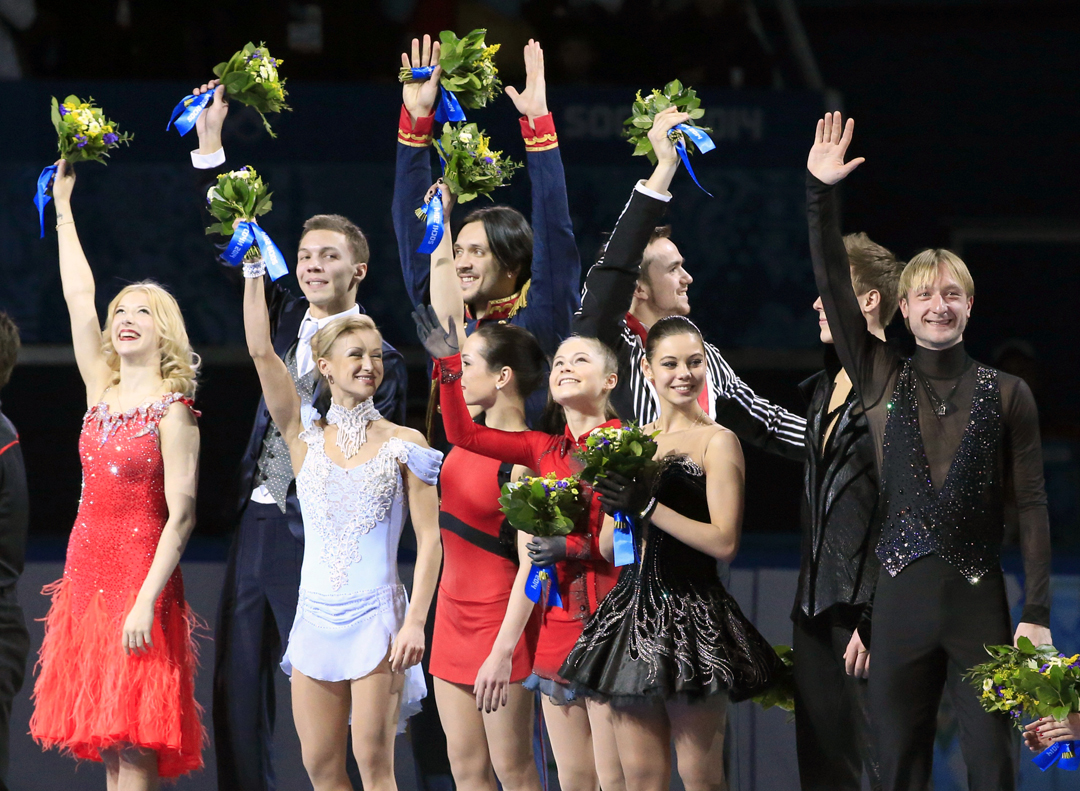
At the 2014 Sochi Olympics, they won 11 gold medals, including team figure skating (Photo provided by Kyodo News Images)
Accumulating knowledge and questions will become the "intelligence" that will help you survive the future.
Could you please explain again the significance of us studying literature and history?
I believe that the first thing that is necessary to preserve peace is to "know the other person." Studying literature and history not only helps us learn about various things, but also helps us develop our understanding and imagination.
Learning about the origins and history of a country does not mean that the war will end immediately, so the learning and knowledge gained at university may seem like a long shot. However, I would be happy if students would not give up what they know just because of this.
Lastly, please give a message to the students.
There's no need to rush to know, and no need to be ashamed of what you don't know. The important thing is to ask yourself questions such as "Why?" and "I don't know." The accumulation of "saving questions" will connect at random timing and become the intelligence needed to survive in the world.
For example, when it comes to trends between Russia and Ukraine, questions such as "Why did they start a war like this?" and "How do the Russians feel?" Please take care of the questions you have. I wish you could live your daily life without dismissing it as "It doesn't matter to me.''
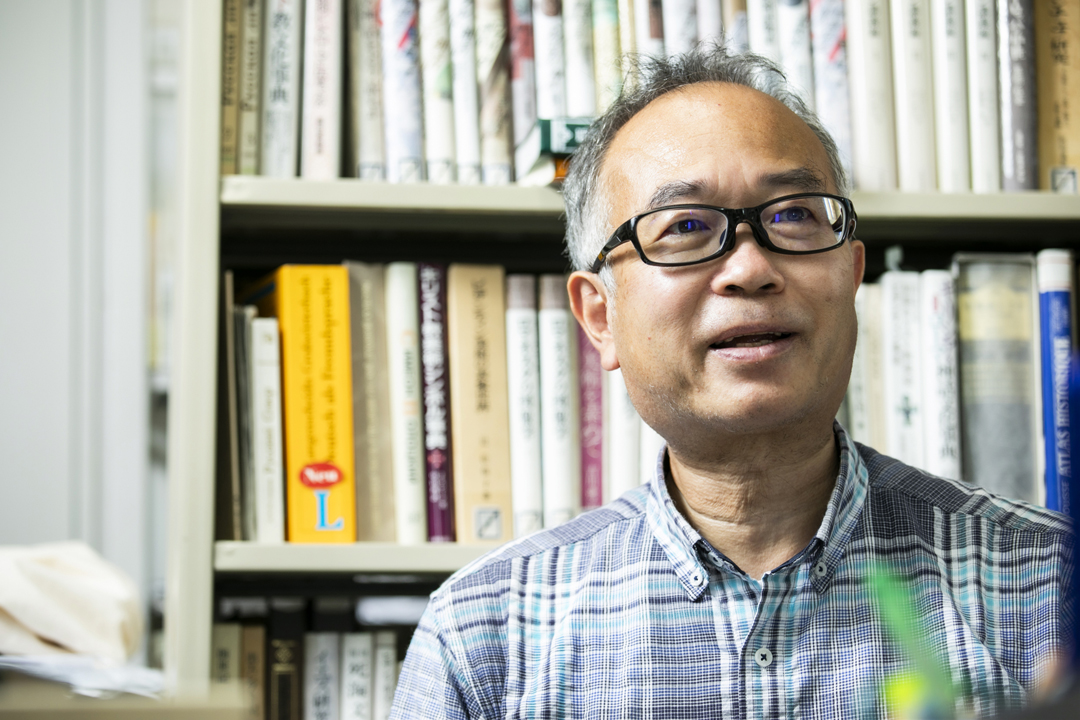
Kiyoharu Miura
Professor Faculty of Letters, Arts and Sciences. Ph.D. (Literature). Her areas of expertise are medieval Russian literature and medieval Russian history. His books include "The Origins of Russia: From Centerless Forests and Grasslands to the Third Rome'' (Kodansha, 2003) and "Russia's Thought Circuit: The Deep Depths of the Invasion of Ukraine from its Spiritual History'' (Fusosha, 2022).
Interview and text: Akane Ichikawa (Graduated from School of Culture, Media and Society in 2017)
Photography: Kota Nunokawa
Image design: Ryo Uchida
▼Click here for the first part!
"How do we keep the peace?" Please tell us! Professor Miura (Part 1)

![[Save version] Map of the four main campuses](https://www.waseda.jp/inst/weekly/assets/uploads/2026/06/110d605cfac40346aad1d2df464a6586-940x705-1-1-610x457.jpg)